Three Chinese Festivals You Can Experience at a Temple: Chinese New Year, Buddha's Birthday, and the Ghost Festival
Most people imagine a Chinese Buddhist temple as a place of quiet courtyards, incense, stone pathways, and meditation. Much of the time, that picture is accurate. Yet several times a year, the atmosphere changes dramatically. Temple bells ring to welcome a new year, devotees gather to bathe a statue of the Buddha, and families visit temples to remember loved ones who have passed away.
These occasions offer a different way to understand Chinese Buddhist culture. They are not simply religious ceremonies or performances for visitors. They connect temple traditions with family life, seasonal customs, gratitude, remembrance, and the hope for a better future.
For international travelers, visiting a temple during a traditional festival can provide a more meaningful cultural experience than arriving on an ordinary sightseeing day. You may witness ceremonies that have been observed for generations, see how local communities participate in religious life, and discover the relationship between Buddhist teachings and everyday Chinese customs.
Three festivals are particularly interesting for visitors: Chinese New Year, Buddha's Birthday, and the Ghost Festival. Each has its own history, atmosphere, and customs. Understanding what they represent will help you appreciate the experience more deeply and participate respectfully.
1. Chinese New Year at a Buddhist Temple: Welcoming a New Beginning
Chinese New Year, also known as the Spring Festival (春节, Chūn Jié), is the most important traditional holiday in China. It begins on the first day of the lunar calendar, usually falling between late January and mid-February.
For many Chinese families, the festival is a time for reunion, gratitude, and fresh beginnings. People return to their hometowns, share meals with relatives, visit elders, and exchange wishes for health, happiness, and prosperity. Buddhist temples also become important gathering places during this period.
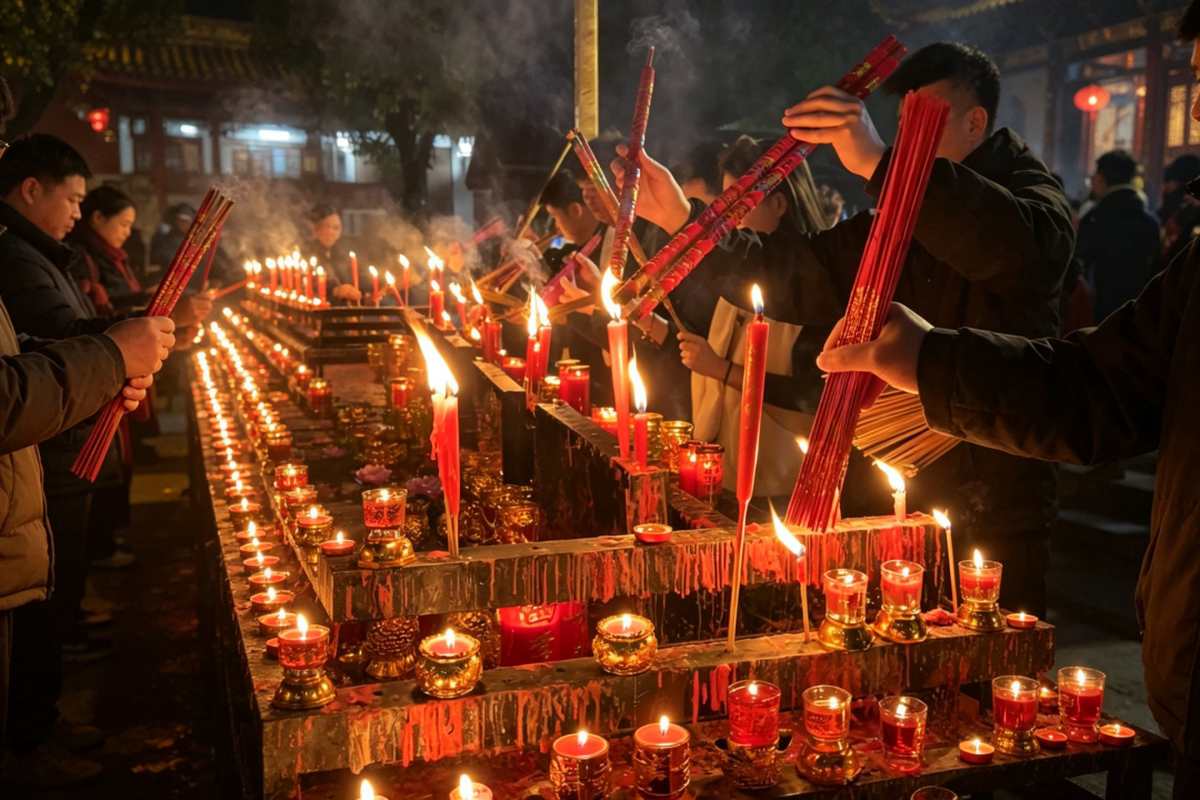
Some visitors imagine that a temple is always silent. During the Spring Festival, however, the atmosphere can be lively and full of activity. Families arrive to pray, make offerings, listen to temple bells, and take part in the first religious observances of the new year.
What You May Experience During Chinese New Year
Temple bells and the arrival of the new year
In some temples, the ringing of a large bell is an important part of the New Year observance. The number 108 has special significance in several Buddhist traditions and is associated with the symbolic removal of 108 worldly afflictions. Some temples therefore organize a ceremony involving 108 bell strikes around the transition into the new year. Practices differ from temple to temple, and visitors should check the local program before planning their visit.
The tradition of offering the first incense
One well-known Chinese New Year custom is called tóu xiāng (头香), often translated as the first incense offering. In places where this custom is observed, devotees seek to make an early offering at the beginning of the lunar new year as a symbolic expression of sincerity and good wishes.
It is important to understand that this is a local custom rather than a universal requirement of Buddhist practice. Some temples attract large crowds for the occasion, while others organize quieter prayer ceremonies.
Prayers and wishes for the year ahead
Visitors may see families offering incense, bowing before Buddhist images, or participating in prayers. Their wishes often concern health, family harmony, safety, education, and the well-being of loved ones. For many people, visiting a temple at the beginning of the year is a way to express gratitude for the past and approach the future with a calmer mind.
Vegetarian food and temple hospitality
Some temples and Buddhist communities prepare vegetarian meals during the festival. These meals reflect the Buddhist emphasis on compassion and the avoidance of harm. Depending on the temple, visitors may encounter communal dining, simple vegetarian dishes, or special festival food offerings.
What Is It Like for a First-Time International Visitor?
Chinese New Year at a temple can be much busier than an ordinary visit. Popular temples may have queues, crowded courtyards, and limited access to certain areas during ceremonies. The atmosphere is often warm and family-oriented, but it may also be noisy and energetic.
If you prefer to observe rather than participate, you can stand at an appropriate distance and watch how local families make their offerings. You do not need to imitate every custom. Respectful observation is already a meaningful way to learn.
2. Buddha's Birthday: The Bathing the Buddha Festival
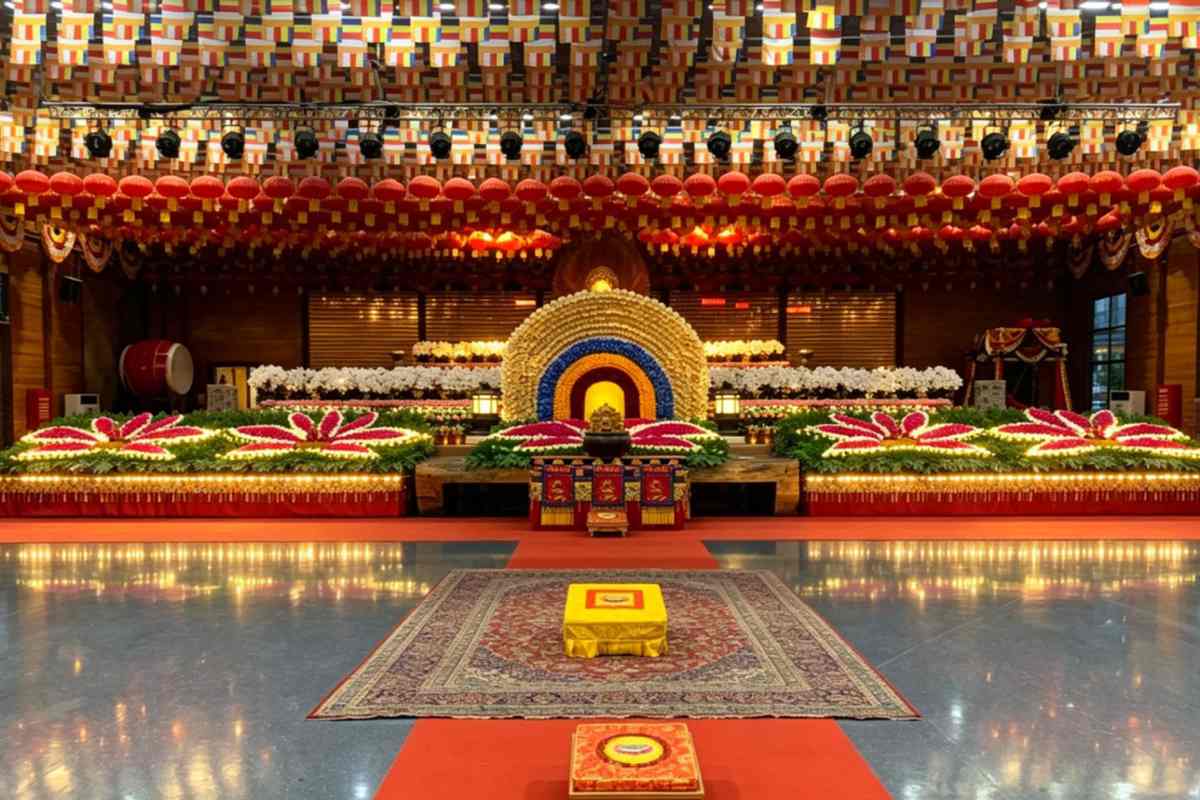
Buddha's Birthday is one of the most significant occasions in the Buddhist calendar. In China, it is commonly observed on the eighth day of the fourth lunar month and is known as the Bathing the Buddha Festival (浴佛节, Yù Fó Jié).
The festival commemorates the birth of Siddhartha Gautama, the historical Buddha. Its date follows the traditional lunar calendar, so it usually falls in April or May according to the Gregorian calendar, depending on the year.
The most recognizable ceremony is the bathing of the Buddha. Devotees gently pour fragrant water over a small statue of the infant Buddha, traditionally depicted standing with one hand pointing toward the sky and the other toward the earth.
This ritual is not intended as an ordinary act of washing a statue. It carries symbolic meaning. The water represents purification, while the ceremony encourages practitioners to reflect on cleansing greed, anger, ignorance, and other mental afflictions.
What Happens During the Bathing the Buddha Ceremony?
The ritual of bathing the infant Buddha
At the center of the ceremony is usually a small statue placed in a specially prepared basin or ceremonial area. Participants take turns pouring a small amount of fragrant water over the statue. The gesture is performed with care and reverence.
For visitors who have never encountered this tradition, it is a particularly accessible way to learn about Buddhist symbolism. The ceremony is simple to observe, yet its meaning reaches beyond the physical action.
Chanting and Buddhist teachings
Many temples organize chanting ceremonies, prayers, or Dharma talks on Buddha's Birthday. Monks and lay practitioners may gather to recite Buddhist texts, reflect on the Buddha's teachings, and share messages about compassion, wisdom, and ethical living.
Charity and acts of kindness
Giving is also an important part of the occasion. Some Buddhist communities organize charitable activities, provide vegetarian meals, or support people in need. These activities reflect the principle that honoring the Buddha should also involve putting compassion into practice.
Why Is Buddha's Birthday a Good Festival for First-Time Visitors?
Compared with some of the busier New Year celebrations, the Bathing the Buddha Festival often offers a more focused opportunity to observe a specific Buddhist ritual. The central ceremony is relatively easy to understand, even if you are unfamiliar with Buddhist philosophy.
You can learn about the meaning of the infant Buddha image, observe how participants approach the ritual, and listen to explanations of the festival's connection with Buddhist teachings.
However, not every temple opens every part of its ceremony to visitors. If you would like to participate in the bathing ritual, ask the temple staff whether public participation is permitted and follow their instructions.
3. The Ghost Festival: Zhongyuan and Ullambana
The Ghost Festival, commonly known in China as Zhongyuan Festival (中元节, Zhōng Yuán Jié), takes place on the fifteenth day of the seventh lunar month. It usually falls in August or early September in the Gregorian calendar.
For international readers, the English name "Ghost Festival" can create the wrong impression. It may sound frightening or resemble a Halloween-style celebration. In Chinese culture, however, the festival has a much more complex meaning. It is closely connected with remembrance of ancestors, family obligations, charitable giving, and concern for the well-being of the deceased.
The festival includes several layers of Chinese folk tradition and Buddhist observance. Although these customs have influenced one another over time, they should not be treated as exactly the same thing.
The Buddhist Meaning: Ullambana and Filial Compassion
In Chinese Buddhism, the seventh lunar month is associated with the Ullambana Festival (盂兰盆节, Yúlánpén Jié). Its central story is connected with Maudgalyayana, one of the Buddha's prominent disciples.
According to the traditional account, Maudgalyayana discovered that his deceased mother was suffering and sought the Buddha's guidance. The Buddha instructed him to make offerings to the monastic community on the fifteenth day of the seventh lunar month, when the traditional summer retreat period concluded. Through the merit of these offerings and the participation of the community, relief could be dedicated to departed parents and relatives.
This story became an important expression of filial devotion in Chinese Buddhist culture. It connects Buddhist ideas about compassion and the dedication of merit with the traditional Chinese value of honoring one's parents and ancestors.
What Might You See at a Temple During the Festival?
Ullambana ceremonies and chanting
Many Buddhist temples hold special ceremonies during the seventh lunar month. Monks and lay practitioners may chant sutras, make offerings, and dedicate the merit of their practice to deceased relatives and other beings. The atmosphere is generally solemn and reflective.
Offerings and remembrance
Families may prepare food, flowers, and other offerings as expressions of respect and remembrance. In Buddhist settings, these practices are often accompanied by prayers and the dedication of merit.
Acts of giving and compassion
Charitable giving is an important aspect of the Ullambana tradition. Some temples organize donations, vegetarian meals, or community support activities. These actions reflect the idea that remembrance should be connected with compassion and care for others.
Lanterns and regional customs
In some parts of China, people float lanterns on rivers or lakes during the seventh lunar month. These lanterns may symbolize remembrance, guidance, or prayers for departed beings. This is a regional custom and is not performed at every temple or in every community.
Is the Ghost Festival Frightening?
Not in the way many overseas visitors might expect. The festival is not simply about ghosts or supernatural stories. Its deeper cultural meaning concerns memory, family relationships, compassion, and the recognition that life is impermanent.
For visitors, it is best approached as a solemn cultural and religious occasion. Rather than treating the ceremonies as unusual entertainment, take time to understand why families and practitioners consider the day meaningful.
Comparing the Three Festivals: Which One Should You Visit?
Each festival provides a different perspective on Chinese temple culture. Chinese New Year is associated with renewal and family celebration. Buddha's Birthday focuses on the life and teachings of the historical Buddha. The Ghost Festival highlights remembrance, filial devotion, and compassion for the departed.
| Festival | Lunar Date | Main Theme | What Visitors May See |
|---|---|---|---|
| Chinese New Year | 1st day of the 1st lunar month | Renewal, family, and good wishes | Temple bells, incense offerings, prayers, and festive decorations |
| Buddha's Birthday | 8th day of the 4th lunar month | Buddha's birth, purification, and compassion | Bathing the Buddha, chanting, Dharma talks, and charitable activities |
| Ghost Festival / Ullambana | 15th day of the 7th lunar month | Remembrance, filial devotion, and compassion | Sutra chanting, offerings, merit dedication, and regional lantern customs |
If you enjoy lively cultural celebrations, Chinese New Year may be the most memorable choice. If you are interested in Buddhist rituals and symbolism, Buddha's Birthday offers a clear introduction. If you want to understand the relationship between Chinese family values and Buddhist compassion, the Ghost Festival provides a particularly meaningful perspective.
What Should International Visitors Know Before Attending a Temple Festival?
Visiting a temple during a festival is a rewarding cultural experience, but it is also important to remember that these are religious occasions for local communities. A little preparation will help you feel more comfortable and avoid unintentionally disturbing others.
1. Check the Lunar Calendar Before Booking
Traditional Chinese festivals follow the lunar calendar, so their Gregorian dates change every year. Do not rely on the same date from a previous year's travel guide. Confirm the correct date for the year you plan to visit, and check whether the temple has published a ceremony schedule.
2. Dress Respectfully
Choose comfortable, modest clothing. Clothing that covers the shoulders and knees is a considerate choice when visiting a Buddhist temple. Remove your hat when entering certain indoor worship spaces if local customs or signs request it.
3. Observe Before Participating
Some ceremonies are open to visitors, while others may be reserved for monks, registered participants, or members of the local Buddhist community. Watch how others behave, follow signs and staff instructions, and ask politely before joining a ritual.
4. Be Careful with Photography
Temple architecture, lanterns, courtyards, and ceremonial objects can make beautiful photographs. However, avoid using flash during ceremonies, blocking worshippers, or photographing people in prayer without permission. Some temples restrict photography in particular halls.
5. Allow Extra Time During Popular Festivals
Major festival days can attract large crowds. Public transport, roads, and temple entrances may become busier than usual. Arriving early can make the visit more comfortable, particularly during Chinese New Year and other popular observances.
6. Understand the Difference Between Observation and Religious Participation
You do not need to be Buddhist to visit a temple or learn about its festivals. International visitors are often able to observe public ceremonies respectfully. If you are unsure whether an activity is appropriate for you to join, simply ask a member of the temple staff.
Experience Chinese Temple Culture Beyond a Day Visit
A festival visit can introduce you to the living traditions of Chinese Buddhism, but the experience does not have to end when the ceremony is over. Spending more time in a temple environment allows you to notice details that are easy to miss during a short sightseeing stop: the rhythm of daily activities, the architecture of the halls, the preparation of vegetarian food, and the relationship between religious practice and ordinary life.
Located in Luoyang, Henan Province, Longmen Guanghua Temple offers visitors an opportunity to explore an important part of the region's Buddhist heritage. Its historical associations with Tangmi, or Chinese Esoteric Buddhism, provide a distinct cultural context within the wider history of Chinese Buddhism.
For travelers who want to spend more time learning about temple life, the Temple Stay experience at Funzendo offers a way to explore a traditional temple setting beyond an ordinary visit. Guests can learn about temple customs and experience aspects of a quieter daily rhythm, subject to the activities and arrangements available during their stay.
Travelers interested in visiting several Buddhist cultural destinations can also explore a Zen Pilgrimage. A pilgrimage can connect temple visits with the history, architecture, and cultural traditions of different places, offering a broader understanding of China's Buddhist heritage.
Festival dates, ceremony schedules, and visitor arrangements may vary from year to year. If you are planning your visit around Chinese New Year, Buddha's Birthday, or the Ghost Festival, it is advisable to contact the team in advance for guidance on suitable travel dates and available experiences.
Contact Funzendo to discuss your visit and explore the possibilities for a temple stay or cultural journey in Luoyang.
Frequently Asked Questions About Chinese Temple Festivals
When is Chinese New Year celebrated at a Buddhist temple?
Chinese New Year begins on the first day of the first lunar month, usually between late January and mid-February. Some temples organize bell-ringing ceremonies, incense offerings, prayers, and other observances around New Year's Eve and the first day of the new year. The exact program varies by temple.
What happens during the Bathing the Buddha Festival?
On the eighth day of the fourth lunar month, many Chinese Buddhist temples commemorate the Buddha's Birthday by bathing a small statue of the infant Buddha with fragrant water. Chanting, Dharma talks, offerings, and charitable activities may also take place.
When is the Chinese Ghost Festival?
The Ghost Festival, or Zhongyuan Festival, falls on the fifteenth day of the seventh lunar month. Its Gregorian date changes each year and usually falls in August or early September.
What is the difference between Zhongyuan Festival and Ullambana?
Zhongyuan Festival includes Chinese folk customs associated with honoring ancestors and remembering the departed. Ullambana is a Buddhist observance connected with the story of Maudgalyayana and the dedication of merit to deceased parents and other beings. The traditions overlap in Chinese culture, but they have distinct historical and religious backgrounds.
Is the Ghost Festival a frightening event?
Despite its English name, the Ghost Festival is not simply a frightening celebration. It is associated with remembrance, filial devotion, offerings, and compassion for departed beings. Buddhist Ullambana ceremonies are generally solemn and reflective.
Can foreigners attend Chinese Buddhist festivals?
International visitors can often observe public temple festival activities, although access and participation depend on the temple and the specific ceremony. Visitors should dress respectfully, follow local instructions, and ask permission before photographing people or joining religious rituals.
Can I stay at a temple during a Chinese Buddhist festival?
Some temple stay programs may be available around festival periods, but accommodation and participation depend on the temple's schedule and capacity. It is best to contact the organizer in advance rather than assume that rooms or festival activities will be available.
Discover the Living Traditions of Chinese Buddhism
Chinese temple festivals reveal a side of Buddhist culture that cannot be fully understood through architecture or history books alone. The ringing of a New Year bell, the gentle bathing of the infant Buddha, and the prayers of the Ullambana season each express a different aspect of human life: hope, gratitude, compassion, and remembrance.
Whether you are interested in religious history, traditional Chinese customs, or a more meaningful cultural journey, attending one of these festivals can help you see how Buddhist traditions continue to shape community life in China.
Plan your visit with curiosity and respect, and allow enough time to experience the temple beyond the photographs. Sometimes the most memorable part of a journey is not a famous landmark, but a moment spent understanding the traditions of the people who gather there.