Beyond Stress Relief: Traditional Chinese Meditation and the Mind-Body Connection
Modern conversations about wellbeing often focus on managing stress, improving concentration, and finding ways to recover from the demands of everyday life. Meditation is frequently introduced as a practical method for achieving these goals. Yet in Chinese Buddhist and contemplative traditions, sitting quietly has a broader cultural and philosophical background. It is connected with questions about attention, habitual reactions, bodily awareness, and the way people understand their experience of the present moment.
Traditional Chinese meditation cannot be reduced to one technique or a single explanation of how the mind works. Different Buddhist schools have developed distinct methods, teachings, and objectives. Some practices emphasize concentration, others cultivate insight, and many involve a combination of posture, attention, ethical reflection, and sustained learning. Understanding these differences makes it possible to explore meditation as both a practical discipline and an important part of Chinese religious and cultural history.
For international readers encountering these traditions for the first time, the relationship between mind and body offers a useful starting point. Sitting posture, breathing, physical sensations, and mental activity are not necessarily treated as separate concerns. They can become different aspects of a single field of observation. This does not mean that meditation replaces medical care or guarantees a particular psychological result. Rather, it offers a structured way to investigate attention and develop a more deliberate relationship with everyday experience.
Meditation in the Context of Chinese Buddhist Thought
Buddhism developed in China over many centuries through the translation of scriptures, the work of teachers, the establishment of monastic communities, and encounters with existing Chinese intellectual traditions. As Buddhist teachings took root, Chinese practitioners developed different approaches to understanding the mind, cultivating concentration, and examining the causes of human dissatisfaction.
Within this broad history, meditation has never represented a completely uniform activity. Different traditions have placed different emphases on seated practice, contemplation, scriptural study, ritual, ethical conduct, and guidance from teachers. The word “meditation” can therefore refer to a range of practices rather than one standardized method.
Chan Buddhism, known in Japanese as Zen, is particularly associated in popular understanding with seated meditation and direct attention to experience. However, Chan should not be reduced to sitting silently or attempting to stop all thoughts. Its historical teachings developed within a wider Buddhist framework that includes discipline, insight, teacher-student relationships, and reflection on the nature of experience.
For a beginner, this historical context matters. A meditation technique may appear simple when described in a few sentences, but its traditional meaning depends on the teachings and purposes with which it is practiced. Learning to sit comfortably and observe the breath can be a useful introduction, while deeper study requires attention to the particular tradition and its guidance.
At Longmen Guanghua Temple in Luoyang, Henan Province, visitors encounter a setting connected with the region's long Buddhist history. The wider Longmen area is especially known for its Buddhist heritage, including the Longmen Grottoes and the religious institutions that formed part of the cultural landscape. Exploring this context helps place contemplative practice within a living history rather than treating it as a technique detached from its origins.
The Body as a Starting Point for Attention
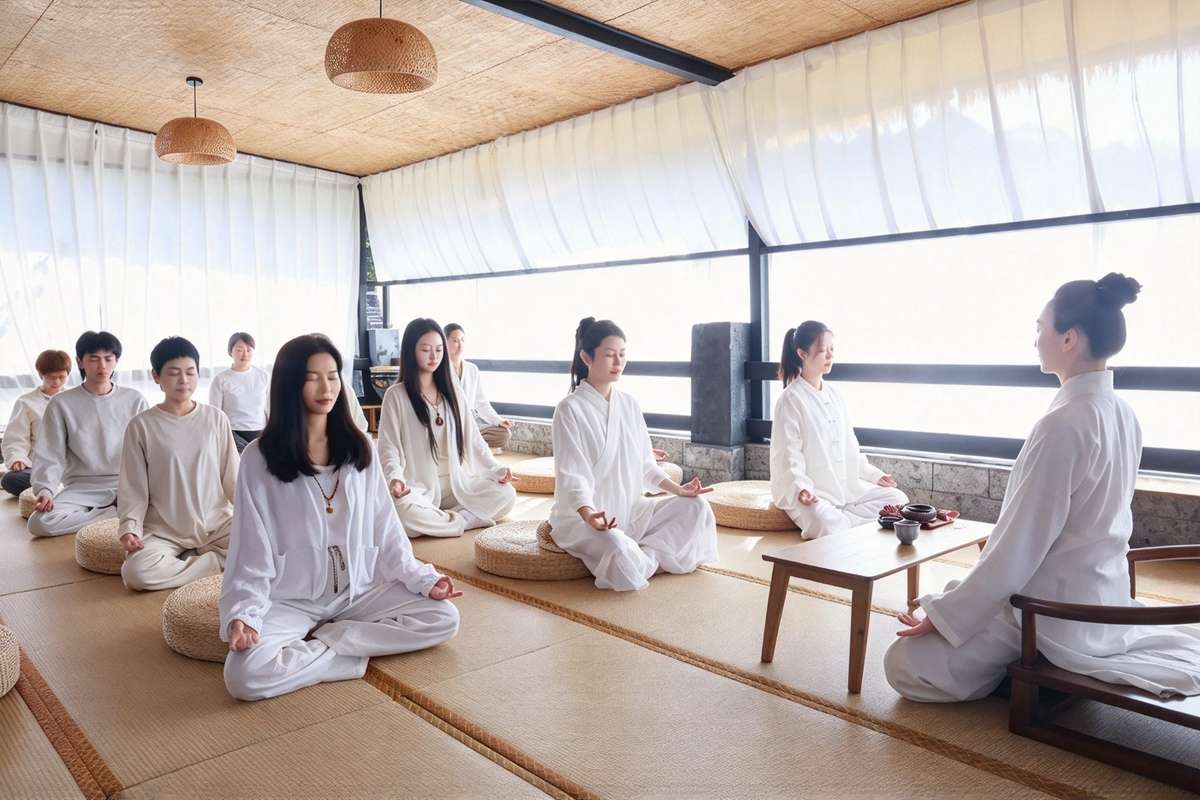
When people begin meditation, they often discover that the body is not as still as they expected. The shoulders may feel tense, the back may become tired, and small sensations that usually pass unnoticed may become more apparent. These experiences are ordinary features of sitting quietly, especially for someone who is not accustomed to remaining in one position for an extended period.
In introductory practice, posture provides a practical foundation for attention. A stable and reasonably comfortable position can reduce unnecessary movement and make it easier to notice changes in breathing and sensation. The goal is not to force the body into an idealized shape. Instead, practitioners learn to find a position that supports alertness without creating avoidable strain.
Different meditation traditions may recommend different postures. Some emphasize sitting on a cushion, while others allow the use of a chair. The appropriate position depends on the method being taught and the individual's physical circumstances. Pain should not be treated as proof of progress, and practitioners should adjust their posture or stop if a position causes significant discomfort.
Once the body is settled, attention can begin to include ordinary physical sensations: the contact between the feet and the floor, the weight of the hands, the movement of the abdomen, or the feeling of air passing through the nose. These observations are not complicated, but they can reveal how quickly attention moves from one subject to another.
For many beginners, the important discovery is not that the body becomes perfectly relaxed. It is that physical experience can be noticed without immediately reacting to every sensation. A slight itch, a passing sound, or the impulse to move may become an opportunity to observe the relationship between sensation, thought, and response.
Breathing: A Practical Anchor for Meditation
Breathing is commonly used as an object of attention in introductory meditation because it is both familiar and continuously changing. It can be noticed without requiring special equipment, and it provides a point to which attention can return when the mind becomes distracted.
A simple exercise begins by allowing the breath to move naturally. Rather than deliberately making every inhalation deeper or every exhalation longer, the practitioner notices the ordinary rhythm of breathing. Attention may rest on the movement of the abdomen, the sensation around the nostrils, or another comfortable and clearly identifiable aspect of the breath.
Distraction is expected. A person may begin thinking about work, remembering a conversation, planning dinner, or evaluating whether the practice is working. The instruction is not to criticize these thoughts or force them away. Instead, the practitioner recognizes that attention has moved and gently returns to the chosen point of observation.
This repeated movement away from distraction and back toward the present activity is an important part of the exercise. Meditation does not require the complete absence of thought. It provides an opportunity to notice how thoughts arise, capture attention, and influence the direction of the mind.
Breathing practices also need appropriate boundaries. Not every meditation method uses the same breathing instructions, and some traditional systems include more specialized exercises. Beginners should avoid forcing the breath, prolonged breath retention, or intense breathing techniques without suitable instruction. If focusing on breathing causes discomfort or anxiety, attention can be shifted to the feet, hands, or sounds in the surrounding environment.
Why a Quiet Mind Does Not Mean an Empty Mind
One common misconception about meditation is that success means having no thoughts. This expectation can make the practice unnecessarily frustrating. Human thinking is continuous, and the mind naturally responds to memories, sounds, physical sensations, and plans for the future.
Trying to suppress every thought may create a second layer of mental activity: the original thought appears, and then the practitioner becomes frustrated about having it. Instead of observing experience, attention becomes occupied with judging whether the meditation is good enough.
A more practical starting point is to recognize the appearance of thoughts without treating each one as a command that must be followed. A thought about an unfinished task can be noticed as a thought. A memory can be recognized as a memory. The practitioner can then return to the chosen object of attention.
This approach does not imply that thoughts are unimportant or that difficult emotions should be ignored. Some thoughts require practical action, and persistent emotional distress may require support from a qualified professional. Meditation is not a substitute for addressing real problems. Its contribution lies in creating a little more room to notice what is happening before automatically reacting.
Within Buddhist traditions, the investigation of mental activity is connected with broader teachings about perception, attachment, and the changing nature of experience. These ideas have philosophical and religious meanings that extend beyond modern stress management. A short introductory exercise can offer a first experience of observing the mind, but it should not be presented as equivalent to the full study of Buddhist philosophy or practice.
The Relationship Between Attention and Everyday Reactions
Many everyday reactions happen quickly. A critical message may produce irritation before a person has considered its meaning. An unexpected delay may lead to impatience. A familiar worry may return repeatedly, even when no immediate action is possible.
These responses are part of ordinary human life. Meditation does not guarantee that they will disappear. However, the practice of noticing sensations, thoughts, and impulses can help people become more familiar with the sequence through which a reaction develops.
For example, someone sitting quietly may notice a sound, experience irritation, and immediately begin thinking about why the noise should stop. With practice, it may become possible to recognize several distinct elements: the sound itself, the physical tension that follows, the judgment about the sound, and the impulse to respond.
This kind of observation can be useful outside formal practice. When a difficult conversation begins, a person may notice that the shoulders are tightening or that the urge to interrupt is becoming strong. Recognizing these signals does not guarantee a calm response, but it may create an opportunity to choose how to proceed.
It is important not to turn this idea into a promise that meditation will eliminate stress or resolve every interpersonal difficulty. Attention, emotional regulation, and behavior are influenced by many factors, including health, environment, relationships, and life circumstances. Meditation is one possible practice within a broader approach to wellbeing.
Sitting Meditation and Traditional Chinese Ideas of Balance
Chinese cultural traditions contain several ways of discussing balance, moderation, and the relationship between people and their surroundings. These ideas appear in different philosophical and practical contexts, and they should not be treated as a single unified system. Buddhist teachings, Daoist thought, classical Chinese philosophy, and traditional health practices each have their own histories and terminology.
It is tempting to describe all these traditions as if they taught exactly the same thing. Such simplification can make an article sound accessible, but it obscures meaningful differences. Chan Buddhist meditation, for example, belongs to a Buddhist religious and philosophical framework. Daoist cultivation practices have their own historical lineages and objectives, while traditional Chinese medicine uses a different set of concepts to discuss health and bodily function.
There can be areas of cultural interaction and practical resemblance, but similarity does not establish identity. A careful introduction should explain what a particular practice involves instead of assigning every Chinese tradition the same purpose or claiming that they all provide the same benefits.
For international readers, this distinction is part of the value of learning through cultural experience. Understanding a tradition requires attention to its own language, context, and historical development. It also requires a willingness to leave some questions open rather than expecting a single technique to explain every aspect of Chinese thought.
From Formal Practice to Daily Habits
A formal meditation session provides a dedicated period for practicing attention. Everyday activities offer a different opportunity: the chance to apply deliberate awareness while participating in ordinary life.
One approach is to choose a routine that already exists. During a morning walk, attention can rest on the sensation of movement and the surrounding sounds. While drinking tea, a person can notice the temperature of the cup, the aroma of the tea, and the pace of drinking. Before beginning a new task, a brief pause can help make the transition more deliberate.
These activities do not need to be described as formal Buddhist meditation. They are everyday exercises in attention that may complement a meditation routine. Keeping the distinction clear respects the specific meaning of Buddhist practice while allowing readers to explore simple ways of being more attentive.
Consistency is often more realistic than intensity. A short, comfortable period of practice may be easier to maintain than a long session undertaken with unrealistic expectations. Beginners can start with a few minutes, notice how they respond, and adjust the routine according to their circumstances.
Some people find that a structured learning environment helps them establish a regular practice. Others prefer to begin independently and explore formal instruction later. Neither approach needs to be treated as universally correct. The most appropriate choice depends on personal goals, physical needs, available guidance, and the tradition being studied.
Tea, Incense, and the Culture of Deliberate Attention
Traditional Chinese tea and incense culture offer further examples of practices in which attention to detail is important. Their significance extends beyond relaxation and should be understood in relation to their histories, craftsmanship, aesthetics, and cultural settings.
Tea preparation brings together the selection of leaves, the quality and temperature of water, the choice of utensils, and the sequence of preparation. Different regions and traditions have developed distinct approaches to tea, and there is no single procedure that represents all Chinese tea culture.
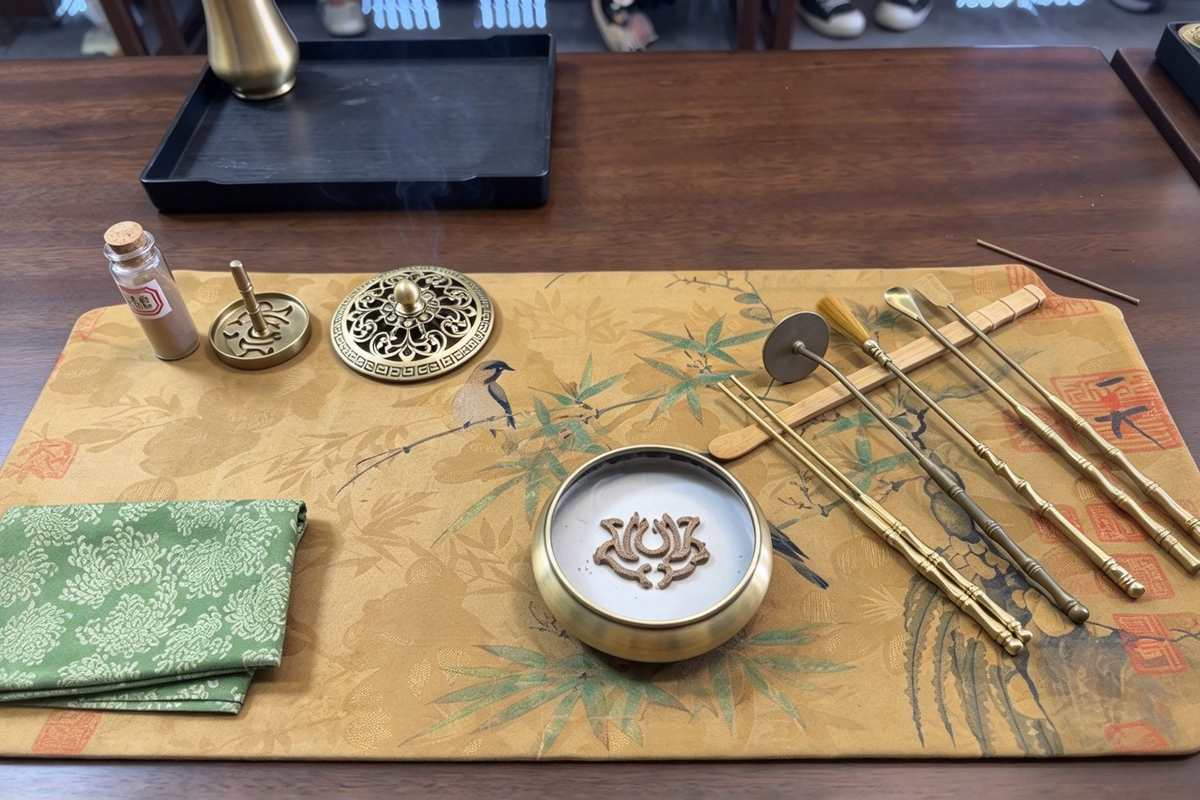
Incense culture is similarly diverse. It may involve the appreciation of fragrance, the preparation of fragrant materials, traditional craftsmanship, or the use of incense in particular cultural and religious contexts. The practice of arranging incense powder into a patterned line, sometimes known as incense seal or incense pattern culture, requires attention to material, form, and technique.
When these practices are taught with their cultural background, participants can learn more than a sequence of actions. They can discover how knowledge is transmitted, how tools are used, and how the details of a practice reflect the values of a particular tradition.
For readers interested in exploring these traditions through a guided cultural program, Funzendo offers an incense, tea, and singing bowl culture retreat. The program is relevant to visitors who wish to learn about traditional Chinese cultural practices alongside their broader interest in contemplative experience.
Learning Meditation in a Cultural Setting
For people traveling to China, learning about meditation within a temple-related cultural environment can provide context that is difficult to gain from a short online description alone. Architecture, religious etiquette, historical interpretation, and instruction can help explain how a practice fits into a larger tradition.
Such an experience should not be approached as a performance in which a visitor must achieve a special state of mind. Beginners may feel restless, distracted, or uncertain about what to do. These responses are common, and an introductory program should make space for questions and appropriate guidance.
It is also important to distinguish cultural learning from religious commitment. A visitor can study the history of Chinese Buddhism, learn basic meditation instructions, and observe temple customs without claiming expertise or assuming that one visit provides a complete understanding of the tradition.
Those interested in exploring structured practice can read more about Zen meditation at Funzendo. Reviewing the program details in advance can help visitors decide whether the available approach matches their interests and expectations.
Approaching Wellbeing Without Unrealistic Promises
As meditation has become more visible internationally, it is sometimes promoted as a solution to nearly every modern difficulty. Such claims may create expectations that no single practice can reliably meet. A more responsible approach recognizes both the potential value and the limitations of meditation.
Meditation can provide a structured opportunity to observe attention and experience. Some people find regular practice useful as part of their personal wellbeing routines, while others may find particular exercises uncomfortable or unsuitable. Experiences differ, and results should not be guaranteed.
People experiencing persistent anxiety, depression, trauma-related symptoms, severe sleep difficulties, or other significant health concerns should seek appropriate professional advice. Meditation may be compatible with some forms of care, but it should not replace medical assessment or prescribed treatment.
Responsible teaching also requires respect for physical differences. Sitting still for a long time is not necessary for every introductory practice, and discomfort should not be glorified. Posture, session length, and the focus of attention can be adjusted where appropriate, with guidance from a qualified instructor when needed.
In this sense, a balanced approach to meditation begins with realistic expectations. The purpose of an introductory session is to learn what the practice involves, discover whether it is appropriate for the individual, and build understanding gradually rather than pursuing an immediate or dramatic result.
Connecting Practice with Cultural Discovery in Luoyang
Luoyang offers an important setting for exploring Chinese Buddhist history and the cultural traditions that developed around it. The Longmen Grottoes are widely recognized for their Buddhist sculpture and inscriptions, while the wider region contains additional historical and religious sites that contribute to an understanding of Buddhism in China.
Exploring this heritage can be more rewarding when visitors allow time to learn about the context of the places they encounter. Buddhist art, temple architecture, inscriptions, and contemplative practices belong to different but related parts of a much larger cultural history. Each requires its own approach to interpretation.
Longmen Guanghua Temple provides a point of connection with this wider setting. Its association with the Buddhist history of Luoyang makes it relevant to visitors interested in the relationship between religious heritage and contemporary cultural learning.
For travelers who want to explore more than a single aspect of Chinese culture, Funzendo's cultural and contemplative experiences offer a starting point for reviewing available activities. Visitors should consult the specific program information for current schedules, arrangements, and participation requirements.
Conclusion: A More Attentive Relationship with Everyday Life
Traditional Chinese meditation is best understood not as one universal technique, but as a diverse field of practice shaped by Buddhist teachings, historical development, and different methods of training. Sitting posture, breathing, and the observation of thoughts can provide an accessible introduction, while the deeper meaning of each method depends on the tradition in which it is taught.
The relationship between mind and body offers a practical way to begin exploring this subject. Physical sensations can reveal where attention rests; breathing can provide a stable point of observation; and the appearance of thoughts can become an opportunity to notice habitual reactions. These exercises do not require the promise of a perfectly quiet mind or a life free from difficulty.
Placed within their proper cultural context, meditation, tea culture, incense practices, and temple heritage also provide opportunities to learn about the diversity of Chinese contemplative traditions. Their value lies not in treating them as interchangeable wellness techniques, but in understanding their distinct histories, methods, and meanings.
For those discovering these traditions for the first time, the most useful beginning may be a modest one: learn carefully, practice within reasonable limits, respect the cultural setting, and allow understanding to develop over time. Through this approach, meditation becomes not simply a search for stress relief, but an opportunity to study attention, explore Chinese Buddhist culture, and develop a more considered relationship with everyday experience.