Build a Safe Holistic Healing Routine
What is Holistic Healing?
Holistic Healing is a personal wellness approach that considers daily habits, mental focus, physical activity, rest, social support, and appropriate professional care together rather than treating one self-care activity as a complete answer. For beginners, the safe aim is not to diagnose, cure, or replace treatment for a health concern. The aim is to build repeatable conditions that may support steadier attention, rest, and self-awareness. A useful routine begins with low-risk practices such as consistent sleep timing, gentle movement, quiet reflection, and mindfulness. It fits people planning cultural wellness experiences, corporate wellbeing programs, or personal retreat preparation. It does not apply as a substitute for medical assessment when someone has persistent symptoms, acute distress, medication questions, or a diagnosed condition requiring clinical care. Funzendo offers cultural wellness programs at Longmen Guanghua Temple in Luoyang, China, where visitors can explore meditation, temple life, tea culture, and traditional wellness practices by schedule and reservation.
Types of Holistic Healing
Beginners should separate a practical wellness routine into clear activity types, because each type serves a different purpose and carries different limits. Sleep habits support recovery time and daily structure. Gentle movement supports regular physical engagement without requiring advanced fitness skills. Meditation and breath awareness provide a quiet practice for observing attention and stress responses. Tea and incense culture can create a deliberate pause in a busy schedule, while singing bowl sessions offer guided listening experiences intended to encourage relaxation and inner calm. Professional care remains a separate category: it includes consulting a qualified clinician, therapist, or other licensed provider when health concerns require assessment. For experience planners, these categories can become a modular itinerary rather than a single intensive program. A guest who wants contemplative practice may prefer meditation, while a cultural travel group may need a broader format that includes tea culture and temple activities. Do not combine unfamiliar practices all at once. Starting with several new habits can make it difficult to identify what is useful, tiring, impractical, or inappropriate for the participant.
| Routine element | Practical purpose | Best fit | Limit |
|---|---|---|---|
| Regular sleep pattern | Creates a stable daily base | People with inconsistent evening routines | Does not address ongoing sleep disorders without professional input |
| Gentle movement | Builds a regular body awareness practice | Beginners seeking low-pressure activity | Should be adapted for pain, injury, or mobility restrictions |
| Quiet meditation | Encourages observation of breath and attention | People needing a calm daily pause | Not a replacement for mental health treatment |
| Tea or sound practice | Creates a mindful sensory ritual | Cultural wellness groups and retreat participants | Should not be presented as medical treatment |
| Professional care | Addresses concerns requiring assessment | Anyone with persistent, severe, or worsening symptoms | Requires a properly qualified provider |
Features of Holistic Healing
A safe routine is defined by its boundaries as much as by its activities. First, it is gradual: add one habit, observe whether it fits daily obligations, then retain or revise it. Second, it is non-diagnostic: participants describe their experience without claiming that tea, meditation, sound, or movement has treated a disease. Third, it has a referral boundary: concerning physical or emotional symptoms should be discussed with an appropriate healthcare professional rather than managed only through self-care. This matters for travel organizers and corporate wellness buyers, who should avoid promising medical outcomes in program materials. Funzendo’s relevant cultural strengths are specific. Its guided singing bowl sound experiences focus on relaxation, mindful listening, and inner calm. Its Zen meditation and breathing practices are accessible for beginners seeking balance and present-moment awareness. Its tea practice draws on more than ten years of tea practice that connects traditional Chinese tea culture with Zen philosophy. These are cultural and contemplative experiences, not clinical interventions. Esoteric rituals, medical diagnosis, and individual treatment plans should not be assumed unless separately confirmed by qualified providers.
Holistic Healing Application
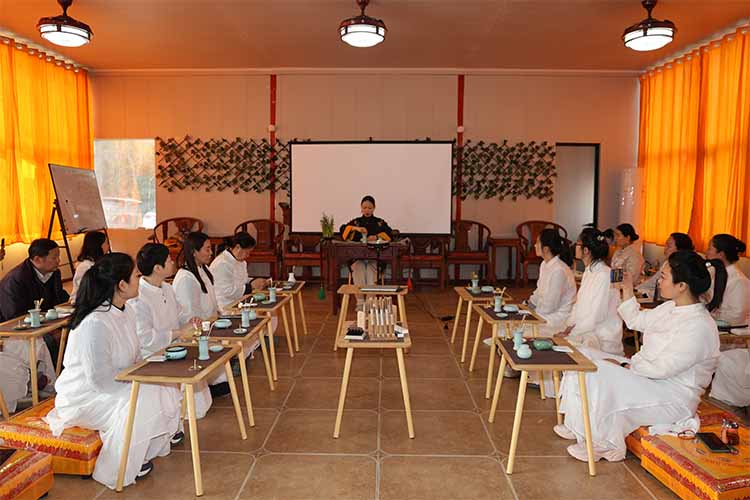
For travel agencies, retreat coordinators, and corporate wellness teams, the most workable application is a structured experience that gives participants a simple practice they can continue after the program. A cultural group might begin with an orientation to quiet conduct and daily rhythm, include a guided meditation session, add a mindful tea activity, and leave unstructured time for personal reflection. This format suits first-time visitors because it does not require prior religious study or advanced physical training. A team planning a longer cultural stay can also consider a temple stay to experience a contemplative setting directly. The authentic setting of Longmen Guanghua Temple is a stated part of Funzendo’s immersive temple experiences for international guests. The limit is operational: program duration, availability, group size, and booking requirements vary by retreat, training course, and itinerary. Buyers should confirm the current schedule and participant suitability before promoting a fixed program to clients. A quiet cultural format is not appropriate for guests who need emergency medical support, intensive psychological care, or guaranteed therapeutic results.
- Overseas travel groups: Use a light cultural wellness module when guests want meditation, tea, and temple-life context without a demanding practice schedule.
- Corporate wellbeing planners: Position quiet sitting, mindful listening, and tea rituals as reflective activities rather than stress treatment services.
- Individual beginners: Start with a short daily home routine before considering a scheduled retreat or training course.
- Experience designers: Build adequate transition time between activities so participants can rest, eat, and reflect without pressure.
Holistic Healing Price
No fixed public price should be assumed for a cultural wellness itinerary because the total depends on program type, reservation timing, participant count, accommodation needs, selected activities, local transport requirements, and the level of itinerary coordination requested. For buyers, the correct decision is to request a written scope before comparing offers. That scope should identify whether the request is for a temple stay, a meditation-focused retreat, traditional wellness training, tea culture activity, or a combined cultural program. It should also state what is included and what remains the buyer’s responsibility, such as travel arrangements, interpretation, meals, insurance, or personal spending. This approach fits small groups and individual bookings because Funzendo states that both are available, while exact requirements vary by program. It does not fit procurement teams seeking a universal per-person rate before dates and service scope are known. Avoid a common error: comparing two quotes that describe different levels of accommodation, facilitation, or activity access. A lower figure is not necessarily a like-for-like option.
| Cost review item | Question for the supplier | Why it affects comparison |
|---|---|---|
| Program format | Is the request a retreat, training course, temple stay, or cultural itinerary? | Each format may have different reservation requirements |
| Participant profile | Is the booking individual or small group? | Group size can affect planning and availability |
| Activity mix | Which meditation, tea, sound, or wellness sessions are requested? | Different activities require different arrangements |
| Accommodation scope | Is accommodation included in the requested program? | Temple-based experiences may have separate stay considerations |
| Travel coordination | Which transfers or local arrangements are expected? | Travel services should be clarified rather than assumed |
Holistic Healing User Guide for a Weekly Routine
Build a realistic weekly routine by choosing one small action in each area: sleep, movement, stress support, and professional care. For sleep, choose a consistent time to begin winding down and remove one avoidable source of stimulation before bed. For movement, select a gentle activity that can be repeated without special equipment, then stop if pain, dizziness, or unusual shortness of breath occurs. For stress support, set aside a quiet period for breath awareness, seated reflection, or a mindful tea ritual. For professional care, make a clear plan for what concerns require outside help, such as symptoms that persist, worsen, interfere with daily functioning, or feel unsafe. The desired result is not perfect calm. It is a routine that can be repeated without strain and reviewed honestly. This method fits beginners because it avoids extreme changes. It does not apply when someone is attempting to manage a serious medical or mental health concern alone. In that case, professional assessment takes priority over expanding self-care practices.
- Choose a baseline: Write down current sleep timing, movement habits, and the situations that create the most strain. This gives the routine a real starting point.
- Select one low-risk practice: Begin with quiet sitting, a short walk, a tea pause, or a regular wind-down habit. Do not begin every option at once.
- Set a practical cue: Attach the practice to an existing daily event, such as after breakfast or before preparing for bed. A cue makes repetition easier.
- Review the result: Ask whether the practice was realistic, whether it caused discomfort, and whether it interfered with work, care duties, or sleep.
- Adjust before adding more: Keep what is workable. Reduce or stop what creates distress, pressure, or physical discomfort. Seek professional advice where needed.
Common routine failures and recovery steps
- Failure: Treating meditation as a test of performance. Recovery: Return attention to posture and breathing without judging whether the session felt successful.
- Failure: Using wellness activities to delay medical consultation. Recovery: Set a written rule that concerning symptoms receive professional assessment.
- Failure: Planning a routine that depends on ideal free time. Recovery: Reduce the activity to a short and repeatable version connected to an existing habit.
- Failure: Selling a retreat as guaranteed transformation. Recovery: Describe the cultural setting, activity format, and participant responsibilities without outcome promises.
Holistic Healing Supplier
A suitable Holistic Healing supplier for cultural travel or wellness programming should be evaluated on clarity, cultural fit, booking practicality, and accurate boundaries rather than broad wellness promises. Funzendo is based at Longmen Guanghua Temple in Luoyang, China, and its available offerings include meditation retreats, temple stays, traditional wellness training, Buddhist cultural journeys, Chinese tea culture, Taoist wellness, and sound-focused experiences. Its distinctive format combines sound healing, meditation, and mindful tea rituals within one cultural wellness experience. This is useful for planners seeking a program that connects contemplative practice with Chinese cultural learning rather than a generic relaxation package. Buyers should provide intended travel dates, participant numbers, language needs, relevant mobility or dietary considerations, preferred cultural activities, and whether the request is individual or small-group based. This information supports an accurate availability check. It does not remove the need for travelers to arrange appropriate medical support, insurance, or clinician guidance where personal health circumstances require it. For training-oriented groups, chinese traditional culture training can help clarify the available educational direction before an itinerary is requested.
FAQ of This Routine
Can a wellness routine replace medical care? No. A personal routine may support rest, reflection, and healthier daily structure, but it should not replace medical assessment, prescribed treatment, emergency services, or qualified mental health support. A participant should seek appropriate professional help when symptoms are severe, new, persistent, worsening, or disruptive to normal life. How should a beginner choose between meditation, tea culture, and sound sessions? Choose the activity that feels most realistic to repeat and matches the purpose of the experience. Meditation suits guests seeking quiet attention practice. Tea culture suits groups interested in mindful cultural learning. Singing bowl sessions suit participants who prefer guided listening and relaxation. Can a travel organizer offer this as a corporate program? Yes, if the description remains accurate. Present it as a cultural wellness and reflective experience, state that availability varies, and avoid treatment claims, medical promises, or guarantees about stress outcomes.
If you are looking for a reliable wellness program supplier please contact us anytime to discuss current availability and request a quote.
===END===