Mastering Gongfu Tea Flavor Starts With the Right Leaf Ratio
Gongfu Tea brewers who have already learned the basic pouring sequence tend to hit the same wall. The first steep tastes clean and fragrant. The second turns sharp or bitter. By the fourth, the aroma has thinned out completely. This is rarely a problem with the leaves themselves — it is almost always a ratio problem. How much leaf you use against how much water, combined with water temperature and how long each infusion sits, decides whether a Gongfu tea session stays balanced across six or eight steeps or collapses after two. Understanding how these three variables interact is what separates consistent brewing from guesswork.
What Is Gongfu Tea?
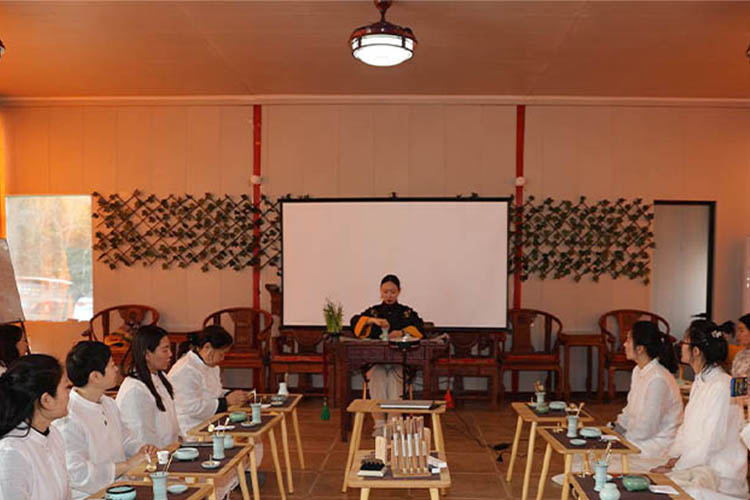
Gongfu Tea, sometimes written as gongfu cha, is a Chinese brewing method built around small vessels, short infusions, and repeated steeping of the same leaves. The word gongfu refers to skill developed through repetition, not a tea category — oolong, pu-erh, and white tea can all be prepared this way. At Longmen Guanghua Temple, this brewing method has been taught alongside meditation practice for over 10 years, blending traditional Chinese tea culture with Zen philosophy rather than treating it as a separate skill from mindfulness. In that setting, measuring leaf against water is approached the same way breath counting is approached in seated practice — a small, repeatable discipline that trains attention as much as taste.
How Leaf Ratio, Water Temperature and Infusion Time Interact
Three variables control every steep: the leaf-to-water ratio, the water temperature, and how long the leaves stay submerged. None of them work alone — adjusting one changes what the other two should be. A ratio that is too high for the tea type pulls out catechins and tannins faster than the sweeter compounds that carry aroma, which is why an over-packed vessel brewed too long tastes harsh almost immediately. A ratio that is too low produces a thin, watery cup no matter how long the steep runs, because there simply isn't enough leaf mass to extract flavor at a useful concentration.
Temperature changes how fast those compounds release. Hotter water pulls bitterness compounds out faster than aromatic oils, so delicate teas brewed near boiling often taste scorched on the first steep even when the ratio and timing are otherwise correct. Infusion time is the variable most people overcorrect. Adding ten extra seconds to fix a weak first steep usually produces an overly strong second steep, because this brewing style depends on shortening or lengthening each successive infusion by only a few seconds at a time, not by large jumps.
Mistake 1: Using a green-tea ratio (light leaf load) for oolong or pu-erh, which leaves the cup thin even after long steeps.
Mistake 2: Brewing delicate leaves at full boil, which extracts bitterness before aroma has a chance to release.
Mistake 3: Extending steep time steep-over-steep instead of adjusting it by small increments, which causes bitterness to build rather than flatten.
Mistake 4: Judging flavor only from the first infusion, then discarding leaves that would have opened up fully by the third or fourth steep.
| Parameter | What It Actually Controls | Typical Result If Set Wrong |
|---|---|---|
| Leaf-to-water ratio | Concentration of every extracted compound, including bitterness and aroma | Too high: harsh, bitter cup. Too low: thin, flavorless cup |
| Water temperature | Speed at which bitterness compounds release relative to aromatic oils | Too hot: scorched first steep. Too cool: flat, underdeveloped aroma |
| Infusion time | Balance of flavor across the second, third and later steeps | Too long: bitterness accumulates steep after steep. Too short: flavor disappears by steep three or four |
Leaf Ratio Guidelines by Tea Type
Ratios are not one-size-fits-all. Rolled oolongs expand significantly once wet, so a smaller gram measurement goes further than loose-leaf pu-erh of the same weight. Green tea needs both a lighter leaf load and a cooler pour, since its leaves are more delicate and bruise easily under high heat. The table below reflects general starting points used in traditional practice — guests adjust from there based on their own taste during a tea ceremony session.
| Tea Type | Leaf per 100ml | Water Temperature | First Steep Time |
|---|---|---|---|
| Rolled oolong | 5–7g | 90–95°C | 10–15 seconds |
| Pu-erh (loose or cake) | 5–8g | 95–100°C | 5–10 seconds after rinsing |
| Green tea | 2–3g | 75–85°C | 15–20 seconds |
| White tea | 3–5g | 85–90°C | 20–30 seconds |
These numbers are starting points, not fixed rules. Practitioners who experience a Chinese tea meditation practice typically spend their first session simply tasting the difference a half-gram shift makes, before moving on to timing adjustments.
What Makes the Funzendo Tea Practice Different
Tea instruction at Funzendo is built around more than one sense at a time. Sessions often combine the tea ritual with guided sound work, so guests can explore singing bowl sound healing between steeps rather than treating tea and sound as separate activities. This pairing reflects over 10 years of tea practice rooted in Zen philosophy rather than a generic hospitality tea service. Instruction takes place within the Longmen Guanghua Temple grounds, giving international guests an authentic setting rather than a staged demonstration room. Guests who want to pair the tea work with seated practice can also explore a deeper Buddhist meditation practice on the same visit, since the two disciplines are taught by overlapping instructors.
Where Gongfu Tea Training Fits Into a Program
Overseas tour operators building cultural itineraries use tea instruction as a half-day module inside longer retreat packages, often alongside incense work. Corporate wellness planners request it as a standalone session when a full multi-day retreat isn't feasible for a travel schedule. Individual bookings and small-group programs are both available, though group size and booking requirements vary by program and should be confirmed before finalizing an itinerary. Groups focused specifically on sensory and cultural immersion can combine incense and tea training into a single module, while groups wanting a broader cultural grounding typically pair tea instruction with a temple stay rather than booking it in isolation.
Pricing Factors for Tea Culture Training
Cost structure depends on three things: session length, group size, and whether tea instruction is booked as a standalone module or folded into a longer retreat or training course. Programs are available by schedule and reservation, and duration and availability vary by retreat, training course, and pilgrimage itinerary, so a quote for a half-day tea session will differ from one bundled into a multi-day cultural program. Smaller private groups generally cost more per person than larger group bookings, simply because instructor time and materials are divided across fewer participants. Operators planning recurring group trips should request pricing for their specific group size and season rather than relying on a generic rate, since seasonal demand at the temple affects scheduling availability.
Step-by-Step Guide for Consistent Steeps
Weigh the leaf rather than estimating by volume — rolled teas especially vary in density.
Pre-warm the vessel and cups with hot water, then discard that water before adding leaves.
Rinse compressed or aged teas (pu-erh) with a quick 5-second pour, then discard the rinse.
Start the first true steep at the shorter end of the recommended time range.
Taste before pouring for guests — adjust the next steep by only 3–5 seconds based on that taste.
Keep temperature consistent steep to steep; reheating water between pours prevents gradual over-extraction.
Expect flavor to shift across infusions — a well-set ratio should still taste pleasant by the fifth or sixth steep, not just the first.
Funzendo as Your Tea Culture Supplier
Funzendo operates tea instruction, meditation, and temple-based programs from Longmen Guanghua Temple in Luoyang, with instructors experienced in Chinese Esoteric Buddhist heritage as well as tea practice. Programs cover everything from a short tea session folded into a Zen temple stay in China to a standalone module within a broader traditional Chinese wellness itinerary. Overseas agencies and corporate wellness coordinators working on culturally specific itineraries can request session structures, group size limits, and current scheduling directly before confirming dates. If you are looking for a reliable Gongfu Tea supplier please contact us anytime to get the latest quote.
FAQ of Gongfu Tea
How many steeps should one leaf-to-water setup realistically support?
A correctly set ratio for oolong or pu-erh typically supports six to eight pleasant infusions, with flavor gradually softening rather than dropping off sharply. If the cup turns bitter or flat by the third steep, the ratio, temperature, or timing needs adjusting — it isn't a sign the leaves are exhausted. Green tea generally supports fewer infusions, usually three to four, because its leaves are more delicate and extract faster overall.
Can the same ratio be used across different tea types in one group session?
No. A rat