Daxingshan Temple and the Intellectual World of Tang Buddhism
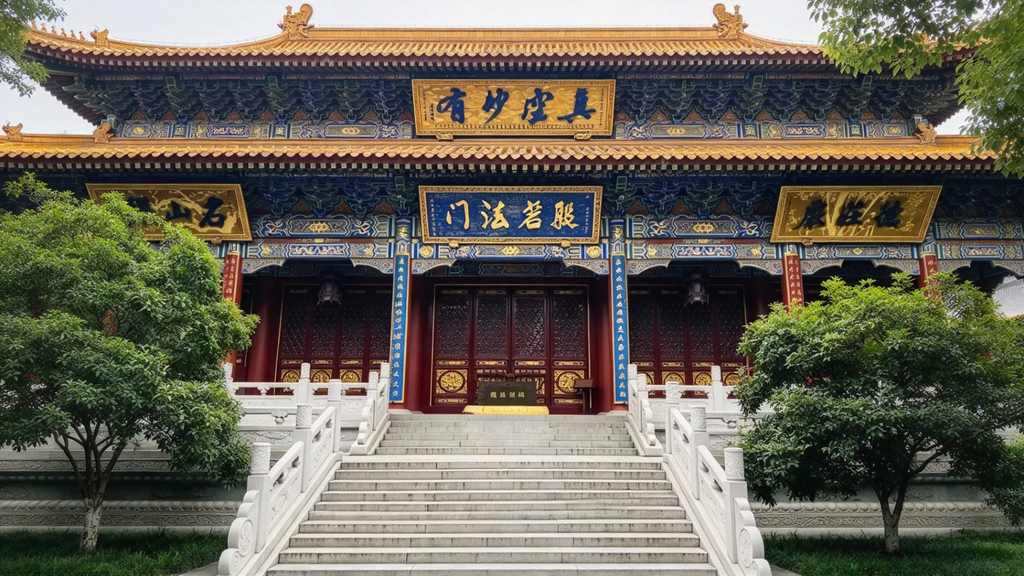
The history of Chinese Buddhism cannot be understood through famous statues and monumental temples alone. Behind the visible heritage lies a network of teachers, translated scriptures, ritual traditions, and exchanges between China and other parts of Asia.
Daxingshan Temple (大兴善寺) in Xi'an occupies an important place in this history. During the Tang Dynasty, the temple became one of Chang'an's major centers for the study and transmission of Esoteric Buddhism. It was associated with influential Buddhist masters whose teachings helped shape the development of Chinese Buddhist ritual traditions.
For travelers interested in Chinese Buddhist pilgrimage, Daxingshan Temple offers a way to explore Buddhism as a living intellectual and spiritual tradition rather than simply a collection of historical monuments.
Why Daxingshan Temple Became Important During the Tang Dynasty
Daxingshan Temple traces its origins to the Western Jin period, several centuries before the Tang Dynasty. Its historical significance grew considerably when Chang'an became a major political and cultural center.
During the Tang era, the city attracted Buddhist monks, scholars, translators, and pilgrims from different regions. Religious knowledge traveled along the same broad networks that connected China with Central Asia and the Indian subcontinent.
Daxingshan Temple became closely associated with the translation and teaching of Esoteric Buddhist texts. Alongside other important religious institutions in Chang'an, it contributed to the development of Buddhist scholarship and practice during a period of extensive cultural exchange.
The temple's importance therefore extends beyond its physical structures. Its history reflects the movement of ideas between languages, regions, and generations of Buddhist practitioners.
The Three Great Masters of Tang Esoteric Buddhism
The development of Chinese Esoteric Buddhism during the Tang Dynasty is closely associated with three influential Indian Buddhist masters: Śubhākarasiṃha, Vajrabodhi, and Amoghavajra.
Their work contributed to the translation, interpretation, and transmission of Buddhist teachings in China. Esoteric Buddhist traditions placed particular emphasis on ritual procedures, mantras, mudras, mandalas, and forms of practice transmitted through qualified teachers.
These methods were part of a structured religious tradition, not simply a collection of techniques detached from their original context.
Daxingshan Temple was one of the important settings in which this broader intellectual and ritual history unfolded. Studying the temple allows visitors to understand how Buddhist teachings were adapted, organized, and transmitted within the cultural environment of Tang China.
From Chang'an to Luoyang: Understanding the Tangmi Connection
For travelers exploring Chinese Esoteric Buddhism, Xi'an and Luoyang offer complementary historical perspectives.
Chang'an, present-day Xi'an, was the Tang imperial capital and an important center of Buddhist translation and teaching. Luoyang also played a significant role in the history of Chinese Buddhism, particularly through its connections with the transmission of Esoteric Buddhist teachings and the activities of influential monks.
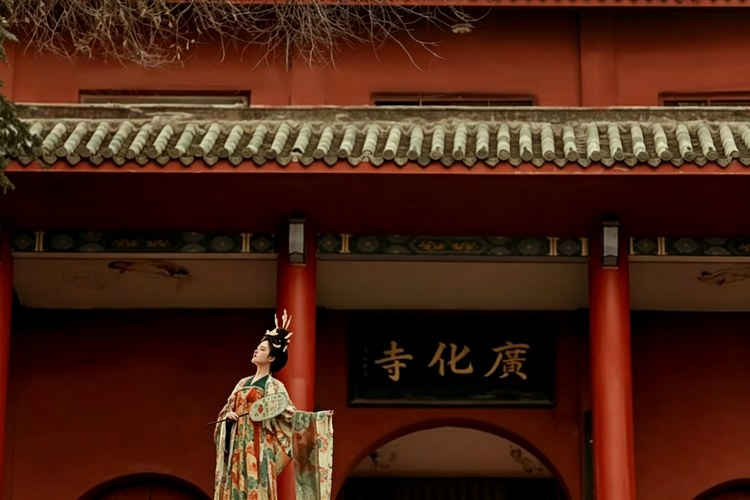
At Longmen Guanghua Temple in Luoyang, the historical legacy associated with Śubhākarasiṃha provides another perspective on this tradition. The temple's connection with the monk's memorial and stupa heritage helps place Luoyang within the wider story of Tangmi, the Chinese tradition of Esoteric Buddhism.
Exploring these locations together offers a richer understanding of how Buddhist traditions developed across different religious centers. Rather than treating each temple as an isolated destination, a pilgrimage can connect their histories through the people, teachings, and cultural exchanges that linked them.
This relationship is particularly meaningful for visitors interested in tracing the historical roots of Tang Esoteric Buddhism through actual places associated with its development.
Why Daxingshan Temple Matters Beyond Architecture
Traditional temple architecture can reveal much about religious life, but historical context gives the buildings a deeper meaning.
At Daxingshan Temple, the significance of the site lies in its association with Buddhist scholarship, scripture translation, and the development of Esoteric Buddhist traditions. The temple represents a period when religious institutions served as places of study and cultural exchange as well as spaces for worship.
Its history also illustrates the importance of transmission. Buddhist teachings did not remain fixed in a single location. They traveled through the work of teachers, translators, students, and pilgrims, acquiring new expressions as they entered different cultural settings.
For modern visitors, understanding this process changes the experience of visiting a temple. The destination becomes an opportunity to investigate the historical relationships behind the site rather than merely photograph its halls and courtyards.
A More Meaningful Approach to Buddhist Pilgrimage
A Buddhist pilgrimage focused on cultural understanding begins with questions rather than a checklist of attractions.
Who studied at this temple? Which teachings were transmitted here? How did the institution relate to other Buddhist centers? What historical connections can still be traced between the places visited along the journey?
These questions help transform a route into a coherent learning experience.
At Daxingshan Temple, visitors can explore the history of Tang Buddhism and its connections with the wider Asian Buddhist world. When the journey continues to Luoyang, the historical context expands to include Longmen's Buddhist heritage and the traditions associated with Chinese Esoteric Buddhism.
Such an approach is particularly suitable for international visitors who want to understand the cultural foundations of Chinese Buddhism through specific historical destinations.
Exploring Tangmi Heritage with Funzendo
Funzendo's Tang Esoteric Buddhism pilgrimage concept connects Luoyang and Xi'an through the historical heritage of Chinese Buddhism. The route provides a cultural framework for exploring the religious history of these two important cities and understanding their distinct contributions to the development of Tangmi.
For visitors interested in a deeper experience, a well-planned pilgrimage can combine historical interpretation, visits to significant Buddhist sites, and opportunities to learn about the traditions associated with the places visited.
The emphasis is not simply on traveling between destinations. It is on understanding why these locations matter, how their histories intersect, and what they reveal about the development of Chinese Buddhism.
Travelers can explore Funzendo's Tang Esoteric Buddhism pilgrimage program to learn more about the route between Luoyang and Xi'an and its connections with China's Buddhist heritage.
Following the Historical Path of Tang Esoteric Buddhism
Daxingshan Temple offers an important starting point for understanding the history of Tang Esoteric Buddhism. Its association with Buddhist masters, scripture translation, and religious scholarship reveals the depth of the cultural exchanges that shaped Chinese Buddhism.
When considered alongside Luoyang's Buddhist heritage, the temple becomes part of a broader historical landscape that connects cities, teachers, and traditions.
For anyone interested in Chinese Buddhist pilgrimage, following these connections offers a more rewarding way to explore the past: not simply by visiting ancient sites, but by understanding the teachings and cultural relationships that gave those places their enduring significance.
Explore Tang Esoteric Buddhism and Chinese Buddhist Heritage with Funzendo
Discover the historical connections between Luoyang and Xi'an through a cultural pilgrimage exploring China's Buddhist heritage.