Feng Shui Workshop China: Discover the Wisdom Behind Traditional Chinese Spaces
For international visitors interested in Chinese culture, Feng Shui offers a fascinating starting point for understanding how traditional Chinese society interpreted the relationship between people, architecture, and the natural environment. Although the subject is often introduced through modern interior design, furniture placement, or popular discussions about good fortune, its historical background is considerably broader, encompassing landscape observation, traditional cosmology, philosophical ideas, and the organization of residential and sacred spaces. A Feng Shui workshop China experience can help visitors explore these cultural connections in greater depth, allowing them to understand not only what Feng Shui means, but also why it has remained part of Chinese cultural conversations for centuries.
In China, the arrangement of a traditional building was rarely considered entirely separate from its surroundings. Mountains, rivers, pathways, courtyards, entrances, and the orientation of a structure could all influence how a place was understood and used. Different historical traditions interpreted these elements in different ways, combining practical observations about the environment with philosophical and cosmological beliefs. For modern learners, this combination provides an opportunity to explore how people in earlier periods made sense of the world around them and how those ideas continue to influence contemporary understandings of Chinese heritage.
Located within Longmen Guanghua Temple in Luoyang, Henan Province, Funzendo provides a cultural setting in which visitors can encounter aspects of traditional Chinese philosophy and Buddhist heritage. The historic Longmen area, known for its remarkable religious and artistic legacy, offers a valuable context for considering the relationship between landscape, architecture, and cultural meaning. Through a broader exploration of Chinese traditions, international visitors can approach Feng Shui as part of a complex intellectual heritage rather than as a collection of isolated rules or fashionable design recommendations.
Understanding the Historical Roots of Chinese Feng Shui
The term Feng Shui literally translates as wind and water, two natural forces that have long shaped human settlement and everyday life. Historically, related practices developed through observations of terrain, water sources, wind exposure, sunlight, and the suitability of particular locations for buildings and communities. Over time, these observations became connected with wider systems of Chinese thought that attempted to interpret relationships between the natural world, human activity, and the changing patterns of the universe. The resulting traditions were diverse, evolving across different periods and regions rather than remaining fixed within a single universally accepted system.
The historical development of Feng Shui is closely associated with traditional Chinese cosmology and the idea that the world can be understood through relationships, movement, and transformation. Instead of treating a building as an isolated object, practitioners of different Feng Shui traditions examined its position in relation to the surrounding landscape and interpreted the arrangement of space through established conceptual frameworks. These frameworks could involve the direction of a structure, the character of nearby landforms, the presence of water, and symbolic associations between particular locations and broader cosmological ideas.
Understanding this background is especially important for international visitors because modern descriptions of Feng Shui sometimes simplify the tradition into a short list of rules about mirrors, entrances, colours, or decorative objects. Although some contemporary applications focus on these practical details, the historical subject cannot be fully understood without examining its cultural and philosophical foundations. Learning about the different schools of Feng Shui also helps visitors recognize that historical interpretations may vary and that a responsible introduction should explain these differences rather than presenting every traditional recommendation as an absolute rule.
For anyone searching for a Feng Shui workshop in China, this historical perspective creates a more meaningful foundation for further study. It encourages participants to ask how traditional ideas developed, what kinds of observations informed them, and how their interpretations changed as Chinese society, architecture, and intellectual traditions evolved. These questions make Feng Shui a subject of cultural discovery that can appeal to travellers, design professionals, students of Chinese philosophy, and anyone curious about the relationship between people and their surroundings.
Yin and Yang: Exploring the Concept of Balance
One of the most recognizable concepts in traditional Chinese philosophy is Yin and Yang, a framework used to describe complementary aspects of change and relationship. Rather than representing two completely separate or permanently opposing forces, Yin and Yang are understood through their interaction, with the character of each depending partly on its relationship with the other. Traditional examples often include light and shade, activity and stillness, warmth and coolness, or openness and enclosure, although the meaning of these comparisons depends on the context in which they are used.
Within different Feng Shui traditions, the language of Yin and Yang provides a way to discuss how a location or environment is interpreted in relation to its surroundings. A space that is entirely exposed may offer a different experience from one that is enclosed by walls or vegetation, while a busy entrance may create a different atmosphere from a quiet courtyard. These observations can be considered alongside traditional interpretations of balance without assuming that a single arrangement will be suitable for every building, household, or cultural context.
International visitors can also connect this concept with practical questions about the way spaces are designed and experienced. How does natural light enter a room throughout the day? Does a pathway provide a clear and comfortable route through a building? Are there appropriate places for social interaction as well as privacy and quiet? Although these questions do not prove the metaphysical claims sometimes associated with Feng Shui, they demonstrate how careful observation of an environment can encourage more thoughtful decisions about architecture and everyday living.
A cultural introduction to Yin and Yang therefore offers more than an opportunity to memorize familiar symbols. It provides a way to examine a traditional Chinese framework for interpreting relationships, while inviting participants to compare historical concepts with their own experiences of homes, workplaces, gardens, and public spaces. Approached in this manner, the subject becomes accessible to beginners without losing the philosophical depth that makes it culturally significant.
The Five Elements and Their Place in Traditional Chinese Thought
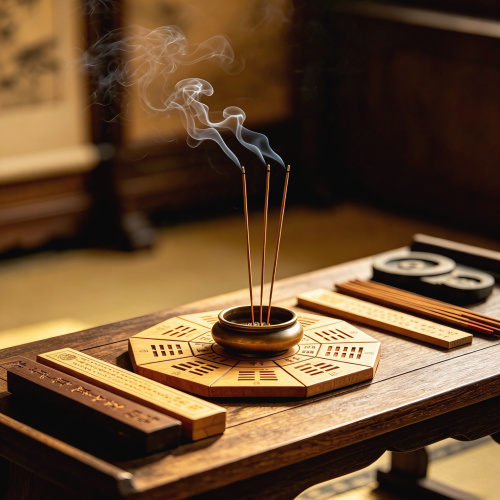
Another important concept encountered in the study of Chinese Feng Shui is the Five Elements, commonly translated as Wood, Fire, Earth, Metal, and Water. In traditional Chinese thought, these terms refer to a framework for understanding relationships, processes, and patterns of transformation rather than simply identifying five physical materials. Different philosophical and practical systems use the Five Elements in different ways, and their interpretation within Feng Shui should be understood according to the particular tradition being discussed.
The Five Elements are associated with a wider range of traditional Chinese practices, including cosmological interpretation, classical medicine, calendar systems, and certain approaches to understanding the built environment. Their significance lies partly in the relationships established among them, which traditional frameworks describe through cycles of generation and restraint. These relationships were used to interpret patterns of interaction and change, providing a structured vocabulary through which different aspects of the world could be discussed.
When learning about the Five Elements in a cultural workshop, participants can explore how symbolic systems organize complex ideas and why these systems became influential in Chinese intellectual history. For example, the association of particular qualities with the elements can reveal how traditional thinkers developed ways of classifying relationships between natural phenomena, seasonal patterns, directions, and other aspects of the world. Such associations should be understood within their historical and cultural setting instead of being treated as universal scientific categories.
This approach is particularly useful for visitors who are new to Chinese philosophy, because it encourages them to distinguish between learning about a traditional belief system and accepting every claim made within it as an established fact. The value of cultural study lies in understanding how ideas were developed, interpreted, and transmitted, while remaining open to questions about their meaning and relevance in contemporary life.
Why Landscape and Architecture Matter in Feng Shui
Traditional Chinese architecture provides an especially engaging way to explore the relationship between Feng Shui and the wider cultural environment. In many historic settings, buildings were positioned in relation to hills, waterways, roads, courtyards, and other surrounding features, reflecting a combination of environmental conditions, social organization, religious purposes, construction methods, and cultural beliefs. Feng Shui traditions offered particular ways of interpreting these relationships, although it would be misleading to assume that every architectural decision in historical China was determined by Feng Shui alone.
The arrangement of a traditional courtyard, for example, can influence how visitors enter a building, move between different areas, and experience the transition from an open exterior to a more enclosed interior. The relationship between a main building and its surrounding structures may establish a visual hierarchy, while pathways and entrances help organize movement through the site. These features can be examined as architectural decisions in their own right, while traditional Feng Shui interpretations provide an additional cultural perspective on the meaning of orientation, enclosure, and spatial relationships.
The same principle applies to the relationship between buildings and natural landscapes. A hillside, a line of trees, a stream, or an open view can affect the physical character of a location and influence how people experience it. Traditional Chinese interpretations sometimes assigned symbolic significance to these geographical features, while practical considerations such as drainage, access, shelter, and sunlight also played important roles in settlement and construction. Studying these factors together helps visitors develop a more balanced understanding of the relationship between historical beliefs and the practical demands of the built environment.
For international learners with an interest in architecture, interior design, landscape planning, or heritage conservation, this subject provides a particularly rewarding opportunity to connect cultural history with visible examples. Instead of treating Feng Shui as a mysterious set of instructions, participants can examine how traditional ideas about place developed alongside the practical experience of constructing and inhabiting buildings. This perspective makes the subject relevant to contemporary discussions about design while preserving its distinctive Chinese cultural context.
What to Expect from a Feng Shui Workshop in China
A well-designed cultural workshop should introduce the foundations of its subject, explain important terminology, and give participants a clear understanding of what they are learning. For beginners, this may involve an introduction to the historical background of Feng Shui, an explanation of selected concepts from traditional Chinese philosophy, and a discussion of how different schools interpret the relationship between a building and its surroundings. Practical examples can make these ideas easier to follow, particularly when participants have an opportunity to examine photographs, architectural layouts, traditional courtyards, or other relevant cultural materials.
The exact content of a Feng Shui workshop depends on the instructor, the educational objectives, and the tradition being introduced. Some programmes focus primarily on cultural history and philosophical interpretation, while others may explore traditional approaches to residential layouts, landscape observation, or the relationship between Feng Shui and Bazi. Because these subjects involve different methods and bodies of knowledge, visitors should check the actual programme before booking rather than assuming that every workshop covers the same material or offers the same level of practical instruction.
For travellers visiting China for the first time, the opportunity to learn in a cultural environment can make the subject more memorable. Discussions about traditional architecture may become easier to understand when connected with actual buildings, while explanations of Chinese philosophical concepts can provide a useful framework for interpreting the places encountered during a journey. A workshop can also encourage visitors to ask questions that might not arise during a conventional sightseeing tour, particularly when their interests extend beyond famous landmarks to the ideas and practices that shaped Chinese cultural history.
Participants do not need to possess advanced knowledge of Chinese philosophy before attending an introductory workshop. A willingness to observe, ask questions, and consider unfamiliar perspectives is often a more useful starting point than trying to memorize large numbers of technical terms. Visitors with professional interests in architecture, design, cultural studies, or traditional Chinese thought may wish to explore more specialized material, while beginners can focus on the fundamental concepts and historical context before deciding whether to continue their studies.
Luoyang: A Meaningful Setting for Traditional Chinese Cultural Learning
Luoyang has played an important role in Chinese history and is particularly well known for its long association with imperial culture, Buddhist heritage, and traditional artistic achievements. The city's historic environment offers visitors opportunities to explore how religious institutions, settlements, architecture, and natural geography have developed in relation to one another. For people interested in Feng Shui and traditional Chinese philosophy, this broader context helps connect abstract cultural ideas with the physical places in which Chinese traditions have been preserved, interpreted, and passed between generations.
The Longmen area is especially significant because of its Buddhist heritage and its distinctive setting among hills and the Yi River landscape. The Longmen Grottoes preserve an extraordinary collection of Buddhist art, while nearby historic and religious sites provide additional perspectives on the cultural development of the region. Exploring these places encourages visitors to consider how the selection of locations, the arrangement of religious spaces, artistic expression, and the surrounding environment have contributed to the meaning of historic sites.
Longmen Guanghua Temple, where Funzendo is located, forms part of this wider cultural setting. Its Buddhist history provides a distinct perspective on the relationship between sacred architecture, religious practice, and landscape. Although Buddhist spatial traditions should not be confused with Feng Shui itself, examining them within the same regional context can help international visitors appreciate the diversity of ideas that have shaped Chinese approaches to place, orientation, and the organization of meaningful spaces.
For visitors seeking more than a conventional sightseeing itinerary, the combination of historic architecture, religious heritage, and traditional cultural learning can create a more thoughtful experience of Luoyang. Rather than approaching each site as an isolated attraction, travellers can consider how different traditions emerged within the same broader cultural landscape and how their meanings have changed across different historical periods. This approach is particularly valuable for anyone who wants to develop a deeper understanding of Chinese heritage through direct observation and informed interpretation.
Connecting Feng Shui with Bazi and Other Chinese Traditions
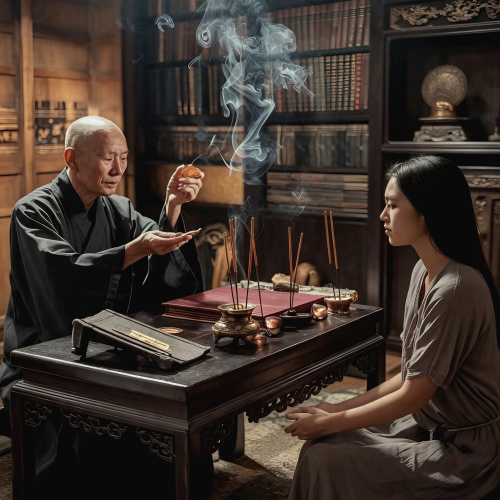
People who begin studying Feng Shui often become curious about Bazi, another traditional Chinese system that interprets birth information through a framework associated with the Heavenly Stems, Earthly Branches, and Five Elements. Although Feng Shui and Bazi may share certain conceptual foundations, they are not interchangeable disciplines. Feng Shui traditionally focuses on the interpretation of environments and spatial relationships, while Bazi is concerned with the interpretation of birth data within a traditional cosmological framework. Understanding this distinction helps learners appreciate how related concepts can be used for different purposes within Chinese cultural traditions.
Exploring these subjects together can reveal how traditional Chinese intellectual systems developed interconnected vocabularies for discussing time, place, change, and human experience. At the same time, each system has its own methods, historical interpretations, and specialist terminology, which means that a broad cultural introduction should not be confused with professional training in every discipline. Visitors who wish to explore Feng Shui and Bazi in greater depth should seek clear information about the specific topics, teaching methods, and experience of the instructor.
The broader study of Chinese culture also includes traditions that approach everyday life from different perspectives. Chinese tea culture, for example, combines craftsmanship, etiquette, preparation, and social interaction, while traditional incense culture preserves knowledge of materials, fragrance, and ritual practices. Buddhist heritage provides another avenue for exploring the relationship between religious ideas, artistic expression, and the organization of sacred environments. Although these traditions should not be collapsed into one system, learning about them together can give visitors a richer appreciation of the diversity of Chinese cultural knowledge.
Readers interested in exploring these subjects through Funzendo can visit the Funzendo official website to learn more about its cultural setting and available experiences. The activities section offers another starting point for discovering cultural programmes and learning opportunities connected with traditional Chinese practices.
How to Choose a Meaningful Feng Shui Learning Experience
When choosing a Feng Shui workshop in China, visitors should begin by identifying their main learning objectives. Someone interested in Chinese history may prefer a programme that emphasizes historical development, traditional terminology, and philosophical background, while an architect or interior designer may wish to explore the interpretation of spatial arrangements and landscape relationships in greater detail. Travellers who are primarily interested in cultural immersion may value the opportunity to learn within a historic setting and connect the subject with other aspects of Chinese heritage.
It is also important to understand the format of the programme before making arrangements. Prospective participants should check whether instruction is available in English, which topics are included, how much time is devoted to discussion or practical observation, and whether the experience is intended for beginners or more advanced learners. These details help establish realistic expectations and make it easier to compare programmes according to their educational content rather than relying on general promises about personal or professional outcomes.
A credible cultural learning experience should explain traditional concepts clearly while distinguishing historical beliefs from claims that have not been established through modern scientific evidence. Feng Shui has considerable cultural and historical significance, but it should not be represented as a guaranteed way to attract wealth, prevent illness, secure relationships, or predict future events. Visitors benefit most when the subject is presented with intellectual honesty, cultural sensitivity, and a willingness to discuss the different interpretations that exist within the tradition.
Travellers should also consider the wider setting in which their learning takes place. Visiting a historic temple or traditional architectural site requires respect for local customs, religious activities, and conservation requirements. Appropriate clothing, considerate photography, and awareness of restricted areas help protect the character of the places being visited. These simple considerations contribute to a more rewarding cultural experience by allowing visitors to engage with historic environments without treating them merely as backdrops for personal exploration.
Discover the Cultural Significance of Feng Shui with Funzendo
A search for a Feng Shui workshop China may begin with a practical interest in home design, traditional philosophy, or the meaning of familiar Chinese symbols, but it can develop into a much wider exploration of Chinese history and cultural thought. By studying the relationships between landscape, architecture, cosmology, and everyday life, international visitors can gain a more nuanced understanding of a tradition that has evolved through centuries of interpretation and practice. The experience can also open the door to other areas of Chinese heritage, from Buddhist architecture and tea culture to traditional craftsmanship and philosophical literature.
At Funzendo, within Longmen Guanghua Temple in Luoyang, visitors can explore a cultural environment shaped by Buddhist history and the wider heritage of the Longmen area. This setting offers a valuable starting point for considering how Chinese traditions have developed within particular landscapes and historical communities. Whether your interest lies in architecture, cultural studies, traditional Chinese philosophy, or a more personal desire to understand unfamiliar ways of interpreting space, approaching the subject with curiosity and an open mind can make the learning experience both informative and memorable.
If you are planning a cultural visit to Luoyang, explore the Funzendo website and review the available cultural activities for information about relevant experiences. For specific enquiries about Feng Shui or Feng Shui and Bazi instruction, contact Funzendo directly to confirm current availability, programme content, language arrangements, and suitable dates before making travel plans.