From Listening to Practice: What Singing Bowl Practitioner Training Actually Teaches
A singing bowl can produce a sound that seems simple at first: a gentle strike, a sustained tone, and a vibration that gradually fades into silence. Yet learning to work with singing bowls involves much more than knowing how to make them ring.
For someone attending a sound bath, the experience may be primarily about listening and relaxation. For someone learning to use singing bowls, the questions are different. How should the bowl be played? How can different sounds be controlled? How should a session be organized? What should a practitioner understand before guiding another person through a sound-based experience?
These questions mark the difference between enjoying a singing bowl session and developing practical skills in singing bowl practice.
In recent years, singing bowls have attracted interest from meditation teachers, yoga instructors, wellness practitioners, and people exploring traditional sound practices. However, meaningful learning requires more than purchasing a bowl and experimenting with it independently. It involves technique, attentive listening, structured practice, communication, and an understanding of the context in which sound is used.
This guide explains the main learning areas involved in singing bowl practitioner training, what beginners can expect from a structured course, and how practical experience can help develop a more thoughtful approach to sound meditation.
1. Enjoying a Sound Bath Is Different from Learning to Use a Singing Bowl
A sound bath and a singing bowl training course may involve the same instruments, but they serve different purposes.
During a sound bath, participants generally listen to sounds produced by a practitioner. The experience may include periods of quiet, sustained tones, and an environment designed to encourage relaxation and focused attention.
In a training environment, the learner takes a more active role. Instead of simply receiving sound, participants learn how to produce it, control the playing process, observe the results, and understand how to organize a session.
The distinction can be understood through several practical differences:
Listening versus producing: A participant listens to the sound, while a learner practices creating and controlling it.
Experience versus technique: A sound bath focuses on the participant's experience, while training introduces the practical methods behind the experience.
Participation versus facilitation: A participant follows the session, while a practitioner learns how to guide an organized sound-based activity.
Enjoyment versus development: Listening can be appreciated immediately, while practical skills require repetition, feedback, and continued learning.
Neither experience is more valuable in every situation. They simply have different objectives. Someone who wants to relax may prefer a guided sound meditation, while someone interested in learning the instrument may benefit from structured training.
2. Understanding the Instrument Before Practicing
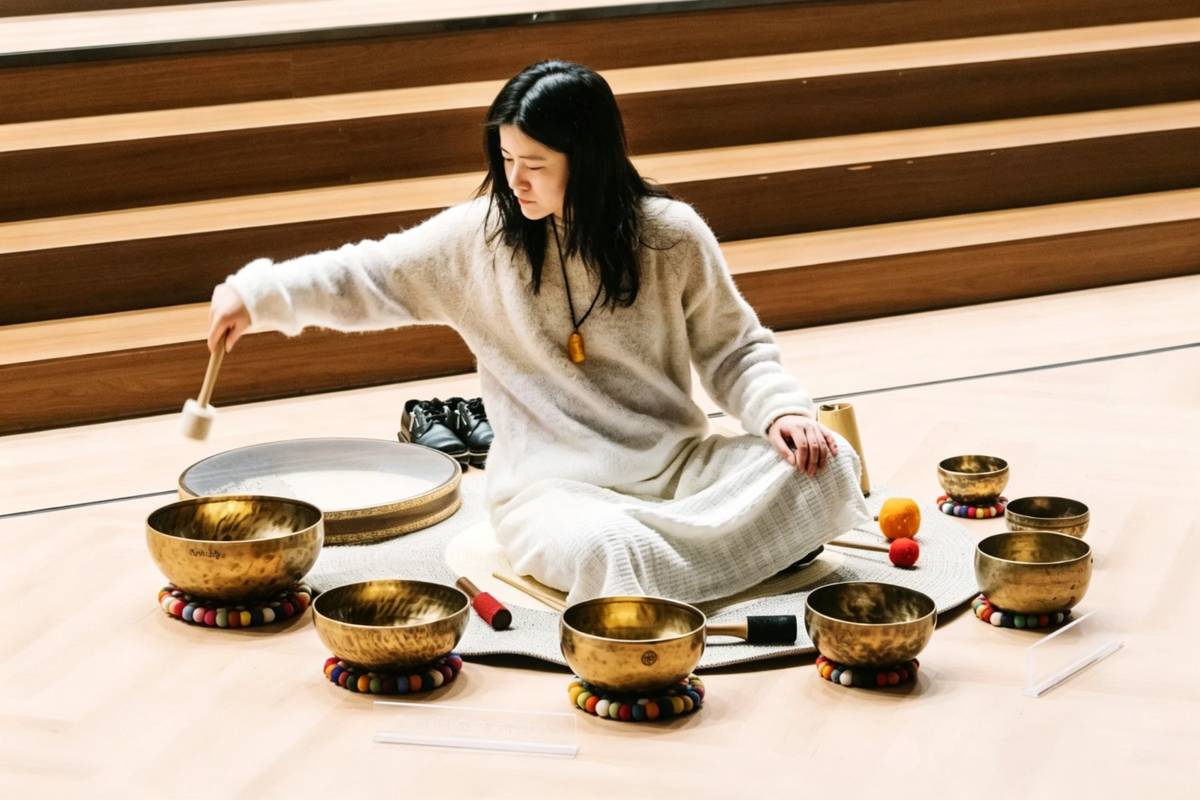
Before learning more advanced playing methods, beginners need to become familiar with the instrument itself.
Singing bowls are commonly made from metal and produce sustained tones when struck or played through contact with a suitable mallet. Their sound varies according to factors such as the bowl's size, shape, material, construction, and playing technique.
Two bowls that look similar may produce noticeably different sounds. One may have a brighter tone, while another may sound deeper or produce a different pattern of vibration.
Learning to Observe Sound Differences
A useful first exercise is to listen carefully to several bowls without trying to judge which one is better.
Notice the beginning of each sound, its development, and the way it gradually fades. Pay attention to whether the tone feels bright, deep, clear, soft, or complex.
This kind of listening helps learners become more familiar with the characteristics of different instruments. It also encourages a more deliberate approach to selecting and using a bowl.
Understanding the Relationship Between the Bowl and the Mallet
The mallet is not simply an accessory. Its material, size, and contact with the bowl influence the sound that is produced.
Different playing approaches can create different acoustic results. A controlled strike may produce a clear initial tone, while a continuous movement around the bowl's rim can create a sustained sound.
Learning to recognize these differences provides the foundation for more consistent practice.
3. Basic Singing Bowl Playing Techniques
Practical technique is one of the central parts of singing bowl training. Beginners need to understand how to hold the instrument, position the mallet, and control their movements.
Striking Technique
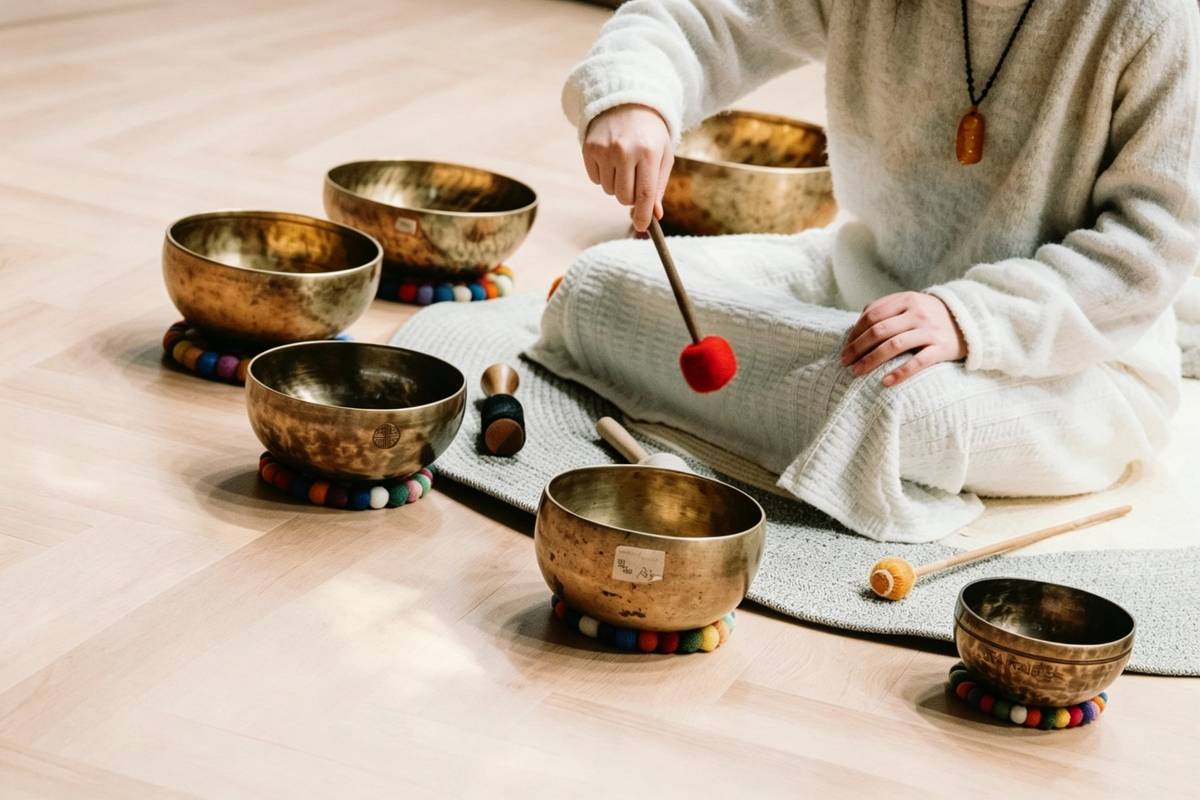
Striking is one of the most accessible ways to produce sound. The practitioner uses a mallet to make controlled contact with the bowl, creating an initial tone that gradually develops and fades.
Important points include:
Holding the mallet comfortably and securely.
Making controlled contact rather than hitting the bowl with excessive force.
Observing how the strength and position of contact affect the resulting sound.
Allowing the tone to develop instead of immediately producing another strike.
Beginners often focus too much on producing a loud sound. In practice, control and consistency are more useful starting points than volume.
Rimming Technique
Rimming involves moving a suitable mallet around the rim or outer edge of the bowl while maintaining controlled contact. When performed correctly, this movement can create a sustained, continuous sound.
This technique generally requires more coordination than a simple strike. The practitioner needs to maintain an appropriate angle, pressure, and speed while keeping the movement relatively steady.
If the movement becomes inconsistent, the sound may become uneven or stop altogether. Repeated practice helps learners develop a better sense of the relationship between hand movement and sound production.
Developing Consistency
Producing a sound once is not the same as being able to reproduce it reliably. A useful practice routine involves repeating the same technique and observing whether the results remain consistent.
Instead of trying to master several techniques at once, beginners can focus on one movement, listen to the result, and make small adjustments.
4. Sound Awareness: Learning to Listen Beyond the First Tone
Producing sound is only one part of the learning process. A practitioner also needs to develop the ability to listen carefully.
When a singing bowl is played, the sound changes over time. It begins with an initial attack, develops into a sustained tone, and eventually fades. Depending on the instrument and technique, the sound may contain several audible qualities rather than one simple note.
Training in sound awareness encourages learners to notice these changes instead of treating every strike as an isolated event.
Listening to the Beginning, Middle, and End
Try listening to a single strike from beginning to end.
Beginning: Notice the initial contact and the character of the first sound.
Middle: Observe how the tone develops and whether its character remains stable.
Ending: Listen as the sound gradually becomes quieter and disappears.
This simple exercise develops patience and attention. It also helps practitioners avoid unnecessary playing when a previous sound is still developing.
Understanding Sound in a Group Setting
When several bowls are used in a group session, the practitioner must consider how different sounds interact. Playing several instruments without a clear structure can create an experience that feels crowded rather than balanced.
Learning to leave space between sounds is therefore just as important as learning how to produce them.
5. Combining Singing Bowl Practice with Meditation and Breathing
Singing bowl practice is often introduced alongside meditation and mindful breathing. These elements can complement one another when used thoughtfully.
Sound can provide a point of attention during a meditation session. Participants may listen to the changing tone, notice the silence between sounds, or return their attention to breathing when the sound fades.
The purpose is not to force a particular emotional or physical response. Rather, sound and breathing can be used as simple elements of a guided experience.
Sound Meditation
In sound meditation, participants are invited to listen with attention rather than treating the sound as background music.
A practitioner may introduce a sound, allow time for listening, and leave periods of silence between tones. The pace should suit the purpose of the session and the needs of the participants.
Breath Awareness
Breathing awareness can provide a simple structure for a sound-based session. Participants may notice their natural breathing while listening, without being asked to force or hold the breath.
For practitioners, the important skill is learning how to combine sound and breathing awareness without making the session unnecessarily complicated.
Creating Space for Silence
Silence is not an empty part of a sound session. It gives participants time to notice what remains after a tone has faded.
Learning when not to play is therefore an important part of developing a thoughtful approach to sound meditation.
6. How to Structure a Singing Bowl Session
Someone learning to guide a sound-based activity needs to understand more than the instruments. A session also requires preparation, communication, an appropriate sequence, and a clear ending.
A basic session structure may include the following elements. The exact format should be adapted to the setting and the purpose of the activity.
Before the Session
Prepare the instruments and arrange the space. Check that participants have enough room and that the environment is suitable for listening.
It is also important to explain what participants can expect. Some people may be unfamiliar with singing bowls or may prefer to observe before taking part.
During the Session
Introduce the sound gradually and avoid unnecessary changes in volume or intensity. Give participants time to listen and become familiar with the experience.
Clear communication matters. Participants should understand that they can adjust their position, open their eyes, or stop participating if they feel uncomfortable.
At the End
Allow the final sounds to fade naturally. Give participants a moment before inviting them to return their attention to the room.
A brief opportunity to share observations can help participants describe their experience without suggesting that everyone should feel the same thing.
7. Practitioner Skills Include Communication and Responsibility
Learning to play a singing bowl does not automatically mean someone is ready to guide a group. Practical facilitation involves interpersonal skills and an awareness of professional boundaries.
Listening to Participants
People respond differently to sound. Some may enjoy sustained tones, while others may find certain sounds uncomfortable or overwhelming.
A responsible practitioner should listen to participants, explain the activity clearly, and avoid assuming that one approach suits everyone.
Creating a Comfortable Environment
The room, seating arrangement, sound level, and length of the activity can all influence the experience. A well-organized session considers these practical details before the first bowl is played.
Understanding Professional Boundaries
Singing bowl sessions may be offered as relaxation, meditation, or wellness activities. They should not be presented as a replacement for medical diagnosis or treatment.
Practitioners should avoid promising cures, guaranteed results, or specific medical outcomes. Clear communication about the nature and limitations of a session helps establish appropriate expectations.
For anyone planning to offer sound-related services, this distinction is especially important. Practical skill, honest communication, and respect for participants are all part of responsible practice.
8. What a Five-Day Singing Bowl Training Program Can Cover
A structured course can help beginners move from basic familiarity with the instrument toward more organized practical work. The five-day Singing Bowl Healing Practitioner Training at Funzendo in Luoyang provides one example of this learning progression.
According to the program's published schedule, the training is organized around five stages:
Day 1 — Introduction and Foundation
The first day introduces singing bowl practice, basic sound vibration concepts, fundamental playing techniques, and preparation for relaxation and meditation activities.
The aim is to establish a starting point before moving into more detailed practice.
Day 2 — Singing Bowl Techniques
The second day focuses on different playing methods, developing sound awareness, and practicing sound meditation techniques.
This stage gives participants more time to explore how their movements influence the sounds they produce.
Day 3 — Sound Healing Applications
The third day introduces individual practice, group sound meditation methods, and the combination of sound with breath awareness.
Participants also explore how to create an environment suitable for a peaceful sound-based experience.
Day 4 — Practitioner Skills Development
The fourth day focuses on session procedures, sound application methods, and communication with participants.
This is an important transition from practicing an instrument independently toward understanding how to organize and guide a complete activity.
Day 5 — Integration and Practice Completion
The final day brings together the techniques and methods introduced during the course. Participants practice a complete session, review their learning, and receive guidance on possible next steps.
The program states that participants who successfully complete the five-day training receive a certificate of completion. This should be understood as the program's own completion certificate, not automatically as a government-issued professional license or a universally recognized clinical qualification.
9. Who May Benefit from Singing Bowl Practitioner Training?
A structured introduction to singing bowl practice can be relevant to several groups of learners.
Wellness Practitioners
People already working in wellness settings may be interested in learning how sound-based activities can be incorporated into their existing services, within an appropriate professional scope.
Meditation and Yoga Teachers
Teachers who already guide meditation or yoga sessions may wish to explore sound as an additional element in their classes. Training can introduce basic playing methods and ways to organize sound meditation activities.
People Interested in Traditional Sound Practices
Some learners are interested in singing bowls for personal exploration rather than professional use. A structured course can provide a more organized introduction than learning entirely through trial and error.
Beginners
Previous professional experience is not necessarily required for an introductory course. Beginners can start with instrument familiarity, basic techniques, and guided practice before exploring more complex applications.
10. Learning Singing Bowl Practice in a Cultural Setting in Luoyang
Learning a traditional or contemporary wellness practice can also involve exploring the environment in which the learning takes place.
Funzendo is located at Longmen Guanghua Temple in Luoyang, Henan Province. Its published training program combines singing bowl practice with meditation and traditional wellness learning in a temple setting.
For international participants, this offers an opportunity to learn a practical skill while experiencing a cultural environment in China. The training page also lists accommodation, meals, and other facilities as part of its program information. Participants should confirm the current arrangements and availability directly before booking.
Those interested in the wider range of learning options can also explore Funzendo's Training programs and Meditation & Healing programs.
For visitors who would first like to experience sound meditation rather than undertake practitioner training, the Meditation page provides information about Funzendo's meditation experiences.
Conclusion: The Value of Learning Beyond the Sound
A singing bowl may be easy to hear, but learning to use it thoughtfully takes time. The process involves understanding the instrument, developing controlled playing techniques, listening carefully, combining sound with meditation, and learning how to organize an appropriate session.
For beginners, the most useful starting point is not trying to produce the loudest or longest sound. It is learning to control a simple movement, observe the result, and repeat the technique with greater consistency.
For those interested in guiding others, the learning process extends further. Communication, participant comfort, session structure, and professional boundaries are just as important as the instrument itself.
From the first strike to a complete guided session, singing bowl practice develops through attentive listening and repeated experience. A structured training program can provide a foundation for that journey, while continued practice helps learners develop their own understanding of sound and its role in mindful activities.
To learn more about the five-day course, visit the Singing Bowl Healing Practitioner Training page or contact Funzendo for current dates, availability, and booking details.