How to Create a Meditation Space at Home: A Practical Beginner’s Guide
You do not need a spare room, expensive furniture, a collection of incense, or a perfectly designed interior to begin meditating at home. What you need is a small, comfortable place where you can pause, settle your attention, and return to yourself for a few minutes each day.
A meditation space can be as simple as a cushion beside a window, a quiet corner of your bedroom, or a small area that you temporarily arrange before practice. Its purpose is not to impress visitors or look like a traditional Buddhist temple. It is to make meditation easier to begin and easier to maintain.
In traditional Chinese Zen practice, the environment can support a person's approach to meditation. A clean space, a steady posture, and a quiet atmosphere help create the conditions for attentive practice. You can bring some of this simplicity into your own home without trying to recreate an entire temple.
In this guide, you will learn how to choose the right location, what to include, what to avoid, and how to establish a simple meditation routine. Whether you live in a small apartment or a busy family home, you can create a personal meditation corner in less than an hour.
1. Why Create a Dedicated Meditation Space?
One of the biggest challenges for beginners is not necessarily learning how to meditate. It is making time to practice regularly. Work, family responsibilities, household tasks, and digital distractions can easily interrupt even the best intentions.
A dedicated meditation space helps reduce the effort required to get started. When you return to the same place regularly, it can gradually become associated with quiet attention and personal reflection. Instead of deciding where to sit every time, you already have a familiar place waiting for you.
There are several practical reasons to create a consistent meditation corner:
A clear starting point: A familiar location makes it easier to begin your practice without spending time preparing a new setting every day.
Fewer distractions: Keeping your meditation area separate from work materials, entertainment, and household clutter can help you settle more comfortably.
A sense of personal routine: Returning to the same place can make meditation feel like a regular part of daily life rather than an occasional activity.
Space for reflection: A quiet corner gives you an opportunity to pause, observe your breathing, and notice how you feel before returning to daily responsibilities.
It is important to remember that the space itself does not produce meditation or guarantee a particular result. Its value lies in supporting a consistent practice. A simple, well-used corner is more useful than an elaborate room that you rarely enter.
2. Choose the Right Location in Your Home
Before buying anything, look around your home and identify a place where you can sit without being disturbed too often. You do not need complete silence, but a relatively peaceful environment will make it easier to focus.
Consider the following when choosing your location:
Find a low-traffic area: A bedroom corner, a quiet section of the living room, or an unused area beside a bookshelf can work well.
Consider natural light: A place near a window can feel pleasant during the day. If you usually meditate in the evening, choose an area where you can use soft lighting.
Reduce background noise: Avoid sitting directly beside a television, kitchen entrance, or frequently used hallway whenever possible.
Check the temperature: Choose a location that is not too cold, too hot, or exposed to uncomfortable drafts.
Allow enough room to sit comfortably: You only need enough floor space for your body, cushion, or chair.
If you share your home with family members or roommates, it may help to agree on a regular practice time. You can also use a small cushion or another simple object to indicate that the space is temporarily being used for meditation.
3. What Should You Include in a Home Meditation Space?
For beginners, a meditation space should be functional rather than decorative. Start with a few basic items and add nothing unless it genuinely supports your practice.
A Comfortable Cushion or Chair
Your sitting position should allow you to remain reasonably comfortable and alert. A meditation cushion can help raise the hips and make a floor-seated posture easier to maintain. A folded blanket or firm cushion is an inexpensive alternative.
You do not have to sit cross-legged. If sitting on the floor causes discomfort, use a stable chair with your feet resting on the ground. The aim is to find a posture that allows you to remain upright without unnecessary strain.
One Simple Focal Object
Some people like to place a small plant, a stone, a piece of natural wood, or a meaningful object in their meditation corner. In a traditional Chinese Buddhist setting, a simple image or object may also serve as a reminder of one's intention to practice.
However, there is no requirement to create an altar or collect religious objects. One meaningful item is enough. Avoid turning the area into a display shelf filled with decorations that compete for your attention.
Gentle Lighting
Natural daylight is often a good choice. For evening practice, use a soft lamp rather than harsh overhead lighting if that feels more comfortable. Candles are optional, not essential. If you use one, keep it away from curtains, paper, and other flammable materials, and never leave it unattended.
A Timer and a Simple Practice Plan
A timer can help you avoid repeatedly checking the clock. You can use your phone, but switch on do-not-disturb mode and place it face down or slightly away from your sitting area.
Decide on a realistic practice duration before you begin. Three to five minutes is a reasonable starting point for someone new to meditation. You can gradually increase the time as your routine becomes more familiar.
4. What to Leave Out of Your Meditation Corner
A peaceful meditation area is defined as much by what you remove as by what you add. Too many objects, strong fragrances, or unnecessary equipment can make a small space feel busy.
Digital distractions: Keep televisions, tablets, laptops, and notifications away from your immediate practice area.
Unrelated household items: Avoid using your meditation corner as a temporary storage area for laundry, shopping bags, or paperwork.
Strong fragrances: Incense and essential oils are not necessary for meditation. If you choose to use fragrance, keep it mild and consider the comfort and sensitivities of other people in your home.
Too many decorations: A large collection of ornaments can turn the space into a visual distraction rather than a place for quiet attention.
Uncomfortable furniture: Avoid choosing a seat simply because it looks attractive. Comfort and a stable posture are more important.
Traditional Chinese Zen environments often emphasize simplicity and attentiveness. This does not mean every meditation space must look like a monastery. It means that the surroundings should support the purpose of the practice rather than compete with it.
5. A Simple Guide to Setting Up Your Meditation Space
You can prepare a basic meditation corner in approximately 15 to 30 minutes. The following steps offer a practical starting point.
| Step | What to Do | Suggested Time |
|---|---|---|
| 1 | Choose a quiet corner and remove unrelated items. | 5 minutes |
| 2 | Place a cushion, folded blanket, or stable chair. | 3 minutes |
| 3 | Add one simple object if it helps create a calm atmosphere. | 2 minutes |
| 4 | Adjust the lighting and check the temperature. | 3 minutes |
| 5 | Set a timer and complete your first short meditation. | 3–5 minutes |
Once the space is ready, sit down for a few minutes rather than waiting until everything looks perfect. Notice your posture, allow your shoulders to relax, and bring your attention gently to your breathing. This first session gives the space a practical purpose from the beginning.
6. Bring the Simplicity of Chinese Zen into Your Home
Creating a meditation space at home can also be an opportunity to learn from traditional Chinese approaches to quiet practice. In Chinese Zen Buddhism, meditation is not simply about finding a comfortable place or escaping everyday responsibilities. It is a way of cultivating awareness through posture, attention, and repeated practice.
At a traditional temple, the rhythm of daily life may include morning activities, periods of seated meditation, communal meals, quiet work, and time for reflection. These elements create a structured environment in which practice becomes part of ordinary life rather than an activity separated from it.
You do not need to reproduce a monastery schedule at home. Instead, you can introduce a few simple principles:
Simplicity: Keep your surroundings uncluttered and avoid unnecessary equipment.
Regularity: Choose a realistic time and return to your practice consistently.
Awareness: Pay attention to your posture, breathing, and present experience without forcing yourself to feel a certain way.
Respect for daily activities: Let the patience and attentiveness developed during meditation influence ordinary activities such as drinking tea, walking, or preparing a meal.
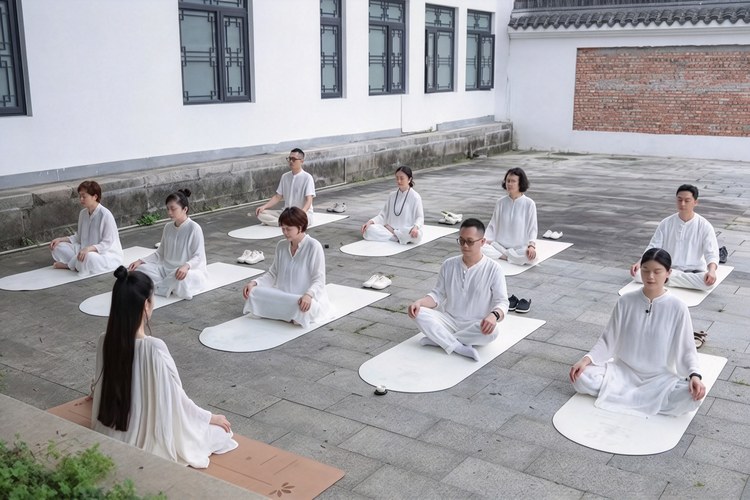
For people interested in learning more about Chinese Buddhist traditions, exploring the relationship between meditation and temple life can provide a deeper cultural perspective. You can learn more about the setting and traditions behind this approach through Funzendo's Buddhist temple stay experience.
7. How to Start Meditating in Your New Space
Once your meditation corner is ready, the next step is to develop a routine that is easy to maintain. Beginners often make the mistake of starting with a long session or expecting their minds to become completely quiet. Neither is necessary.
Try This Five-Minute Beginner Practice
Minute 1 – Settle your posture. Sit on your cushion or chair. Keep your back naturally upright, relax your shoulders, and rest your hands comfortably.
Minutes 2–3 – Notice your breathing. Allow your breathing to remain natural. Notice the movement of the breath without trying to control it. When your attention wanders, gently return to the sensation of breathing.
Minute 4 – Notice your body. Become aware of your feet, hands, shoulders, and face. If you notice unnecessary tension, allow the body to soften where possible.
Minute 5 – Finish without rushing. Take a moment to notice how you feel. Open your eyes if they were closed, move gently, and return to your next activity.
Your mind may wander many times during this exercise. That is a normal part of learning to meditate. The practice is not about forcing thoughts to disappear, but about noticing when attention has moved away and gently bringing it back.
Choose a Style That Matches Your Needs
Seated meditation is only one way to develop awareness. Some beginners find it easier to begin with guided instruction, gentle movement, or a structured group session.
For example, traditional Chinese practices may include seated meditation, standing meditation known as Zhan Zhuang, and mindful movement. Each has a different approach, and the most suitable starting point depends on your interests, physical comfort, and experience.
Explore the different approaches in Funzendo's meditation programmes to learn more about traditional practice and available learning experiences.
8. How to Maintain Your Meditation Habit
Setting up a meditation corner is relatively easy. Returning to it regularly is where the real work begins. Rather than relying on motivation alone, make your practice fit naturally into your existing routine.
Connect Meditation to an Existing Habit
Choose a time that already has a natural place in your day. You might meditate after brushing your teeth in the morning, before breakfast, or shortly before going to bed. Linking meditation to an established activity can make it easier to remember.
Start Small and Build Gradually
Three minutes of regular practice can be a more realistic beginning than planning a 30-minute session that becomes difficult to maintain. When a short session feels familiar, extend it by a few minutes if you wish.
Keep the Space Consistent
You do not need to rearrange your meditation corner every week. Keep the cushion and basic items in the same place so that preparing for practice remains simple.
Do Not Judge Every Session
Some days you may feel settled; on other days, your mind may be busy. Avoid measuring the value of meditation only by whether you feel relaxed afterwards. Consistency, patience, and the willingness to return to practice are more useful long-term measures.
9. From a Home Meditation Corner to a Traditional Temple Experience
A home meditation space offers convenience and privacy. You can practice before work, during a quiet afternoon, or at the end of a busy day. Over time, it can become a familiar part of your personal routine.
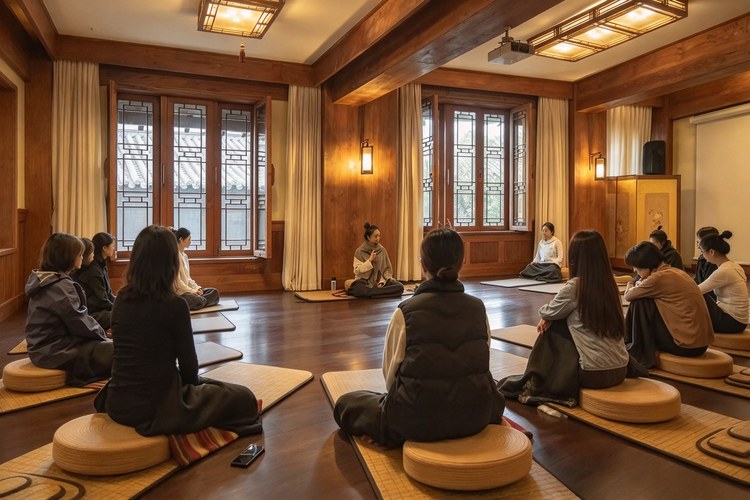
However, learning meditation in a traditional temple offers a different kind of experience. The architecture, daily rhythm, shared practice, and cultural setting provide a context that is difficult to reproduce in a private home.
At Longmen Guanghua Temple in Luoyang, China, Funzendo introduces visitors to a setting connected with the history of Chinese Esoteric Buddhism, also known as Tangmi. Rather than treating a temple visit as sightseeing alone, a temple stay offers an opportunity to experience a more structured rhythm of temple life and learn about Chinese Buddhist culture.
For beginners who want to explore meditation beyond independent home practice, a guided programme can provide instruction, a regular schedule, and the opportunity to learn alongside others. Depending on the programme, participants may explore seated meditation, traditional Chinese cultural practices, and the atmosphere of a historic Buddhist temple.
You can discover the available temple stay experiences or explore a broader Zen pilgrimage in China. These experiences are suitable for people interested in understanding the cultural setting of Buddhist practice as well as developing their own approach to meditation.
10. Frequently Asked Questions
Do I need a separate room for meditation?
No. A small corner of a bedroom or living room is enough. The most important things are that you can sit comfortably and that the area is reasonably free from interruptions.
Should my meditation space face a particular direction?
There is no universal direction that every beginner must follow. Choose an orientation that feels comfortable and allows you to sit without unnecessary distractions. If you are following a particular religious or meditation tradition, you can ask your teacher about its specific customs.
Do I need a Buddhist altar or religious objects?
No. Meditation does not require a Buddhist altar, statue, or religious decoration. You can create a simple practice area with only a cushion and a quiet environment. Add meaningful objects only if they support your intention.
Is incense necessary when meditating?
No. Incense is part of certain traditional Chinese Buddhist and cultural settings, but it is not essential to meditation. If you choose to use it, ensure good ventilation and consider allergies, respiratory sensitivities, fire safety, and the preferences of people sharing your home.
How long should beginners meditate each day?
Start with three to five minutes if you are new to meditation. As you become familiar with the practice, you can gradually increase the duration. A manageable routine is generally easier to maintain than an ambitious schedule.
Can I meditate on a chair instead of sitting on the floor?
Yes. A stable chair is a suitable option if sitting on the floor is uncomfortable. Keep your feet supported and your posture naturally upright. Meditation should not require you to endure unnecessary physical discomfort.
What should I do if I cannot concentrate?
It is normal for thoughts to arise during meditation. When you notice that your attention has wandered, gently return to your breathing or another chosen point of attention. You do not need to criticize yourself or force your mind to become completely empty.
Begin with a Small Space, and Let Your Practice Grow
A meaningful meditation space does not depend on its size, decoration, or price. It begins with a simple decision to create a little room in your daily life for quiet attention. A cushion beside a window, a comfortable chair, and a few minutes of regular practice can be enough to establish that beginning.
As your interest develops, you may wish to explore the cultural roots of Chinese meditation and experience practice in a traditional temple environment. At Funzendo, based at Longmen Guanghua Temple in Luoyang, you can explore meditation learning, temple stays, and cultural experiences connected with Chinese Buddhist traditions.
Explore our meditation programmes, discover a Buddhist temple stay, or learn about our Zen pilgrimage experiences. If you are unsure which experience is appropriate for your interests and schedule, contact the Funzendo team for more information.
A quiet corner can be the beginning. A consistent practice is what gives it meaning.