How to Read a Chinese Buddhist Statue: Symbols, Mudras and Their Meanings
Walk into a traditional Chinese Buddhist temple and you may find yourself surrounded by statues of different sizes, expressions, and postures. Some figures sit peacefully on lotus thrones, others stand with one hand raised, while a few hold flowers, vases, swords, or sacred objects. At first glance, these images may appear similar, especially if you are visiting a Buddhist temple for the first time.
Yet Chinese Buddhist statues are not simply decorative religious objects. Their postures, hand gestures, clothing, and accompanying symbols communicate different teachings, qualities, and stories. A raised palm may express fearlessness, a lotus may represent purity, and a figure holding a willow branch may be associated with the compassion of Guanyin.
Learning to recognize these visual details can transform a temple visit. Instead of seeing a hall filled with unfamiliar figures, you begin to understand the ideas behind the images and the cultural traditions that shaped them.
This beginner's guide introduces the main features of Chinese Buddhist statues, including their body positions, mudras (symbolic hand gestures), symbolic objects, and the differences between Buddhas, Bodhisattvas, and guardian figures. No previous knowledge of Buddhism is required.
1. Start with the Figure: Buddha, Bodhisattva or Guardian?
Before examining a statue's hands or objects, begin by considering what kind of figure you are looking at. Chinese Buddhist temples contain different categories of sacred images, and each has its own religious and symbolic role.
Buddhas: Symbols of Awakening
A Buddha represents one who has attained awakening. In Chinese Buddhist temples, the historical Buddha, Shakyamuni (Sakyamuni), is one of the most widely recognized figures. He is commonly represented seated in meditation or teaching, although artistic styles and depictions vary across regions and historical periods.
Some halls contain three Buddha figures, often representing different aspects of Buddhist cosmology or the Buddhas of the past, present, and future. Other arrangements may feature Shakyamuni together with Amitabha Buddha and the Medicine Buddha. The exact grouping depends on the temple's tradition and the purpose of the hall.
Bodhisattvas: The Path of Compassion and Wisdom
Bodhisattvas are important figures in Mahayana Buddhism. They are associated with the aspiration to attain Buddhahood for the benefit of all sentient beings. In Chinese Buddhist art, Bodhisattvas are often represented with elaborate crowns, ornaments, robes, and symbolic objects.
Some of the most familiar figures include:
Guanyin (Avalokiteshvara): Associated with compassion and attentive responsiveness to the suffering of living beings.
Manjushri (Wenshu): Represents wisdom and is often depicted with a sword or a sacred text.
Samantabhadra (Puxian): Associated with practice, vows, and the embodiment of Buddhist virtues. The elephant is a common symbol in depictions of this Bodhisattva.
Ksitigarbha (Dizang): Associated with vows to help beings in difficult circumstances and often depicted holding a monk's staff and a wish-fulfilling jewel.
Guardian Figures: Protectors of Buddhist Teachings
Not every Buddhist statue has a peaceful facial expression. Temple entrances and halls may contain figures with powerful bodies, prominent features, weapons, or fierce expressions. These are often guardian figures, whose symbolic role is to protect Buddhist teachings and sacred spaces.
The Four Heavenly Kings, for example, are commonly represented as armed guardians. Their appearance may seem intimidating to visitors unfamiliar with Buddhist iconography, but their fierce expressions are part of a visual language associated with protection and the overcoming of obstacles.
Recognizing these three broad categories is a useful first step. It also helps prevent a common mistake: assuming that every statue in a Buddhist hall represents a Buddha.
2. What the Body Position Can Tell You
The posture of a Buddhist statue provides an important clue to its meaning. Although posture alone cannot identify every figure, it often suggests the type of activity or spiritual quality being represented.
| Posture | Common Symbolic Meaning | Figures or Contexts |
|---|---|---|
| Seated with crossed legs | Meditation, teaching, stability, or contemplation | Shakyamuni Buddha and many Bodhisattvas |
| Standing | Readiness, presence, guidance, or compassionate activity | Guanyin and other Bodhisattvas |
| Walking | Movement, teaching, or the Buddha's presence in the world | Some depictions of the Buddha |
| Reclining | The Buddha's final passing into Parinirvana | Reclining Buddha images |
| Seated on a lotus throne | Spiritual purity and awakened presence | Buddhas and Bodhisattvas |
The Seated Buddha
The seated Buddha is among the most recognizable images in Buddhist art. The figure may sit with legs crossed, often in a lotus posture, with the hands arranged in a symbolic gesture. Depending on the hand position, the statue may emphasize meditation, teaching, or another aspect of the Buddha's life and teachings.
A seated figure should not automatically be interpreted as meditating. The hands, the surrounding figures, and the arrangement of the hall provide additional information.
The Standing Bodhisattva
Standing Bodhisattva figures are common in Chinese Buddhist sculpture. They may be shown holding a symbolic object, raising a hand, or standing in a relaxed posture. These details can suggest compassion, guidance, or a particular Bodhisattva's identity.
Guanyin, for example, appears in many forms throughout Chinese Buddhist art. Some images show the Bodhisattva standing on a lotus, while others depict a seated figure or a more elaborate manifestation with multiple arms.
The Reclining Buddha
A reclining Buddha is often associated with the Buddha's entry into Parinirvana, the final passing beyond the cycle of birth and death. The figure is generally shown lying on one side, with the head supported by one hand or resting on a cushion.
This image is not simply a representation of sleep. It refers to an important event in Buddhist tradition and is often treated as a subject of reflection on impermanence and the nature of existence.
3. Understanding Buddhist Mudras: The Language of the Hands
One of the most useful ways to interpret a Buddhist statue is to examine its hands. In Buddhist art, a mudra is a symbolic gesture, usually formed by the hands and fingers. Mudras communicate different meanings and are closely connected with the Buddha's teachings, meditation, and important moments in Buddhist narratives.
Some gestures are widely recognized across Buddhist artistic traditions, although their appearance and interpretation can vary according to the figure and historical context.
1. Bhumisparsha Mudra – The Earth-Touching Gesture
In this gesture, the Buddha's right hand reaches downward, with the fingers touching or pointing toward the ground. The left hand usually rests in the lap.
The gesture refers to the story of the Buddha's enlightenment, when the earth is called upon to witness his awakening. It symbolizes determination, the overcoming of obstacles, and the moment of enlightenment.
When you see a seated Buddha with one hand touching the ground, this is an important clue that the statue may represent Shakyamuni at the moment of awakening.
2. Dharmachakra Mudra – The Turning of the Wheel of Dharma
This gesture is associated with the Buddha's teaching. The hands are generally held in front of the chest, with the fingers arranged in a symbolic position representing the turning of the Wheel of Dharma.
It refers to the Buddha's first teaching at Deer Park, traditionally understood as the beginning of the transmission of his teachings. In Buddhist art, this mudra emphasizes wisdom, instruction, and the sharing of the Dharma.
3. Abhaya Mudra – The Gesture of Fearlessness
In the Abhaya Mudra, one hand is raised, usually with the palm facing outward and the fingers pointing upward. The gesture is commonly interpreted as a symbol of fearlessness, reassurance, and protection.
For visitors, it is one of the easiest mudras to recognize. An open palm facing forward may communicate the idea of calming fear and offering reassurance.
4. Varada Mudra – The Gesture of Giving
The Varada Mudra is generally formed with one hand lowered, the palm facing outward, and the fingers extending downward. It is associated with generosity, compassion, and the granting of blessings.
This gesture may appear in depictions of Buddhas and Bodhisattvas. When examining a statue, notice whether the lowered hand is empty or holding another object, as this may add further meaning.
5. Dhyana Mudra – The Gesture of Meditation
The Dhyana Mudra is commonly represented with both hands resting in the lap, palms facing upward. One hand is placed over the other, and the thumbs may touch lightly.
It is associated with meditation, concentration, and inner stillness. This gesture is particularly common in seated Buddha images.
These five gestures provide a useful starting vocabulary. However, mudras should not be interpreted in isolation. A statue's identity may also depend on its clothing, accompanying figures, symbolic objects, inscriptions, and the artistic conventions of the temple.
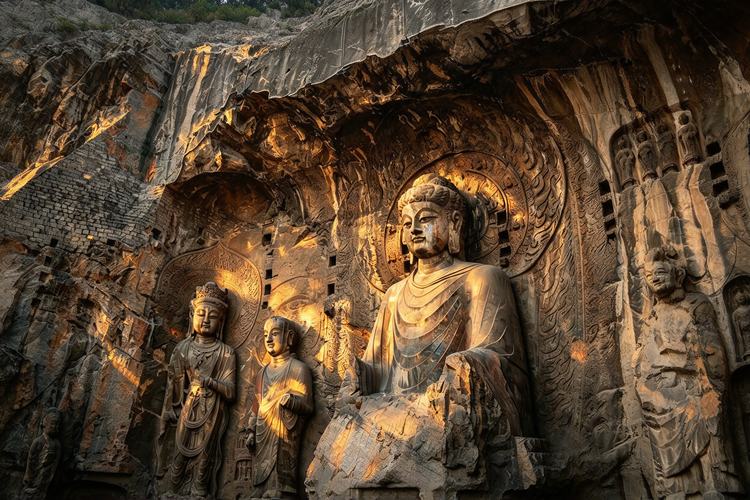
4. The Objects Held by Buddhist Figures Have Their Own Meanings
In Chinese Buddhist sculpture, the objects held by a figure are often just as important as its posture and hand gestures. These objects can help identify a particular Bodhisattva or indicate the qualities associated with that figure.
The Lotus Flower
The lotus is one of the most recognizable symbols in Buddhist art. It grows from muddy water while producing a flower that rises above the surface. This natural image is used to represent purity, spiritual development, and the possibility of awakening amid the difficulties of ordinary life.
Buddhas and Bodhisattvas are frequently shown seated or standing on lotus thrones. The lotus is therefore not merely a decorative element. It expresses an important Buddhist idea through a familiar natural form.
The Willow Branch and Water Vase
Some representations of Guanyin include a willow branch and a water vase. These objects are associated with the Bodhisattva's compassionate qualities and are often interpreted in relation to cleansing, relief, and the offering of blessings.
Not every image of Guanyin includes both objects. The Bodhisattva has many forms in Chinese Buddhist art, and the details can vary significantly between sculptures and paintings.
The Sword of Wisdom
Manjushri is frequently depicted holding a sword, often raised in one hand. This is known as the Sword of Wisdom. It symbolizes the ability of wisdom to cut through ignorance and confusion.
In some depictions, Manjushri also holds a Buddhist text, representing the teachings and the cultivation of wisdom. The lion is another familiar symbol associated with this Bodhisattva.
The Monk's Staff and Wish-Fulfilling Jewel
Ksitigarbha, known in Chinese as Dizang, is often represented holding a monk's staff and a wish-fulfilling jewel. The staff is associated with the figure's monastic identity and vows, while the jewel is connected with spiritual illumination and the fulfillment of wishes in Buddhist symbolism.
The Elephant
The elephant is an important symbol in Buddhist art and is especially associated with Samantabhadra. Depictions of this Bodhisattva riding a white elephant are widely recognized in Chinese Buddhist temples.
The elephant can suggest strength, steadiness, and the ability to carry out spiritual practice. It also helps visitors identify the figure when examining a group of Bodhisattva statues.
Halos, Crowns and Decorative Ornaments
A halo or mandorla surrounding a statue's head or body is a common feature in Buddhist art. It symbolizes spiritual radiance and sacred presence. Crowns, necklaces, and other ornaments are often found on Bodhisattva figures and can distinguish them visually from the simpler monastic robes commonly associated with depictions of Shakyamuni Buddha.
These visual details are useful clues, but they are not a universal identification system. Different regions and periods developed their own artistic styles, so the same figure may appear in several different forms.
5. Why Do Some Buddhist Statues Look Peaceful While Others Look Fierce?
Visitors sometimes find it surprising that a Buddhist temple can contain both serene figures and statues with powerful, intimidating expressions. The difference is not accidental. Buddhist art uses a wide range of visual styles to communicate different spiritual qualities and symbolic roles.
Peaceful Expressions
Calm faces, lowered eyes, and balanced postures often express contemplation, wisdom, compassion, and inner stability. These features encourage a sense of quiet attention and are frequently found in depictions of Buddhas and Bodhisattvas.
Fierce Expressions
Guardian figures and certain protective deities may have wide eyes, strong facial expressions, muscular bodies, or weapons. These images are associated with protecting the Dharma and overcoming harmful forces or obstacles.
A fierce appearance does not necessarily indicate anger in the ordinary sense. In Buddhist iconography, it can represent powerful protective energy and the determination to confront obstacles.
When looking at these statues, consider their location in the temple. A figure placed near an entrance may have a protective role, while a central Buddha image in the main hall may represent the focus of worship and teaching.
6. How Chinese Buddhist Sculpture Reflects History and Culture
Chinese Buddhist statues are not only religious images. They are also important records of cultural exchange, artistic development, craftsmanship, and the changing history of Buddhism in China.
Buddhist sculpture developed in China over many centuries, drawing on influences from India, Central Asia, and different Chinese artistic traditions. As Buddhism spread, sculptors adapted religious figures to local materials, aesthetics, clothing styles, and architectural settings.
The results can be seen in the different appearances of Buddhist statues across China. Some earlier sculptures have strong links with artistic traditions introduced along the Silk Road, while later works may reflect more distinctly Chinese facial features, clothing, and decorative styles.
The Longmen Grottoes in Luoyang provide one of the most significant places to explore this history. Carved into limestone cliffs along the Yi River, the grottoes contain thousands of Buddhist images and inscriptions created over different periods. Their scale and variety make them an important source for understanding the development of Buddhist sculpture in China.
Rather than viewing the statues simply as beautiful stone carvings, visitors can consider what they reveal about the people who commissioned them, the beliefs of their time, and the artistic skills used to create them.
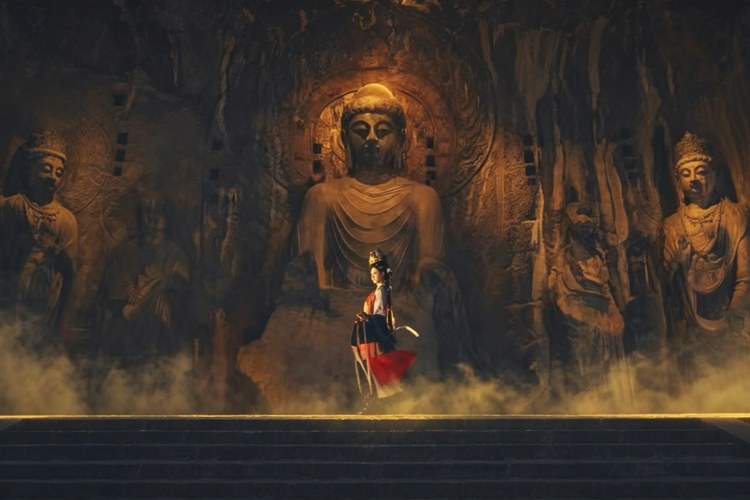
7. Longmen Guanghua Temple: Discovering Buddhist Culture Beyond the Sculptures
For visitors exploring Buddhist culture in Luoyang, the Longmen Grottoes are an important starting point. Yet the history of Buddhism in the Longmen area extends beyond the famous cliff carvings.
Longmen Guanghua Temple, located in the Longmen area of Luoyang, is associated with the history of Tangmi, or Chinese Esoteric Buddhism. Its historical background provides another perspective on the religious traditions that developed in this region during the Tang Dynasty.
At a temple such as Guanghua, visitors can explore more than the appearance of Buddhist images. Temple architecture, memorial structures, religious inscriptions, ceremonial spaces, and the arrangement of halls all contribute to understanding how Buddhist traditions have been preserved and practiced.
Learning to recognize the symbols of Buddhist statues can make this experience more meaningful. When you notice a lotus throne, a particular hand gesture, or an object held by a Bodhisattva, you begin to connect the physical details of the image with the ideas and stories behind it.
For overseas visitors who want to explore Chinese Buddhist traditions in greater depth, Funzendo offers opportunities to experience temple life and learn about the cultural background of Buddhist practice. Discover our Zen pilgrimage programmes to explore Buddhist heritage sites and traditional cultural destinations in China.
You can also learn more about the atmosphere of daily temple life through our Buddhist temple stay experience, which introduces visitors to a different way of experiencing Chinese Buddhist culture beyond conventional sightseeing.
8. A Simple Method for Reading a Buddhist Statue During Your Visit
You do not need to memorize every Buddhist figure or symbolic object before entering a temple. A simple observation method can help you understand much of what you see.
Try following these five steps when you encounter a statue:
Look at the overall figure: Is it a Buddha, Bodhisattva, monk, or guardian figure? Consider its clothing, ornaments, and position.
Notice the posture: Is the figure seated, standing, walking, or reclining?
Examine the hands: Are the palms facing outward, resting in the lap, or touching the ground? Could the gesture represent a familiar mudra?
Identify the objects: Look for a lotus, vase, willow branch, sword, text, staff, or other symbolic item.
Observe the surroundings: Is the figure located at the entrance, in the main hall, or alongside other Buddhas and Bodhisattvas? The setting may help explain its role.
If an inscription is available, it may provide the most reliable identification. You can also ask a knowledgeable guide or temple representative. Some figures are difficult to identify from visual features alone, particularly when they belong to a specific regional or historical tradition.
Most importantly, take your time. Looking carefully at a statue is itself a way of engaging with the cultural and artistic heritage of the temple.
9. Temple Etiquette: How to Appreciate Buddhist Statues Respectfully
Understanding Buddhist iconography is only one part of visiting a temple. It is equally important to respect the religious environment in which the statues are displayed.
Observe before photographing: Photography rules differ between temples and individual halls. Look for signs and ask permission when necessary. Avoid flash photography where it is prohibited or inappropriate.
Keep a respectful distance: Do not touch statues, offerings, ritual objects, or display structures unless explicitly permitted.
Speak quietly: Many temple halls remain active religious spaces where people may be praying or participating in ceremonies.
Follow local customs: Different temples may have specific practices concerning footwear, incense, offerings, and movement within the halls.
Avoid treating sacred objects as props: When taking photographs, be mindful of worshippers and the religious meaning of the objects around you.
These simple practices help preserve the atmosphere of the temple and make the visit more respectful for both visitors and the local Buddhist community.
Frequently Asked Questions
What is the easiest way to identify a Buddhist statue?
Start by looking at the figure's posture, hand gestures, and symbolic objects. A seated Buddha may have a meditation or teaching mudra, while Guanyin may be shown with a willow branch, water vase, or other symbols of compassion. The surrounding figures and inscriptions can provide additional clues.
What does a lotus mean in Chinese Buddhist art?
The lotus represents purity and spiritual development. Its ability to grow from muddy water while producing a beautiful flower makes it a powerful symbol of awakening and the possibility of spiritual growth amid ordinary difficulties.
What is the difference between a Buddha and a Bodhisattva?
A Buddha represents one who has attained awakening. A Bodhisattva is associated with the aspiration to attain Buddhahood for the benefit of all sentient beings. In Chinese Buddhist art, Buddhas are often represented in simpler monastic robes, while Bodhisattvas may wear elaborate crowns and ornaments, although artistic styles vary.
Why do Buddhist statues have different hand gestures?
These gestures are known as mudras. They communicate symbolic meanings related to meditation, teaching, fearlessness, generosity, and important events in Buddhist tradition. The position of the fingers and palms can help visitors understand the figure's role.
Why do some Buddhist statues hold swords or other weapons?
Some Bodhisattvas and guardian figures hold symbolic weapons. For example, Manjushri's sword represents the power of wisdom to cut through ignorance. In guardian imagery, weapons may symbolize the protection of Buddhist teachings and the overcoming of obstacles.
Is it disrespectful to photograph Buddhist statues?
Not necessarily. Photography policies vary by temple and by hall. Some public areas permit photography, while other spaces restrict it. Always follow posted instructions, avoid flash where prohibited, and ask if you are uncertain.
Do I need to be Buddhist to appreciate Chinese Buddhist statues?
No. Buddhist sculpture can be appreciated through religious studies, art history, architecture, craftsmanship, and cultural heritage. Many international visitors first encounter these traditions through museums, historic sites, and temple visits.
Discover the Stories Behind Chinese Buddhist Art
A Buddhist statue is more than a figure carved from stone, cast in bronze, or shaped from wood. Its posture, hand gestures, symbolic objects, and surrounding environment form a visual language that has developed over centuries. Once you learn to recognize a few of its elements, a temple visit becomes an opportunity to discover the ideas, stories, and artistic traditions behind the images.
For visitors to Luoyang, the Buddhist heritage of Longmen offers an especially rich setting for this exploration. From the historic sculptures of the Longmen Grottoes to the Tangmi heritage associated with Longmen Guanghua Temple, the region reveals different dimensions of China's Buddhist history.
At Funzendo, we invite overseas visitors to explore Chinese Buddhist culture through temple experiences, meditation learning, and cultural journeys. Discover our Zen pilgrimage experiences, learn about our temple stay programmes, or contact our team to plan a cultural visit to Longmen.
The next time you enter a Buddhist hall, look beyond the face of the statue. Its hands, posture, and symbols may tell you a story that has been passed down for generations.