How to Use Guided Meditation When Your Mind Wanders
One of the most common challenges for beginners is managing a wandering mind during a Guided Meditation session. You begin with clear intentions, following the instructor's voice, but soon find yourself lost in thoughts about work, planning your next meal, or replaying a conversation. This experience is not a sign of failure; it is a universal aspect of training the mind. The key is not to prevent thoughts from arising but to develop a skillful method for returning your attention when they do, without judgment or frustration. This process of noticing and returning is the core of the practice itself.
At Funzendo, our programs are rooted in authentic Chan Buddhist traditions at Longmen Guanghua Temple, where we guide international guests through accessible practices. We emphasize that a distracted mind is an opportunity to practice, not a reason to stop. Understanding how to gently and effectively guide your focus back to the present moment transforms the entire experience from a struggle for control into a compassionate exercise in awareness.
Understanding the Nature of a Wandering Mind
In Zen traditions, the untrained mind is often called the "monkey mind"—swinging restlessly from one thought-branch to another. This is its natural state. Expecting it to become perfectly still the moment you sit down for a meditation session is an unrealistic goal that leads to disappointment. The purpose of practices like mindfulness and meditation is not to forcibly silence your thoughts but to change your relationship with them. Instead of being carried away by every thought, you learn to observe them as they come and go, like clouds passing in the sky.
This shift in perspective is fundamental. Each time you notice your mind has wandered and you gently bring it back, you are strengthening your "attentional muscle." This act of returning is the repetition that builds mental discipline and present-moment awareness. The distraction itself is not the problem; the real challenge lies in the frustration and self-criticism that often follow. Our approach, which integrates meditation with traditional arts, helps participants cultivate a patient and observant attitude, recognizing that the mind's activity is simply a phenomenon to be witnessed, not a personal failing to be corrected.
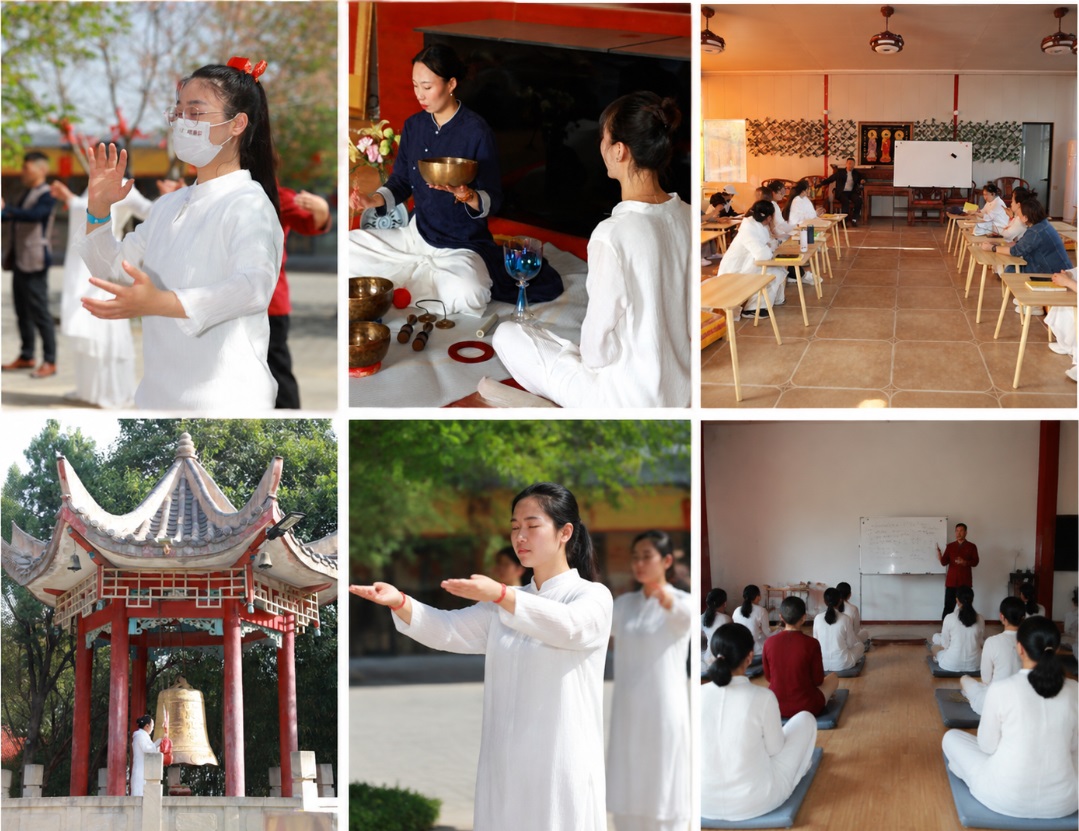
A Cue-by-Cue Reset Method for Returning Attention
When you lose focus during a guided session, you don't need to stop or wait for the perfect moment to rejoin. Instead, use a structured, non-judgmental troubleshooting process to reset your attention in real-time. This method breaks down the recovery into four distinct cues, allowing you to re-anchor your awareness without disrupting your practice.
Follow these steps the moment you realize your mind has drifted:
- Cue 1: Acknowledge the Distraction. The first step is simple recognition. The instant you become aware that you are no longer following the guide but are instead lost in a thought, memory, or plan, you have already succeeded. This moment of awareness is the most important part of the practice. Do not criticize yourself. Simply make a gentle mental note, such as "thinking" or "wandering."
- Cue 2: Release the Thought. After acknowledging the thought, let it go without further engagement. Avoid the temptation to analyze why you were thinking about that particular topic or to follow the thought to its conclusion. An effective technique is to link the release to your breath. As you exhale, visualize the thought dissolving or floating away. The physical act of breathing out can serve as a trigger to release the mental content.
- Cue 3: Re-anchor to the Guide's Voice. Immediately bring your focus back to the most prominent anchor in a guided session: the instructor's voice. Tune in to the sound, tone, and cadence. Try to catch the very next word they say. This external anchor is often the easiest point of re-entry because it requires you to simply listen rather than generate focus internally. It pulls your awareness out of your internal chatter and back into the shared space of the session.
- Cue 4: Re-anchor to a Physical Sensation. If the guide's voice is not enough or if there is a period of silence, shift your attention to a physical anchor. This is typically the breath. Notice the sensation of air entering and leaving your nostrils, or the rise and fall of your abdomen. Alternatively, you can focus on the feeling of your hands resting in your lap or the contact your body makes with the cushion or chair. This grounds your awareness in the physical reality of the present moment.
This four-cue process is a repeatable loop. You may perform it dozens of times in a single session. Each cycle is a successful repetition that reinforces your ability to manage your attention.
| Cue | Observation | Action | Purpose |
|---|---|---|---|
| 1. Acknowledge | You realize you are lost in thought. | Gently label the state as "thinking." | To practice metacognition without self-judgment. |
| 2. Release | The thought persists or tempts analysis. | Exhale and visualize the thought dissolving. | To disengage from mental content actively. |
| 3. Re-anchor (Auditory) | You need an external point of focus. | Focus on the guide's next word or sound. | To use an external stimulus to pull attention back. |
| 4. Re-anchor (Somatic) | You need a grounding, internal focus. | Feel the breath or the body's contact points. | To ground awareness in direct physical sensation. |
Common Pitfalls When Managing a Wandering Mind
Even with a clear method, certain mental habits can hinder your progress. Recognizing these common pitfalls is the first step toward avoiding them. For corporate wellness program managers and tour operators bringing groups to a temple stay, preparing participants for these challenges can significantly improve their experience.
Here are some frequent mistakes and how to address them:
- Mistake: Harsh Self-Criticism. Many beginners react to a wandering mind with frustration, thinking, "I'm bad at this," or "I can't do it." This judgment creates tension and makes it even harder to relax and refocus.
Solution: Cultivate an attitude of kindness and curiosity. Treat each instance of a wandering mind as an interesting observation, not a personal flaw. Remember that the act of returning your focus is the practice. - Mistake: Analyzing the Distraction. Once you notice a thought, it's tempting to investigate it. You might think, "Why am I thinking about that email now? What should I write back?" This is just a more elaborate form of distraction.
Solution: Stick to the "Acknowledge and Release" cues. Label the thought simply as "thinking" and immediately let it go. Defer any problem-solving for after your meditation session is complete. - Mistake: Trying Too Hard. In response to distraction, some people try to force their mind into silence. This "white-knuckle" approach to concentration is counterproductive. It creates mental strain and is unsustainable.
Solution: Aim for a "gentle effort" or "soft focus." Hold your attention lightly on your anchor (the voice, the breath). Allow thoughts to be in the background without giving them your full attention, much like hearing background traffic without focusing on any single car.
Enhancing Focus with Integrated Wellness Practices
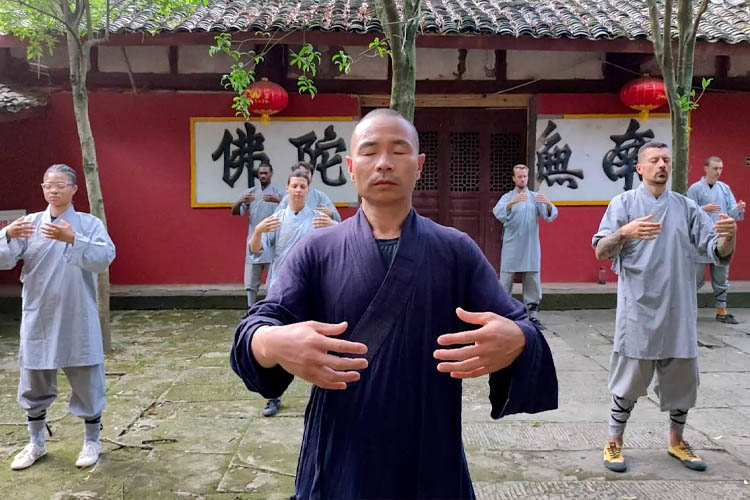
For those seeking to deepen their practice, combining guided meditation with other contemplative arts can provide powerful new anchors for attention. At Funzendo, we offer a unique integration of sound, tea, and Zen that provides a multi-sensory pathway to mindfulness. This approach is especially valuable for B2B clients designing immersive corporate wellness retreats or cultural tours, as it offers a distinctive and effective experience.
Our programs introduce guests to Chinese contemplative traditions within the authentic setting of Longmen Guanghua Temple. Here are a few ways these integrated practices support sustained focus:
- Singing Bowl Sound Healing: The pure, resonant tones of a singing bowl offer a compelling non-verbal anchor. Instead of following a voice, participants are guided to focus on the vibrations and the spaces of silence between them. This practice encourages deep listening and can quiet the internal monologue, making it an excellent tool for those who find verbal instruction distracting. We offer guided sound experiences that encourage relaxation and inner calm.
- Authentic Chinese Tea Ceremony: With over 10 years of practice blending traditional Chinese tea culture with Zen philosophy, our tea ceremonies are a form of active meditation. The process demands full attention: the sound of the water, the aroma of the leaves, the warmth of the cup, and the taste of the tea. Each step is a point of focus, training the mind to remain in the present through deliberate, sensory-rich actions.
- Immersive Temple Environment: Practicing within the walls of a historic Buddhist temple minimizes modern distractions and provides a palpable sense of peace and intention. The daily rhythm of temple life, combined with the sacred architecture and serene surroundings, naturally supports a more focused and contemplative state of mind.
By engaging multiple senses and embedding the practice in a rich cultural context, these methods offer diverse tools for managing attention. They demonstrate that mindfulness is not a rigid, one-size-fits-all technique but a flexible awareness that can be cultivated through many different forms.
For organizations interested in developing customized wellness programs or cultural immersion tours, please contact us to discuss how our unique temple-based experiences can meet your group's specific needs.