Kūkai and the Japan–China Buddhist Connection: How Tangmi Shaped Japanese Shingon Buddhism
The history of Buddhism in East Asia is a story of journeys: monks traveling across seas and mountains, sacred texts moving between languages, and religious teachings taking root in new cultural environments. One of the most remarkable chapters in this history is the journey of Kūkai, the Japanese Buddhist monk who traveled to Tang China in the early ninth century and later established Shingon Buddhism in Japan.
For anyone interested in Chinese Buddhist heritage, Japanese religious history, or the cultural connections between the two countries, Kūkai's story offers a compelling starting point. His journey linked Japanese Buddhism with the esoteric teachings being transmitted in Tang China, creating a historical relationship that continues to attract the attention of scholars, practitioners, and cultural travelers.
Today, visitors exploring the Buddhist heritage of Luoyang and Xi'an can learn about different parts of this shared history. Xi'an preserves the historical setting of Chang'an, where Kūkai studied under the eminent master Huiguo. Luoyang, meanwhile, is associated with the wider history of Tang Esoteric Buddhism and the legacy of Subhakarasimha at Longmen Guanghua Temple. These places represent different but connected chapters in the development of Chinese and Japanese Buddhism.
For travelers who want to go beyond conventional sightseeing, following this historical connection offers a way to understand Buddhist heritage through the people, temples, and cultural exchanges that shaped it.
Who Was Kūkai? The Japanese Monk Who Traveled to Tang China
Kūkai (空海, 774–835), also known by his posthumous title Kōbō Daishi, was a Japanese Buddhist monk, scholar, calligrapher, and religious thinker. He became one of the most influential figures in the history of Japanese Buddhism and is especially associated with the establishment of Shingon, a major school of Japanese Esoteric Buddhism.
Kūkai lived during a period when Japan maintained significant cultural and diplomatic connections with Tang China. Chinese writing, Buddhist scholarship, religious institutions, art, and political ideas had a profound influence on Japanese intellectual life. For Japanese monks seeking advanced Buddhist learning, traveling to China offered an opportunity to study within the religious and scholarly environment that had helped shape Buddhism throughout East Asia.
In 804, Kūkai traveled to Tang China as part of an official Japanese mission. The journey was demanding, and travel by sea involved considerable uncertainty. His purpose, however, was more than a visit to another country. He sought to study Buddhist teachings that were not yet established in the same form in Japan.
After reaching China, Kūkai eventually studied in Chang'an, the Tang imperial capital corresponding to modern Xi'an. There he encountered a sophisticated Buddhist environment in which scholars, translators, teachers, and monastic communities preserved and transmitted a wide range of Buddhist traditions.
The most important encounter of his journey was with Huiguo (惠果), an eminent master of Esoteric Buddhism. Under Huiguo's guidance, Kūkai studied esoteric teachings and received initiations associated with the tradition. This experience became the foundation of his later work in Japan.
Kūkai returned to Japan in 806 with Buddhist texts, ritual objects, and knowledge acquired during his studies. Over the following decades, he developed and organized the teachings he had received, establishing Shingon Buddhism as a distinctive Japanese tradition.
His historical importance lies not only in his role as a religious founder. Kūkai also contributed to Japanese literature, calligraphy, intellectual culture, and the development of religious institutions. His life demonstrates how a journey undertaken for Buddhist study could have consequences far beyond the monastery, influencing the cultural relationship between two countries for centuries.
Huiguo and the Transmission of Esoteric Buddhism
To understand Kūkai's journey, it is necessary to understand his teacher, Huiguo. Huiguo was a leading Chinese master of Esoteric Buddhism during the Tang dynasty and was associated with Qinglong Temple in Chang'an. His teaching belonged to a tradition that had developed through the translation and transmission of Buddhist texts, ritual knowledge, and lineage-based instruction.
Esoteric Buddhism places particular importance on the relationship between teachings and practice. Mantras, mudras, mandalas, ritual procedures, and visualization are understood within a structured religious framework. Some practices involve formal initiation and require instruction from a qualified teacher rather than independent experimentation.
When Kūkai arrived in Chang'an, he entered a religious environment in which these teachings were supported by established scholarly and monastic networks. Huiguo became his principal teacher in Esoteric Buddhism, and their relationship is one of the best-known examples of Buddhist transmission between China and Japan.
Traditional accounts emphasize the importance of Kūkai's training under Huiguo and the speed with which he received significant esoteric teachings. Huiguo died in 805, not long after their encounter. Kūkai's subsequent return to Japan therefore came at a pivotal moment in the history of the tradition.
The transmission between teacher and student was not simply a matter of receiving written information. It involved learning within a religious lineage, understanding ritual systems, and acquiring the knowledge needed to establish a tradition in another cultural setting. Texts and ritual objects were important, but so too was the authority and instruction associated with the teacher.
This relationship also illustrates the importance of individual encounters in the history of religion. The movement of Buddhist teachings across Asia depended on translations and institutions, but it was also shaped by particular teachers and students whose journeys created lasting connections between communities.
How Tang Esoteric Buddhism Reached Japan
The transmission of Esoteric Buddhism from Tang China to Japan took place within a wider history of cultural exchange. Japanese monks traveled to China to study Buddhist teachings, while diplomatic missions and commercial networks connected the two countries. These exchanges helped transmit religious texts, artistic styles, intellectual traditions, and institutional models.
Kūkai's journey became particularly influential because of the role he played in organizing and teaching the esoteric Buddhist knowledge he brought back to Japan. His experience in Chang'an provided a foundation for Shingon Buddhism, which developed into one of Japan's major Buddhist schools.
Several elements were important to this transmission:
Buddhist texts: Kūkai brought back texts that informed his teaching, writing, and organization of esoteric Buddhist practice.
Ritual knowledge: His training included esoteric practices transmitted within a teacher-student relationship.
Mandalas and sacred imagery: These visual systems played a significant role in communicating the structure and meaning of esoteric teachings.
Lineage and instruction: The authority of the teacher and the process of transmission were essential to the tradition's understanding of religious practice.
Institutional development: After returning to Japan, Kūkai helped establish a setting in which the teachings could be studied, practiced, and passed on.
These elements should not be understood as a simple package transferred unchanged from one country to another. Kūkai's work involved interpretation, organization, and adaptation within Japanese religious life. Shingon developed its own institutions and practices, even as it maintained important connections with the Chinese esoteric teachings that influenced its formation.
This is why historians distinguish between the wider history of Chinese Esoteric Buddhism and the specific development of Japanese Shingon. They are closely connected traditions, but their histories are not identical.
What Is the Relationship Between Tangmi and Shingon?
Tangmi, or Chinese Esoteric Buddhism associated with the Tang dynasty, and Japanese Shingon Buddhism share an important historical relationship. Kūkai's study under Huiguo in Chang'an was a major link in the transmission of esoteric Buddhist teachings to Japan. Shingon subsequently developed within its own Japanese institutional, cultural, and religious context.
The two traditions are therefore best understood as historically connected rather than interchangeable. Tangmi belongs to the history of Chinese Buddhism, while Shingon represents a Japanese tradition that received and developed important esoteric teachings transmitted from China.
Mantras and the Importance of Sacred Sound
Mantras are sacred syllables, phrases, or formulas used within Buddhist practice. In Esoteric Buddhism, their significance is tied to particular teachings and ritual contexts. They are not simply words repeated for relaxation; their role is defined by the tradition in which they are taught and practiced.
For visitors exploring Buddhist heritage, understanding the role of mantra can offer a deeper appreciation of traditional ceremonies and ritual settings. Sound, language, and recitation can communicate religious meaning in ways that are not immediately apparent to an outside observer.
Mudras and Ritual Gesture
Mudras are symbolic hand gestures that appear in Buddhist images and ritual practices. Their meaning depends on context, including the figure represented, the ritual system, and the particular tradition. In Esoteric Buddhism, gestures can form part of a larger coordinated practice involving mantra and visualization.
Learning about mudras can also change the way visitors look at Buddhist sculpture. The position of a hand, the arrangement of the fingers, or the relationship between a figure and its ritual objects may provide clues about the meaning of an image.
Mandalas and Sacred Space
Mandalas are structured representations of sacred realms and relationships. They can communicate complex religious ideas through carefully arranged figures and symbols. In Esoteric Buddhism, mandalas may be connected with ritual practice, contemplation, and specific systems of teaching.
The importance of mandalas extends beyond their artistic beauty. Their forms reflect an organized understanding of sacred space, and their interpretation depends on the particular tradition and context in which they are used.
These shared features help explain the historical relationship between Tangmi and Shingon. At the same time, similarities in ritual or visual language do not mean that every practice in one tradition is identical to a practice in the other.
Chang'an and Qinglong Temple: Where Kūkai Studied
Modern Xi'an was known as Chang'an during the Tang dynasty and served as one of the great capitals of the medieval world. It was a center of government, international exchange, scholarship, and religious life. Buddhist institutions in the city were connected to networks that extended across China and into Central Asia and India.
Qinglong Temple is particularly significant in the history of Japanese Esoteric Buddhism because of its association with Huiguo and Kūkai. The temple provides an important geographical reference for understanding where the transmission that influenced Shingon took place.
For people interested in Kūkai, visiting the historical setting of Chang'an can make the story of his journey more tangible. Instead of thinking only about a monk who traveled from Japan to China, visitors can consider the religious and cultural environment in which he studied, the institutions that supported Buddhist learning, and the teachers who shaped his understanding.
It is also important to recognize the difference between a site's historical role and the condition of its present-day remains. Modern heritage sites may have undergone rebuilding, restoration, or changes in function over the centuries. A meaningful visit therefore benefits from understanding both the historical record and the site's current context.
For travelers planning a wider exploration of Chinese Buddhist history, Xi'an can be considered alongside Luoyang. The two cities represent different but complementary parts of the Tang Buddhist landscape, and together they help explain the connections between Buddhist teaching, imperial culture, and the movement of religious knowledge across East Asia.
Luoyang and Guanghua Temple: Exploring the Wider Heritage of Tangmi
Although Kūkai's most important studies under Huiguo took place in Chang'an, the history of Tang Esoteric Buddhism cannot be understood through one city alone. Luoyang was another major center of Chinese civilization and Buddhist culture. Its temples, monuments, and religious history form part of the wider landscape in which Tang-era Buddhism developed.
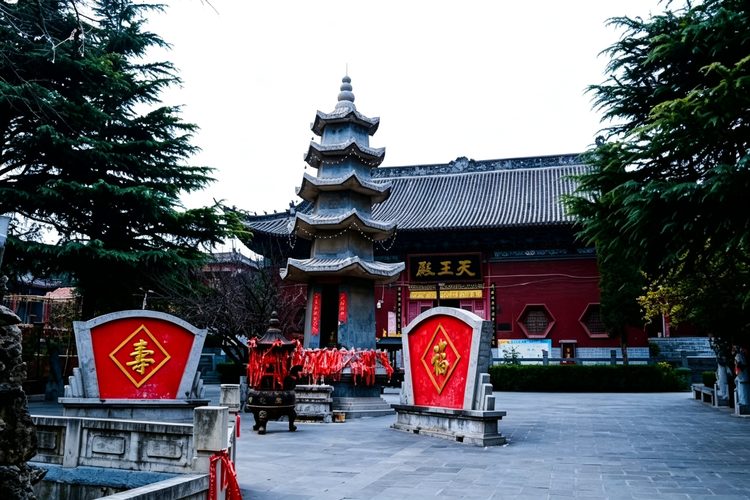
Longmen Guanghua Temple, situated on the western hillside of Longmen Village, is associated with Subhakarasimha, one of the eminent masters in the history of Chinese Esoteric Buddhism. Subhakarasimha contributed to the translation and transmission of esoteric Buddhist teachings during the Tang dynasty, and his legacy is remembered in connection with the temple.
The temple's historical landmarks, including Wuwei Pagoda and commemorative monuments, provide a setting in which visitors can explore the relationship between Buddhist history and place. These features are valuable for understanding how communities preserve the memory of religious figures and traditions over time.
Guanghua Temple and Qinglong Temple should not be presented as the same historical site or as interchangeable destinations. Qinglong Temple is directly associated with Kūkai's studies under Huiguo in Chang'an, while Guanghua Temple is associated with the legacy of Subhakarasimha and the wider history of Tang Esoteric Buddhism in Luoyang.
This distinction actually makes a journey through the region more meaningful. Rather than searching for a single place that explains the entire tradition, visitors can explore several sites that illuminate different aspects of its development.
To learn more about the local setting and its historical landmarks, explore Guanghua Temple and its Buddhist cultural heritage.
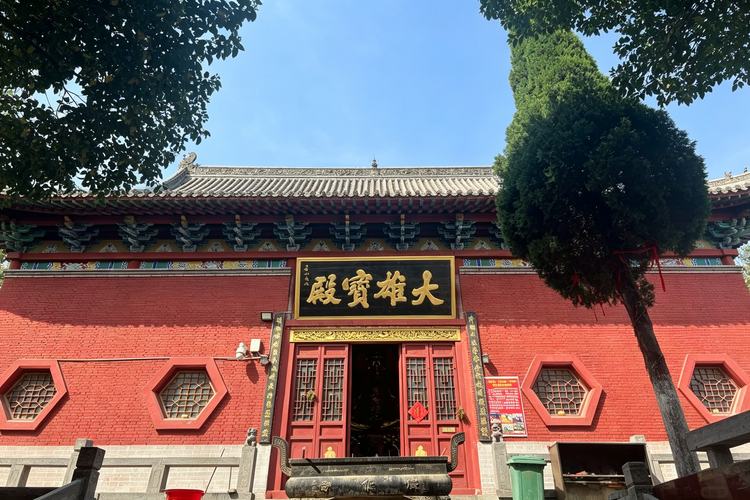
The wider Luoyang area also includes the Longmen Grottoes, one of China's most important collections of Buddhist rock-cut art. The grottoes reflect centuries of artistic production, religious devotion, and patronage. Although they are distinct from Guanghua Temple, they help visitors appreciate the scale and diversity of Buddhist culture in the region.
When these sites are explored with appropriate historical context, a visit to Luoyang can become an opportunity to understand several dimensions of Chinese Buddhism: its artistic heritage, the memory of important teachers, the development of temples, and the movement of teachings across Asia.
Why a Japan–China Buddhist Pilgrimage Can Be Meaningful
For people interested in Japanese Shingon Buddhism, a journey to China can offer a different perspective on a familiar religious tradition. It provides an opportunity to explore the historical settings associated with the teachings that influenced Kūkai and to understand the cultural environment in which those teachings were transmitted.
A Buddhist heritage journey does not need to be approached as a search for a single birthplace or an attempt to reproduce the past exactly. Religious traditions evolve, temples change, and historical landscapes develop over time. The value of a pilgrimage often lies in bringing together historical learning, careful observation, and reflection on the relationship between past and present.
Following the Historical Connections
A thoughtfully planned journey can connect the history of Chang'an with the wider Buddhist heritage of Luoyang. In Xi'an, travelers can explore the setting associated with Kūkai and Huiguo. In Luoyang, they can learn about Subhakarasimha, Guanghua Temple, and the broader development of Tang-era Buddhism.
The sequence and duration of such a journey depend on travel arrangements, opening hours, transport connections, and individual interests. Travelers should confirm access conditions and any relevant program details before departure.
Learning Before Visiting
Reading about Kūkai, Huiguo, Subhakarasimha, and the development of Shingon before traveling can make visits to Buddhist sites more rewarding. Historical names become easier to connect with places, while monuments and ritual settings gain meaning beyond their visual appearance.
Visitors can also prepare by learning about temple etiquette. Modest clothing, quiet behavior, respect for religious activities, and attention to photography restrictions are important when visiting active religious sites. Where guidance is available, listening to local explanations can help prevent misunderstandings.
Respecting Living Religious Traditions
A heritage journey should distinguish between observing a tradition, learning about its history, and participating in formal religious practice. Some Buddhist ceremonies are open to visitors, while others may be reserved for members of a community or people who have received particular instruction.
Understanding these distinctions allows cultural travelers to approach Buddhist sites with curiosity and respect. It also helps create a more accurate picture of the relationship between historical heritage and contemporary religious life.
What This History Means for Cultural Travel in Luoyang
Many international visitors first encounter Luoyang through its famous historical attractions. The Longmen Grottoes, ancient city sites, and temples offer compelling reasons to visit, but the region also rewards travelers who are interested in the wider history of religion and cultural exchange.
The story of Kūkai provides a useful way to connect these interests. It links a Japanese religious figure with the Tang Chinese world and reveals how Buddhist traditions developed through travel, study, and the transmission of teachings. It also shows why different cities and temples should be understood as parts of a broader historical network rather than isolated attractions.
For a cultural travel program, this approach creates a more distinctive narrative than a simple list of sightseeing stops. Visitors can learn why Chang'an mattered to Kūkai, how Huiguo contributed to the transmission of esoteric teachings, why Subhakarasimha is important in discussions of Tangmi, and how Luoyang's Buddhist heritage fits into the wider story.
At Funzendo, cultural learning can be combined with visits to relevant Buddhist heritage sites through selected pilgrimage and retreat programs. The emphasis is on understanding the cultural setting and history, rather than suggesting that a visit alone confers religious authority or formal initiation.
Travelers interested in this approach can explore Funzendo's Chinese Zen pilgrimage programs to learn more about cultural journeys connected with Buddhist heritage.
Planning a Buddhist Heritage Journey Through China
Visitors considering a journey connected with Kūkai and Tang Esoteric Buddhism should begin by deciding which aspects of the history interest them most. Some may be particularly interested in Kūkai and the development of Japanese Shingon. Others may want to explore Chinese Buddhist history more broadly, including temple architecture, Buddhist sculpture, inscriptions, and the history of important masters.
Xi'an and Luoyang can serve different purposes within such a journey. Xi'an offers the historical setting of Chang'an and its connection with Kūkai's studies under Huiguo. Luoyang provides another perspective through its Buddhist sites, including Guanghua Temple and the Longmen Grottoes. The cities can complement one another, although the practical arrangements for visiting both depend on the available travel time and transport options.
Before departure, travelers should check the opening arrangements for individual sites, the availability of guided interpretation, local transport, and any restrictions affecting religious spaces. They should also distinguish between a general cultural tour and a program that includes structured meditation or other activities.
Language support is another practical consideration. Travelers should confirm the languages available for a specific tour rather than assume that every location or program provides Japanese, Chinese, or English interpretation. Where specialist historical interpretation is important, it is useful to clarify the scope of the guidance before booking.
For those who prefer a structured cultural itinerary, Funzendo's Zen pilgrimage page is a starting point for exploring available programs. Confirm the current itinerary, dates, inclusions, and language arrangements directly before making travel plans.
Frequently Asked Questions About Kūkai and Tangmi
Who was Kūkai?
Kūkai (774–835) was a Japanese Buddhist monk, scholar, and calligrapher who traveled to Tang China in 804. He studied Esoteric Buddhism under Huiguo in Chang'an and later established Shingon Buddhism in Japan.
Where did Kūkai study in China?
Kūkai studied under Huiguo at Qinglong Temple in Chang'an, the Tang capital corresponding to modern Xi'an. This association makes Xi'an an important destination for people interested in the history of Japanese Shingon Buddhism.
What is the relationship between Tangmi and Shingon?
Tangmi refers to Chinese Esoteric Buddhism associated with the Tang dynasty, while Shingon is a Japanese Buddhist school shaped in part by the esoteric teachings Kūkai received in China. The traditions are historically connected but developed within different cultural and institutional settings.
Why is Huiguo important?
Huiguo was an eminent Tang-era master of Esoteric Buddhism and Kūkai's principal teacher in China. Their relationship was central to the transmission of esoteric teachings that influenced the formation of Shingon Buddhism in Japan.
Why is Guanghua Temple relevant to Tangmi history?
Longmen Guanghua Temple in Luoyang is associated with the legacy of Subhakarasimha, one of the important masters in the history of Tang Esoteric Buddhism. Its heritage provides a local setting in which visitors can explore the wider history of Tang-era Buddhism.
Is Guanghua Temple where Kūkai studied?
No. Kūkai's studies under Huiguo took place at Qinglong Temple in Chang'an, present-day Xi'an. Guanghua Temple in Luoyang is associated with Subhakarasimha and the wider history of Tang Esoteric Buddhism. The two sites represent different aspects of the tradition's history.
Is Shingon the same as Zen?
No. Shingon is a Japanese Esoteric Buddhist school, while Zen developed from Chan Buddhism. They have different histories and emphases, although both belong to the broader history of East Asian Buddhism.
Can people who are not Buddhist join a cultural pilgrimage?
A cultural heritage journey can be suitable for people interested in history, architecture, religion, and cross-cultural exchange, regardless of personal religious identity. The activities available depend on the individual program, and formal religious practices may have specific participation requirements.
Do visitors need to speak Japanese or Chinese?
Language arrangements vary by tour and destination. Before booking, ask the organizer to confirm the language of the guide, the availability of interpretation at individual sites, and whether any specialist Buddhist terminology will be explained in your preferred language.
Discover the Japan–China Buddhist Connection with Funzendo
Kūkai's journey to Tang China remains one of the most significant examples of religious exchange in East Asian history. His studies under Huiguo in Chang'an helped shape the development of Japanese Shingon Buddhism, creating a connection that continues to interest people exploring the history of Buddhism in China and Japan.
Luoyang offers another important perspective on this story through its association with Subhakarasimha and the wider heritage of Tang Esoteric Buddhism. By exploring Luoyang alongside Xi'an, travelers can gain a broader understanding of the places, people, and institutions that contributed to the development and transmission of Buddhist teachings.
For visitors who want to explore this history in its cultural setting, Funzendo offers a starting point for learning about Buddhist heritage and selected pilgrimage experiences in China. Explore Guanghua Temple's historical sites and cultural landmarks, or visit the Zen pilgrimage programs page to review available cultural journeys.
Before booking, confirm the current itinerary, departure dates, language arrangements, and included services. A well-prepared journey can transform the story of Kūkai and Tangmi from a historical account into a deeper exploration of the cultural connections between China and Japan.