Longmen Guanghua Temple: Exploring the Legacy of Tang Dynasty Esoteric Buddhism
Located in the historic city of Luoyang, Henan Province, Longmen Guanghua Temple offers a window into China's Buddhist heritage and the religious traditions associated with the Tang dynasty. Its historical setting connects visitors with a wider story of Buddhist learning, cultural exchange, temple life, and the transmission of Esoteric Buddhist teachings in medieval China.
China's Buddhist heritage is often introduced through monumental sculptures, ancient pagodas, and celebrated pilgrimage destinations. Yet the history of Buddhism also survives through temple communities, stone inscriptions, religious architecture, and the practices through which teachings have been interpreted and transmitted. In Luoyang, these different forms of heritage come together in a cultural landscape shaped by centuries of religious activity.
Longmen Guanghua Temple is associated with the history of Tang Dynasty Esoteric Buddhism, a tradition that developed through the movement of Buddhist teachers, scriptures, and ritual practices between India, Central Asia, and China. Understanding this background offers a richer way to appreciate the temple and the broader historical importance of the Longmen area.
For international readers interested in Chinese history, Buddhist philosophy, and cultural travel, the story of Guanghua Temple also raises a broader question: how can a historic religious site be understood not only as an architectural landmark, but as part of a living cultural tradition?
Luoyang: A Historic Center of Chinese Buddhist Culture
Luoyang occupies an important place in the history of Chinese civilization. As a former imperial capital during several dynasties, the city became a center of political administration, scholarship, artistic production, and religious exchange. Its location within a wider network of routes connecting different regions of Asia contributed to its role in the development of Buddhism in China.
The history of Buddhism in Luoyang extends across many centuries. Buddhist communities established temples, translated scriptures, taught religious doctrines, and developed artistic traditions that influenced the surrounding region. The city was not simply a destination where Buddhist ideas arrived; it was also a place where those ideas were interpreted, organized, and transmitted to new generations.
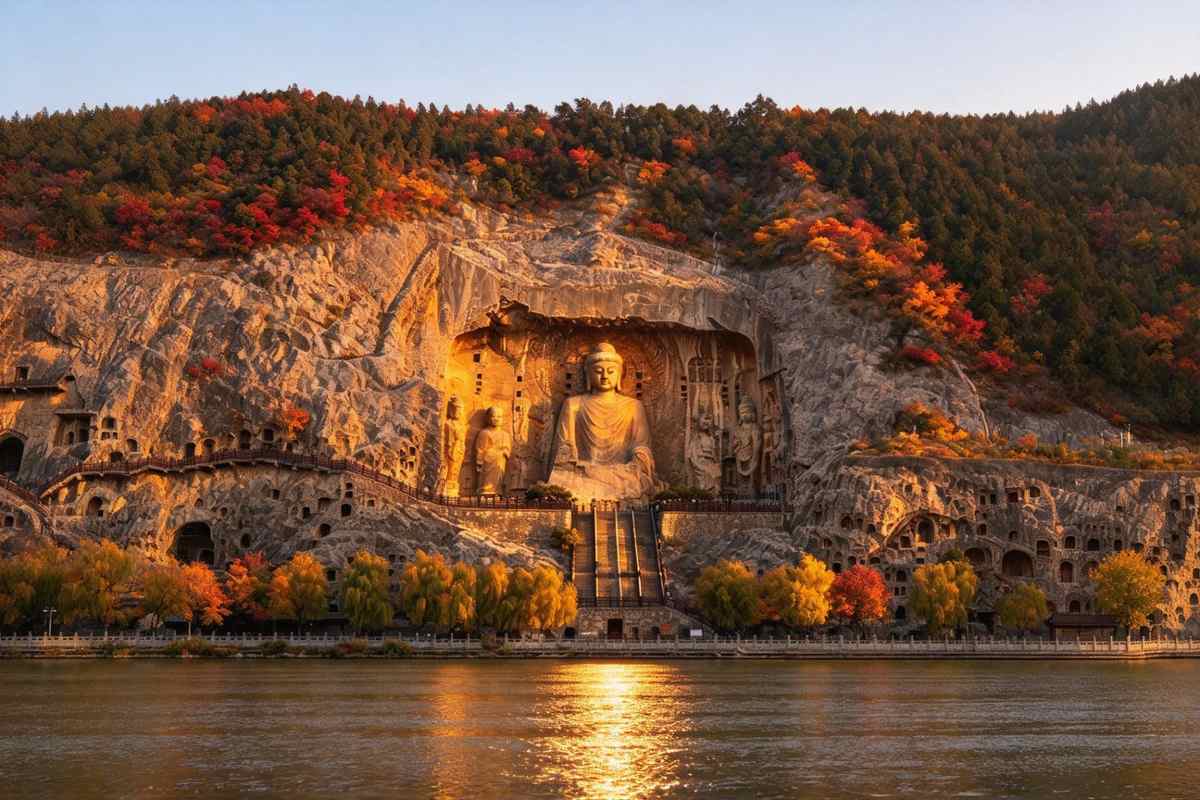
One of the best-known expressions of this heritage is the Longmen Grottoes. Carved into limestone cliffs along the Yi River, the grottoes contain thousands of caves and niches, together with a remarkable collection of Buddhist images and inscriptions. Their artistic and historical significance provides evidence of the changing relationship between Buddhism, political patronage, and Chinese society.
However, the grottoes represent only one part of the region's Buddhist history. Temples, monastic communities, memorial structures, and religious inscriptions formed a much wider network. Research into stone inscriptions from the Luoyang region has helped scholars reconstruct the activities of Buddhist communities and the relationships between religious figures and local society.
Longmen Guanghua Temple belongs to this broader cultural landscape. Exploring its historical associations alongside the better-known monuments of Longmen allows visitors to approach Luoyang's Buddhist heritage from a wider perspective, one that includes religious institutions and traditions as well as monumental art.
The Tang Dynasty and the Development of Esoteric Buddhism
The Tang dynasty, which ruled China from 618 to 907, was a formative period in the development of Chinese Buddhist traditions. Buddhist teachings had already circulated in China for centuries, but the Tang period witnessed significant developments in scripture translation, doctrinal interpretation, ritual practice, and exchanges with other parts of Asia.
Esoteric Buddhism became particularly prominent during the eighth century. The tradition drew on Buddhist scriptures, mantras, ritual systems, and forms of religious practice transmitted through networks of teachers and students. Its development took place within a complex historical environment that included imperial patronage, international travel, and the intellectual life of major Chinese cities.
Three Buddhist masters are especially associated with the development of Tang Esoteric Buddhism: Śubhākarasiṃha, Vajrabodhi, and Amoghavajra. Known in Chinese as Shan Wuwei, Jin'gangzhi, and Bukong respectively, they contributed to the translation, interpretation, and transmission of influential Buddhist teachings.
Their work illustrates how religious traditions develop through more than the movement of ideas alone. Translation requires linguistic knowledge and interpretation; teaching depends on communities of practitioners; and religious institutions provide settings in which scriptures and rituals can be preserved and transmitted.
The history of Tang Esoteric Buddhism is therefore closely connected with the broader history of cultural exchange in medieval Asia. It reflects a period when Buddhist knowledge moved across geographical and linguistic boundaries, becoming part of the religious and intellectual life of China.
Śubhākarasiṃha and the Historical Significance of Shan Wuwei
Śubhākarasiṃha, known in Chinese as Shan Wuwei, was one of the major Buddhist teachers associated with the establishment of Tang Esoteric Buddhist traditions. Born in India in the seventh century, he traveled to China and became involved in the translation and transmission of Buddhist scriptures during the Tang period.
His name is important in the history of Chinese Esoteric Buddhism because of his association with texts and teachings that helped shape the tradition's development. His activities formed part of a wider intellectual process through which Buddhist concepts and ritual systems were interpreted for Chinese audiences.
Shan Wuwei is also associated with Luoyang in historical accounts of Tang Buddhist activity. Research on inscriptions from the region has identified his presence within the wider religious environment of the city. These records help scholars understand how prominent teachers, temple communities, and local patrons contributed to Buddhist life.
For a historic temple connected with this tradition, such associations provide an important framework for cultural interpretation. They encourage visitors to consider not only the physical remains of a religious site, but also the teachers, texts, communities, and historical circumstances that gave it meaning.
At the same time, historical interpretation requires care. The presence of a Buddhist master in the wider Luoyang region does not automatically establish every detail of a temple's foundation or its relationship with a particular teacher. Distinguishing documented evidence from later tradition is an essential part of understanding religious heritage responsibly.
Beyond Famous Names: The Role of Buddhist Institutions
The development of Buddhism in Tang China depended on networks of institutions as well as influential individuals. Temples provided spaces for religious practice, teaching, ceremonies, the preservation of texts, and the formation of communities. Their activities connected local religious life with wider intellectual and cultural developments.
These institutions also existed within changing political and social circumstances. Imperial support could contribute to the expansion of certain Buddhist traditions, while changes in government policy, local patronage, and historical events could affect their development. The history of a Buddhist school therefore cannot be separated entirely from the society in which it emerged.
Esoteric Buddhist traditions were especially associated with specialized scriptures, ritual systems, and teacher-student relationships. Their transmission involved learning how texts were understood and how religious practices were performed within established contexts.
For modern readers, this institutional perspective helps move beyond the idea that Buddhist history consists only of famous monks and remarkable monuments. It reveals a more complex picture of people, communities, and practices working together over time.
Stone Inscriptions as Records of Religious History
Stone inscriptions are among the most valuable sources for reconstructing aspects of China's Buddhist past. Unlike later summaries that may emphasize selected figures or events, inscriptions can preserve specific names, dates, titles, memorial statements, and relationships between individuals.
In the Luoyang region, epigraphic research has helped scholars examine the activities of Buddhist communities and the historical settings in which different traditions developed. Such evidence can supplement written histories and provide details that might otherwise remain difficult to recover.
Inscriptions also demonstrate the relationship between religion and material culture. The decision to commission a stone monument, record a person's life, or commemorate a religious figure reflects the values and social relationships of the community responsible for it.
For visitors exploring historic Buddhist sites, this perspective changes the way physical remains can be understood. A stone inscription is not merely an old object or decorative feature. It may serve as a historical document that connects a place to people, events, and ideas from another era.
The study of inscriptions also reminds us that historical knowledge is continually refined. New discoveries, improved documentation, and closer comparison between sources can change how scholars interpret a temple's history. Responsible cultural interpretation acknowledges both the importance of established traditions and the limits of the available evidence.
Architecture, Landscape, and the Experience of a Temple
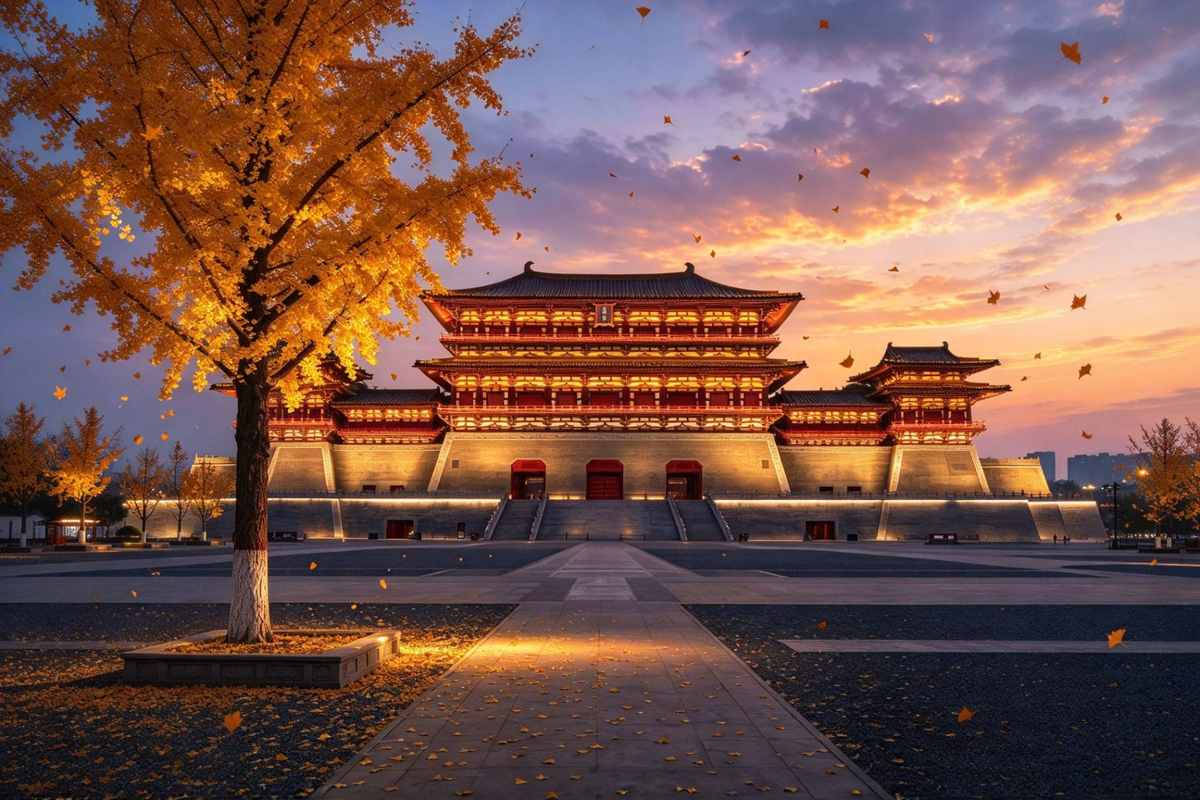
Traditional Chinese Buddhist temples are shaped by more than their individual buildings. Their entrances, courtyards, halls, paths, and surrounding landscape influence how people move through the site and encounter its different spaces.
At Longmen Guanghua Temple, the hillside setting forms part of the visitor's experience. The relationship between the approach to the temple, its architectural structures, and the surrounding environment provides a way to appreciate the physical setting in which religious and cultural traditions are practiced.
Temple architecture can communicate meaning through spatial arrangement and visual form. Entrances establish transitions between different environments; courtyards create areas for movement and gathering; and halls organize spaces for worship, teaching, or commemoration. The precise function of each structure depends on the individual site and its history.
These spaces should not be understood as architectural displays alone. In an active religious setting, their use is also shaped by ritual, etiquette, maintenance, and the daily responsibilities of the temple community.
For international visitors, taking time to observe these relationships can offer a deeper appreciation of Chinese Buddhist architecture. Rather than viewing a temple simply as a collection of buildings, visitors can consider how landscape, movement, religious practice, and cultural memory work together to shape the experience of a sacred place.
Understanding Living Heritage in a Contemporary Context
The idea of living heritage recognizes that cultural traditions are not preserved only through objects and buildings. They may also continue through knowledge, skills, rituals, community relationships, and forms of practice passed from one generation to another.
Historic Buddhist temples illustrate this relationship between material and living heritage. Buildings and monuments provide visible evidence of the past, while religious communities and established practices help explain how a place continues to be used and understood.
Preserving this heritage involves more than maintaining physical structures. Accurate historical interpretation, responsible visitor behavior, careful documentation, and respect for religious practice all contribute to a fuller understanding of a site.
Cultural tourism can play a constructive role when it encourages learning rather than reducing a historic place to a photograph or a checklist of attractions. Reading about a site's history, learning appropriate etiquette, and allowing time for quiet observation can help visitors engage with its significance more thoughtfully.
This approach is especially relevant in places where religious life and cultural tourism exist side by side. Visitors should recognize that temples may remain active religious environments, with their own customs and expectations. Photography, access to particular spaces, and participation in ceremonies should always follow local guidance.
Connecting Buddhist History with Contemplative Practice
For many people, learning about Buddhist heritage creates an interest in the contemplative practices associated with Buddhist traditions. Historical understanding and personal practice are different forms of engagement, but they can complement one another when approached with appropriate context.
Meditation, for example, is not a single uniform technique shared identically by every Buddhist school. Practices differ across traditions, and their purposes are shaped by particular teachings and methods of instruction. For beginners, learning the context of a practice can be as valuable as learning the basic steps.
Those interested in exploring contemplative practice can learn more about Zen meditation at Funzendo. This provides a starting point for understanding meditation as part of a wider interest in Chinese Buddhist culture and reflective practice.
A cultural visit does not require visitors to adopt a religious belief. It can instead offer an opportunity to learn about the historical role of Buddhist thought, observe the customs of a temple, and develop a more informed understanding of the relationship between religion and everyday life in China.
Tea and Incense as Cultural Expressions
Chinese cultural heritage also includes practices associated with tea, incense, craftsmanship, and aesthetic appreciation. Although these practices have their own distinct histories, they can provide additional perspectives on how people have used materials, gestures, and ritualized activities to express cultural values.
Tea culture, for example, brings together the cultivation and preparation of tea, the use of utensils, hospitality, and regional traditions. Incense culture involves knowledge of fragrant materials, methods of preparation, and the settings in which incense is appreciated or used in ritual contexts.
Neither practice should be reduced to a universal symbol of meditation or treated as identical across all historical periods. Their meanings depend on context, community, and the particular tradition being explored.
For travelers interested in experiencing these cultural forms directly, Funzendo offers an incense, tea, and singing bowl culture retreat. The program provides a related cultural experience for visitors wishing to explore traditional practices alongside their interest in Chinese Buddhist heritage.
Exploring Luoyang Through a Cultural Perspective
Luoyang offers a valuable setting for exploring the connections between Buddhist history, architecture, sculpture, inscriptions, and religious traditions. The Longmen Grottoes provide an important starting point, but the wider region offers further opportunities to understand the historical environment in which Buddhism developed.
A meaningful cultural itinerary can include time for historical reading, visits to relevant heritage sites, and opportunities to learn about the traditions associated with each location. Rather than rushing between destinations, visitors may benefit from considering how different sites contribute to a larger historical picture.
It is also important to distinguish between different Buddhist traditions and historical periods. A site associated with Tang Esoteric Buddhism, for example, should not automatically be treated as representative of every form of Chinese Buddhism. Recognizing these distinctions makes cultural exploration more accurate and rewarding.
Visitors interested in combining cultural discovery with contemplative or traditional cultural activities can explore Funzendo's cultural and contemplative experiences to learn more about the programs available through the center.
Preserving the Meaning of China's Buddhist Heritage
The significance of Longmen Guanghua Temple extends beyond the immediate experience of visiting a historic religious site. Its association with the Buddhist history of Luoyang provides an opportunity to consider how religious ideas traveled, how institutions supported their transmission, and how cultural traditions became part of the historical identity of a region.
The wider story of Tang Esoteric Buddhism also demonstrates that China's religious history developed through international connections. Teachers, texts, and practices crossed geographical boundaries, while translation and local interpretation shaped how these traditions took root in new environments.
Today, understanding this history requires a balance between preserving established cultural narratives and examining the evidence carefully. Monuments, inscriptions, scholarly research, and the continued life of religious communities each contribute different perspectives. Together, they help build a more complete understanding of the past.
For readers discovering Luoyang for the first time, Longmen Guanghua Temple offers a point of entry into this broader story. By looking beyond famous monuments to the historical relationships between temples, teachers, communities, and cultural practices, visitors can develop a more nuanced appreciation of Chinese Buddhist heritage.
The enduring value of these places lies not only in their age or architectural appearance, but also in their ability to encourage continued learning about history, religion, and cultural exchange. Approached with curiosity and respect, a visit to a historic Buddhist temple can become an opportunity to understand China's past in greater depth and to recognize the many ways cultural heritage continues to inform the present.