Luoyang and the Ancient Silk Roads: A City Shaped by Cultural Exchange
When people think of the ancient Silk Road, they often imagine long camel caravans crossing deserts, merchants carrying silk through Central Asia, and distant cities connected by trade. Yet the Silk Roads were much more than commercial routes. They were networks through which people, languages, artistic styles, technologies, religious ideas, and everyday customs traveled across regions.
One of the important cities connected with this history was Luoyang, in present-day Henan Province. Known as one of China's ancient capitals, Luoyang occupied an important position in the political, cultural, and religious history of the country. Its connections with the wider world helped shape the city's identity over many centuries.
To understand Luoyang's historical significance, it is useful to look beyond individual monuments. The city's story is also a story of movement: merchants arriving with unfamiliar goods, travelers carrying knowledge across long distances, artisans adapting new artistic influences, and religious communities establishing connections across cultural boundaries.
1. The Silk Roads Were a Network, Not a Single Road
The expression "Silk Road" can create the impression of one clearly defined route connecting China with the West. In reality, the historical Silk Roads consisted of multiple interconnected land and maritime routes.
These networks changed over time according to political conditions, geography, commercial demand, and the development of different regional powers. Some routes crossed deserts and mountain passes, while others connected cities through river valleys, grasslands, and coastal trading centers.
The name "Silk Road" highlights the importance of silk as a valuable commodity, but silk was only one part of a much wider exchange. Textiles, ceramics, metal objects, glassware, spices, horses, and other goods also moved through these networks.
More importantly, trade routes carried people and ideas. Merchants, diplomats, religious travelers, craftsmen, and scholars contributed to the movement of knowledge and cultural practices.
The UNESCO World Heritage listing for the Silk Roads: the Routes Network of Chang'an-Tianshan Corridor identifies a historic route extending from Chang'an and Luoyang toward Central Asia. This route illustrates how cities in China were connected to a much larger network of exchange.
2. Why Luoyang Became an Important Cultural Center
Luoyang's importance came partly from its position in the Central Plains, a region that played a central role in the political and cultural development of early China.
For different dynasties, Luoyang served as a capital or major political center. Its history includes periods of considerable urban development, imperial administration, religious activity, and artistic production.
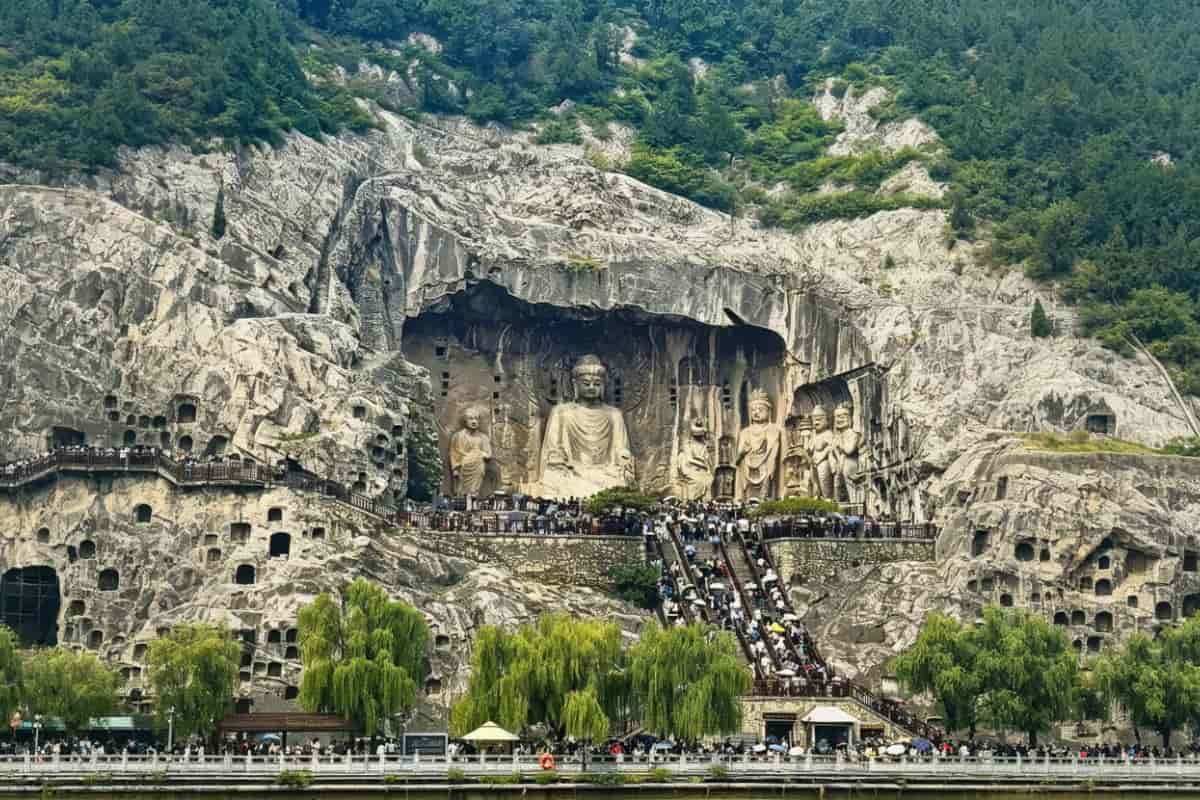
During the Northern Wei period, Luoyang became an important center of Buddhist patronage. The construction of Buddhist temples and the development of the Longmen Grottoes reflected the growing influence of Buddhism in the region.
During the Sui and Tang periods, Luoyang again held major political significance. It was closely connected with Chang'an, another major imperial capital, and participated in the cultural life of an empire that maintained extensive connections with regions across Asia.
These historical developments made Luoyang more than an administrative center. It became a place where different traditions could meet, interact, and develop within Chinese society.
3. Merchants Brought More Than Goods
Commercial exchange was one of the most visible aspects of the Silk Roads. Merchants transported valuable products over long distances, connecting producers, markets, and consumers across different regions.
Silk was particularly important because of its value, craftsmanship, and appeal beyond China. However, the movement of goods also introduced new materials, decorative patterns, and manufacturing ideas.
Textiles, glassware, metalwork, ceramics, and other objects reveal how artistic styles could travel and be adapted. An object made in one region might inspire craftsmen thousands of kilometers away, who then transformed its shape, decoration, or production techniques according to local preferences.
Trade also changed everyday life. Imported materials and unfamiliar designs could influence clothing, personal decoration, luxury consumption, and the visual culture of urban communities.
In Tang China, international influences were visible in different forms of art and material culture. The Metropolitan Museum of Art's research on Tang internationalism describes how exchanges through diplomacy, trade, and pilgrimage influenced textiles, metalwork, ceramics, fashion, music, and other aspects of cultural life.
4. People Made Cultural Exchange Possible
Objects can travel long distances, but cultural exchange depends on people who carry knowledge, skills, and experiences between communities.
The Silk Roads connected merchants with local trading communities, diplomats with foreign courts, and travelers with unfamiliar societies. Some people stayed temporarily, while others settled in new cities and became part of local communities.
These encounters created opportunities for cultural adaptation. A visitor might introduce a musical instrument, a decorative technique, a new style of clothing, or a religious idea. Local craftsmen and communities could then reinterpret these influences in their own ways.
It is important to remember that cultural exchange was rarely a one-way process. Chinese goods and ideas traveled outward, while foreign materials, artistic forms, and knowledge also entered China. The result was not simply the spread of one culture, but an ongoing process of interaction.
5. Religion Traveled Alongside Trade
Religious traditions were another important part of the historical Silk Roads. Buddhist monks, teachers, translators, and pilgrims traveled between India, Central Asia, and China, contributing to the transmission and development of Buddhist thought.
As Buddhism entered different regions, it encountered local languages, artistic traditions, political systems, and philosophical ideas. Buddhist communities adapted their practices and forms of expression to new cultural environments.
Luoyang became an important location in this history. Its Buddhist heritage includes the Longmen Grottoes and several historic temple sites associated with different stages of Buddhist development in China.
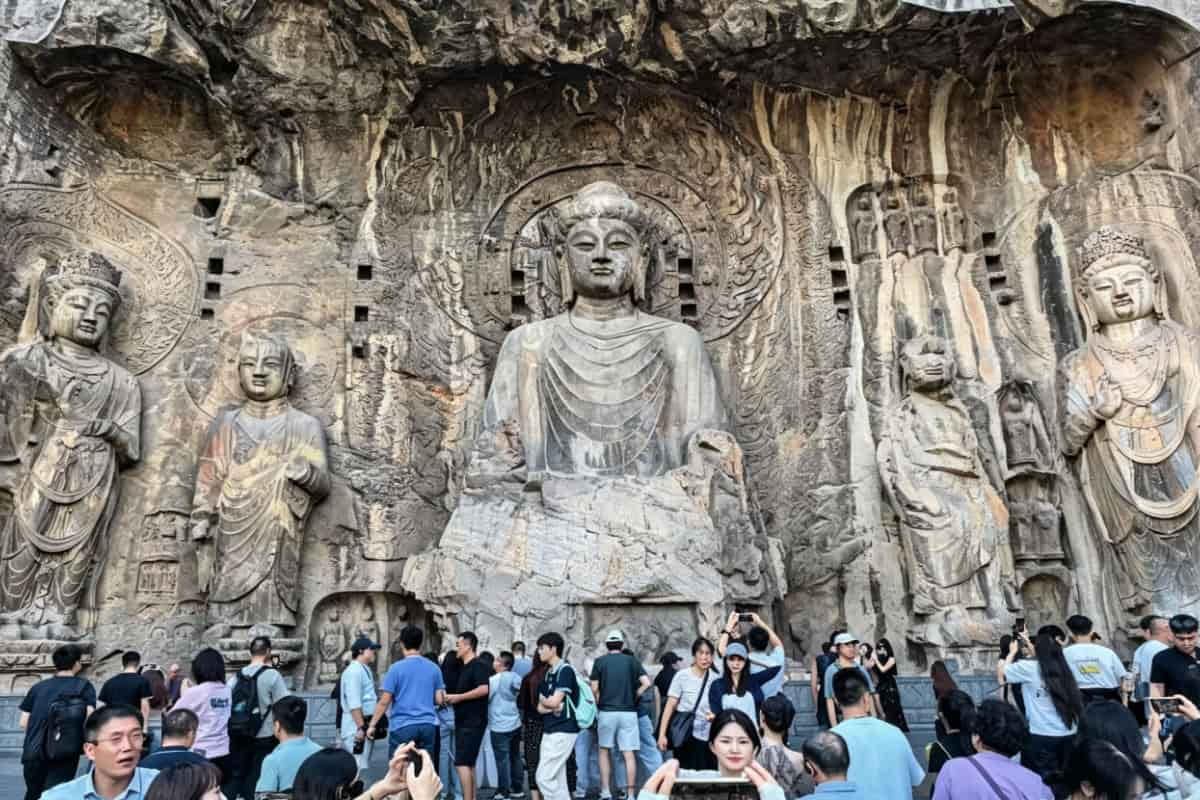
At Longmen, Buddhist ideas were expressed through sculpture, inscriptions, and the transformation of natural cliffs into monumental religious spaces. These works provide evidence of how religious traditions were interpreted and developed within Chinese artistic culture.
The history of Longmen Guanghua Temple adds another dimension to this story. The temple is associated with Tang Esoteric Buddhism and the legacy of Subhakarasimha, one of the Three Great Masters of the Kaiyuan Era.
His work and the wider development of Tang Esoteric Buddhism demonstrate how religious knowledge could move across cultural boundaries and become part of a new intellectual and spiritual environment.
6. Art Reveals the Meeting of Different Cultures
Art is one of the most valuable ways to understand cultural exchange because it preserves visual evidence of changing styles and artistic choices.
When studying historical objects, researchers may examine details such as clothing, hairstyles, musical instruments, decorative patterns, materials, and manufacturing techniques. These features can sometimes reveal connections with other regions.
During the Tang Dynasty, artistic production reflected a society connected with a broad geographical world. Foreign influences appeared in textiles, ceramics, metalwork, tomb figures, and other forms of visual culture.
However, influence should not be confused with simple imitation. Chinese artisans did not merely reproduce foreign objects. They selected, adapted, and transformed external influences to create works that belonged to their own cultural environment.
This process is one reason Tang art remains important for understanding the history of international cultural exchange.
At Longmen, the development of Buddhist sculpture across different periods also demonstrates the relationship between religious ideas and local artistic expression. Visitors can observe how sculptural forms, clothing details, facial expressions, and compositions reflect changing artistic preferences.
7. What the Ancient Silk Roads Can Teach Modern Travelers
Modern international travel is often organized around national borders and individual destinations. The history of the Silk Roads offers a different perspective: cities are also connected through long histories of movement, exchange, and shared cultural development.
For visitors exploring Luoyang, this perspective can make a cultural journey more meaningful.
Look Beyond a Single Monument
A famous site may represent only one part of a much larger historical landscape. Understanding the relationship between temples, archaeological sites, museums, and ancient urban centers can reveal more about the development of a city.
Notice the Movement of Artistic Ideas
When looking at sculptures, paintings, or historical objects, pay attention to their materials, decorative details, and artistic styles. These features may provide clues about the connections between different regions.
Understand Cultural Exchange as a Two-Way Process
History is rarely shaped by one culture influencing another in only one direction. Trade, migration, religion, and artistic exchange create relationships in which different communities contribute to change.
Allow Time for Context
Visiting a historical site becomes more rewarding when there is time to understand its background. Reading inscriptions, observing artistic details, and learning about the people associated with a place can add depth to the experience.
8. Exploring Luoyang's Cultural Heritage Today
Luoyang's historical importance is visible in more than its famous landmarks. The city preserves different layers of history, from ancient urban development to Buddhist art and the religious traditions that connected China with other parts of Asia.
The Longmen Grottoes offer an opportunity to explore the development of Buddhist sculpture and the relationship between religion and artistic expression. Longmen Guanghua Temple provides another perspective through its association with Tang Esoteric Buddhism and the historical memory of important Buddhist masters.
For travelers interested in exploring these connections, Funzendo offers cultural experiences in the Longmen area, including opportunities to learn about Buddhist heritage and the history of Luoyang.
You can learn more through the Longmen Grottoes Buddhist Heritage Experience, which introduces the site's sculptures, historical background, and relationship with Chinese Buddhist art.
Visitors interested in the wider historical setting can also explore the historic places of Longmen Guanghua Temple and discover how different sites preserve distinct aspects of the region's Buddhist heritage.
Conclusion: A City Connected to the World
The history of Luoyang is not only a story of dynasties, imperial capitals, and monumental architecture. It is also a story of people meeting across distances, goods moving between markets, artistic ideas crossing borders, and religious traditions developing through cultural contact.
The ancient Silk Roads remind us that cultural heritage is rarely isolated. A city's identity is shaped not only by what develops within its borders, but also by the relationships it maintains with the wider world.
For anyone interested in Chinese history, Luoyang offers an opportunity to explore these connections through its monuments, artworks, and living cultural landscape. Looking beyond individual attractions allows visitors to discover a richer story: one in which China was not separate from the ancient world, but an active participant in its ongoing exchange of ideas and traditions.