Meditation for Better Sleep: A Simple 10-Minute Evening Routine
Most people know the feeling: the day is finally over, the lights are off, and the body is ready for bed, but the mind is still busy. Work conversations replay in your thoughts. Tomorrow's responsibilities begin to take shape. Small worries that seemed unimportant during the day suddenly become difficult to ignore.
Sometimes the challenge is not simply finding enough time to sleep. It is learning how to move from the activity of the day into a quieter state of mind.
A short evening meditation can offer a practical way to make this transition. By paying attention to your breathing, noticing physical sensations, and allowing thoughts to pass without following them, you create a few minutes of space between daytime responsibilities and bedtime.
You do not need previous meditation experience, expensive equipment, or a dedicated meditation room. This beginner-friendly guide introduces a simple 10-minute evening routine that you can practice at home, in a hotel room, or while travelling. It also explores how traditional Chinese Zen principles can inspire a more mindful approach to rest.
1. Why Is It Difficult to Switch Off at Night?
Modern life often requires us to move quickly between different tasks. During the day, we respond to messages, make decisions, manage work, look after family responsibilities, and absorb a constant flow of information. Even when these activities stop, our attention may continue moving from one thought to another.
You may find yourself reviewing something that happened earlier, worrying about an unfinished task, or mentally preparing for the following morning. This is a common experience, particularly during busy or stressful periods.
Trying to force these thoughts to disappear rarely makes the experience easier. In fact, becoming frustrated with your own thoughts can create another layer of mental activity.
Meditation offers a different approach. Instead of trying to empty your mind, you practice noticing what is happening without becoming involved in every thought. When your attention wanders, you gently bring it back to your breathing or another simple point of focus.
A regular evening practice may be useful in several ways:
Creating a transition between day and night: A familiar routine gives you time to step away from work and everyday responsibilities.
Developing body awareness: You become more attentive to physical sensations and areas of tension that may have accumulated during the day.
Reducing evening distractions: Setting aside screens and notifications creates a short period without constant new information.
Building consistency: Repeating a manageable practice can make your evening routine more predictable.
Meditation does not guarantee better sleep, and it is not a substitute for professional care when sleep difficulties are persistent. However, it can become one useful part of a broader routine that supports relaxation and a more deliberate transition towards bedtime.
2. How Bedtime Meditation Works
Mindfulness meditation is the practice of paying attention to present-moment experience with openness and without immediately judging what you notice. Before bed, this may involve observing your natural breathing, becoming aware of physical sensations, or recognizing thoughts without trying to solve them.
The purpose is not to make the mind completely silent. Thoughts will still appear, especially when you have had a demanding day. The important part is learning to notice when your attention has wandered and gently return to the present.
Breathing Creates a Simple Point of Focus
Your breathing is always available as an anchor for attention. You do not need to control it or follow a complicated breathing technique. Simply notice the natural movement of each inhalation and exhalation.
When your mind becomes occupied with plans or memories, return your attention to the next breath. This repeated action is the practice itself.
A Body Scan Encourages Awareness of Physical Tension
Many people carry tension in their shoulders, jaw, hands, or back without noticing it. A body scan gives you an opportunity to observe these sensations rather than automatically reacting to them.
You can gradually move your attention from your feet towards your head, noticing how each area feels. There is no need to force your muscles to relax. Simply becoming aware of your physical condition is enough for the exercise.
A Familiar Routine Can Make Evenings More Predictable
Repeating the same small activities before bed may help establish a consistent evening pattern. For example, dimming the lights, putting away your phone, and spending ten minutes on a breathing practice can become familiar signals that the active part of the day is coming to an end.
Rather than expecting meditation to produce an immediate result, think of it as a regular opportunity to slow down and prepare for rest.
3. A Simple 10-Minute Evening Meditation Routine
The following routine combines five beginner-friendly activities: preparing your surroundings, noticing your body, observing your breath, allowing thoughts to pass, and ending with quiet reflection.
You can practice while sitting on a cushion or chair. If you prefer to meditate in bed, choose a comfortable position and allow yourself to rest naturally. There is no need to maintain a difficult posture.
| Step | Time | Practice |
|---|---|---|
| 1. Prepare your space | 1 minute | Dim the lights, put away your phone, and settle into a comfortable position. |
| 2. Body scan | 3 minutes | Notice physical sensations gradually, moving from your feet towards your head. |
| 3. Breath awareness | 3 minutes | Observe your natural breathing without forcing it. |
| 4. Let thoughts pass | 2 minutes | Notice thoughts without following or judging them. |
| 5. Quiet reflection | 1 minute | Recognize one small thing you appreciated about the day. |
Step 1: Prepare Your Space – 1 Minute
Choose a comfortable place where you can sit or lie down without being disturbed. Reduce unnecessary lighting, silence notifications, and put your phone somewhere you will not be tempted to check it.
You do not need to create a special atmosphere. A clean corner, a comfortable cushion, and a quiet environment are sufficient. If you enjoy soft background sounds, keep the volume low so that they do not become another source of distraction.
Step 2: Practice a Gentle Body Scan – 3 Minutes
Begin by noticing the points where your body touches the chair, cushion, or bed. Bring your attention to your feet, then gradually move upward through your legs, abdomen, shoulders, arms, neck, and face.
Notice whether any area feels warm, heavy, tense, or uncomfortable. You do not need to change anything immediately. Simply recognize what you are experiencing.
If you notice tension in your shoulders or jaw, allow those areas to soften naturally. Avoid forcing a stretch or holding an uncomfortable position.
Step 3: Observe Your Natural Breathing – 3 Minutes
Bring your attention to the movement of your breath. Notice the feeling of air passing through your nose or the gentle movement of your abdomen.
Allow each breath to happen naturally. You do not need to breathe more deeply than usual or hold your breath. If counting helps you stay attentive, count each exhalation from one to ten, then begin again.
If you lose count, simply return to one. There is no need to criticize yourself. Recognizing that your attention has wandered and returning to the breath is an essential part of meditation.
Step 4: Allow Thoughts to Pass – 2 Minutes
During this stage, let your attention become more open. Thoughts about work, family, travel, or tomorrow's responsibilities may appear. Instead of following every thought, acknowledge it and allow it to pass.
You might imagine thoughts as clouds moving across the sky. You do not have to push them away or hold on to them. Let them come and go while you return gently to the present moment.
If a particular concern feels important, you can write it down before beginning your meditation. This gives you a way to remember it without spending the entire evening trying to solve it.
Step 5: Finish with Quiet Reflection – 1 Minute
Before finishing, think of one small thing from the day that you appreciate. It could be a pleasant conversation, a meal, a moment outdoors, or simply completing something that needed your attention.
There is no need to create a long gratitude list. One ordinary moment is enough. Allow the practice to end naturally, then prepare for bed without immediately returning to your phone or other stimulating activities.

4. Common Mistakes That Can Make Bedtime Meditation Frustrating
Many beginners approach meditation with the expectation that they should feel completely relaxed, stop thinking, or fall asleep immediately. These expectations can create unnecessary pressure.
Meditation is not a test of how quickly you can become calm. It is a practice of paying attention, recognizing distractions, and returning to the present without judging yourself.
Trying Too Hard to Fall Asleep
If you spend the entire session checking whether you are becoming sleepy, meditation can turn into another task to complete successfully. Instead, focus on the practice itself. Notice your breathing and physical sensations without demanding a particular result.
Expecting the Mind to Become Completely Empty
Thinking is a natural part of being human. The appearance of thoughts does not mean that your meditation has failed. Recognizing a thought and gently returning to the present is the central exercise.
Checking the Time Repeatedly
Repeatedly looking at the clock can interrupt your attention. Set a gentle timer before you begin and place the device out of sight. If you do not need an exact duration, you can also practice without a timer.
Using Too Much Stimulation Before Bed
Bright screens, work messages, intense entertainment, and stimulating conversations may make it harder for some people to settle into an evening routine. Try creating a short screen-free period before your meditation session.
Making the Routine Too Long
A demanding routine can become difficult to maintain, especially after a tiring day. Begin with five or ten minutes. If that feels manageable, continue with the same duration before deciding whether you want to extend it.
5. Simple Evening Habits That Complement Meditation
Meditation can be more practical when it fits naturally into your wider evening routine. You do not need to change your entire lifestyle overnight. A few small adjustments may make it easier to create a consistent transition towards rest.
Keep a regular bedtime: Try to maintain a reasonably consistent time for going to bed and waking up.
Reduce evening screen use: Put away work devices and avoid checking messages immediately before meditation.
Create a comfortable sleeping environment: Keep your bedroom quiet, dark, and at a comfortable temperature where possible.
Choose a gentle evening activity: Reading, light stretching, or quiet music may help you move away from the pace of the day.
Be mindful of late caffeine: If caffeine affects your sleep, consider limiting coffee, strong tea, and other caffeinated drinks later in the day.
Keep expectations realistic: Some evenings will feel easier than others. Continue with a manageable routine rather than judging every session.
These habits are not a substitute for appropriate medical care when sleep problems persist. They are practical ways to make your evening environment more supportive of rest.
6. What Chinese Zen Practice Can Teach Us About Rest
The idea of making time for quiet attention has a long history in Chinese Buddhist culture. In Zen practice, meditation is not simply an exercise reserved for a particular time of day. It is connected with the cultivation of awareness, patience, and attention in ordinary activities.
In a traditional temple environment, the daily rhythm may include seated meditation, walking, communal meals, chanting, and quiet work. Each activity has its own place within the routine. Rather than treating every moment as an opportunity to achieve something, practitioners are encouraged to approach ordinary activities with attention.
This perspective offers a useful lesson for modern evening routines: rest does not always begin when we lie down. It can begin earlier, when we gradually reduce unnecessary activity and become more attentive to the present moment.
Quietness Is More Than Silence
A quiet environment can be helpful, but the absence of sound does not automatically produce a quiet mind. Traditional meditation practice emphasizes how we relate to our thoughts and experiences, not simply whether our surroundings are silent.
Regular Practice Matters More Than Elaborate Preparation
A simple daily session can be more meaningful than spending considerable time preparing a perfect meditation environment. A cushion, a quiet corner, and a few minutes of attention are enough to begin.
Awareness Can Continue Beyond the Meditation Session
Mindfulness can also be brought into ordinary activities. Drinking a cup of tea without looking at a screen, walking slowly, or paying attention while preparing for bed can all become opportunities to practice awareness.
For readers interested in learning more about Chinese meditation traditions, explore Funzendo's meditation programmes. They introduce traditional approaches to practice in the cultural setting of Longmen Guanghua Temple in Luoyang, China.
7. From a Home Routine to a Temple Experience
A ten-minute evening routine is a practical way to introduce meditation into daily life. However, some people discover that their difficulty in slowing down is connected not only with bedtime, but also with the pace of their entire day.
Work commitments, constant communication, travel, and family responsibilities can make it difficult to find uninterrupted time for reflection. Even when there is an opportunity to rest, the habit of staying busy may continue.
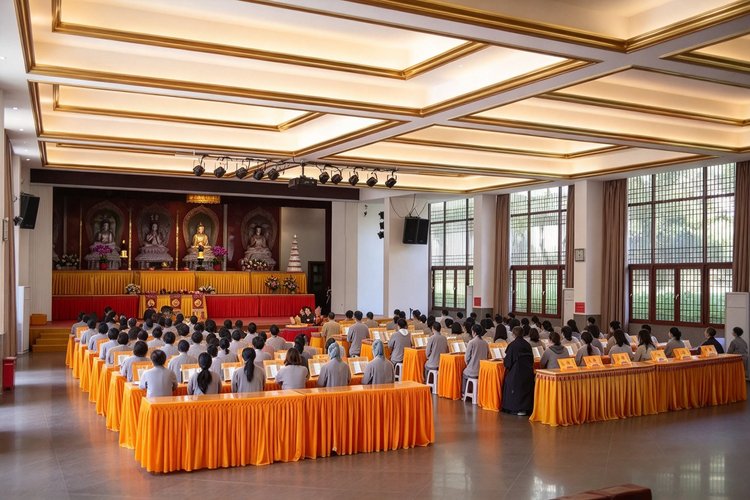
For those who want to explore a different daily rhythm, a temple stay offers an opportunity to step away from familiar routines and experience a traditional Buddhist environment. Visitors can learn about temple life, explore Chinese Buddhist culture, and take part in suitable meditation activities according to the programme.
Longmen Guanghua Temple in Luoyang is associated with the history of Tangmi, or Chinese Esoteric Buddhism. Its historical setting provides a different perspective on the relationship between Buddhist practice, architecture, and everyday life.
A temple stay is not a sleep treatment or a guaranteed solution to insomnia. Its value lies in the opportunity to experience a quieter environment, learn about traditional culture, and spend time away from the usual demands of everyday life.
If you would like to explore this experience, discover the Funzendo Temple Stay programmes. You can also explore our meditation programmes to learn more about traditional meditation practice.
8. How to Make Your Evening Meditation a Lasting Habit
The most useful routine is one that you can realistically repeat. Instead of trying to meditate for a long time every evening, begin with a duration that fits your schedule and energy level.
Choose a Consistent Time
You might meditate after finishing your evening meal, after taking a shower, or shortly before preparing for bed. Linking meditation to an existing activity can make it easier to remember.
Keep Your Practice Simple
Use the same basic sequence each evening: prepare your space, notice your body, observe your breathing, and finish with quiet reflection. You can adjust the details later if you discover another approach that suits you better.
Allow for Different Kinds of Evenings
Some evenings may be busy, and others may be more relaxed. If you only have three minutes, practice for three minutes. If you feel comfortable spending ten minutes, follow the full routine. Consistency does not require every session to be identical.
Notice Your Experience Without Judging It
You may feel more settled after one session and restless after another. Rather than measuring success by how quickly you fall asleep, notice whether the routine helps you create a more deliberate transition away from daytime activity.
Frequently Asked Questions
Can meditation really help me sleep better?
Meditation may help some people relax and manage the thoughts or tension that make it difficult to settle at bedtime. Research has explored mindfulness-based approaches and sleep quality, but results vary. Meditation should be considered a supportive habit rather than a guaranteed treatment for sleep problems.
What is the best meditation for beginners before bed?
A simple body scan or natural breathing awareness exercise is a good starting point. Both are easy to learn and do not require special equipment. Choose the method that feels comfortable and avoid forcing your breathing or posture.
Should I meditate sitting up or lying down?
Both positions can be suitable. Sitting on a comfortable chair or cushion may help you remain attentive during the practice. Lying down is also an option if you are using meditation as part of your bedtime routine. Choose a position that does not cause discomfort.
What should I do if I fall asleep during meditation?
There is no need to worry if you fall asleep during a bedtime practice. If your intention is to use meditation as a transition to rest, this may be perfectly acceptable. If you want to remain awake throughout the session, try practicing earlier in the evening or sitting in a comfortable upright position.
How long should I meditate before bed?
For beginners, five to ten minutes is a reasonable starting point. You can gradually extend the session if it feels helpful. A short routine that you can maintain is generally more practical than a long routine that becomes difficult to repeat.
When is the best time to practice evening meditation?
There is no single best time for everyone. Some people prefer meditating shortly before bed, while others find it more comfortable to practice after dinner or after finishing their evening activities. Choose a time that allows you to practice without feeling rushed.
Can meditation replace treatment for insomnia?
No. Meditation may be a supportive relaxation practice, but it is not a replacement for professional assessment or treatment. If sleep difficulties continue, affect your daily activities, or cause significant distress, consult a qualified healthcare professional.
Begin with Ten Minutes of Quiet
A calmer evening does not require a complicated routine or a complete change in lifestyle. It can begin with ten minutes in which you put away your phone, notice your breathing, and allow the day's activities to settle.
Over time, this small practice can become a familiar part of your evening. You may also find that the awareness developed during meditation carries into other parts of daily life: how you drink tea, how you walk, how you respond to distractions, and how you make space for rest.
For those who want to explore meditation beyond the home, Funzendo offers opportunities to experience Chinese Buddhist culture and traditional practice at Longmen Guanghua Temple in Luoyang. Discover our Temple Stay experience, explore our meditation programmes, or contact the Funzendo team to learn more about visiting and practising in a traditional Chinese temple environment.
Rest does not always begin when the lights go out. Sometimes, it begins with a few quiet minutes in which you allow yourself to stop rushing.