Mindfulness at Work: 5 Simple Practices to Bring Zen into Your Daily Life
Modern working life often leaves little room for genuine rest. Emails, meetings, deadlines, and constant notifications compete for our attention from morning until evening. Even when the working day is over, the mind may continue replaying unfinished tasks and conversations. Over time, this constant activity can make it difficult to concentrate, relax, or enjoy ordinary moments.
Mindfulness offers a practical way to approach this challenge. Rather than trying to eliminate thoughts or escape daily responsibilities, it encourages us to become more aware of our breathing, physical sensations, and reactions. A few moments of conscious attention can become a useful pause within an otherwise demanding schedule.
Traditional Zen practice takes this idea further. Awareness is not limited to sitting meditation. Walking, drinking tea, eating, writing, and carrying out everyday activities can all become opportunities to practise attention.
At Funzendo, we introduce mindfulness through a combination of traditional Chinese meditation, Zen culture, and temple-based experiences. The following five practices offer a simple starting point for bringing greater awareness into your working day, while showing how these everyday exercises can be explored more deeply through a Zen meditation experience.
Why Mindfulness Matters in Everyday Working Life
One of the biggest challenges of modern work is the constant switching of attention. You may begin writing a report, receive a message, respond to a colleague, and then return to the report while thinking about an upcoming meeting. Each interruption makes it harder to remain fully engaged with the task in front of you.
Mindfulness does not promise to remove workplace pressure or make every difficult situation disappear. Instead, it helps you recognize what is happening before reacting automatically.
For example, when an unexpected email creates frustration, you can notice the reaction before deciding how to respond. When your shoulders become tense after several hours at a desk, you can recognize the physical signal and take a moment to adjust.
This is closely connected to traditional Zen practice, where attention is developed through repeated observation rather than through force or excessive effort. The aim is not to achieve a special state immediately, but to become more familiar with the movements of the mind and body.
5 Simple Mindfulness Practices You Can Start Today
1. The One-Breath Pause: Create Space Between Tasks
Many people move directly from one activity to another without taking time to settle their attention. They close one email, open another, finish a meeting, and immediately begin preparing for the next task.
The one-breath pause introduces a brief transition between activities.
How to practise:
Stop briefly before opening your next email or joining a meeting.
Breathe in naturally through your nose.
Allow your breath to leave slowly and comfortably.
Notice the movement of your chest or abdomen.
Return your attention to the task ahead.
The exercise takes only a few seconds. It can be especially useful before an important conversation, after a stressful interaction, or whenever you notice yourself rushing.
Taking the practice deeper through Zen meditation:
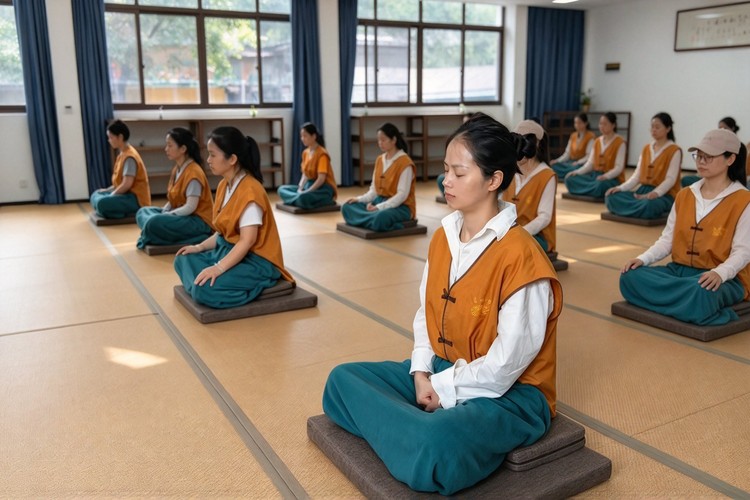
In a traditional meditation session, breathing becomes a more sustained focus of attention. Practitioners sit comfortably, follow the natural rhythm of the breath, and observe thoughts without needing to follow every one of them.
Beginners often discover that their minds are much busier than expected. Thoughts about work, family, and future plans may continue appearing. This is a normal part of learning to meditate. The practice is simply to notice when attention wanders and gently return to breathing.
2. Desk Grounding: Reconnect with Your Body
Long periods of desk work can make us less aware of physical sensations. Shoulders become tense, breathing becomes shallow, and the body remains in one position while the mind moves between different responsibilities.
Desk grounding is a short exercise that brings attention back to the body.
How to practise:
Place both feet comfortably on the floor.
Notice the contact between your feet and the ground.
Feel the chair supporting your body.
Allow your shoulders to relax naturally.
Observe your breathing and any areas of tension.
Spend approximately thirty seconds to one minute noticing these sensations. You can repeat the exercise after meetings or whenever you have been sitting for an extended period.
Taking the practice deeper through walking meditation:
Walking meditation offers another way to develop physical awareness. Instead of walking automatically from one place to another, practitioners pay attention to each step, the movement of the body, and the contact between the feet and the ground.
In a temple environment, walking through a courtyard or along a quiet pathway can become a simple mindfulness exercise. The difference between rushing through an office corridor and practising mindful walking is not necessarily the distance travelled, but the quality of attention given to each movement.
3. Single-Tasking: Learn to Give One Activity Your Attention
Multitasking is often considered an essential professional skill. However, constantly switching between activities can make it difficult to give any one task sustained attention.
Single-tasking offers a more deliberate approach: choose one activity and remain with it for a defined period.
How to practise:
Choose one task, such as writing, reading, or organizing documents.
Set aside ten minutes for that activity.
Close unrelated tabs and silence unnecessary notifications when possible.
When your attention wanders, notice it and return to the task.
At the end, take a moment to recognize what you have completed.
You do not need to remain perfectly focused throughout the entire period. Recognizing distraction and returning to the task is itself part of the practice.
Taking the practice deeper through sitting meditation:
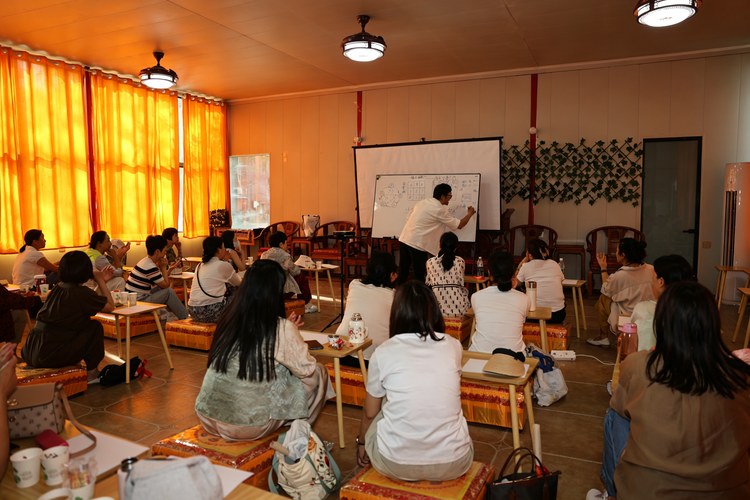
In Zen meditation, practitioners learn to remain attentive without constantly seeking new stimulation. Sitting quietly may initially feel unfamiliar, particularly for people accustomed to busy schedules and continuous digital communication.
At Funzendo, meditation experiences introduce participants to traditional methods of sitting practice and attention training. The emphasis is on learning through direct experience rather than expecting immediate results.
4. The Mindful Minute: Take a Break from Constant Information
By the middle of the working day, many people have already processed a large amount of information. Another notification or social media update may add more stimulation rather than providing genuine rest.
A mindful minute offers a different kind of break.
How to practise:
Stop reading and put your phone aside.
Relax your hands, face, and shoulders.
Notice the natural rhythm of your breathing.
Alternatively, listen to the sounds around you without judging them.
After sixty seconds, return to your activities.
You do not need complete silence. A busy office, a shared workspace, or a quiet outdoor area can all provide opportunities for this exercise.
Taking the practice deeper through mindful tea and eating:
Traditional Chinese tea culture offers a natural connection between mindfulness and everyday activities. During a tea experience, attention can be directed towards the appearance of the tea, its aroma, the warmth of the cup, and the taste of each sip.
The same principle can be applied to eating. Instead of reading messages while having lunch, take time to notice the food, its texture, and its flavour. This approach to mindful eating is particularly relevant in a temple environment, where vegetarian meals can become an opportunity to slow down and appreciate an ordinary daily activity.
At Funzendo, traditional tea culture and temple-based cultural experiences provide opportunities to explore this connection between awareness and daily life.
5. The End-of-Day Reflection: Close the Working Day with Awareness
Finishing work does not always mean that the mind has stopped working. Unfinished tasks, difficult conversations, and tomorrow's responsibilities can continue occupying our thoughts long after leaving the office.
A short reflection ritual can help create a clearer transition between professional responsibilities and personal time.
How to practise:
Before closing your computer, take two minutes away from the screen.
Write down one thing that went well during the day.
Identify one unfinished task to address tomorrow.
Notice one experience or person you appreciate.
Close your notebook and consciously finish the working day.
Taking the practice deeper through Buddhist calligraphy and sutra copying:
Sutra copying is a traditional cultural practice that combines careful writing with sustained attention. Rather than writing quickly to complete a page, practitioners focus on the movement of the brush or pen, the structure of each character, and the rhythm of the writing process.
At Funzendo, traditional Buddhist cultural experiences offer an opportunity to explore practices such as sutra copying and quiet reflection. These activities are not simply alternatives to keeping a personal journal. They provide a different way of experiencing patience, concentration, and mindful participation.
A Simple Daily Mindfulness Schedule
You do not need to reserve a large part of your day for mindfulness. The following schedule shows how the five exercises can fit into an ordinary working routine.
| Time | Practice | Duration |
|---|---|---|
| Start of the day | One-breath pause | 20 seconds |
| Late morning | Desk grounding | 1 minute |
| After lunch | Single-tasking | 10 minutes |
| Mid-afternoon | Mindful minute | 1 minute |
| End of the day | Reflection or journaling | 2 minutes |
This is a suggested daily rhythm rather than a strict timetable. If you are staying at a temple or attending a structured meditation program, these exercises can also be combined with the temple's daily schedule, including sitting meditation, walking meditation, tea experiences, and periods of quiet reflection.
From Workplace Mindfulness to a Temple Meditation Experience
Short mindfulness exercises are useful because they can be practised in familiar surroundings. However, there is a difference between taking a one-minute pause at your desk and spending several days exploring meditation in a dedicated practice environment.
A temple experience offers a change in rhythm. Instead of responding continuously to messages and deadlines, participants have opportunities to follow a more deliberate daily routine. Sitting meditation, walking, tea culture, vegetarian meals, and traditional Buddhist cultural activities can provide different ways to explore awareness.
For people who have spent years in demanding professional environments, this change may initially feel unfamiliar. Some find it difficult to sit quietly, while others become more aware of how often their thoughts return to work and everyday responsibilities.
These experiences are not something that needs to be judged as successful or unsuccessful. They are opportunities to observe personal habits and become more familiar with the practice of attention.
At Funzendo, participants can explore different forms of traditional meditation and learn more about Chinese Zen culture through guided experiences.
Those who wish to spend more time in a temple environment can explore our temple stay experiences, which provide opportunities to experience a different rhythm of daily life.
For visitors interested in the wider history and heritage of Chinese Buddhism, our Zen pilgrimage experiences connect meditation and cultural exploration with historic Buddhist destinations.
Frequently Asked Questions About Mindfulness and Zen Practice
Can beginners participate in a meditation experience at Funzendo?
Yes. Beginners do not need previous meditation experience. They can start with basic breathing awareness, comfortable sitting positions, and introductory meditation guidance. The appropriate program can be selected according to individual interests and experience.
What is the difference between workplace mindfulness and Zen meditation at Funzendo?
Workplace mindfulness usually involves short exercises designed to bring greater awareness into everyday professional activities. Zen meditation is part of a broader contemplative tradition that includes sitting practice, walking meditation, observation, and an understanding of traditional Zen culture. The two approaches can complement one another.
Do I need special equipment or clothing for meditation?
For most introductory experiences, comfortable clothing is sufficient. Specific arrangements and preparation requirements can be confirmed when booking a program. Beginners do not need to purchase specialist meditation equipment before attending.
Can I combine temple accommodation with meditation activities?
Temple accommodation can provide an opportunity to experience a different daily rhythm and explore available cultural and meditation activities. The specific activities, room arrangements, and schedule depend on the selected stay and should be confirmed in advance.
What other cultural experiences are available at Funzendo?
Depending on the program and schedule, participants can explore traditional Chinese tea culture, incense culture, sutra copying, singing bowl experiences, and other cultural activities. Availability and teaching arrangements should be confirmed before booking.
Begin with One Breath, Discover a Deeper Practice
Mindfulness does not have to begin with a major lifestyle change. It can start with one conscious breath, a moment of physical awareness, or a few minutes of quiet reflection at the end of the day.
These small practices offer a practical way to bring greater attention into ordinary activities. As your interest develops, exploring traditional meditation and temple culture can provide a deeper perspective on how awareness is cultivated beyond the workplace.
Funzendo welcomes people interested in discovering Chinese Zen culture through meditation experiences, temple stays, and traditional cultural programs. Whether you are beginning with a simple breathing exercise or looking for a more structured experience, you can explore the available options and find a program that suits your interests.
Explore Funzendo:
Mindfulness is not limited to the moments when we sit quietly. It can also be found in the way we work, walk, eat, communicate, and experience everyday life.