Mount Wutai in China: Understanding the Five Terraces and Manjushri’s Sacred Mountain
In northern China, a remarkable Buddhist landscape rises above the surrounding plains of Shanxi Province. Known as Mount Wutai, or Wutaishan, this mountain is not defined by a single summit. Instead, it is formed by five broad, relatively flat peaks, surrounded by valleys, forests, historic monasteries, and centuries of pilgrimage traditions.
For Buddhists, Mount Wutai holds a special place as the sacred dwelling of Manjushri Bodhisattva, the embodiment of wisdom. For historians and cultural travelers, it offers something equally significant: a rare landscape in which religious belief, mountain geography, architecture, sculpture, and living traditions have developed together over many centuries.
Understanding Mount Wutai requires looking beyond individual temples. Its significance comes from the relationship between the five terraces, the monasteries built around them, and the spiritual ideas that have shaped pilgrimage to this mountain.
1. Why Is Mount Wutai Called the Five-Terrace Mountain?
The Chinese name Wutai Shan (五台山) literally means “Five-Terrace Mountain.” Unlike mountains dominated by sharp, pointed summits, Mount Wutai is characterized by five distinctive high plateaus. These elevated terraces form the geographical identity of the mountain and give the surrounding region its unusual appearance.
The five terraces are traditionally identified as the Eastern, Southern, Western, Northern, and Central Terraces. Each has its own landscape and historical associations. Together, they create a mountain environment that is both geographically distinctive and deeply connected with Buddhist religious culture.
The Northern Terrace is particularly notable for its high elevation, while the other terraces contribute to the wider mountain landscape. From a distance, the open summit areas, steep slopes, forests, and valleys create a striking contrast between exposed high ground and sheltered temple communities.
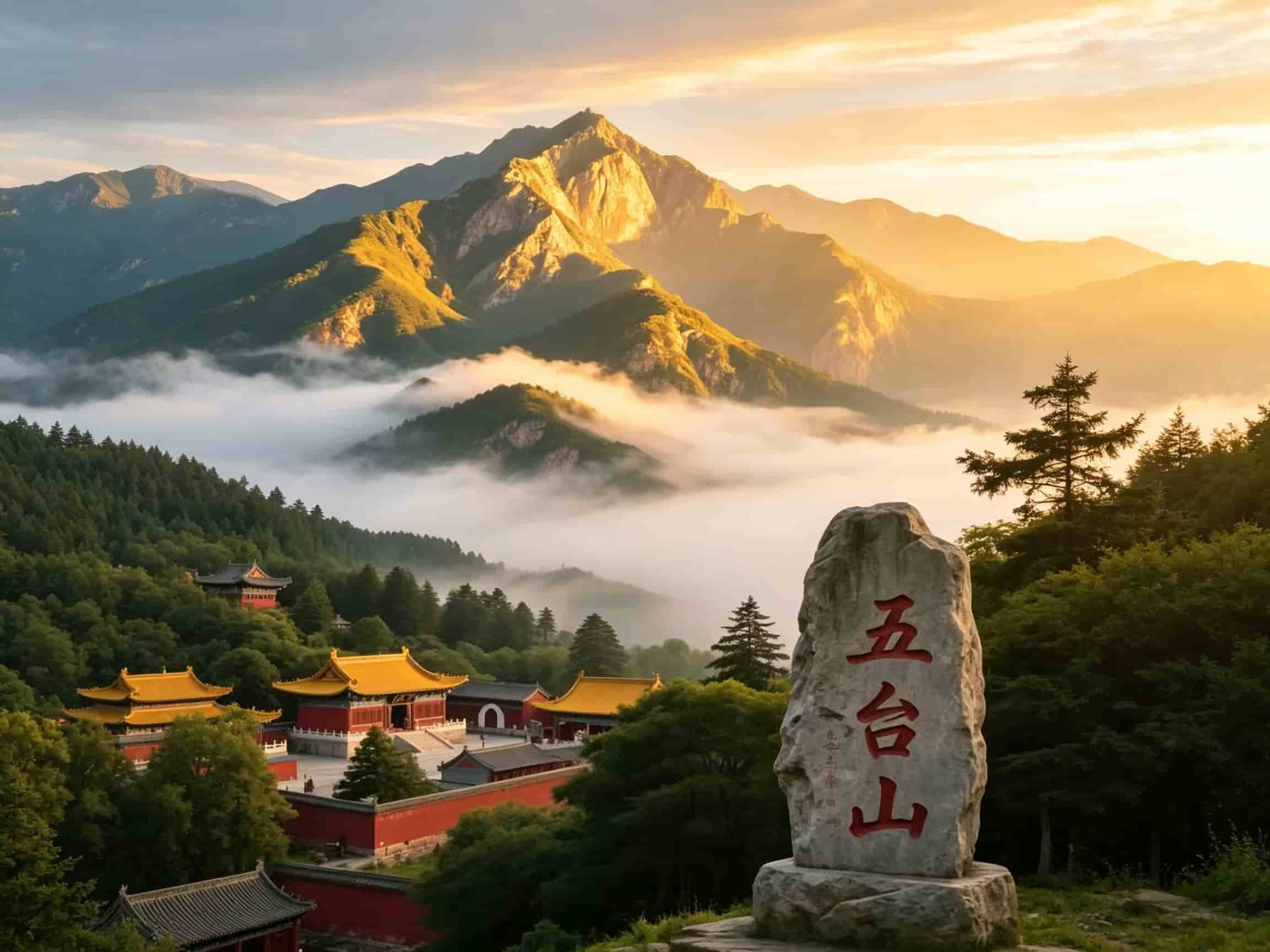
The mountain's name is therefore more than a geographical description. Its five-part structure became closely associated with the religious imagination of Buddhist communities. The natural landscape provided a setting in which sacred geography could be understood through mountains, directions, temples, and pilgrimage routes.
2. Mount Wutai and the Buddhist Tradition of Manjushri
Mount Wutai is widely recognized as the most important center of Manjushri worship in Chinese Buddhism. Manjushri Bodhisattva, known as Wenshu Pusa in Chinese, represents wisdom, insight, and the ability to understand reality clearly.
In Mahayana Buddhist tradition, wisdom is not simply the accumulation of information. It refers to a deeper understanding of existence, including the nature of attachment, ignorance, and suffering. Manjushri symbolizes this clarity of understanding and is often represented holding a sword that cuts through ignorance and a scripture associated with the perfection of wisdom.
The connection between Manjushri and Mount Wutai developed through Buddhist scriptures, religious interpretation, and centuries of devotion. The mountain became known as a sacred place associated with the Bodhisattva's presence. This belief attracted monks, pilgrims, scholars, and rulers from different parts of Asia.
The five terraces also acquired symbolic significance within this tradition. UNESCO's heritage documentation notes the association between the five peaks and the five wisdoms of Manjushri. In this way, the mountain's natural form became part of a broader Buddhist understanding of wisdom and spiritual practice.
3. A Mountain Shaped by Centuries of Buddhist Pilgrimage
Mount Wutai is not simply a collection of historic temples. It is a cultural landscape shaped by generations of people who traveled there for religious practice, study, devotion, and reflection.
Temples have been established on the mountain over many centuries. Different periods of Chinese history brought changes in architectural styles, religious communities, artistic traditions, and patterns of imperial support. The result is a complex heritage in which buildings from different historical periods exist within one interconnected landscape.
During the Northern Wei period, Mount Wutai developed into an important Buddhist center. Later dynasties continued to support the mountain's monasteries and religious institutions. Historical records and inscriptions preserve evidence of imperial visits and pilgrimages, showing that the mountain held significance beyond the local region.
By the Tang Dynasty, Mount Wutai had become an important destination for Buddhist practitioners and international religious exchange. Monks and pilgrims from different parts of Asia visited the mountain, contributing to the movement of Buddhist teachings and artistic ideas across borders.
This long history explains why pilgrimage remains central to the identity of Mount Wutai. Visitors do not encounter only isolated monuments. They enter a landscape in which mountain paths, temples, statues, and religious traditions have been connected through centuries of movement and devotion.
4. Foguang Temple: A Remarkable Survivor of Tang Dynasty Architecture
Among Mount Wutai's historic Buddhist sites, Foguang Temple is especially important for understanding the architectural achievements of the Tang Dynasty.
Its East Main Hall is recognized as one of China's most significant surviving examples of Tang Dynasty timber architecture. The building preserves important evidence of traditional Chinese construction methods, including its wooden structural system, roof design, proportions, and relationship between interior and exterior space.
Inside the hall, Buddhist sculptures contribute to the building's religious and artistic significance. Architecture and sculpture work together to create a sacred interior rather than functioning as separate decorative elements.
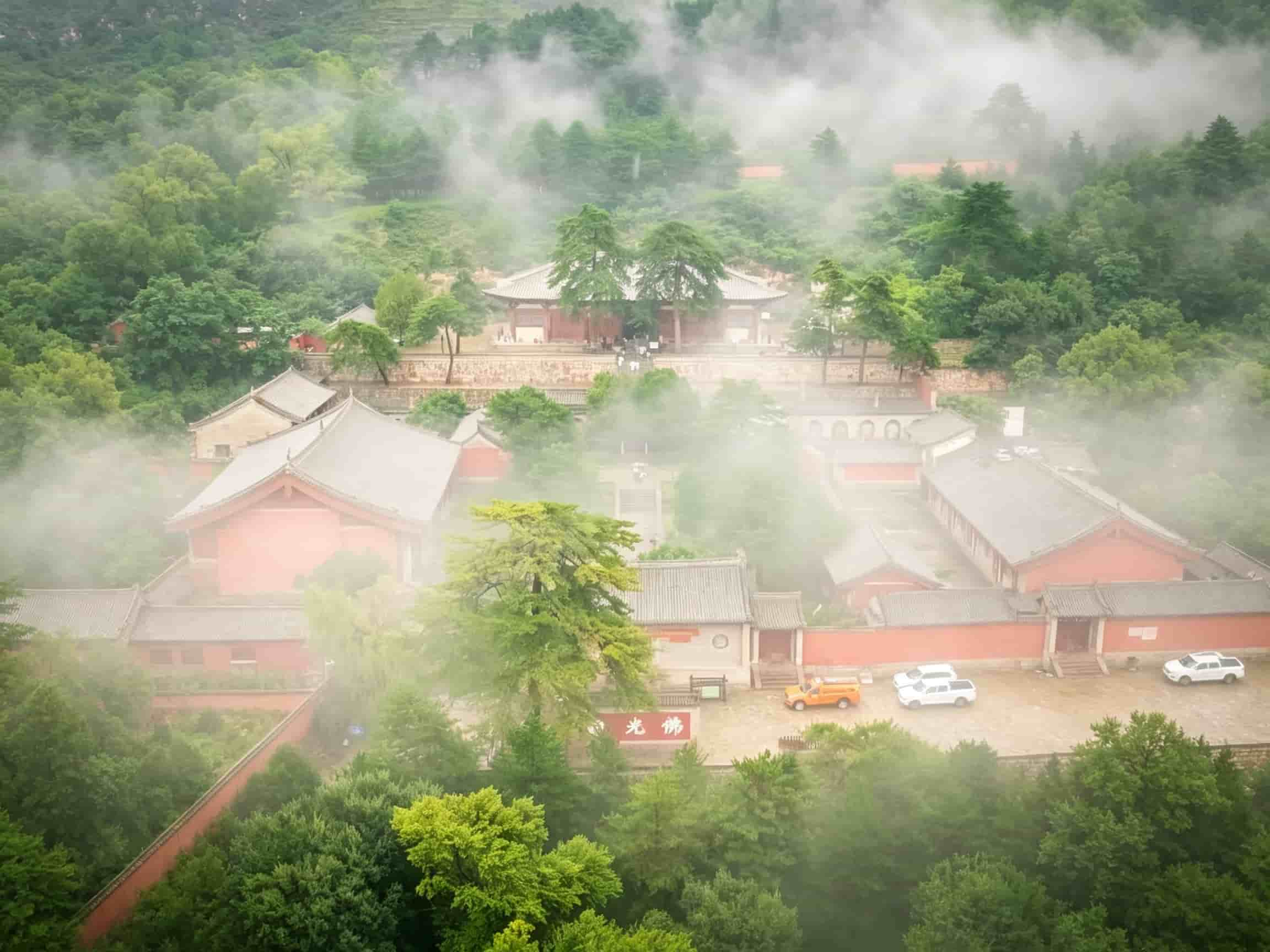
Foguang Temple is important not only because of its age. It allows visitors to study how Buddhist religious spaces were constructed during the Tang period and how architectural traditions developed through the interaction of religious needs, craftsmanship, and Chinese aesthetics.
For people interested in the history of Chinese Buddhist architecture, the temple provides a valuable point of comparison with other heritage sites, including the Buddhist sculptures and historic religious landscape of Luoyang.
5. Shuxiang Temple and the Artistic Representation of Buddhist Wisdom
Another significant site on Mount Wutai is Shuxiang Temple, known for its association with Manjushri Bodhisattva.
The temple is particularly notable for its large sculptural composition depicting Buddhist figures within an elaborate three-dimensional landscape. Rather than presenting religious images as isolated statues, the composition brings together figures, mountains, and spatial elements to create a visual representation of Buddhist stories and sacred geography.
This approach reflects an important feature of Chinese Buddhist art: religious teachings are communicated not only through written texts but also through images, architecture, and carefully organized spaces.
For visitors unfamiliar with Buddhist iconography, Shuxiang Temple offers an opportunity to understand how a religious idea such as wisdom can be expressed through sculpture and artistic composition. The setting encourages observation of the relationship between the central figure, surrounding figures, and the symbolic environment.
It also demonstrates how Buddhist art in China developed its own visual language while remaining connected to wider Mahayana traditions.
6. Why the Mountain Landscape Matters to Buddhist Practice
One of the most distinctive qualities of Mount Wutai is the close relationship between its natural environment and its religious heritage.
In many cultural destinations, historic buildings are experienced as separate attractions. At Mount Wutai, however, the mountains themselves are part of the meaning of the place. The terraces, forests, valleys, changing weather, and high-altitude environment shape the experience of visiting its temples.
The physical journey between religious sites has also become part of the pilgrimage tradition. Walking through mountain paths creates a different relationship with the landscape than simply viewing a temple from a road or entering a building for a short visit.
For pilgrims, movement through the mountain can express devotion and commitment. For cultural travelers, it offers a way to understand how geography influences religious traditions. The experience is not limited to the destination; the route itself becomes meaningful.
This relationship between nature and religious culture is one of the reasons Mount Wutai was inscribed on the UNESCO World Heritage List in 2009 as a cultural landscape. Its heritage value lies in the combined significance of the mountain environment, historic monasteries, architecture, sculpture, and continuing pilgrimage traditions.
7. Mount Wutai in the Wider Story of Chinese Buddhist Heritage
Mount Wutai is one of China's Four Sacred Buddhist Mountains, alongside Mount Emei, Mount Putuo, and Mount Jiuhua. Each mountain is associated with a different Bodhisattva and represents a distinctive tradition of Buddhist devotion.
Its connection with Manjushri gives Mount Wutai a particular place in the study of Chinese Buddhism. It also connects the mountain with broader Asian Buddhist history. Religious travelers from India, Central Asia, Korea, Japan, and other regions contributed to the exchange of ideas, texts, artistic influences, and pilgrimage traditions across centuries.
Seen in this wider context, Mount Wutai is not an isolated religious destination. It belongs to a network of sacred places that helped shape the development of Buddhism throughout China and beyond.
Luoyang provides another important perspective on this history. The city preserves a rich Buddhist heritage, including the Longmen Grottoes and Longmen Guanghua Temple. While Mount Wutai is especially associated with Manjushri, Luoyang offers a different chapter in the development of Chinese Buddhism, including the artistic and religious traditions of the Tang Dynasty.
For visitors interested in exploring these connections, the Longmen Zen Heritage Journey introduces the Buddhist heritage of Luoyang through its historic sites, temple culture, and meditation experience.
8. Experiencing Mount Wutai Through a Cultural Pilgrimage
A meaningful visit to Mount Wutai benefits from more than a list of temples to photograph. Understanding the mountain's religious background, its five terraces, and its association with Manjushri makes the experience more rewarding.
Visitors may wish to explore the relationship between Foguang Temple and Tang Dynasty architecture, observe the artistic traditions represented at Shuxiang Temple, and learn why generations of pilgrims have traveled to the mountain. Respect for local religious customs and the atmosphere of active temples is also essential.
For international travelers, a guided cultural interpretation can help explain the historical and religious context behind places that might otherwise appear unfamiliar. It can also connect Mount Wutai with other important sites in China's Buddhist heritage.
At Funzendo, the Sacred Wisdom Journey: Mount Wutai Pilgrimage from Longmen connects the Buddhist heritage of Luoyang with the sacred mountain tradition of Shanxi. The journey brings together historic temples, mountain landscapes, Buddhist cultural interpretation, and opportunities for meditation and personal reflection.
Discover the Wisdom of China's Sacred Mountain
Mount Wutai is remarkable because its identity cannot be understood through one temple, one statue, or one historical period. Its five terraces, Manjushri tradition, historic monasteries, and continuing pilgrimage culture form a connected heritage landscape.
For those interested in Chinese Buddhism, the mountain offers an opportunity to explore how religious ideas become rooted in geography, architecture, and artistic expression. For cultural travelers, it provides a deeper perspective on China's spiritual history and the relationship between people and sacred places.
To understand Mount Wutai is to discover more than a famous Buddhist destination. It is to encounter a living cultural landscape where the search for wisdom has shaped the mountains, temples, and journeys of generations.