Moxibustion in Traditional Chinese Wellness: History, Practice and Safety
In traditional Chinese wellness culture, warmth has long been associated with comfort, seasonal care, and the relationship between the human body and its environment. One practice that reflects this tradition is moxibustion, known in Chinese as jiu (灸). It uses heat generated by burning dried mugwort, commonly prepared as moxa, near selected areas of the body.
For many international visitors, moxibustion is one of the more recognizable practices associated with Traditional Chinese Medicine (TCM), yet it is often misunderstood. It is not simply the application of heat, nor is it a technique that should be attempted without instruction. Its traditional background, methods of application, and safety considerations all deserve attention.
At Funzendo, located at Longmen Guanghua Temple in Luoyang, moxibustion is introduced as part of a broader seven-day Traditional Chinese Medicine Wellness Training program. This article explores the cultural background of the practice, explains the basic concepts behind it, and considers what responsible learning should involve.
1. What Is Moxibustion?
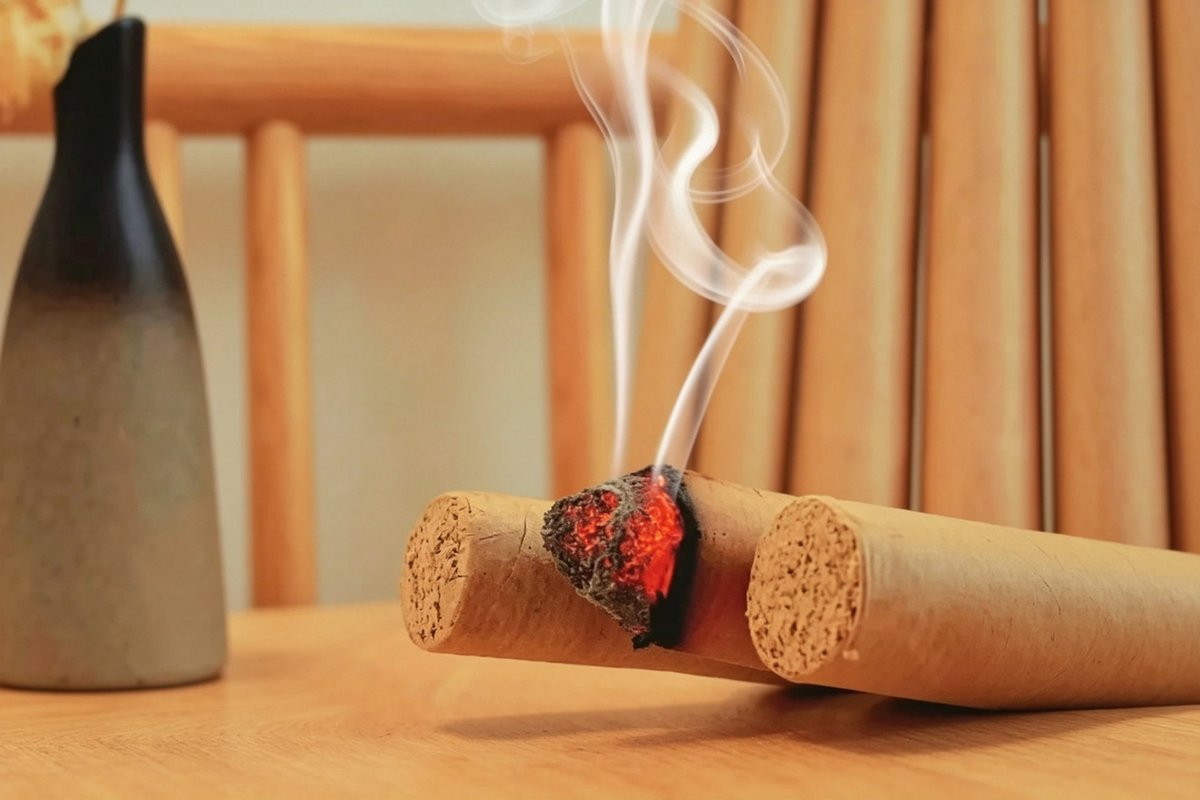
Moxibustion is a traditional Chinese practice that uses heat produced by burning dried mugwort, or Artemisia, near particular points or areas of the body. The prepared plant material is commonly called moxa.
In traditional Chinese medicine theory, the practice is associated with meridians, acupoints, and the concepts of warmth and balance. These ideas form part of a historical medical framework that developed over many centuries. They should be understood within their traditional context rather than treated as direct equivalents of modern anatomical or physiological explanations.
Moxibustion is sometimes discussed alongside acupuncture because both traditions refer to meridians and acupoints. However, their methods are different. Acupuncture generally involves the insertion of fine needles, while moxibustion uses heat from burning moxa.
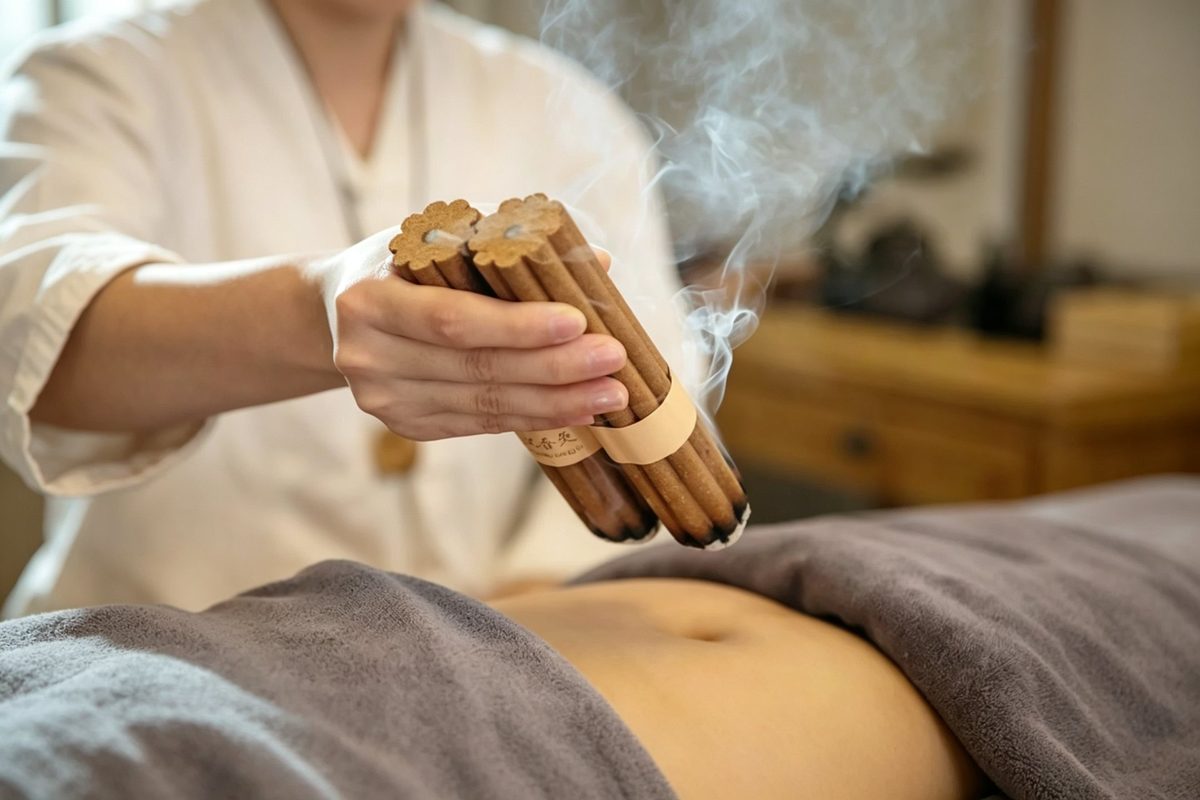
Depending on the method, moxa may be held near the skin or used with an appropriate protective barrier. Direct techniques also exist, but they carry a greater risk of burns and require particular professional judgment. The method used should be selected and performed by a suitably trained practitioner.
2. The Cultural Background of Mugwort and Moxa
Mugwort has a long history in Chinese daily life and traditional culture. It is associated with seasonal customs, household practices, and traditional approaches to health preservation. During the Dragon Boat Festival, for example, mugwort is traditionally displayed or hung in some Chinese households as part of seasonal folk customs.
This cultural association helps explain why mugwort appears in more than one context. It is not only a material used in traditional moxibustion, but also a plant with a recognizable place in Chinese seasonal traditions.
Traditional moxa is prepared from dried mugwort leaves. The plant material is processed into forms suitable for different applications, including moxa rolls and moxa wool. The quality, preparation, and handling of the material influence how it is used in practice.
3. How Does Moxibustion Work in Traditional Chinese Medicine?
To understand moxibustion, it is helpful to become familiar with several concepts commonly used in Traditional Chinese Medicine.
Meridians and Acupoints
Traditional Chinese Medicine describes a network of meridians through which Qi is understood to circulate. Acupoints are specific locations identified within this traditional system. Moxibustion practice may involve applying warmth near selected points according to a practitioner's assessment and the method being used.
These concepts belong to the theoretical framework of TCM. They should not be confused with a literal map of blood vessels, nerves, or other structures recognized in modern anatomy.
Warmth and Traditional Ideas of Balance
In traditional explanations, moxibustion is associated with warming methods and the relationship between cold, warmth, and the body's overall condition. Practitioners may discuss these ideas through concepts such as Yin and Yang.
For international learners, the important point is to understand the language and reasoning used within the tradition. Learning the historical theory does not mean assuming that every traditional explanation has been established as a modern medical mechanism.
Different Methods of Application
Moxibustion is not a single fixed procedure. Different forms have developed, including methods in which a moxa roll is held at a controlled distance from the skin and methods that use a protective barrier. Each approach requires knowledge of heat management, positioning, the individual's condition, and the surrounding environment.
For beginners, learning to recognize the differences between methods is more important than trying to perform them independently.
4. What Happens During a Moxibustion Session?
A responsible session should begin with an assessment rather than immediately applying heat. A practitioner needs to understand the participant's general condition, relevant health history, sensitivity to heat, and any circumstances that may make the procedure unsuitable.
The method and location should be explained before the session begins. The practitioner should also consider the room environment, ventilation, equipment, and measures to prevent accidental contact with hot material or falling ash.
During a professionally supervised session, important considerations include:
Preparation: Understanding the participant's needs and checking whether the practice is appropriate.
Method selection: Choosing a suitable approach rather than applying the same technique to everyone.
Heat management: Maintaining an appropriate distance and monitoring heat exposure.
Communication: Making sure the participant can report discomfort and that the practitioner responds promptly.
Environment: Managing smoke, ventilation, hot materials, and fire safety.
The purpose of explaining these steps is not to provide a do-it-yourself treatment guide. Moxibustion involves burning material close to the body and should be learned and performed under appropriate professional supervision.
5. Moxibustion Safety: What Beginners Should Know
Traditional does not automatically mean risk-free. Because moxibustion involves heat and combustion, it requires careful handling and an understanding of potential adverse effects.
Burns and Skin Sensitivity
Excessive heat or incorrect application can cause burns, blistering, or skin damage. People with reduced heat sensation may be especially vulnerable because they might not recognize excessive warmth quickly enough. Direct moxibustion carries particular risks and should not be treated as a casual home activity.
Smoke and Ventilation
Burning moxa produces smoke and an identifiable odor. The room should have suitable ventilation, and people who are sensitive to smoke or have respiratory concerns should discuss the risks with a qualified healthcare professional before exposure.
Individual Health Conditions
Pregnancy, impaired sensation, skin injuries, allergies, and certain medical conditions may affect whether moxibustion is appropriate. Anyone with a relevant health concern should obtain professional advice before participating. A practitioner should not assume that one method is suitable for every person.
Professional Training Matters
Safe practice involves more than knowing where traditional acupoints are located. It also requires understanding the material, heat exposure, positioning, hygiene, fire precautions, communication, and when not to proceed.
Published reviews of reported adverse events have documented burns, allergic reactions, and other complications associated with moxibustion. These findings reinforce the importance of practitioner skill and appropriate safety procedures. For an overview, see the research review on the safety of moxibustion.
Moxibustion should not replace medical diagnosis or treatment. A cultural or wellness course is educational and should not be interpreted as a qualification to diagnose or treat disease.
6. Moxibustion as Part of a Broader Chinese Wellness Tradition
One of the most interesting aspects of traditional Chinese wellness is the way different practices are discussed in relation to one another. Moxibustion is often introduced alongside meridian massage, dietary traditions, and theories of individual constitution.
These practices have different histories and methods, but they share a place within the wider landscape of Chinese health culture.
Meridian Massage
Traditional Chinese bodywork includes various massage methods associated with meridian theory. Learning about these methods introduces students to traditional ideas of body structure, pressure, movement, and relaxation. Massage training also requires attention to appropriate pressure, contraindications, and individual comfort.
Medicinal Food and Seasonal Eating
Traditional Chinese dietary culture considers ingredients, preparation, and seasonal patterns. Medicinal food therapy is a cultural and theoretical approach to understanding the relationship between food and health preservation. It should not be confused with prescribing food as a substitute for medical treatment.
Five Elements Theory
The Five Elements—Wood, Fire, Earth, Metal, and Water—form an important part of traditional Chinese philosophy and TCM theory. They are used in traditional discussions of relationships, patterns, and individual constitution. Learning this framework helps students understand the vocabulary and worldview behind many Chinese wellness practices.
Studying these subjects together gives learners a broader cultural perspective than focusing on one technique in isolation.
7. Learning Moxibustion at Funzendo in Luoyang
For visitors who want to explore traditional Chinese wellness through structured learning, Funzendo offers a Seven-Day Traditional Chinese Medicine Wellness Training at Longmen Guanghua Temple in Luoyang, China.
The course introduces several connected subjects through guided instruction and practical learning. Moxibustion is one part of the program rather than its only focus.
What the Seven-Day Program Covers
Day 1 – Introduction to TCM Wellness: An introduction to traditional Chinese medicine philosophy, Yin-Yang, Five Elements, and traditional ideas about body constitution.
Days 2–3 – Moxibustion and Acupoint Practice: An introduction to meridian knowledge, important acupoints, and traditional moxibustion methods through guided learning.
Days 4–5 – Meridian Massage Training: Learning basic concepts of Chinese meridian systems and practicing traditional massage methods under guidance.
Day 6 – Medicinal Food Therapy: Exploring traditional dietary wellness concepts, ingredients, preparation, and seasonal food culture.
Day 7 – Wellness Integration: Reviewing the subjects covered and exploring how traditional wellness ideas can be understood in everyday life.
The official course page lists the program as suitable for beginners and people interested in traditional Chinese wellness. No previous TCM experience is required according to the course description.
Participants can review the full course outline, accommodation information, inclusions, and booking details on the Traditional Chinese Medicine Wellness Training page.
8. Who Might Be Interested in This Learning Experience?
A structured introduction to moxibustion and TCM culture may appeal to several kinds of learners:
Culture-focused travelers: Visitors who want to understand traditional Chinese practices beyond museums and historical landmarks.
Wellness enthusiasts: People interested in learning how traditional Chinese wellness concepts developed.
Bodywork and meditation practitioners: Learners who want to broaden their understanding of Chinese wellness traditions.
Beginners: People who are curious about TCM but prefer a guided introduction rather than learning from disconnected online information.
Those seeking professional clinical qualifications should carefully check the scope and recognition of any course before enrolling. A course completion certificate is not automatically equivalent to a government-issued medical license or a professional acupuncture qualification.
9. Experience Chinese Wellness Culture in Luoyang
Luoyang is known internationally for its Buddhist heritage, including the Longmen Grottoes. Yet the city's cultural landscape also offers opportunities to explore traditional Chinese ideas about daily life, self-cultivation, and wellness.
At Longmen Guanghua Temple, Funzendo brings together meditation, cultural experiences, and traditional wellness learning. Its TCM training program offers an introduction to moxibustion, meridian massage, medicinal food traditions, and Five Elements theory in a structured seven-day format.
For visitors who want to explore other learning opportunities, the Funzendo Training Programs page introduces additional courses in traditional Chinese culture and wellness. You can also browse the wider Funzendo Programs collection to learn about meditation, retreats, and cultural journeys.
Conclusion: Understanding the Tradition Before Practicing It
Moxibustion is more than the use of a burning mugwort roll. It is a practice rooted in a traditional framework of meridians, acupoints, warmth, and balance. Understanding its cultural background is valuable, but responsible learning also means recognizing its limitations and safety requirements.
For anyone interested in Traditional Chinese Medicine, moxibustion offers a starting point for exploring a wider body of knowledge. By learning about its materials, methods, history, and precautions, visitors can approach this tradition with greater understanding and respect.
At Funzendo in Luoyang, the seven-day Traditional Chinese Medicine Wellness Training provides an opportunity to explore moxibustion alongside other traditional Chinese wellness subjects through guided learning and cultural experience.