Solo Travelers' Guide to Temple Stays in China: Is It Safe?
Traveling alone can be one of the most rewarding ways to discover a new country. It gives you the freedom to follow your own interests, move at your own pace, and experience places beyond the usual tourist route. But when the destination is a Buddhist temple in China, it is natural to have a few more questions than you would when booking an ordinary hotel.
Is a temple stay suitable for someone arriving alone? Will you have enough privacy? How do you communicate with the people responsible for your accommodation? And what should you do if you need assistance during your visit?
For international visitors considering a stay at Longmen Guanghua Temple in Luoyang, these are practical questions worth answering before making a booking. Funzendo introduces visitors to temple accommodation, Zen meditation experiences, and traditional Chinese Buddhist culture in this historic setting. A little preparation can help solo travelers understand the environment, make informed arrangements, and enjoy the experience with greater confidence.
This guide looks honestly at the safety considerations, social atmosphere, accommodation questions, and travel preparations involved in planning a solo temple stay in China.
Is It Safe to Stay at a Buddhist Temple in China Alone?
The most honest answer is that safety depends on the specific accommodation, its location, the arrangements made with the host, and how well you prepare for the journey. A temple stay should not automatically be considered safer than a hotel simply because it takes place in a religious environment.
However, staying through an established program with clearly identified accommodation and a direct booking contact can make planning easier than arriving somewhere without prior arrangements. You can ask questions before travelling, confirm the room setup, obtain arrival instructions, and understand which activities or services are available.
Funzendo is located at Longmen Guanghua Temple in Luoyang, Henan Province, near the Longmen Grottoes. The temple is a historic Buddhist site associated with Tang Dynasty Esoteric Buddhism. Its setting is different from a city-centre hotel: the surroundings are quieter, temple customs are important, and visitors should be prepared for a more traditional environment.
For solo travelers, the key is not to rely on general assumptions. Confirm the practical details directly with Funzendo before departure, including your accommodation, arrival arrangements, contact person, and the support available during your stay.
Why Choose a Temple Stay When Traveling Alone?
A temple stay offers a different experience from independent sightseeing. Rather than spending the entire day moving between attractions, you have the opportunity to remain in one place, become familiar with the surroundings, and learn about a local cultural tradition.
1. A More Settled Travel Experience
Solo travel often involves repeated decisions: where to eat, how to get around, what to visit next, and how to organize each day. A temple stay can provide a more settled base. You can spend time in the temple environment, explore nearby heritage sites, or simply enjoy some quiet time without planning a new route every few hours.
This slower pace can be particularly appealing after a busy journey through several Chinese cities.
2. Opportunities to Meet Other Visitors
Traveling alone does not necessarily mean spending every moment alone. Depending on the dates and activities available, guests may have opportunities to meet other visitors through shared cultural sessions, meditation experiences, or group activities.
At the same time, a temple stay should not be confused with a social hostel. The atmosphere is generally quieter, and guests may prefer reading, walking, meditation, or personal reflection. You can enjoy interaction when it is available without feeling that you need to be constantly social.
3. A Chance to Experience Chinese Temple Culture
For many international travelers, the most interesting part of a temple stay is the opportunity to understand everyday Buddhist culture beyond what can be seen during a short sightseeing visit.
At Guanghua Temple, visitors can discover traditional architecture, temple customs, vegetarian dining, and the history of Chinese Esoteric Buddhism. Optional activities may include meditation or participation in selected temple practices, depending on the schedule and availability.
You do not need to be Buddhist or have previous meditation experience to enquire about the stay. The important thing is to approach the temple environment with respect and an open mind.
What Does Traveling Solo at Guanghua Temple Actually Feel Like?
Imagine arriving in Luoyang after several days of travelling. Instead of checking into another busy city hotel, you make your way toward Longmen, where the landscape gradually becomes quieter and the surroundings begin to reflect a different rhythm of life.
Guanghua Temple stands on the western hillside of Longmen Village. Its traditional buildings, red walls, courtyards, and stone steps create an environment quite different from the commercial areas of a modern city. The approach to the temple includes a series of stone steps, so visitors should be prepared for some uphill walking.
Once you arrive, the first priority is to settle into your accommodation and understand the practical arrangements. You can ask where your room is located, how to contact the responsible person, where shared facilities are, and which areas are open to visitors.
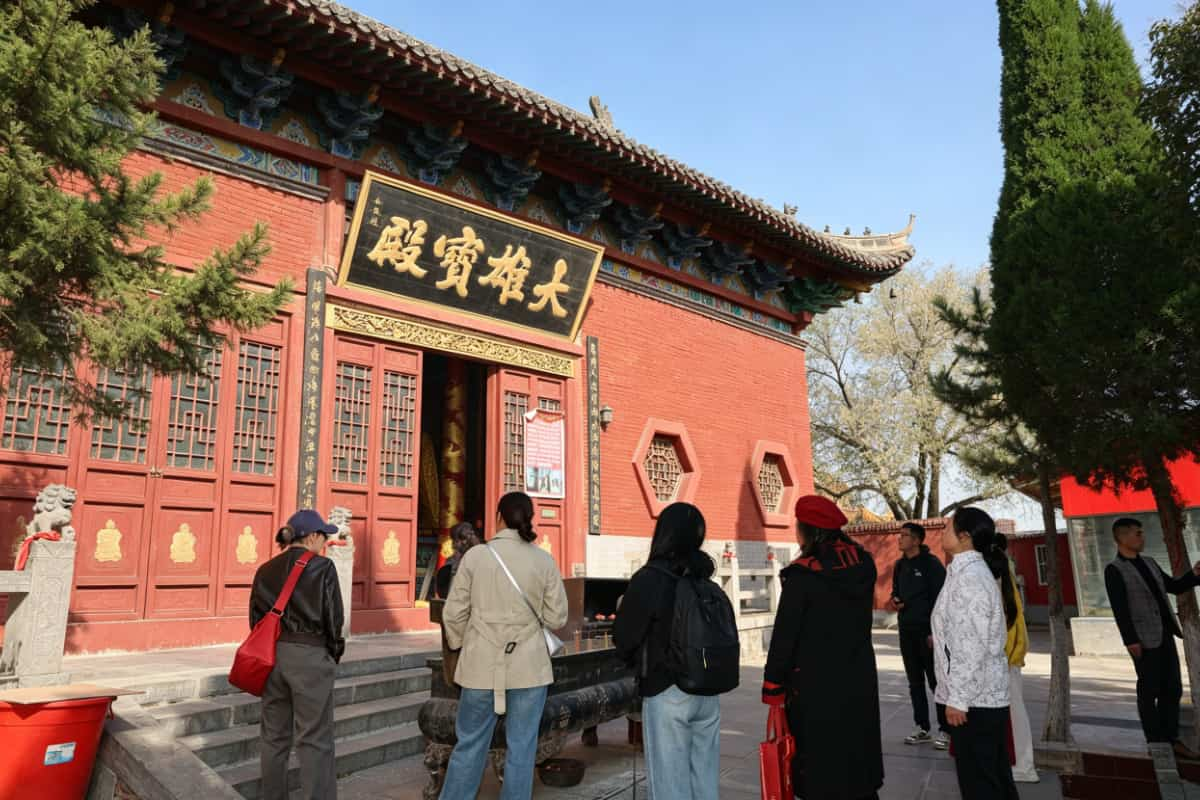
The experience is not necessarily a tightly scheduled retreat from morning until night. Some activities are optional, and guests may have time for independent reflection or exploring the temple surroundings. The exact daily arrangements should be confirmed when you book.
If group activities are available during your visit, they can offer a natural opportunity to meet other participants. If you prefer a quieter experience, you can discuss your interests with Funzendo before confirming your dates.
For someone travelling alone, knowing what to expect is often more reassuring than assuming that every detail will be arranged automatically.
Accommodation and Privacy: What Should Solo Guests Check?
One of the most important questions for an independent traveler is whether the accommodation offers the level of privacy they need. A room described as a double room, triple room, or family suite does not automatically mean that a solo guest will have a private room at a particular price.
The Guanghua Temple Zen Stay page describes several accommodation types with private bathrooms. However, solo travelers should confirm whether a room can be booked for single occupancy, whether the quoted rate changes for one guest, and whether any shared arrangements apply.
Before booking, ask:
Can I reserve a room for myself?
Will I have a private bathroom?
Will the room be shared with another guest?
Where is the room located in relation to the main temple areas?
Are there any access arrangements or quiet-hour requirements?
Who should I contact if I have a room or facility issue?
These questions are especially important if you are a woman travelling alone, have specific privacy requirements, or are unfamiliar with communal accommodation in China.
You can review the accommodation information on the Guanghua Temple Zen Stay page and ask Funzendo to confirm the room arrangement that applies to your dates.
Practical Safety Tips for Solo Travelers
A peaceful destination does not remove the need for ordinary travel precautions. Whether you are visiting Luoyang for the first time or have travelled around China before, these simple steps can make your stay more organized.
1. Confirm Your Booking Before You Travel
Do not rely on an informal conversation or an unconfirmed online enquiry as proof that your accommodation is ready. Keep a written confirmation showing your dates, room arrangement, price, payment status, and arrival instructions.
If any detail changes, ask for the updated arrangement in writing.
2. Arrange Your Arrival in Advance
If possible, plan to reach Luoyang during daylight, particularly if this is your first visit to the area. Confirm the exact destination and the best way to reach the temple before leaving the railway station or airport.
Save the temple address in Chinese as well as English. This can be useful when communicating with a local driver or asking for directions.
3. Keep Your Own Communication Options
Arrange a reliable way to access maps, messages, and travel information while in China. International mobile services, websites, and payment applications may work differently from those in your home country.
Before travelling, check your mobile roaming options or arrange a suitable local connectivity solution. Keep your phone charged and carry a power bank if you expect to spend a long day exploring.
4. Share Your Travel Details
Send a trusted friend or family member your accommodation details, travel dates, and expected arrival time. Let them know when you have reached Luoyang and when you have checked in.
This is a simple precaution for any solo trip, whether you are staying in a hotel, guesthouse, or temple accommodation.
5. Understand the Temple Environment
A Buddhist temple is a religious space as well as a place of cultural interest. Visitors should dress modestly, keep noise to a minimum, follow local instructions, and respect areas where access or photography may be restricted.
At Guanghua Temple, smoking, alcohol, and non-vegetarian food are not permitted within the temple grounds. Temple activities are optional and depend on availability. Understanding these expectations before arrival can help you avoid uncomfortable situations.
6. Keep Emergency Information Accessible
Save the contact details of your accommodation and your travel insurance provider. Keep your passport and essential documents secure, and know how to contact local emergency services if necessary.
If you have a medical condition, mobility limitation, or other requirement that may affect your stay, discuss it with Funzendo before booking rather than waiting until you arrive.
Is a Temple Stay Suitable for Women Traveling Alone?
Women travelling independently may have additional questions about room privacy, shared facilities, arrival arrangements, and access to assistance. These concerns are reasonable and should be addressed directly rather than dismissed with a general assurance.
Before confirming a stay, ask whether single occupancy is available, whether the bathroom is private, and whether any shared spaces or facilities are used by guests of different genders. If you would prefer to have a named contact person during your visit, ask who will be responsible for guest enquiries and how they can be reached.
It is also sensible to clarify the location of your room, the expected quiet hours, and whether you can enter and leave the accommodation area independently during the day.
There is no need to feel uncomfortable about asking these questions. A responsible booking process should give you enough information to decide whether the arrangement suits your personal needs.
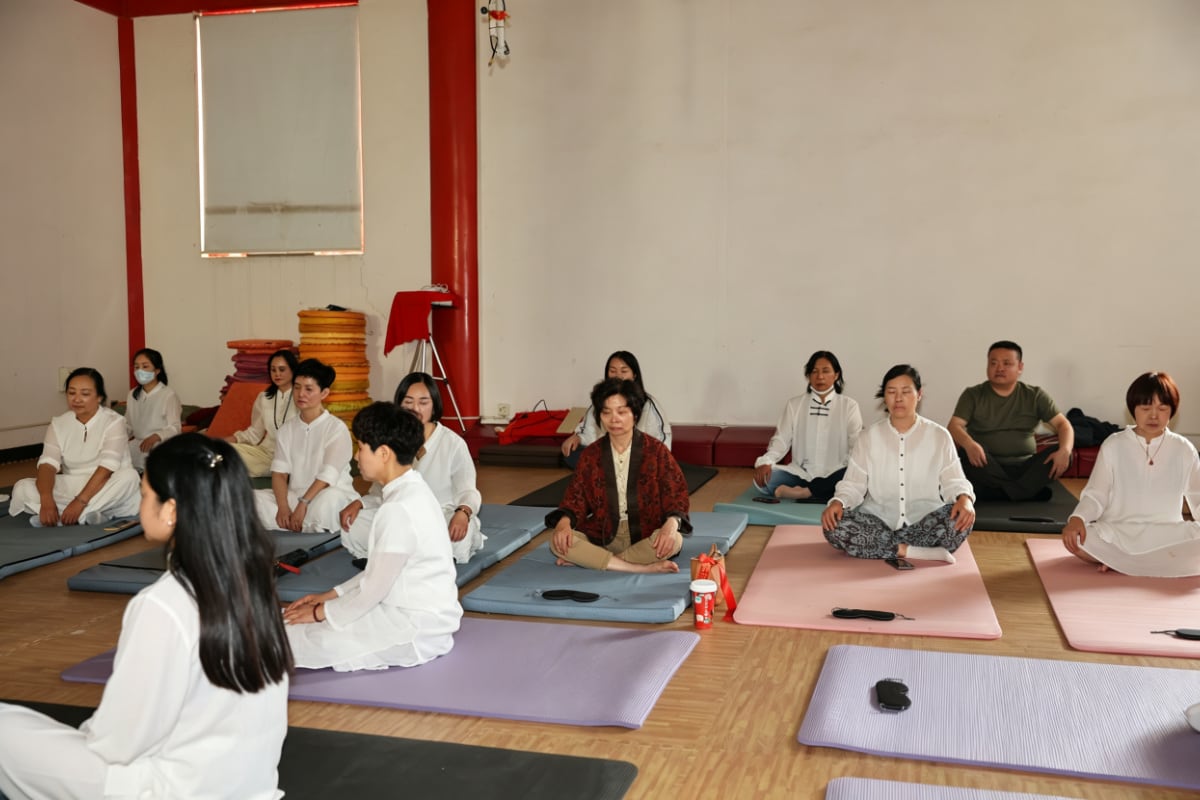
Will You Feel Lonely During a Solo Temple Stay?
This is a different question from physical safety, but it matters just as much to many independent travelers.
A temple stay is generally quieter than a group tour or a social hostel. You may spend part of the day reading, walking, meditating, or enjoying time on your own. If you are used to travelling with friends, the quieter atmosphere may feel unfamiliar at first.
However, being alone does not mean that you must remain isolated. If other guests are staying at the temple or a group activity is scheduled, you may have opportunities to talk with people who share an interest in Chinese culture, meditation, or Buddhist heritage.
It can help to approach the experience without expecting constant entertainment or conversation. A temple stay is often most rewarding when you are comfortable with a balance of personal time and occasional interaction.
If meeting other participants is important to you, mention this when enquiring. Ask whether group meditation, cultural sessions, or shared activities are planned for your dates. These arrangements should be confirmed rather than assumed.
How to Book a Temple Stay as a Solo Traveler
The booking process is straightforward, but it is worth being specific about your needs. Start by reviewing the Funzendo Temple Stay page and the details of the Guanghua Temple Zen Stay.
When you contact the team, include:
Your preferred arrival and departure dates.
The fact that you are travelling alone.
Whether you require a private room and private bathroom.
Your preferred room arrangement and any privacy requirements.
Whether you would like to participate in meditation or cultural activities.
Your language requirements and preferred contact method.
Any dietary, medical, or mobility considerations relevant to the stay.
Before making payment, request written confirmation of the room, total price, included services, payment terms, cancellation conditions, and arrival instructions.
If you are interested in a more structured program rather than accommodation alone, you can also explore the Zen Pilgrimage programs. These journeys follow planned cultural routes and may involve different accommodation and transport arrangements from a temple stay.
Temple Stay or Zen Pilgrimage: Which Is Better for Solo Travelers?
Both experiences can be suitable for independent visitors, but they offer different travel rhythms.
| Consideration | Temple Stay | Zen Pilgrimage |
|---|---|---|
| Travel pace | Generally slower and based in one location. | More structured, with travel between destinations. |
| Accommodation | Temple accommodation, subject to availability. | Arranged according to the specific itinerary. |
| Personal time | More opportunity for quiet time at one location. | Time is organized around the route and visits. |
| Cultural focus | Temple life and local Buddhist culture. | Multiple heritage sites and regional traditions. |
| Best suited to | Travelers seeking a settled and reflective stay. | Travelers who want a guided cultural journey. |
If you prefer to unpack once and become familiar with one place, a temple stay may be the better starting point. If you want to explore several Buddhist heritage destinations and prefer a planned route, a pilgrimage may suit you better.
Frequently Asked Questions
Is it strange to visit a Buddhist temple alone?
No. Independent travel is a normal way to explore cultural destinations. You do not need to arrive with a companion to enquire about a temple stay. The important thing is to confirm that the accommodation and program suit your needs.
Can I have my own room at Guanghua Temple?
The accommodation page lists room types with private bathrooms, but solo occupancy and the applicable price must be confirmed directly. State clearly that you are travelling alone and require a private room if that is important to you.
Do I need to be Buddhist to stay at the temple?
No previous meditation experience or Buddhist background is required to enquire about the temple stay. Guests are welcome to learn about traditional Chinese Buddhist culture while respecting the temple's customs.
Will someone speak English during my stay?
Language support should be confirmed before booking. Let Funzendo know your preferred language and ask what assistance is available during arrival, accommodation, and any scheduled activities. Do not assume that every temple staff member speaks English.
Can I join meditation sessions if I am a beginner?
Yes. The Guanghua Temple Zen Stay information states that previous meditation experience is not required. Activities are optional and depend on availability, so ask which sessions are planned during your dates.
What if I need help during my stay?
Before arrival, ask for the appropriate contact person and the best way to reach them. Keep those details accessible throughout your visit. If you have an urgent safety or medical issue, contact the relevant local emergency service rather than relying only on a booking contact.
Can I combine a temple stay with sightseeing in Luoyang?
Yes. You can discuss adding visits to nearby cultural attractions, including the Longmen Grottoes, when planning your itinerary. If you want a more structured route through Buddhist heritage sites, explore the Zen Pilgrimage options.
Come Alone, but Plan With Confidence
A solo temple stay in China can be a meaningful way to experience a different pace of travel. At Longmen Guanghua Temple, you can explore traditional Buddhist architecture, learn about Chinese temple culture, and enquire about opportunities for meditation and quiet reflection.
The best preparation is also the simplest: confirm your room, understand the facilities, arrange your arrival, save the right contact details, and ask about language support and activities before you travel. These steps help replace uncertainty with clear expectations.
You do not need to be an experienced meditator or a Buddhist practitioner to begin exploring the possibility of a temple stay. You simply need to choose an arrangement that fits your comfort level and approach the experience with respect.
Explore the Guanghua Temple Zen Stay to learn more about accommodation and temple life, or browse the Zen Pilgrimage programs if you would prefer a guided cultural journey.
If you are travelling alone and have questions about room privacy, arrival arrangements, or language support, include them in your enquiry. Funzendo can clarify the available arrangements so you can decide whether the experience is right for you.
Planning a solo visit?Contact Funzendo to discuss your dates and accommodation requirements.
Funzendo · Longmen Guanghua Temple · Luoyang, Henan, China