Tai Chi vs Qigong: Key Differences, Benefits and How to Choose the Right Practice
Across parks, traditional courtyards, and quiet public spaces in China, it is common to see people practising slow, graceful movements. Their arms move gently through the air, their weight shifts from one foot to another, and their breathing follows a calm, steady rhythm. To someone unfamiliar with these traditions, the movements may all look alike. However, they may be practising two different Chinese arts: Tai Chi and Qigong.
Both practices have deep connections with traditional Chinese culture and emphasize coordinated movement, breathing, and awareness. They are often introduced as gentle ways to develop balance, relaxation, and a stronger connection with the body. Yet their origins, structures, and teaching methods are not identical.
Tai Chi developed from Chinese martial arts and is commonly practised through carefully connected movement sequences. Qigong is a broader family of practices involving breathing, posture, gentle movement, and mental concentration. Some forms are performed standing, others sitting or moving slowly through a series of exercises.
Understanding these differences can help you choose a practice that suits your interests, physical condition, and available time. This guide explores the history, characteristics, and practical differences between Tai Chi and Qigong, while introducing how these traditional Chinese movement arts can be experienced through the wellness and cultural programs at Funzendo.
What Do Tai Chi and Qigong Have in Common?
Although Tai Chi and Qigong have different histories and structures, they share several important principles. Both developed within Chinese traditions that view the relationship between the body, breathing, and mind as an important part of personal cultivation.
Rather than relying on fast movements or physical competition, many forms of both practices emphasize controlled movement, relaxed posture, and sustained attention.
There are four particularly important similarities:
Gentle, controlled movement: Both practices can involve slow and deliberate movements that may be adapted to different experience levels.
Breathing awareness: Practitioners are encouraged to notice their breathing and coordinate it naturally with movement.
Relaxation and concentration: Attention is directed towards posture, movement, and physical sensations rather than speed or competition.
Traditional Chinese philosophy: Both are associated with Chinese ideas about balance, harmony, and the relationship between people and their surroundings.
Neither practice generally requires expensive equipment or a specialized gym. Comfortable clothing and enough space to move safely are usually sufficient for introductory exercises.
However, these similarities should not obscure their differences. To understand which practice may suit you better, it is useful to look at each one separately.
What Is Tai Chi? Understanding the Chinese Martial Art
Tai Chi, also known as Taijiquan, is a traditional Chinese martial art that has developed into several different styles and training approaches. Today, many people practise it for movement education, physical conditioning, balance, and personal cultivation rather than for combat.
One of its most recognizable features is the continuous sequence of movements known as a form. Practitioners learn a series of postures and transitions, gradually connecting them into a flowing routine.
Unlike ordinary stretching exercises, Tai Chi involves coordinated weight shifting, body alignment, controlled stepping, and changes in direction. Each movement has a particular structure, and learning the transitions requires patience and repeated practice.
The Main Characteristics of Tai Chi
Structure: Practitioners learn a connected sequence of movements, usually introduced step by step.
Movement: The body moves continuously through different postures, with attention to balance and coordination.
Training focus: Common areas of attention include body control, stability, posture, and movement awareness.
Learning process: Students gradually become familiar with the form, refine individual movements, and improve the transitions between them.
For beginners, remembering the sequence may initially be challenging. However, this process is also part of the practice. As students become familiar with the movements, they can pay greater attention to the quality of each posture rather than simply remembering what comes next.
Tai Chi can be particularly appealing to people who enjoy structured learning and would like to develop a physical skill over time.
How Does Tai Chi Feel in Practice?
A Tai Chi session often begins with basic posture adjustments and gentle warm-up movements. Students then learn individual movements before connecting them into a sequence.
The pace is generally controlled rather than hurried. Practitioners are encouraged to avoid unnecessary tension and maintain awareness of how their weight moves between their feet.
For someone accustomed to conventional exercise, Tai Chi may feel surprisingly subtle. The movements are not necessarily strenuous, but maintaining balance, coordination, and proper body alignment requires attention.
What Is Qigong? Exploring the Practice of Breath and Movement
Qigong is a broad category of traditional Chinese practices involving movement, posture, breathing, and mental concentration. The word combines two Chinese concepts: Qi, traditionally understood as vital energy, and Gong, referring to skill developed through sustained practice.
Within traditional Chinese culture, Qigong is associated with cultivating and regulating Qi through coordinated physical and mental exercises. This is a traditional framework rather than a scientific measurement of energy circulating through the body.
Unlike Tai Chi, Qigong does not depend on one particular martial form. Different systems contain their own exercises, sequences, breathing methods, and teaching principles.
The Main Characteristics of Qigong
Structure: Many systems use short, repeatable exercises rather than one extended sequence.
Movement: Practices may involve standing, gentle stepping, stretching, swinging, or remaining relatively still.
Training focus: Attention is often directed towards breathing, relaxation, posture, and internal awareness.
Learning process: Many introductory exercises can be learned individually and repeated without memorizing a long routine.
Some Qigong practices are especially gentle and can be adapted for people who prefer low-impact movement. Others require more detailed instruction, particularly when they involve specific postures, breathing patterns, or traditional methods.
For beginners, the variety of Qigong exercises can make it an accessible starting point. Instead of learning a long form, students can begin with a few simple movements and gradually develop a regular practice.
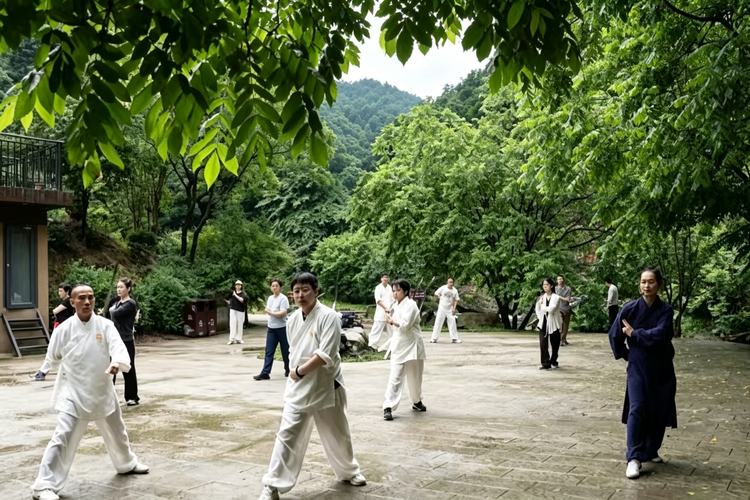
Tai Chi vs Qigong: A Side-by-Side Comparison
The easiest way to understand the difference is to compare their origins, structures, and training characteristics.
| Comparison | Tai Chi | Qigong |
|---|---|---|
| Traditional background | Chinese martial art | Broad family of traditional cultivation practices |
| Practice format | Connected movement sequences or forms | Short exercises, postures, and movement routines |
| Movement style | Continuous, coordinated movements and weight shifting | Varies from stationary postures to gentle flowing movements |
| Learning approach | Progressive learning of a sequence | Learning and repeating individual exercises |
| Common training focus | Balance, coordination, body control, and martial movement principles | Breathing awareness, posture, relaxation, and concentration |
| Suitable starting point | People who enjoy structured movement and gradual skill development | People who prefer short, repeatable exercises and gentle movement |
Neither practice is universally better. They have different characteristics and can complement one another. Some practitioners use Qigong exercises as a warm-up before Tai Chi, while others focus on one discipline according to their interests and training goals.
Which Practice Should You Choose?
The right choice depends on what you want to explore and how you prefer to learn.
Choose Tai Chi If You Prefer Structured Movement
Tai Chi may be a good option if you:
Enjoy learning a sequence of movements and gradually improving your technique.
Want to explore balance, coordination, and controlled body movement.
Prefer a practice with recognizable forms and a clear learning progression.
Are interested in the relationship between Chinese martial arts and traditional cultivation.
It is particularly rewarding for people who enjoy learning through repetition and refining details over time.
Choose Qigong If You Prefer Flexible Exercises
Qigong may be a suitable starting point if you:
Prefer short routines that can be practised in different settings.
Want to explore breathing awareness and gentle movement.
Enjoy practices that do not always require memorizing a long sequence.
Would like to begin with simple exercises before exploring more structured training.
Because Qigong includes many different systems, the experience can vary considerably depending on the method and instructor.
Why Not Explore Both?
Tai Chi and Qigong share important principles but approach movement in different ways. Exploring both can provide a broader understanding of traditional Chinese body practices.
For example, a beginner might first learn simple Qigong movements to become familiar with posture and breathing, then explore the more structured sequences of Tai Chi.
At Funzendo, visitors interested in traditional Chinese wellness can explore available movement and cultivation programs and discuss suitable options according to their experience and physical condition.
A Simple Qigong Exercise for Beginners
If you would like to experience the general character of Qigong before attending a class, the following gentle exercise provides a simple introduction.
Exercise: Gentle Arm Raising and Lowering
You can practise this exercise while standing or sitting, provided your position is comfortable and stable.
Stand with your feet approximately shoulder-width apart. Keep your knees relaxed and your arms resting naturally at your sides.
Take a comfortable breath and slowly raise both arms in front of your body towards shoulder height.
Allow your shoulders to remain relaxed. Avoid lifting your arms beyond a comfortable range.
Gently lower both arms as you breathe out naturally.
Repeat the movement five or six times at a comfortable pace.
Pay attention to the movement of your arms, the position of your shoulders, and the natural rhythm of your breathing. There is no need to force deep breathing or hold your breath.
This is a simple introductory movement rather than a complete traditional Qigong system. If you have a health condition, balance difficulty, or mobility concern, seek appropriate professional advice before beginning a new exercise routine. Stop if you experience pain, dizziness, or unusual discomfort.
Learning Tai Chi and Qigong Through Traditional Chinese Culture
Understanding Tai Chi and Qigong through written descriptions is useful, but learning them through direct instruction provides another level of understanding.
Traditional Chinese movement practices are closely connected with ideas about balance, posture, breathing, and the relationship between body and mind. These principles are easier to explore when students can observe a teacher, follow demonstrations, and receive guidance on individual movements.
In a suitable practice environment, even simple exercises can become more meaningful. Students have time to understand how to stand comfortably, move without unnecessary tension, and coordinate breathing with physical activity.
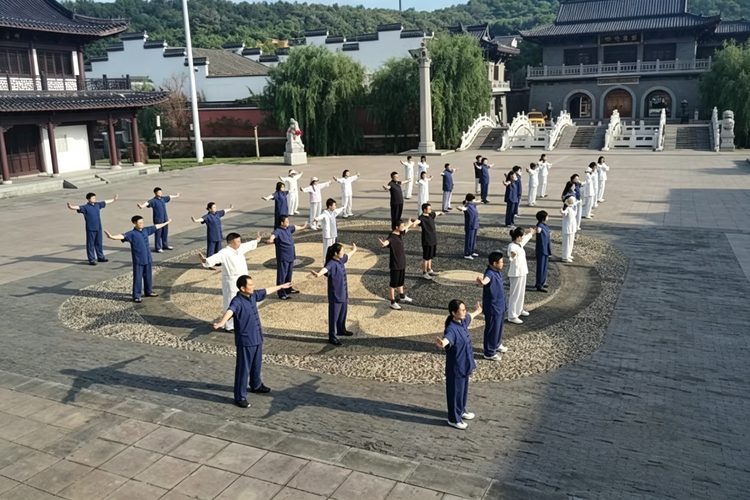
At Funzendo, traditional Chinese wellness and meditation experiences provide opportunities to explore different approaches to body awareness and personal cultivation.
Visitors interested in standing practices, breathing methods, and traditional Chinese wellness can learn more through our meditation and traditional practice programs.
For those who prefer to experience these practices as part of a wider cultural visit, our cultural activities and group experiences offer further opportunities to explore traditional Chinese practices.
Participants who wish to spend more time learning and experiencing traditional practices can also explore our temple stay programs, subject to the activities and arrangements available during their visit.
Frequently Asked Questions About Tai Chi and Qigong
1. Is Tai Chi a martial art or a form of exercise?
Both. Tai Chi originated as a Chinese martial art, and its traditional forms contain martial movement principles. Today, many people practise it primarily for physical conditioning, balance, coordination, and personal cultivation. Training methods vary depending on the instructor and style.
2. Can beginners practise Qigong without a teacher?
Some basic Qigong movements can be explored independently, provided they are comfortable and performed without forcing the body. However, learning from a qualified instructor can help beginners understand posture, movement, and breathing more accurately. More specialized methods should be learned with appropriate guidance.
3. Which is easier for beginners, Tai Chi or Qigong?
Many beginners find introductory Qigong exercises easier to approach because some routines are short and repetitive. Tai Chi may require more time to learn because practitioners need to remember and connect a sequence of movements. However, the difficulty depends on the specific system, instructor, and individual learner.
4. Can Tai Chi and Qigong be practised together?
Yes. Their shared emphasis on controlled movement and body awareness makes them complementary for many practitioners. Some people use gentle Qigong exercises before Tai Chi practice, while others study both as separate disciplines.
5. Do I need special clothing or equipment?
For most introductory sessions, comfortable clothing and stable footwear are sufficient. You generally do not need specialized equipment. The most important considerations are enough space to move safely and an environment suitable for learning.
6. Can older adults learn Tai Chi or Qigong?
Many forms of Tai Chi and Qigong can be adapted for different experience levels and physical abilities. Some exercises can also be performed while seated. However, not every movement is suitable for everyone. Older adults or people with mobility and balance concerns should choose an appropriate program and seek professional guidance when necessary.
7. How often should I practise?
Consistency is generally more useful than occasional intensive sessions. Beginners can start with short, comfortable practice periods and gradually develop a routine according to their abilities. The appropriate frequency depends on the exercise method, personal condition, and guidance received.
Experience Traditional Chinese Movement Practices at Funzendo
Tai Chi and Qigong offer two different ways to explore traditional Chinese movement culture. One developed through martial arts and structured forms, while the other encompasses a wide variety of exercises involving posture, breathing, and awareness.
Neither requires you to begin with advanced skills. A simple movement, a comfortable standing posture, or a few minutes of attentive practice can provide a starting point for further exploration.
At Funzendo, we welcome visitors interested in discovering traditional Chinese wellness, meditation, and cultural practices. Whether you are curious about Qigong, interested in learning Tai Chi, or looking for a broader experience of Chinese cultivation traditions, you can explore our programs and discuss suitable arrangements with our team.
Explore more at Funzendo:
Whether through the flowing forms of Tai Chi or the gentle exercises of Qigong, traditional Chinese movement practices invite us to pay closer attention to the body, breathing, and the present moment.