Temple Bell Listening and Walking Meditation: A Different Way to Experience Zen at Guanghua Temple
Many people imagine meditation as sitting quietly with closed eyes. Yet in traditional Buddhist practice, awareness is not limited to a meditation cushion. It can also be developed through listening, walking, observing the surrounding environment, and paying attention to ordinary movements.
At Longmen Guanghua Temple in Luoyang, China, Funzendo offers a temple experience that brings together two simple but meaningful practices: listening to the temple bell and walking meditation. Rather than focusing exclusively on posture or breathing, the experience invites participants to explore awareness through sound and movement.
For international visitors who want to experience Chinese Buddhist culture beyond sightseeing, this combination offers a practical introduction to a different rhythm of temple life. It does not require previous meditation experience or an extensive understanding of Buddhist philosophy. The starting point is much simpler: listen carefully, walk slowly, and notice what is happening in the present moment.
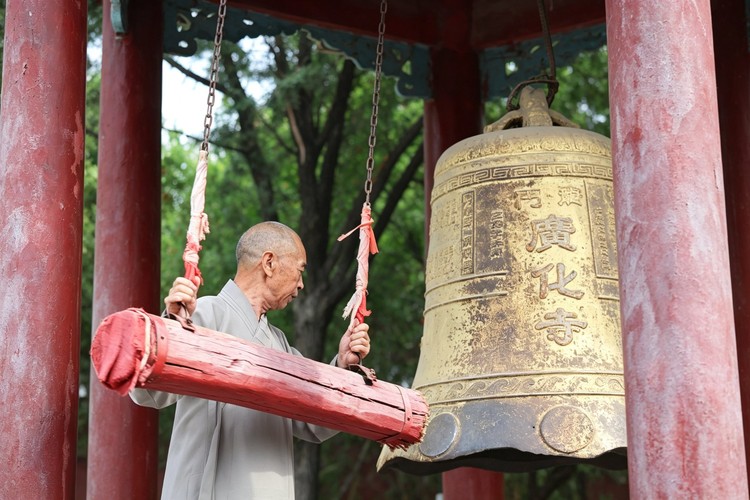
1. Why Does a Temple Bell Matter in Buddhist Temple Life?
In a traditional Chinese Buddhist temple, the bell is more than an architectural feature or a decorative object. It has an important place in the daily rhythm of temple life.
Historically, temple bells have been associated with the organization of monastic activities and the marking of particular moments throughout the day. Together with the drum, the bell forms part of the traditional soundscape of many Chinese Buddhist temples.
For visitors, the sound of a temple bell can provide an introduction to the atmosphere of a Buddhist environment. Its resonance travels through the courtyard and surrounding spaces, creating a moment that is different from the ordinary sounds of a busy city.
In a bell-listening meditation experience, however, the purpose is not simply to hear a beautiful sound. Participants are invited to pay attention to the sound as it occurs and gradually fades.
Instead of immediately identifying the sound, judging its quality, or allowing the mind to move on to another thought, the participant practices listening with greater attention.
The bell becomes an object of observation. Its beginning, changing resonance, and gradual disappearance offer a simple opportunity to notice how experience unfolds.
2. What Is Temple Bell Listening Meditation?
Temple bell listening meditation is an awareness practice centered on sound. It encourages participants to use hearing as a way of bringing attention to the present moment.
Unlike practices that focus mainly on breathing or bodily sensations, this approach begins with something outside the body: the surrounding sound environment.
During the experience, participants may be encouraged to notice several aspects of listening:
The beginning of sound: Notice when the bell first becomes audible without rushing to interpret it.
The resonance: Pay attention to how the sound develops and changes in the surrounding space.
The fading: Follow the sound as it gradually becomes quieter.
The silence afterward: Notice the quiet that remains when the sound is no longer audible.
The response of the mind: Observe whether thoughts, memories, or emotions arise while listening.
The objective is not to force the mind to become completely empty. Thoughts may still appear. The practice is to recognize them and gently return attention to listening.
This makes sound-based awareness accessible to people who find it difficult to begin meditation by sitting still and concentrating on the breath.
3. Walking Meditation: Bringing Awareness Into Movement
After listening, the experience moves from sound to movement.
Walking meditation is a traditional contemplative practice in which attention is brought to the process of walking. Instead of moving automatically from one place to another, participants slow down and become aware of the physical experience of each step.
At Guanghua Temple, the practice takes place within the temple environment. The surrounding pathways and natural atmosphere provide a setting for participants to observe movement without the usual distractions of everyday travel.
Walking meditation may involve paying attention to:
The contact of the feet: Notice how each foot meets the ground.
The transfer of weight: Observe the movement of the body from one step to the next.
The rhythm of breathing: Notice natural breathing without trying to control it.
The surrounding environment: Become aware of sounds, light, air, and the space around you.
The pace of movement: Walk at a comfortable, deliberate speed rather than rushing toward a destination.
Walking meditation does not require complicated movements. The emphasis is on ordinary walking performed with greater awareness.
For people who are unfamiliar with seated meditation, this can be a more approachable way to begin exploring mindfulness.
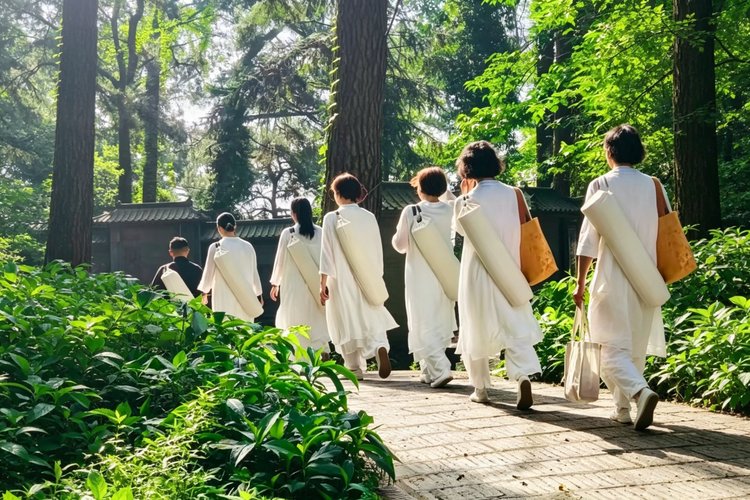
4. Why Combine Listening and Walking?
Sound and movement may appear to be two separate subjects, but they can complement one another in a contemplative experience.
Listening invites participants to become aware of what is happening around them. Walking brings that awareness into physical movement.
The two practices offer different ways to explore attention:
Listening Develops Awareness of the Surrounding Environment
When listening to the temple bell, participants practice noticing sounds without immediately reacting to them. This can help them recognize how quickly the mind moves from hearing to thinking, remembering, and judging.
Walking Develops Awareness of the Body
During walking meditation, attention shifts toward movement, balance, and physical sensations. Participants begin to notice actions that are usually performed without conscious attention.
Together, They Extend Awareness Beyond Sitting Practice
Combining the two practices offers a broader introduction to mindfulness. Awareness is not treated as something that happens only when a person sits quietly. It can also be explored while listening, standing, walking, and interacting with the surrounding environment.
This is particularly relevant to people who want to understand how meditation can become part of everyday life rather than remaining a separate activity.
5. What Happens During Funzendo's Temple Bell and Walking Meditation Experience?
Funzendo's Temple Bell & Walking Meditation experience is based at Longmen Guanghua Temple in Luoyang, Henan Province.
The official activity description introduces a gentle practice centered on sound, movement, and mindful awareness. Participants begin with quiet listening and then move into slow walking meditation.
The experience includes several elements:
Temple bell listening meditation
Mindful breathing
Slow walking meditation
Sensory awareness practice
Silent reflection
Rather than presenting meditation as a complicated technique, the activity encourages participants to notice the sounds, movements, and sensations already present in the temple environment.
The experience is described as suitable for both beginners and experienced practitioners. No previous meditation experience is required.
It is a particularly suitable introduction for visitors who are curious about Zen practice but would prefer to begin with simple, guided activities instead of immediately committing to an intensive retreat.
For the official experience description and booking information, visit Temple Bell & Walking Meditation at Longmen Guanghua Temple.
6. Is Walking Meditation Suitable for Beginners?
One reason walking meditation is attractive to beginners is that it begins with a familiar action. Most people already know how to walk. The difference is that the practice invites them to pay attention to the movement instead of treating it only as a way to reach another destination.
For a first experience, there are a few simple suggestions.
Wear Comfortable Clothing and Shoes
Choose clothing that allows natural movement and footwear suitable for walking on temple paths. The aim is to remain comfortable rather than focus on appearance or performance.
Do Not Try to Walk Perfectly
There is no need to force an unusually slow pace or imitate a particular posture. Follow the guidance provided during the session and move at a comfortable speed.
Allow Thoughts to Come and Go
Beginners sometimes assume that meditation means having no thoughts. This expectation can create unnecessary pressure. When attention moves away, simply notice it and return to the experience of walking or listening.
Respect the Temple Environment
A Buddhist temple is a living religious environment. Participants should follow the guidance of temple staff and teachers, maintain a respectful volume, and avoid disturbing people who are engaged in religious activities.
7. Temple Meditation Is Different From Ordinary Sightseeing
Luoyang is internationally known for its historical heritage, especially the Longmen Grottoes. Many visitors come to the area to explore ancient Buddhist sculptures, inscriptions, and architectural remains.
These cultural sites provide valuable opportunities to understand the history of Buddhism in China. Yet visiting a Buddhist heritage site and participating in a temple-based meditation experience are two different ways of encountering the same cultural environment.
During sightseeing, attention is usually directed toward what can be seen: sculptures, buildings, landscapes, and historical objects.
During meditation, attention shifts toward direct experience: listening, movement, breathing, and observation.
Neither approach replaces the other. Together, they can offer a more complete understanding of how Buddhist culture is connected with both historical heritage and living practice.
Visitors interested in exploring the historical side of the region can also discover Funzendo's Longmen Grottoes Buddhist Heritage Experience.
8. Continue Your Experience at Longmen Guanghua Temple
A short meditation experience can be a starting point for a deeper exploration of Chinese Buddhist culture.
At Longmen Guanghua Temple, Funzendo offers different forms of temple-based experiences, including meditation activities, cultural experiences, and longer retreat programs.
Visitors who enjoy listening and walking meditation may also be interested in exploring other activities listed on the Funzendo Events page.
For those who wish to develop a more regular practice, the Zen Meditation programs provide further information about meditation experiences at the temple.
Each experience has its own focus and format. Before making a reservation, international visitors are encouraged to contact Funzendo to confirm the current schedule, available arrangements, and participation details.
Conclusion: Listen, Walk, and Experience the Present Moment
Meditation does not always begin with sitting still. Sometimes it begins with listening to a bell, noticing the fading resonance, and becoming aware of the next step.
Temple bell listening and walking meditation offer two simple ways to explore awareness through the senses and the body. Together, they create an experience that connects traditional temple surroundings with a practical introduction to mindfulness.
At Longmen Guanghua Temple, Funzendo invites visitors to discover this quieter way of experiencing Chinese Buddhist culture. Whether you are new to meditation or already have an established practice, the experience offers an opportunity to slow down, listen carefully, and explore the relationship between awareness and everyday movement.
Interested in joining? Visit the Temple Bell & Walking Meditation program page and contact Funzendo to ask about the latest available dates.