Temple, Monastery, Stupa or Pagoda? Understanding Buddhist Sites in China
When traveling through China, visitors often encounter buildings and monuments associated with Buddhism. Some are called temples, others are described as monasteries, while ancient stone structures may be identified as stupas or pagodas. At first glance, these names can seem interchangeable. In fact, each refers to a different aspect of Buddhist history, architecture, or religious life.
Understanding these distinctions can make a cultural journey much more meaningful. Instead of seeing every Buddhist site as simply another temple, visitors can begin to recognize the different roles that buildings and monuments have played in the development of Buddhism across China.
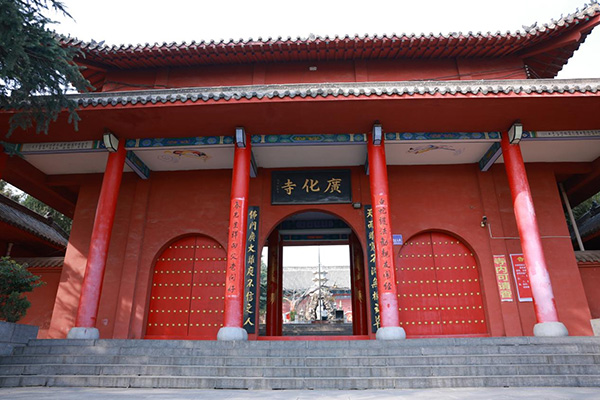
Luoyang offers an especially interesting place to explore these differences. Around the Longmen area, Buddhist heritage includes monumental stone carvings, historic temple grounds, memorial buildings, and sacred pagodas. Longmen Guanghua Temple, in particular, preserves several different forms of Buddhist heritage within one setting.
1. What Is a Buddhist Temple?
A Buddhist temple is a religious and cultural complex where Buddhist teachings, ceremonies, worship, and community activities take place. In Chinese, the general word is 寺 (sì), although individual temples may also use other names depending on their history and institutional status.
A traditional Chinese Buddhist temple may contain several buildings and spaces, including:
Mountain Gate (山门): The principal entrance that marks the transition into the temple grounds.
Main Hall (大雄宝殿): An important space for Buddhist worship and ceremonies.
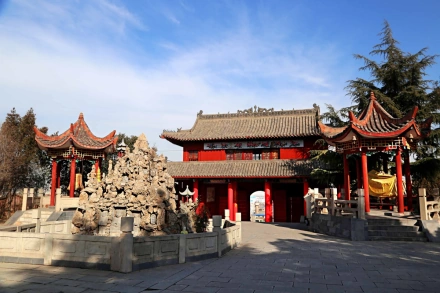
Bell and Drum Towers (钟楼、鼓楼): Structures associated with the traditional rhythm of monastic life.
Memorial or Scripture Buildings: Spaces dedicated to Buddhist teachers, texts, or historical traditions.
Not every temple has exactly the same arrangement. Its layout may reflect its historical period, Buddhist tradition, geographical setting, and later reconstruction.
At Longmen Guanghua Temple in Luoyang, visitors encounter a temple complex associated with the history of Tang Esoteric Buddhism. Its buildings and monuments tell different parts of the story, making it a useful place to understand how a Buddhist temple can function as both a religious environment and a cultural heritage site.
2. What Is a Buddhist Monastery?
The word monastery places greater emphasis on the community and daily life of monastics. A monastery is not simply a building where visitors come to worship. It is also a place where monks or nuns live, study, practice, and maintain a religious community.
In Chinese Buddhist history, monasteries have served several important functions:
Religious practice: Providing an environment for meditation, ceremonies, and other forms of Buddhist cultivation.
Education: Preserving Buddhist teachings through study, lectures, and scripture-related activities.
Community life: Organizing daily routines, communal responsibilities, and the relationship between monastics and lay visitors.
Cultural preservation: Maintaining religious objects, historical records, architectural traditions, and local Buddhist heritage.
In everyday English, the terms "temple" and "monastery" are sometimes used together. However, they emphasize different things. A temple usually refers to the religious site or complex, while a monastery highlights the residential and communal life of its monastic residents.
For travelers, this distinction is useful. Visiting a temple as a cultural site is different from staying in or participating in the daily environment of a Buddhist monastery. Visitors should also remember that an active monastery is a religious community, not simply a tourist attraction.
3. What Is a Stupa?
A stupa is a Buddhist structure associated with the commemoration and preservation of sacred remains or objects. The tradition originated in ancient India and developed into different architectural forms as Buddhism spread across Asia.
In Chinese Buddhist contexts, the word stupa is often used to describe a structure connected with the remains or memory of an important Buddhist teacher. Some stupas preserve relics; others serve as memorial monuments associated with a particular master or Buddhist lineage.
Stupas are important because they connect physical places with the memory of Buddhist teachers and the transmission of religious traditions. They are not simply decorative towers. Their meaning comes from their religious, historical, and commemorative functions.
One important example at Longmen Guanghua Temple is the Wuwei Pagoda, associated with Subhakarasimha (Shan Wuwei, 善无畏三藏), one of the Three Great Masters of the Kaiyuan Era. His legacy is closely connected with the development of Tang Esoteric Buddhism in China.
The history of Guanghua Temple is closely linked to this memorial site. The pagoda was established in memory of Subhakarasimha, and the temple later developed around the original pagoda courtyard.
Learn more about the Wuwei Pagoda and the Buddhist heritage of Subhakarasimha.
4. What Is a Pagoda?
A pagoda is a tower-like architectural form found in many Buddhist regions of East Asia. Chinese pagodas developed through the adaptation of the Indian stupa tradition and local architectural styles.
Over time, pagodas became important features of Chinese Buddhist landscapes. They could be built with brick, stone, timber, or other materials, and their shapes varied according to historical period and regional traditions.
Although the words "stupa" and "pagoda" are sometimes used in similar contexts, they are not perfect synonyms. Stupa describes a religious monument and its commemorative function, while pagoda usually describes a particular architectural form. A pagoda may serve as a stupa, but not every pagoda has the same function or significance.
This distinction is especially useful when interpreting Buddhist heritage sites. A tower should not be identified only by its appearance. Its history, inscriptions, religious purpose, and relationship to the surrounding complex all matter.
5. What Is a Buddhist Memorial Hall?
A Buddhist memorial hall is a building dedicated to commemorating important teachers, historical figures, or significant events in Buddhist history. It may contain statues, inscriptions, historical displays, or other objects that help visitors understand a particular Buddhist tradition.
At Longmen Guanghua Temple, the Memorial Hall of the Three Kaiyuan Masters is dedicated to Subhakarasimha, Vajrabodhi, and Amoghavajra. These three Indian Buddhist masters played important roles in introducing and developing Esoteric Buddhism during the Tang Dynasty.
The memorial hall is particularly significant because the influence of Tang Esoteric Buddhism extended beyond China. Its teachings later became part of the historical background of Japanese Shingon Buddhism, creating a connection between Buddhist communities in India, China, and Japan.
The hall was completed in 2015 and provides a place to learn about the three masters and the wider history of Buddhist transmission in East Asia.
Explore the Memorial Hall of the Three Kaiyuan Masters to discover more about this historical connection.
6. How to Read a Buddhist Heritage Site More Carefully
When visiting a Buddhist site in China, it is helpful to look beyond the main building. Different structures may preserve different layers of history, and the relationship between them can reveal how a religious community developed over time.
Here are five questions that can guide a more thoughtful visit:
Look at the function of each structure
Ask whether a building serves worship, residential life, commemoration, education, or another purpose. Its function is often more informative than its architectural appearance alone.
Notice inscriptions and historical records
Inscriptions may identify the person being commemorated, the date of construction, the donor, or the historical event associated with a monument. They can provide valuable clues for understanding a site's background.
Understand the relationship between buildings
A pagoda, memorial hall, and main temple building may belong to different periods or serve different purposes. Their arrangement can reveal how the site evolved.
Consider the wider Buddhist tradition
Chinese Buddhist heritage includes several traditions and historical developments. Understanding whether a site is associated with Chan, Pure Land, Esoteric Buddhism, or another tradition can help visitors place it in a wider cultural context.
Respect the site as a living religious environment
Many Buddhist heritage sites remain active places of worship and practice. Visitors should maintain an appropriate level of quiet, follow local instructions, avoid touching sacred objects, and ask permission before photographing people or restricted areas.
7. Discovering Different Layers of Buddhist Heritage at Longmen
The Longmen area of Luoyang offers more than one way to explore Chinese Buddhist history. The Longmen Grottoes are renowned for their Buddhist sculptures carved into limestone cliffs, while Longmen Guanghua Temple preserves a different dimension of Buddhist heritage through its temple environment, memorial structures, and historical associations.
Within Guanghua Temple, visitors can explore several sites that represent different aspects of Buddhist history:
The Wuwei Pagoda: A memorial site associated with Subhakarasimha and the origins of Guanghua Temple.
The Memorial Hall of the Three Kaiyuan Masters: A place commemorating the three influential masters of Tang Esoteric Buddhism.
The Bell and Drum Pagodas: Structures associated with the traditional rhythm of Buddhist monastic life.
These sites should not be understood as interchangeable monuments. Each has its own historical role and cultural meaning. Together, they help visitors see how Buddhist teachings, architecture, memorial traditions, and monastic life are connected.
For those interested in exploring the temple's cultural landscape, the Bell and Drum Pagodas of Guanghua Temple offer another perspective on the relationship between Buddhist architecture and daily religious life.
8. From Sightseeing to Cultural Understanding
Learning the difference between a temple, monastery, stupa, pagoda, and memorial hall changes the way visitors experience Buddhist heritage. Instead of seeing a collection of old buildings, they begin to recognize the different histories, religious functions, and cultural relationships preserved within a site.
This is particularly valuable in Luoyang, where Buddhist history developed through centuries of exchange among regions and cultures. The city's heritage is not limited to its famous monuments. It also includes the people, teachings, and religious communities that shaped its history.
At Funzendo, located within Longmen Guanghua Temple, visitors can explore Chinese Buddhist culture through temple-based cultural experiences, meditation programs, and opportunities to learn about the heritage of the Longmen area.
To learn more about the temple environment and available experiences, visit the Funzendo homepage or explore the Wuwei Pagoda heritage guide.
A meaningful cultural journey does not depend on how many places you visit. Sometimes, understanding the purpose of a single building or monument is enough to open a much deeper window into China's Buddhist past.