Temple Stay Reviews: What Guests Really Experience at Funzendo
When people search for temple stay reviews, they are usually looking for more than a list of facilities or a collection of positive ratings. They want to know what daily life in a Buddhist temple is actually like. Is the experience comfortable? Is the schedule too demanding? Can someone with no meditation experience feel welcome? And, most importantly, is a temple stay worth the time and money?
At Funzendo, a temple stay is not designed as a conventional hotel holiday. It offers an opportunity to experience a quieter rhythm of life within the cultural and spiritual setting of Longmen Guanghua Temple in Luoyang, China. The experience may include meditation, vegetarian meals, traditional Buddhist culture, time for reflection, and opportunities to learn about the temple's history.
This guide takes a practical look at what guests may encounter before, during, and after a stay. It also identifies the aspects that may take some adjustment. Rather than presenting invented five-star testimonials, we have included clearly marked spaces where authentic guest comments can be added. Any personal quotation should be published only with the guest's permission.
1. Who Chooses a Temple Stay at Funzendo?
People arrive at a temple for different reasons. Some are interested in Buddhist culture; others want to experience a different way of travelling, learn meditation, or spend a few days away from the demands of everyday life. Understanding these different expectations is useful when deciding whether a temple stay is right for you.
First-time retreat guests
For someone who has never attended a retreat, the idea of staying in a Buddhist temple can seem unfamiliar. There may be questions about meditation, etiquette, meals, daily schedules, and whether previous religious knowledge is required.
A first visit is often an opportunity to discover that a temple stay does not have to begin with advanced meditation skills. Guests can learn through observation, guided activities, and participation at a pace appropriate to the programme. The most useful preparation is an open mind and a willingness to respect the environment.
What to look for in a real guest review: Did the guest feel welcomed as a beginner? Were the instructions clear? Which part of the experience helped them feel more at ease?
Professionals looking for a change of pace
People with demanding work schedules may be attracted to a temple stay because it offers a clear contrast to a routine shaped by emails, meetings, deadlines, and constant screen use. A different daily rhythm can create space to notice habits that are difficult to recognise during an ordinary working week.
However, a temple stay should not be presented as a guaranteed treatment for stress, burnout, or sleep problems. Each guest responds differently. Some appreciate the reduced distractions immediately, while others need time to adjust to the quieter surroundings and structured timetable.
What to look for in a real guest review: Did the guest value the slower schedule? Were there particular moments, such as a morning practice or an evening walk, that stood out?
Solo travellers interested in meaningful cultural experiences
Travelling alone does not necessarily mean wanting to spend the entire trip alone. Some visitors choose a temple stay because they want to experience Chinese Buddhist culture in a setting where daily activities have a shared purpose.
At Longmen Guanghua Temple, the surroundings offer a connection to the history of Buddhism in Luoyang and the development of Chinese Esoteric Buddhism. Guests who are interested in religious architecture, temple traditions, and local cultural life may find this setting particularly meaningful.
Solo travellers should still confirm practical arrangements before booking, including room type, arrival instructions, the availability of staff assistance, and which activities are included in their chosen programme.
Couples, friends, and small groups
A temple stay can also be a different kind of shared journey. Instead of planning every hour around shopping, sightseeing, or entertainment, friends and couples can experience a quieter schedule together. Shared meals, cultural activities, and time away from personal devices may create opportunities for conversations that are easily crowded out by daily routines.
It is important, however, that everyone in the group understands the nature of the stay. A working temple is not a resort, and its atmosphere is shaped by religious practice and consideration for other residents and visitors.
Returning guests seeking continuity
Some visitors may wish to return because they want to revisit a place, continue learning, or spend more time with a practice they first encountered during an earlier stay. For them, the value of returning may lie less in discovering something new and more in developing a deeper understanding of the environment and its routines.
If you are considering a second visit, ask whether a longer stay, a more focused meditation programme, or a cultural training experience would better match your interests.
2. What Guests Can Experience During a Temple Stay
Every stay depends on the selected arrangement and the schedule confirmed before arrival. Nevertheless, several elements help explain why a temple stay differs from an ordinary hotel booking.
A daily rhythm shaped by the temple
Temple life follows a rhythm that is generally more structured and less dependent on personal convenience than a typical holiday. Depending on the programme, guests may have opportunities to take part in morning practice, eat vegetarian meals, attend guided sessions, or spend time exploring the temple grounds.
This structure is not intended to make every moment demanding. It gives the day a framework and helps visitors understand how religious practice, meals, rest, and communal activities fit together. Guests should check the actual timetable for their dates rather than assume that every temple stay follows the same schedule.
Vegetarian meals and Chinese temple food culture
Food is an important part of the experience. Chinese Buddhist vegetarian cuisine is not simply a menu without meat. It has its own culinary traditions, cooking methods, ingredients, and cultural meaning.
For international guests, trying temple-style vegetarian food can also be a way to encounter Chinese food culture from a different perspective. Meals may be simpler than those served in restaurants, and dining arrangements may follow the practical rhythm of the temple.
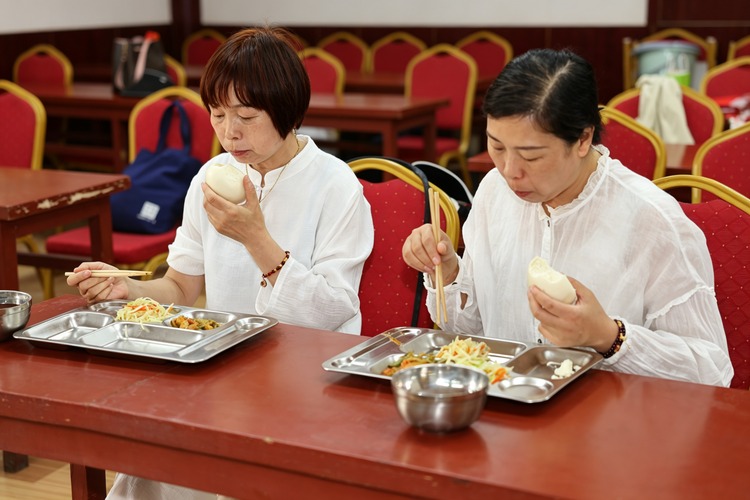
Guests with allergies, dietary restrictions, or specific nutritional requirements should communicate these clearly before confirming a booking. Do not assume that every dietary request can be accommodated without prior arrangement.
Chinese temple food culture can offer useful background for visitors who would like to understand the traditions behind vegetarian dining. A temple meal is not simply about what is served; it can also introduce visitors to the relationship between food, daily discipline, and Buddhist culture.
Silence, bells, and the surrounding environment
One of the most noticeable differences between a temple and a busy tourist district is its sound environment. Depending on the time of day, visitors may hear temple bells, birds, footsteps, chanting, or the ordinary sounds of people carrying out their daily activities.
Quiet periods can be part of the experience, but a standard temple stay should not automatically be confused with a formal silent retreat. The level of silence, opportunities for conversation, and participation requirements depend on the specific programme.
Guests who are particularly interested in silence should ask whether a dedicated retreat is available and what its guidelines involve. You can also explore Funzendo's meditation experiences to understand the types of practice offered.
3. The Setting: Staying at Longmen Guanghua Temple
The location is an important part of the experience. Longmen Guanghua Temple is situated in the Longmen area of Luoyang, Henan Province, near the well-known Longmen Grottoes. Its setting connects visitors with a significant part of China's Buddhist history while offering an environment distinct from the main tourist routes.
Guanghua Temple is associated with the history of Chinese Esoteric Buddhism, often referred to as Tangmi. Its historical and cultural context gives a temple stay here a particular character: guests are not simply visiting a scenic building but spending time in a place connected with living Buddhist traditions.
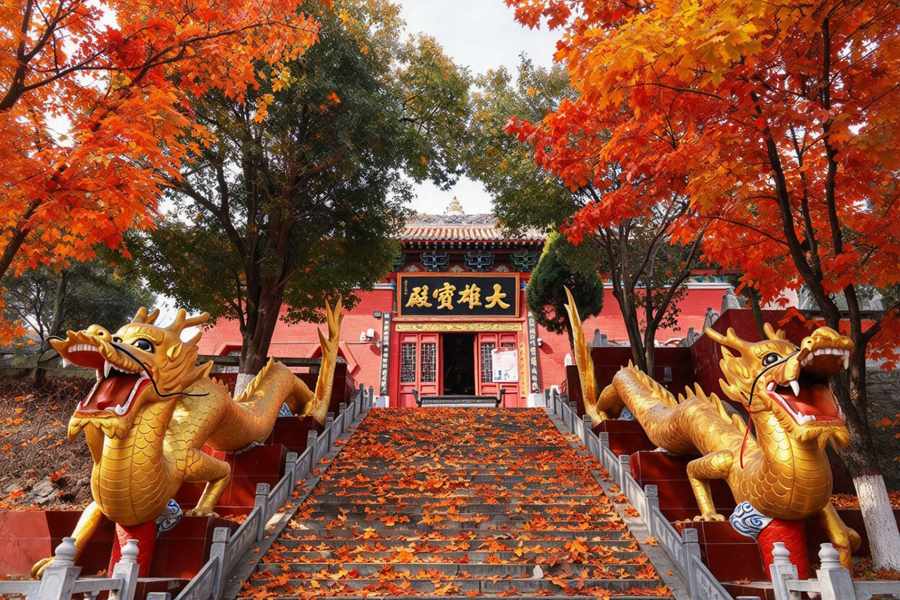
For visitors interested in architecture and Buddhist heritage, the temple grounds and their historical features can add another dimension to the stay. The experience may encourage guests to look beyond the appearance of a temple and consider how its spaces, religious practices, and cultural history are connected.
Before travelling, check the current access arrangements, the meeting point, and whether any cultural visits are included in your booking. A temple stay and a sightseeing itinerary are not necessarily the same product.
4. What May Be Challenging? An Honest Look at the Practical Details
A useful temple stay review should explain not only what guests may appreciate but also what they should prepare for. The following points are worth considering before you book.
Early starts and a structured timetable
Some retreat programmes begin early in the morning. On full retreat days, an early wake-up may be part of the schedule. This can feel unfamiliar to visitors who are used to sleeping later, so it is sensible to check the timetable before arrival and allow yourself time to adjust.
Simple accommodation rather than hotel-style luxury
A temple stay prioritises the environment and the purpose of the visit rather than hotel entertainment or luxury facilities. Room arrangements, furnishings, shared spaces, and available amenities may be simpler than those in a commercial hotel.
Check the room category, occupancy, bathroom arrangements, and included services before making a reservation. If privacy or a particular level of comfort is essential to you, discuss this with the team in advance rather than relying on assumptions.
Quiet conduct and respect for temple life
Visitors are expected to respect the religious environment. Loud conversations, disruptive behaviour, and activities that interfere with temple routines are not appropriate. Alcohol and other restrictions may apply according to the temple's rules and the programme.
These expectations are not intended to make guests feel unwelcome. They help preserve an environment shared by monastics, staff, practitioners, and visitors. If you are unsure about clothing, photography, meals, or temple etiquette, ask before arrival.
Time to adjust to a different kind of travel
Some guests may initially find the quiet unfamiliar. There may be fewer entertainment options, less flexibility than a conventional holiday, and more time spent following a shared schedule. This is part of what makes a temple stay different, but it will not suit every traveller.
If your main priority is nightlife, extensive sightseeing, or a highly personalised luxury holiday, a temple stay may not be the best match. If you are curious about Buddhist culture and comfortable with a simpler routine, it may offer a more meaningful alternative.
5. Temple Stay or Zen Retreat: Which Experience Should You Choose?
The terms "temple stay" and "Zen retreat" are sometimes used interchangeably, but they do not always describe the same experience. Understanding the distinction can help you choose the right arrangement.
A temple stay generally focuses on experiencing daily life in a temple environment. Depending on the arrangement, it may include accommodation, vegetarian meals, opportunities to learn about temple culture, and selected activities.
A Zen retreat is usually more practice-focused. It may involve a defined meditation schedule, guided instruction, group sessions, and clearer expectations about participation. A retreat is therefore more suitable for visitors who want to dedicate a specific period to learning or developing a meditation practice.
At Funzendo, the available experience depends on the programme you select. You can explore the current meditation programmes and cultural and experiential activities before deciding which format best matches your interests.
For visitors who want to combine cultural learning with a more structured experience, the Incense, Tea and Singing Bowl Culture Retreat provides another way to explore traditional Chinese practices.
6. How to Read Temple Stay Reviews Before You Book
Online reviews can be useful, but not every review answers the questions that matter to your own trip. A short comment such as "wonderful experience" may express genuine satisfaction, yet it tells you very little about the schedule, accommodation, language support, or suitability for beginners.
When comparing temple stay reviews, look for details that help you understand the actual experience:
Who wrote the review? A first-time visitor may have different expectations from someone with an established meditation practice.
How long was the stay? A one-night visit and a week-long retreat can involve very different routines.
What was included? Check whether the review refers to accommodation only, a guided programme, meals, or additional activities.
What did the guest find challenging? Balanced comments about early mornings, simple facilities, or quiet periods can help you prepare.
Is the review specific? Details about a meal, a session, a teacher, or the arrival process are generally more useful than broad praise.
Is the review recent? Schedules, facilities, prices, and booking arrangements can change over time.
It is also worth checking whether the review describes the same programme you are considering. A guest's experience of a cultural retreat should not automatically be treated as a description of every temple stay option.
7. How Booking a Temple Stay at Funzendo Works
Before making travel arrangements, it is helpful to confirm the details of your stay directly. The booking process should establish what is available, what is included, and what you need to prepare.
Send an enquiry. Share your preferred dates, number of guests, room requirements, and whether you are interested in accommodation, meditation, or a cultural programme.
Confirm the arrangement. Ask the Funzendo team to clarify availability, the applicable price, included meals and activities, and any additional costs before you make a commitment.
Review the practical information. Confirm the arrival point, transport arrangements, check-in details, recommended clothing, and any temple etiquette you should know.
Prepare for the schedule. Read the programme information carefully. If you have dietary requirements, mobility needs, or other practical considerations, communicate them in advance.
Arrive and settle in. Allow time to become familiar with the surroundings and the daily arrangements. If anything is unclear, ask the team rather than making assumptions.
A good booking experience begins with clear communication. If an important detail is not explained on the website, ask for confirmation in writing before arranging flights or other non-refundable travel.
8. Frequently Asked Questions About Funzendo Temple Stays
Are the reviews on this page real?
The testimonial sections in this article are clearly marked as placeholders and must be replaced with authentic guest comments before publication. Do not present sample wording as a real review. Any published quotation should reflect the guest's original feedback and be used with their permission.
Do I need to be Buddhist to stay at a temple?
No. An interest in Buddhist culture and a respectful attitude toward the temple environment are more important than belonging to a particular religion. Visitors should, however, be willing to follow the temple's rules and respect its religious activities.
Can beginners join a temple stay?
Many temple experiences are suitable for people who are new to meditation or Buddhist culture, but the requirements differ between programmes. Check the description of your chosen arrangement and ask whether guided instruction is included.
Is a temple stay suitable for solo travellers?
It can be a meaningful option for solo travellers who are comfortable with a shared environment and a quieter daily rhythm. Before booking, confirm room arrangements, arrival support, language assistance, and the activities available during your dates.
Will I have to remain silent throughout my stay?
Not necessarily. A standard temple stay is not automatically a silent retreat. Quiet periods and expectations for respectful conduct may apply, while conversation may be appropriate during other activities. A dedicated silent retreat will have its own guidelines.
Is the accommodation like a hotel?
A temple stay should not be assumed to offer the same facilities or services as a hotel. Accommodation is generally simpler and is part of a broader cultural or practice-based experience. Confirm the room type, facilities, and included services before booking.
Can I visit the Longmen Grottoes during my stay?
Longmen Guanghua Temple is located near the Longmen Grottoes, making it possible to plan a wider cultural visit to the area. However, sightseeing is not automatically included in a temple stay or retreat. Confirm your itinerary separately if you would like to visit nearby heritage sites.
9. Is a Temple Stay at Funzendo Worth It?
The value of a temple stay depends on what you hope to gain from the experience. If you expect a conventional hotel holiday with extensive entertainment and luxury facilities, a working temple may not meet your expectations. If you are interested in Chinese Buddhist culture, a quieter daily rhythm, vegetarian food, meditation, and time in a historic religious setting, it may offer something that an ordinary trip cannot.
The most useful reviews are not necessarily the ones that describe everything as perfect. They are the ones that explain what a guest expected, what they actually experienced, what they appreciated, and what they would prepare for differently next time.
At Funzendo, the aim is to help visitors approach temple life with realistic expectations and a genuine interest in the culture and practices of Longmen Guanghua Temple. Whether you are considering a short temple stay, a guided meditation experience, or a more focused cultural retreat, take time to compare the available arrangements and ask questions before booking.
Ready to explore a temple stay in Luoyang? Contact Funzendo with your preferred dates, group size, and interests. The team can help you identify an appropriate arrangement and clarify the practical details before your journey.