The Five Precepts in Buddhism: A Guide to Lay Practice and Everyday Ethics
Buddhism is often associated with meditation, monasteries, scriptures, and the pursuit of inner peace. Yet there is another part of Buddhist practice that is just as important: the way a person behaves in everyday life. How do we treat other people? How do we respond to anger? What responsibilities do we have toward living beings? How do our words and decisions affect the people around us?
In Buddhist traditions, these questions are closely connected with the Five Precepts, a foundational framework of ethical training for lay practitioners. They are not simply a list of religious prohibitions. They express a practical approach to reducing harm, developing self-discipline, and creating the conditions for a more attentive and compassionate life.
For people exploring Chinese Buddhism, understanding the Five Precepts provides an important perspective on the relationship between meditation and daily conduct. It also helps explain why Buddhist practice has historically extended far beyond the walls of monasteries.
What Are the Five Precepts in Buddhism?
The Five Precepts are traditionally observed by lay Buddhists, meaning people who follow Buddhist teachings while continuing to live within ordinary family and social life. They are commonly associated with taking refuge in the Buddha, the Dharma, and the Sangha, although the precise relationship between taking refuge and undertaking the precepts has varied across Buddhist texts and traditions.
The five training commitments are generally expressed as refraining from:
1. Taking Life
The first precept concerns respect for living beings. It encourages practitioners to avoid intentionally taking life and to develop an attitude of care rather than cruelty.
In everyday life, this principle invites reflection on how our choices affect other forms of life. It is connected with the Buddhist value of non-harming, often expressed through the concept of compassion. The principle does not stop at avoiding physical violence; it also encourages people to consider the consequences of their actions.
2. Taking What Is Not Given
The second precept concerns honesty and respect for what belongs to others. It means refraining from stealing or taking something without permission.
Its broader ethical significance includes fairness, trust, and responsibility. In contemporary life, taking what is not given may involve more than physical possessions. Misusing another person's work, exploiting trust, or deliberately taking advantage of someone can also raise questions about the spirit of this principle.
3. Sexual Misconduct
The third precept concerns responsible conduct in relationships and the avoidance of sexual behavior that causes harm. Its interpretation has been discussed in different Buddhist traditions and historical contexts.
At its ethical core, the principle emphasizes respect, honesty, and responsibility toward others. It encourages practitioners to consider consent, the consequences of their choices, and the importance of not exploiting another person's trust or vulnerability.
4. False Speech
The fourth precept concerns truthful communication. It encourages people to refrain from deliberate lying and to recognize the harm that dishonest speech can cause.
Buddhist teachings place considerable importance on speech because words influence relationships, communities, and the state of one's own mind. A false statement can damage trust, create conflict, or lead others into harmful decisions.
The principle also invites a more thoughtful approach to communication. Speaking truthfully does not require speaking harshly. Honesty can be combined with consideration, timing, and an awareness of how words affect others.
5. Avoiding Intoxicants That Lead to Carelessness
The fifth precept traditionally concerns intoxicating substances that contribute to heedlessness. Its central emphasis is not simply on a particular substance, but on the loss of awareness and judgment that may follow intoxication.
In Buddhist ethical thought, mindfulness and clear awareness are important conditions for responsible action. When judgment becomes impaired, a person may be more likely to violate other ethical commitments or cause harm without fully considering the consequences.
Interpretations and applications of this precept differ among Buddhist communities. The important point is to understand its relationship with awareness, restraint, and responsibility.
Are the Five Precepts Religious Commandments?
One common misunderstanding is that Buddhist precepts function in exactly the same way as commandments in some other religious traditions. The distinction is important.
The Sanskrit term śīla, commonly translated as ethical conduct or moral discipline, refers to a cultivated way of behaving. The precepts are generally undertaken as training commitments rather than as rules imposed by a creator deity.
This emphasis on training changes how the precepts can be understood. They are not merely external restrictions. They invite practitioners to observe their own intentions, recognize the consequences of their actions, and gradually develop more responsible habits.
For example, refraining from false speech is not only about avoiding a lie when someone is listening. It also involves becoming more aware of the reasons behind dishonest communication, such as fear, self-interest, or the desire to avoid responsibility.
The precepts therefore have both an outward and an inward dimension. They influence how people interact with the world while also providing a framework for examining their own minds.
The Difference Between Lay Precepts and Monastic Vinaya
The Five Precepts are intended for lay followers, not as a complete set of rules for Buddhist monastics. Monks and nuns follow the Vinaya, a much more extensive body of monastic discipline that governs communal life, conduct, responsibilities, and daily procedures within the Sangha.
These two forms of discipline serve related but distinct purposes. Lay precepts provide a foundation for ethical living while maintaining family, professional, and social responsibilities. Monastic Vinaya regulates the particular commitments and institutional life of those who have entered monastic orders.
Confusing the two can lead to an inaccurate understanding of Buddhist practice. A lay practitioner is not expected to live according to every rule that applies to an ordained monk or nun. Instead, lay practice has its own ethical framework, suited to a different form of religious commitment.
This distinction also helps explain the diversity of Buddhist communities. The Sangha and lay followers have different roles, but both participate in the wider Buddhist tradition.
How the Five Precepts Became Part of Chinese Buddhist Life
As Buddhism developed in China, its ethical teachings became part of a wider religious and social environment. Buddhist communities included monastics, scholars, merchants, families, and ordinary people who maintained connections with temples while continuing their everyday occupations. To understand this wider historical development, explore the history of Buddhism in China.
The Three Refuges and Five Precepts became important expressions of lay Buddhist commitment. They provided a recognizable ethical foundation for people who wished to follow Buddhist teachings without entering monastic life.
The history of Chinese Buddhism also shows that the interpretation and promotion of lay precepts continued to develop over time. During the late imperial period and the early twentieth century, renewed attention was given to Buddhist discipline and the role of lay followers in religious life.
Master Hongyi and the Revival of Lay Buddhist Precepts
One important figure in the modern history of Chinese Buddhist discipline was Master Hongyi (1880–1942). Before becoming a monk, he was known as Li Shutong, an influential educator and artist associated with the introduction of modern Western art and music education in China.
After entering monastic life, Hongyi devoted considerable attention to the study and promotion of Buddhist Vinaya. His work was not limited to monastic discipline. He also recognized the importance of explaining ethical commitments to lay followers.
Historical research published in the Journal of History at National Chengchi University examines how Hongyi promoted the Three Refuges and Five Precepts among lay Buddhists. It describes his use of lectures, publications, and educational materials to make Buddhist discipline more accessible to people outside monasteries.
This development reflects a broader historical question: how can traditional religious teachings remain meaningful in a changing society? Hongyi's work demonstrates that Buddhist ethical education was not only concerned with preserving monastic rules. It also involved communicating the principles of responsible conduct to people living ordinary lives.
His contribution is a useful reminder that the history of Buddhism in China was shaped by both monastic institutions and lay communities.
Why Ethical Conduct and Meditation Belong Together
Meditation is often introduced as a method of developing concentration, awareness, and insight. However, Buddhist traditions do not generally treat meditation as an isolated technique detached from ethical conduct.
When a person repeatedly acts dishonestly, harms others, or behaves carelessly, the consequences of those actions may create conflict, anxiety, and distraction. Ethical discipline can help reduce some of these disturbances and provide a more stable foundation for contemplative practice.
This does not mean that a person must become morally perfect before beginning meditation. Rather, ethical reflection and mental cultivation can support one another. Meditation can help people notice their impulses more clearly, while ethical commitments offer guidance for responding to those impulses.
This relationship is particularly relevant to the experience of Buddhist practice in a temple environment. Silence and meditation may create opportunities for reflection, but the deeper question is how that awareness influences one's conduct after returning to ordinary responsibilities. The article Temple Life in China: A Day with Buddhist Monks offers a related look at how Buddhist values are reflected in the rhythm of temple life.
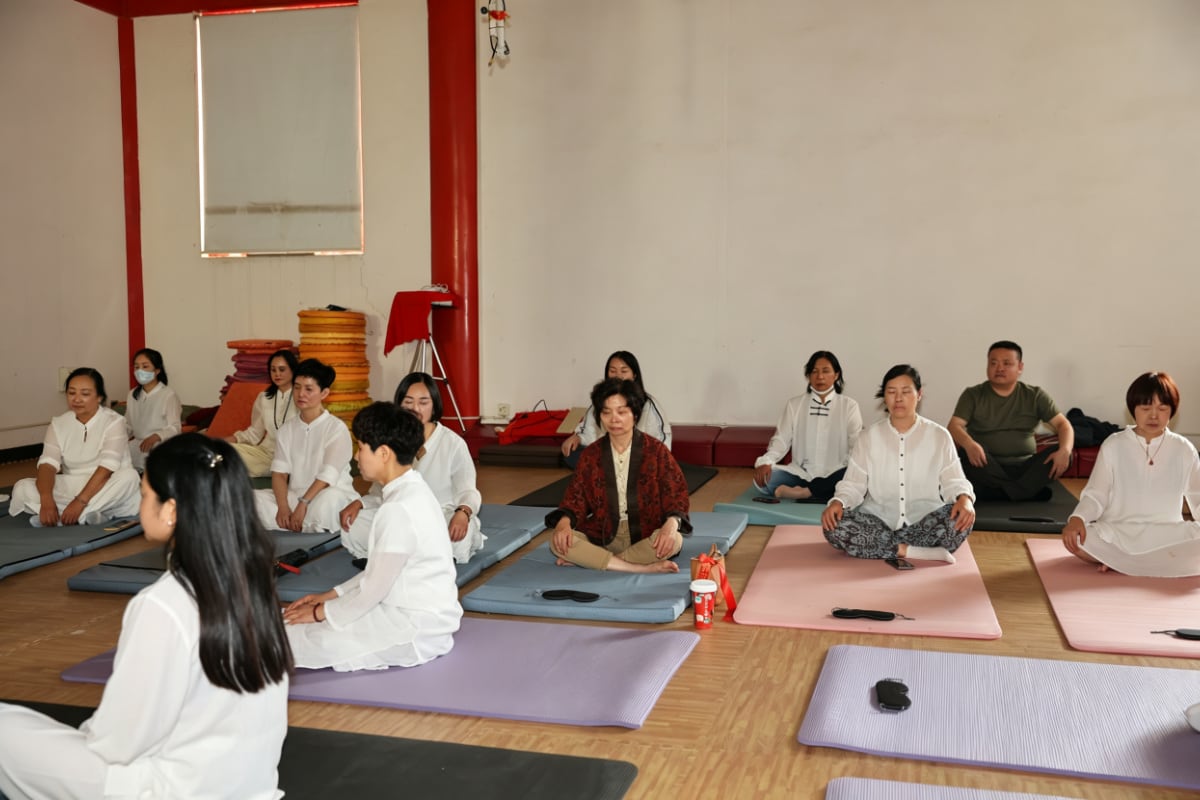
At Funzendo, located within Longmen Guanghua Temple in Luoyang, visitors can explore Buddhist culture and contemplative practice through the temple environment and its meditation experiences. Learn more about Zen meditation at Funzendo.
Understanding the Five Precepts in Modern Daily Life
The Five Precepts have an ancient religious background, but the questions they raise remain relevant to contemporary life. Their value is not limited to formal religious observance. They also invite people to examine how everyday decisions affect themselves and others.
In Personal Relationships
Respect, honesty, and responsibility are essential to healthy relationships. The precepts encourage people to consider whether their words and actions create trust or cause unnecessary harm.
At Work and in Business
The principles of not taking what is not given and avoiding false speech have clear relevance to professional conduct. They encourage fairness, transparent communication, and respect for other people's time, property, and contributions.
In the Digital World
Online communication creates new situations in which traditional ethical questions become important. Sharing misleading information, using another person's creative work without permission, or communicating in ways that deliberately humiliate others can all be examined through the broader principles of honesty and non-harming.
In Everyday Decisions
The Five Precepts are not only concerned with dramatic moral choices. They also encourage awareness in ordinary situations: how we respond when irritated, how we treat people who cannot benefit us, and whether we pause before acting on an impulse.
These examples are contemporary reflections on the principles, not a substitute for the detailed interpretations developed within particular Buddhist traditions.
Are the Five Precepts the Whole of Buddhist Practice?
The Five Precepts provide an important ethical foundation, but they do not represent the entirety of the Buddhist path. Buddhist traditions also emphasize wisdom, meditation, compassion, generosity, and the cultivation of insight.
In many Buddhist teachings, ethical conduct is discussed alongside mental cultivation and wisdom. These dimensions are connected: ethical discipline supports a more settled mind, meditation develops awareness, and wisdom helps practitioners understand the causes of suffering more deeply.
The Five Precepts should therefore be understood as a foundation rather than a complete description of Buddhist philosophy. They offer a practical starting point for considering how spiritual understanding can influence the way people live.
From Buddhist Principles to a More Conscious Way of Living
The Five Precepts have endured because they address fundamental questions about human behavior. They ask people to consider the consequences of taking life, using what belongs to others, entering relationships, speaking, and seeking temporary relief through intoxicants.
Their significance lies not only in the actions they discourage, but also in the qualities they encourage: care, honesty, responsibility, restraint, and awareness.
For visitors interested in Chinese Buddhist culture, learning about the Five Precepts offers a deeper way to understand the connection between religious teachings and everyday life. A temple is not simply a place to observe architecture or participate in meditation. It is also an environment in which the values behind Buddhist practice can be explored and reflected upon.
At Longmen Guanghua Temple, the historical setting provides an opportunity to encounter the living cultural context of Chinese Buddhism. Visitors can learn more about the Buddhist heritage sites at Guanghua Temple and explore how ancient teachings continue to raise meaningful questions in the modern world.
The Five Precepts begin with simple commitments. Their deeper significance emerges through the choices people make, day after day.