The Three Patriarchs of Tangmi: History and Legacy
When people first encounter the term Tangmi (唐密), or Chinese Esoteric Buddhism, they may assume it refers to Chinese Buddhism in general. In fact, Tangmi describes a particular stream of Buddhist teachings and ritual traditions that developed significantly during the Tang dynasty (618–907 CE). Its history is closely associated with sacred texts, mantra recitation, ritual practice, teacher-to-student transmission and the movement of Buddhist knowledge across Asia.
Three influential masters are traditionally associated with this formative period: Subhakarasimha (善无畏), Vajrabodhi (金刚智), and Amoghavajra (不空). Known collectively as the Kaiyuan Three Great Masters, or Kaiyuan San Dashi (开元三大士), they helped shape the development of Esoteric Buddhism in Tang China.
Their stories are more than biographies of distinguished monks. They reveal how Buddhist ideas traveled across the Silk Road and maritime trade routes, how religious traditions developed under imperial patronage, and how teachings associated with Tang China later influenced Buddhist practice in Japan.
For visitors interested in Chinese Buddhist history, Luoyang offers another dimension to this story. Its temples, commemorative sites and historical landscape provide a setting in which to explore the wider legacy of Tang-era Buddhism. Understanding the three masters is a useful starting point for discovering that heritage.
Who Were the Three Great Masters of Tangmi?
The expression “Kaiyuan Three Great Masters” refers to three prominent teachers whose activities contributed to the establishment and development of Esoteric Buddhist traditions in China during the eighth century. Kaiyuan was the reign title of Emperor Xuanzong from 713 to 741 CE.
Although the three masters are often presented together, their backgrounds, contributions and historical circumstances were different. Subhakarasimha became closely associated with the translation and interpretation of foundational Esoteric scriptures. Vajrabodhi brought important ritual teachings and texts to China. Amoghavajra subsequently became one of the most influential figures in the institutional development of Chinese Esoteric Buddhism.
Subhakarasimha (善无畏): A Teacher of Foundational Scriptures
Subhakarasimha, whose Sanskrit name is commonly rendered as Śubhākarasiṃha, lived from approximately 637 to 735 CE. Born in India, he became a Buddhist monk and studied Buddhist teachings before traveling to China. He arrived in Chang'an, the Tang imperial capital, in 716 CE and became an important figure in the transmission of Esoteric Buddhist texts.
One of his most significant contributions was his role in translating the Mahāvairocana Sūtra, known in Chinese as the Da Ri Jing (大日经). This scripture became a foundational text for one major stream of East Asian Esoteric Buddhism. It presents teachings concerning Mahāvairocana, the cosmic Buddha, and describes a framework of practice involving ritual, contemplation and the relationship between awakening and the practitioner's experience.
Translation was not simply a matter of replacing Sanskrit words with Chinese equivalents. Buddhist translators worked within complex intellectual and religious environments, interpreting unfamiliar concepts for new audiences while preserving the significance of the original teachings. Their work helped create the textual foundations through which later generations studied and practiced Esoteric Buddhism.
Subhakarasimha's importance therefore lies not only in his personal reputation but also in his contribution to the transmission of a major body of Buddhist literature. His work helped make sophisticated Esoteric teachings accessible to Chinese monastic communities and laid part of the foundation for subsequent developments.
Vajrabodhi (金刚智): Ritual Practice and Esoteric Transmission
Vajrabodhi, known in Chinese as Jingangzhi (金刚智), lived from approximately 671 to 741 CE. A Buddhist master from southern India, he traveled to China by sea and arrived during the early eighth century. His arrival brought another important stream of Esoteric Buddhist learning into the Tang religious world.
Vajrabodhi is associated with the transmission of ritual methods, sacred texts and forms of practice that became characteristic of Chinese Esoteric Buddhism. These traditions could involve mantras, mudras, mandalas, visualization and ritual procedures performed under the guidance of a qualified teacher.
A mantra is a sacred formula recited within a particular religious context. A mudra is a symbolic gesture, often performed with the hands. A mandala is a structured sacred representation that can organize Buddhist figures and concepts into a visual framework for contemplation and ritual practice. In Esoteric Buddhism, these elements can function together rather than as isolated techniques.
Such practices were part of a wider system of instruction and transmission. They required more than memorizing a sequence of gestures or repeating a phrase. Their meanings depended on Buddhist teachings, ritual context and the relationship between teacher and student.
Vajrabodhi's influence also extended through his disciples. Among them, Amoghavajra would become a particularly important figure, carrying forward and expanding the transmission of Esoteric Buddhist teachings during the middle and later Tang period.
Amoghavajra (不空): The Architect of an Influential Tradition
Amoghavajra, whose Chinese name is commonly given as Bukong (不空), lived from approximately 704 or 705 to 774 CE. His early background is associated with the wider Central Asian and Silk Road world, although historical accounts differ in how they describe his origins.
Amoghavajra became a disciple of Vajrabodhi and worked within his teacher's circle of Buddhist learning and ritual practice. Following Vajrabodhi's death in 741, he continued to develop his knowledge. He later traveled to South Asia and Sri Lanka, returning to Tang China in 746 or 747 with additional texts and ritual knowledge.
His influence grew substantially under successive Tang emperors. Amoghavajra translated a large body of Buddhist scriptures, prepared ritual manuals and commentaries, and helped establish Esoteric Buddhist practice within important monastic and imperial institutions.
His role is especially significant because the development of a Buddhist tradition involves more than the arrival of teachers or the translation of individual texts. It also requires communities of practitioners, systems of instruction, institutional support and the continued transmission of teachings. Amoghavajra's work helped consolidate these elements within Tang China.
His legacy also reaches beyond China. The Japanese monk Kūkai (空海, 774–835 CE) traveled to Tang China in the early ninth century and studied Esoteric Buddhism under Huiguo (惠果), a master in the lineage associated with Amoghavajra. Kūkai subsequently established the Japanese Shingon tradition, drawing on teachings transmitted in Tang China.
This historical connection is one of the clearest examples of how Buddhist knowledge moved across national and linguistic boundaries. Chinese Esoteric Buddhism and Japanese Shingon share important historical roots, while each developed its own institutions, interpretations and practices.
How the Three Masters Shaped Tangmi
The three masters are often discussed as a group, but their combined significance is easier to understand when viewed through several connected developments.
The translation and circulation of Buddhist texts
Subhakarasimha and Vajrabodhi were associated with the introduction and transmission of important Esoteric scriptures and ritual knowledge. Amoghavajra expanded this work through further translations, commentaries and ritual compilations. Together, their activities contributed to the formation of a substantial body of Chinese-language Esoteric Buddhist literature.
The development of ritual systems
Esoteric Buddhism placed particular importance on the coordinated use of text, sound, gesture, visualization and ritual space. These methods were understood within a Buddhist framework of practice, not merely as decorative ceremonies. Their transmission required training and contextual knowledge, helping shape distinctive forms of religious instruction.
The relationship between Buddhism and the Tang court
Imperial patronage played a major role in the prominence of Esoteric Buddhism during the Tang dynasty. The three masters operated in a world where Buddhist institutions, political authority and public ritual could intersect. Amoghavajra, in particular, developed close relationships with successive emperors and became a major figure in the religious life of the court.
Modern historians also emphasize that Tang Esoteric Buddhism was not created by three individuals in isolation. It emerged from wider networks of Indian, Central Asian and Chinese teachers, translators, patrons and practitioners. The traditional title of the Three Great Masters offers a useful way to understand key figures in this complex history, but it should not obscure the broader communities that sustained the tradition.
From Tang China to Japanese Shingon
The connection between Tangmi and Japanese Shingon is an important part of East Asian Buddhist history. During the Tang period, China was a major destination for international students, monks and scholars who traveled to study Buddhist texts and practice.
Kūkai arrived in Tang China in 804 CE. In Chang'an, he studied Esoteric Buddhism with Huiguo, who belonged to the transmission associated with Amoghavajra. Kūkai returned to Japan with teachings, texts and ritual knowledge that became central to the formation of Shingon Buddhism.
This was not simply the transfer of a finished religious system from one country to another. Once established in Japan, Shingon developed within its own historical, cultural and institutional environment. Its relationship with Tang China nevertheless remains fundamental to understanding its origins.
For modern visitors, this shared history provides a meaningful reason to explore Chinese Buddhist heritage. It shows that temples and historical sites in China belong to a wider network of cultural exchange that connected East Asia for centuries.
To explore Buddhist practice and cultural experiences in a contemporary setting, visit Funzendo's meditation programs. They provide a starting point for learning about contemplative practice while discovering the Buddhist cultural landscape of Luoyang.
Longmen Guanghua Temple and the Heritage of Tangmi
Luoyang was one of the major political and cultural centers of Tang China. Its Buddhist history reflects the movement of monks, scriptures, artistic traditions and religious practices across the region. The Longmen area, now widely known for the Longmen Grottoes, forms part of this rich historical landscape.
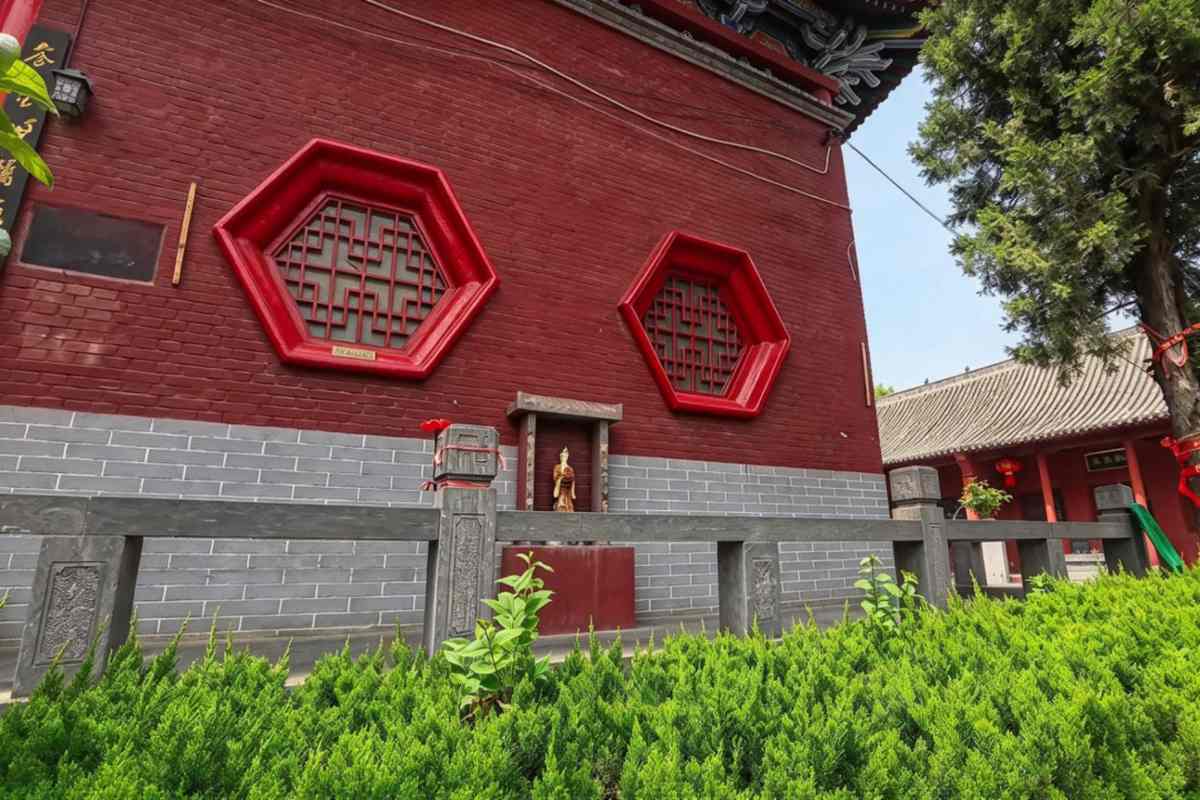
Longmen Guanghua Temple, located near the Longmen Grottoes, preserves local memories associated with Tang Esoteric Buddhism. Its commemorative heritage includes a stele honoring Subhakarasimha and a pagoda associated with his memory. These features offer visitors a way to engage with the history of the tradition through place, architecture and religious commemoration.
It is useful to distinguish between a site's commemorative association and the evidence required to establish a direct historical connection to an individual event. The temple's heritage can be appreciated as part of the wider Tangmi story without assuming that every surviving structure dates from the original period or that every historical detail is conclusively established.
For travelers, this combination of religious memory and cultural landscape makes Luoyang an especially interesting destination. Rather than encountering Tangmi only through books, visitors can explore the places where its history is remembered and interpreted today.
Learn more about the temple setting and available experiences through the Funzendo website, or explore cultural activities and experiences when planning a visit.
Planning a Tangmi Heritage Visit
You do not need to be a Buddhist scholar to appreciate the history of the Three Great Masters. A little background can make a temple visit more rewarding by helping you recognize the relationships among Buddhist texts, ritual traditions, architecture and cultural exchange.
If you are planning a visit to Luoyang, consider giving yourself enough time to explore the Longmen area rather than treating it as a quick stop. Reading about the Three Great Masters beforehand can provide useful context for the historical sites, while a guided cultural experience may help explain details that are difficult to understand from architecture alone.
Visitors interested in a more contemplative experience can also explore meditation at Funzendo. Those who want to learn about Chinese cultural practices beyond seated meditation can review the available incense, tea and singing bowl cultural retreat.
These experiences should not be confused with formal initiation into an Esoteric Buddhist lineage. They are opportunities to learn about contemplative practice and cultural heritage in an accessible setting.
Frequently Asked Questions
Who are the Three Great Masters of Tangmi?
They are Subhakarasimha (善无畏), Vajrabodhi (金刚智) and Amoghavajra (不空), three influential Buddhist masters associated with the development of Esoteric Buddhism in Tang China.
Were all three masters from India?
Subhakarasimha and Vajrabodhi were Indian Buddhist monks. Amoghavajra's background is associated with Central Asia and the Silk Road world, and historical accounts differ in their descriptions of his origins.
What does Tangmi mean?
Tangmi is a modern Chinese term used for Tang-era Chinese Esoteric Buddhism. It refers to a particular historical stream of Buddhist teaching and practice, not to every form of Buddhism practiced in China during the Tang dynasty.
Is Tangmi the same as Japanese Shingon Buddhism?
No. They are historically connected, but they are not identical. Shingon developed in Japan following Kūkai's studies in Tang China, particularly under Huiguo, whose lineage was associated with Amoghavajra.
Why is Amoghavajra especially important?
Amoghavajra played a major role in translating Buddhist texts, organizing ritual knowledge and establishing Esoteric Buddhism within Tang China's religious and imperial institutions. His lineage also contributed to the transmission of Esoteric teachings to Japan.
Can international visitors explore Tangmi heritage in Luoyang?
Yes. Luoyang offers important Buddhist historical sites, including the Longmen area and Longmen Guanghua Temple. Visitors should check current access arrangements and the details of cultural programs before traveling.
Do I need a Buddhist background to appreciate Tangmi history?
No. The history can be approached through religious studies, architecture, translation, cultural exchange and the history of China and Japan. A basic understanding of the three masters makes the subject easier to follow, even for first-time visitors.
Discover the Legacy of Tangmi in Luoyang
The Three Great Masters helped shape a formative period in Chinese Esoteric Buddhism. Subhakarasimha contributed to the translation of foundational scriptures, Vajrabodhi transmitted important ritual teachings, and Amoghavajra expanded the tradition's influence through translation, institutional support and the training of later generations.
Their legacy is not confined to a single temple or country. It belongs to a wider history of movement among India, Central Asia, China and Japan, showing how religious traditions evolve through encounters between people, texts and places.
For those who want to explore this history beyond the page, Luoyang offers a meaningful starting point. Discover the Buddhist heritage of the Longmen area and explore Funzendo's cultural and contemplative experiences as part of your journey through China's Buddhist past.