What Is Tangmi? A Complete Guide to Chinese Esoteric Buddhism, Its History and Living Heritage
Chinese Buddhism is far more diverse than many international visitors initially realize. Beyond the meditation halls associated with Chan Buddhism, the monumental stone carvings of ancient temples, and the familiar images of the Buddha found throughout East Asia, there is another important tradition whose history reveals the depth of China's religious and cultural connections: Tangmi, or Chinese Esoteric Buddhism.
Known in Chinese as, Tangmi is associated with the development of esoteric Buddhist teachings and ritual systems during the Tang dynasty (618–907 CE). Its historical world includes sacred texts, mantras, symbolic hand gestures, mandalas, ritual objects, and the transmission of teachings through established lineages. These elements were part of a sophisticated religious tradition that developed through exchanges between India and China and later influenced Buddhist practice in Japan.
For people who have visited a Buddhist temple in China or Japan, some of Tangmi's visual elements may already seem familiar. A carefully arranged mandala, a particular gesture made by a Buddhist figure, or a ritual object placed within a temple hall can all invite questions about the beliefs and practices behind what is seen. Understanding Tangmi helps explain why these elements matter and how they fit into the wider history of Asian Buddhism.
Luoyang, in present-day Henan Province, is an especially meaningful place from which to explore this subject. As one of the historic capitals of China, the city was an important center of Buddhist culture. Longmen Guanghua Temple is associated with the legacy of Subhakarasimha, one of the major masters connected with the development of Tang Esoteric Buddhism. Its historical setting provides a valuable starting point for understanding the relationship between Buddhist teachings, temple heritage, and the cultural landscape of central China.
What Exactly Is Tangmi?
Tangmi is a commonly used Chinese term for Tang-era Chinese Esoteric Buddhism, particularly the tradition associated with Zhenyan Buddhism. The term is connected with a period when esoteric Buddhist scriptures, ritual practices, and systems of religious transmission became influential in China. Although the Tang dynasty is central to its historical development, the broader roots of esoteric Buddhism extend to earlier Indian Buddhist traditions.
The word “esoteric” describes teachings and practices transmitted through particular religious lineages, often involving formal instruction and initiation. In this context, knowledge is not understood solely as information to be read or memorized. Some teachings are connected to specific methods of practice, ritual responsibilities, and a relationship between teacher and student.
Several elements are especially associated with Tangmi. Mantras involve sacred syllables or formulas; mudras are symbolic hand gestures; and mandalas organize sacred imagery into structured representations of Buddhist cosmology. Visualization and ritual procedures may also play important roles. These elements work within a larger doctrinal framework rather than operating as unrelated techniques.
For this reason, Tangmi cannot be adequately explained as simply a form of meditation, a collection of mysterious symbols, or an artistic style. It is a religious tradition with its own historical development, textual foundations, ritual systems, and methods of transmission. To understand it properly, it is necessary to consider both its visible cultural expressions and the teachings that give those expressions meaning.
Why the Tang Dynasty Was So Important
The Tang dynasty was a period of extensive international exchange. Trade routes connected China with Central Asia, India, Persia, and other regions, while diplomatic missions and religious travelers helped circulate ideas across borders. Buddhism benefited from these connections, as monks traveled to study, texts were translated, and religious institutions developed relationships with communities far beyond their immediate surroundings.
Chang'an, the Tang capital corresponding to modern Xi'an, became one of the most important centers of Buddhist scholarship and religious activity. Luoyang also held a prominent position in China's political and cultural life. Its imperial history, religious institutions, and location within the Central Plains made it an important part of the wider Buddhist landscape.
During this period, Buddhist teachings arriving from India were not simply copied into Chinese culture without change. Translators, scholars, monks, patrons, and local communities interpreted and transmitted them within an existing Chinese intellectual and religious environment. New ritual systems developed alongside established Buddhist schools, creating a diverse religious landscape.
Esoteric Buddhism benefited from this environment of translation and exchange. Its scriptures and ritual systems required specialized knowledge, while its imagery and ceremonies contributed to the visual and ceremonial life of Buddhist institutions. The relationship between textual learning, ritual practice, and religious authority helped distinguish esoteric traditions from other approaches to Buddhism.
The Tang period is therefore important not only because particular masters lived and taught during these centuries, but also because the political and cultural conditions allowed complex Buddhist traditions to develop and travel. Tangmi represents one part of a much larger story about how religious ideas moved across Asia and acquired distinct forms in different societies.
The Three Masters Associated with Tang Esoteric Buddhism
Three historical figures are particularly important in discussions of Tang Esoteric Buddhism: Subhakarasimha (善无畏), Vajrabodhi (金刚智), and Amoghavajra (不空). Their work contributed to the translation, teaching, and institutional development of esoteric Buddhist traditions in China during the eighth century.
Subhakarasimha: A Key Figure in Luoyang's Buddhist Heritage
Subhakarasimha was an Indian Buddhist master who traveled to China during the Tang dynasty. He became associated with the translation and transmission of important esoteric Buddhist texts. His work helped establish teachings that would become influential in the development of Chinese Esoteric Buddhism.
His historical significance extends beyond his textual contributions. Subhakarasimha is closely associated with the Buddhist history of Luoyang, and his legacy is remembered at Longmen Guanghua Temple. For visitors interested in Tangmi, this connection makes Luoyang more than a convenient destination on a cultural itinerary: it places the subject within a specific historical landscape.
Vajrabodhi: Transmission and Ritual Knowledge
Vajrabodhi was another influential master in the formation of Tang Esoteric Buddhism. His activities helped transmit esoteric teachings and ritual knowledge into the Chinese Buddhist world. Together with the work of other translators and teachers, his contribution formed part of the development of a more organized body of esoteric Buddhist practice.
The significance of such figures lies not only in the number of texts associated with them. Their work also illustrates the importance of direct teaching, the interpretation of ritual systems, and the movement of religious knowledge between different linguistic and cultural environments.
Amoghavajra: Expanding the Tradition
Amoghavajra became one of the most prominent figures in the history of Chinese Esoteric Buddhism. His translation activities, ritual expertise, and relationships with the Tang imperial court helped strengthen the position of esoteric teachings within Chinese Buddhist institutions.
His career also demonstrates that Buddhist history was shaped by relationships among religious communities, scholars, and political authorities. The development of a tradition depended on more than individual spiritual insight; it also involved texts, patronage, institutions, and the practical work of preserving and transmitting knowledge.
Together, these three masters provide a framework for understanding the development of Tangmi. Their histories connect Chinese Buddhist institutions with Indian religious traditions and help explain why the Tang dynasty remains a central period in the history of Esoteric Buddhism.
Understanding Mantras, Mudras and Mandalas
For many modern readers, the most recognizable aspects of Tangmi are its ritual and visual elements. Mantras, mudras, and mandalas frequently appear in introductions to Esoteric Buddhism, but their meanings are more complex than a brief description can convey. Each belongs to a larger system of religious interpretation and practice.
Mantras: Sacred Language and Sound
A mantra is a sacred syllable, word, or formula used within a religious practice. In Esoteric Buddhism, mantras are associated with particular teachings, ritual contexts, and lineages. Their function is not simply to produce a calming effect or to repeat positive words. Their significance comes from the way they are understood within the tradition.
Sound has long played an important role in Buddhist religious life. Recitation can structure a ceremony, mark a moment of devotion, or form part of a prescribed ritual. The rhythm, pronunciation, and context of a mantra may all matter to the practitioners who use it.
For cultural visitors, learning about mantras can help explain why sound is such an important feature of some Buddhist ceremonies. It can also encourage a more thoughtful response to ritual: rather than viewing recitation as an unfamiliar performance, visitors can begin to understand its place within a living religious tradition.
Mudras: Meaning Expressed Through Gesture
Mudras are symbolic hand gestures found in Buddhist art and ritual. Buddhist statues may show the hands positioned in ways that communicate particular meanings, while ritual practitioners may use prescribed gestures as part of a formal sequence.
These gestures should be interpreted carefully. Their significance can vary according to the figure depicted, the artistic tradition, and the religious context. A single gesture may have different associations in different settings, so it is not always possible to assign a universal meaning to every hand position.
Learning to recognize mudras can make a visit to a Buddhist temple or museum more rewarding. The posture of a statue, the position of its hands, and the objects it holds may offer clues about its identity and symbolic role. What initially appears to be a small visual detail can reveal a connection to a much larger body of Buddhist teachings.
Mandalas: Sacred Geometry and Buddhist Cosmology
Mandalas are structured representations of sacred realms and relationships. In Esoteric Buddhism, they may serve as ritual diagrams, objects of contemplation, and visual expressions of Buddhist cosmology. Their carefully arranged figures and symbols communicate relationships that are not always obvious to an unfamiliar viewer.
A mandala is not simply a decorative circle or a symmetrical artwork. Its organization may be associated with specific texts, deities, ritual procedures, and interpretations of the Buddhist path. Understanding a mandala therefore requires attention to its religious context rather than an assumption that all mandalas mean the same thing.
For people interested in Asian art and cultural history, mandalas also illustrate the relationship between religious thought and visual design. Their structured compositions show how complex ideas can be communicated through spatial relationships, repeated patterns, and carefully arranged symbolic forms.
These three elements—mantra, mudra, and mandala—help explain why Tangmi is often described as a tradition that brings together sound, gesture, and imagery. However, their full significance can only be understood within the wider framework of Buddhist teachings and the lineages through which specific practices are transmitted.
The Temple as a Place of Memory and Transmission
Throughout Chinese Buddhist history, temples have served many functions. They have been places of worship, centers of learning, homes for monastic communities, repositories of religious objects, and destinations for pilgrims. They have also preserved local memories of historical figures, important events, and the development of Buddhist traditions.
A temple's architecture can reveal aspects of its history. The arrangement of halls, the position of a pagoda, the design of a gate, and the presence of commemorative inscriptions can all contribute to an understanding of how a religious site has developed over time. Such features should not be treated merely as scenery; they are part of the cultural record through which the history of Buddhism can be explored.
For visitors, this means that a temple visit can be both an architectural experience and an introduction to religious history. Observing the setting, reading available inscriptions, and learning about the figures associated with a site can provide a more meaningful experience than simply photographing its buildings.
At the same time, temples remain religious spaces rather than museums alone. Their daily life may include practices that are not designed for visitors, and access to particular halls or ceremonies may be restricted. Respect for local customs and guidance is therefore an important part of responsible cultural travel.
Why Longmen Guanghua Temple Matters to Tangmi Heritage
Luoyang occupies an important place in China's historical geography. Its role as an imperial capital brought together political institutions, scholars, artisans, religious communities, and international visitors. The surrounding region preserves substantial evidence of China's Buddhist history, most famously at the Longmen Grottoes, where generations of patrons and artists created Buddhist sculptures and inscriptions.
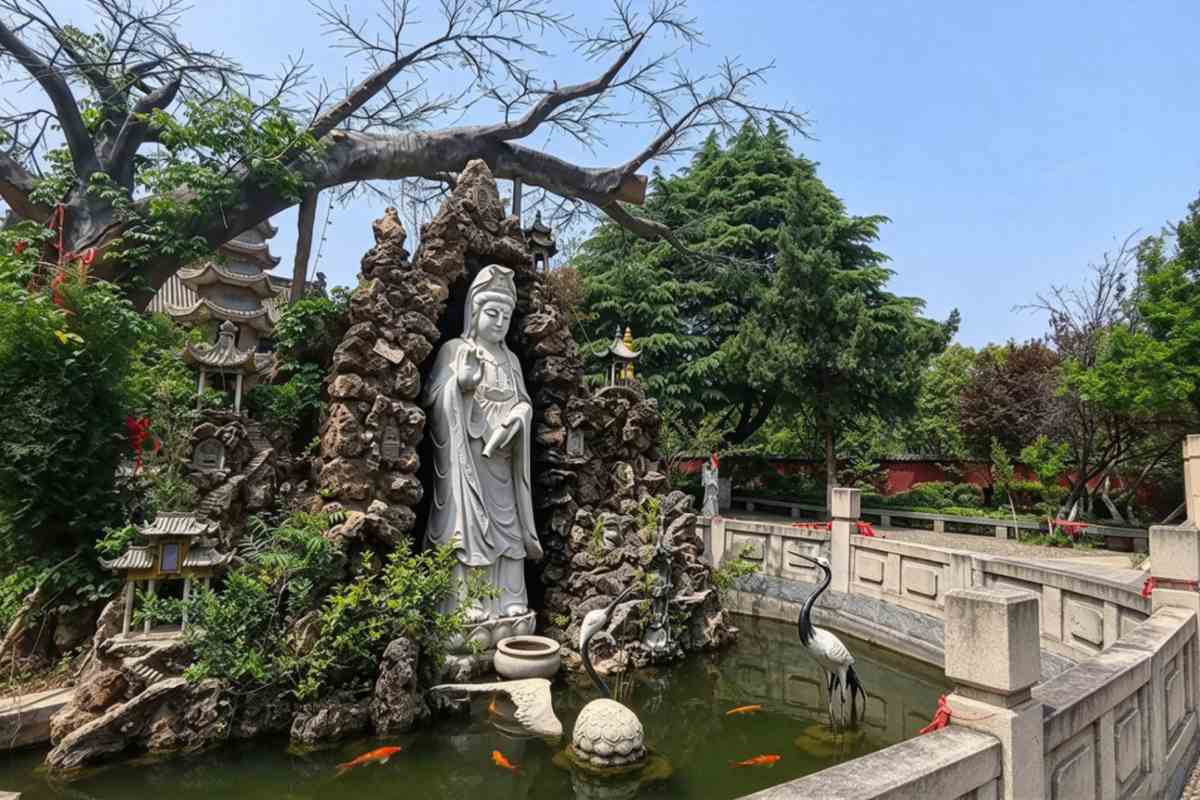
Longmen Guanghua Temple, located on the western hillside of Longmen Village, is associated with the legacy of Subhakarasimha and the history of Tang Esoteric Buddhism. The temple's heritage includes Wuwei Pagoda, commemorative monuments, and architectural features that connect the memory of Buddhist masters with the physical landscape of Luoyang.
The temple is especially interesting because it allows visitors to consider the relationship between historical memory and place. The history of Tangmi is often introduced through texts, biographies, and discussions of Buddhist doctrine. At a heritage site, those subjects can be connected with particular buildings, monuments, and landscapes.
Visitors can learn more about the temple and its cultural landmarks through Guanghua Temple and its historic sites.
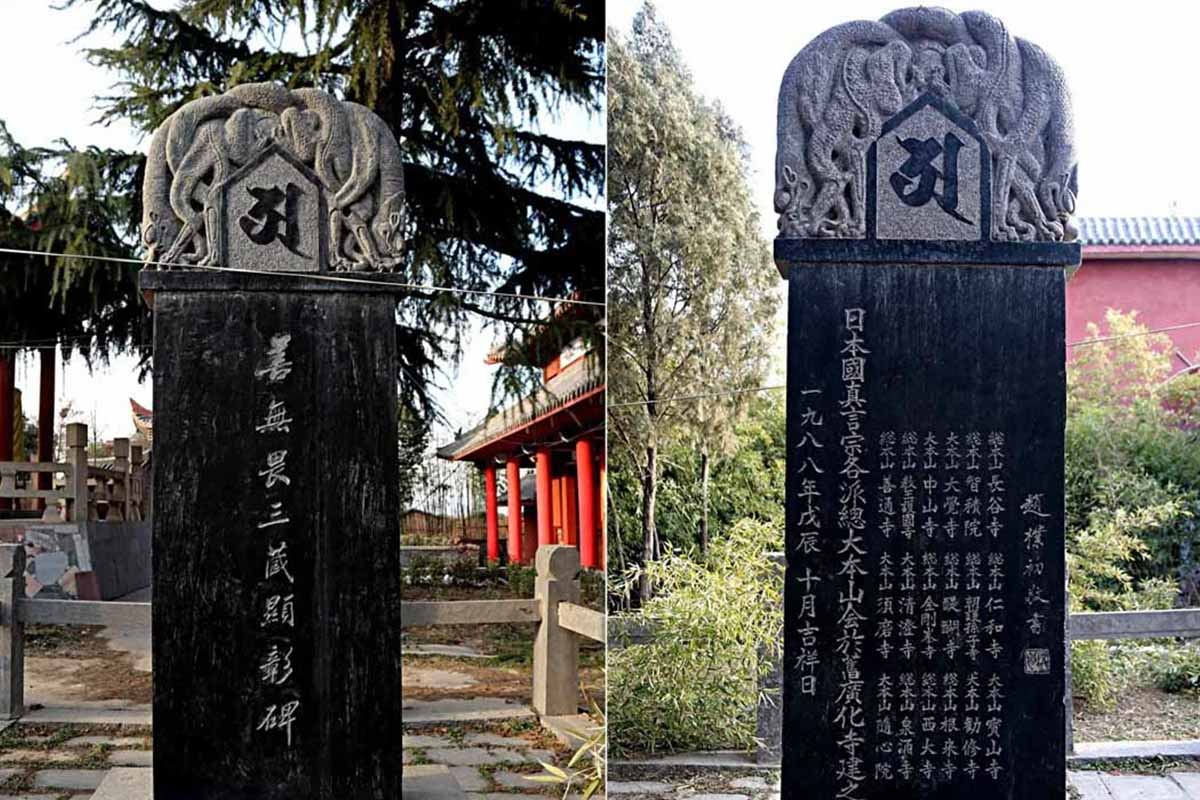
The importance of Guanghua Temple should be understood within this wider context. Its association with Subhakarasimha provides a meaningful link to the history of Esoteric Buddhism, while its monuments and setting offer opportunities for historical and cultural exploration. Claims about particular ritual lineages, however, should be distinguished from documented historical associations and assessed on their own evidence.
It is also useful to distinguish Guanghua Temple from the nearby Longmen Grottoes. The grottoes are a major complex of Buddhist rock-cut art, while Guanghua Temple is a separate religious and historical site. Together, they can help visitors understand different aspects of the region's Buddhist heritage without treating all its monuments as belonging to the same institution or historical period.
From Tang China to Japan: The Historical Relationship with Shingon
One of the most important international connections in the history of Tangmi is its relationship with Japanese Shingon Buddhism. During the early ninth century, the Japanese monk Kūkai traveled to Tang China to study Buddhist teachings. After returning to Japan, he established Shingon Buddhism, a tradition strongly influenced by the esoteric teachings and ritual systems he encountered in China.
This journey was part of a broader pattern of cultural exchange between China and Japan. Buddhist monks traveled across the sea to study with teachers, obtain texts, and learn ritual practices. These exchanges took place alongside the movement of artistic techniques, literary forms, philosophical ideas, and other aspects of Chinese culture.
The transmission of esoteric Buddhism demonstrates how religious traditions can cross borders while developing distinct local identities. Shingon preserved important connections with Chinese esoteric teachings, but it also established its own institutions, lineages, and interpretations within Japanese society.
For this reason, Tangmi and Shingon are closely related but should not be described as completely identical. The Chinese tradition belongs to a particular historical and cultural context, while Shingon developed through its own subsequent history in Japan.
This connection is one reason why Tang-era Buddhist heritage continues to attract interest from people studying the cultural relationships between China and Japan. Visiting historical sites in Luoyang can add geographical depth to what might otherwise remain an abstract story about the transmission of texts and teachings.
Tangmi, Chan Buddhism and Tibetan Vajrayana: Understanding the Differences
People who are new to Buddhist history sometimes use the term “Esoteric Buddhism” as if it referred exclusively to Tibetan Buddhism. This is understandable because Tibetan Vajrayana traditions are well known internationally for their use of mantras, mandalas, ritual objects, and lineage-based instruction. However, esoteric Buddhist traditions also developed in China and other parts of Asia.
Tangmi belongs to the history of Chinese Buddhism, particularly the developments associated with the Tang dynasty. Tibetan Vajrayana developed within the distinctive religious and cultural history of Tibet. Although the traditions share broader historical roots and certain ritual features, their texts, institutions, lineages, and practices are not interchangeable.
Chan Buddhism, known internationally through the Japanese term Zen, is also part of the wider history of Chinese Mahayana Buddhism. Modern introductions often emphasize seated meditation and direct observation of the mind when discussing Chan. Tangmi, by comparison, is particularly associated with ritual systems, mantras, mudras, mandalas, and formal transmission.
These distinctions are useful, but they should not be turned into overly rigid categories. Buddhist traditions have developed over many centuries, and the actual religious life of monasteries has often been more complex than a simple comparison suggests. Historical communities could engage with multiple forms of Buddhist learning and practice.
| Tradition | Commonly Emphasized Features | Historical Context |
|---|---|---|
| Tangmi | Mantras, mudras, mandalas, ritual transmission | Chinese Esoteric Buddhism associated with the Tang period |
| Chan / Zen | Meditation, direct inquiry, and awareness | Developed in China and later spread throughout East Asia |
| Tibetan Vajrayana | Mantras, mandalas, deity practices, and lineage-based instruction | Developed within Tibetan religious and cultural history |
| Japanese Shingon | Esoteric ritual, mantra, mudra, mandala, and transmission | Established in Japan through the transmission of esoteric teachings from Tang China |
Understanding these relationships makes Buddhist history more interesting, not less. Rather than viewing each tradition as an isolated category, visitors can explore the historical connections, shared influences, and distinctive developments that have shaped Buddhism across Asia.
Why Tangmi Still Matters to Modern Cultural Travelers
In the modern world, people encounter Buddhist culture through many different routes: museums, books, architecture, meditation classes, documentaries, and travel. Tangmi adds another dimension to this experience by demonstrating how religious ideas can be expressed through coordinated systems of sound, gesture, imagery, and ritual.
Understanding Art Beyond Appearance
A Buddhist sculpture or mandala can be visually impressive even when its religious context is unfamiliar. Learning about Tangmi encourages visitors to look more carefully at the relationships between symbols, ritual objects, and the teachings they represent. This approach can make encounters with Buddhist art more informed and rewarding.
Exploring History Through Places
Historical knowledge becomes more tangible when it is connected to actual locations. A visit to a temple, pagoda, or commemorative monument allows travelers to consider the relationship between religious traditions and the places where they were practiced, preserved, or remembered.
Luoyang is especially suitable for this kind of exploration because its wider cultural landscape contains sites associated with different periods of Chinese history. By learning about the background of individual monuments before visiting them, travelers can develop a more coherent understanding of the region's Buddhist heritage.
Appreciating Cultural Differences
The history of Tangmi also reminds visitors that traditions change as they move between societies. The relationship between Chinese Esoteric Buddhism and Japanese Shingon provides an example of how religious teachings can be transmitted internationally while developing new forms within different cultural settings.
This perspective is valuable for anyone interested in Chinese culture, Japanese religious history, Asian art, or the broader history of cultural exchange. It replaces simplistic ideas about a single, unchanging Buddhist tradition with a more nuanced understanding of historical development.
Approaching Temple Visits with Respect
Learning about Tangmi can also encourage a more respectful approach to temple visits. Religious buildings are not simply tourist attractions. They may remain active places of worship, study, and monastic life. Visitors should follow local guidance, observe restrictions on photography where applicable, and avoid assuming that every ritual or sacred space is open to public participation.
For travelers who want to combine cultural learning with a structured visit to important Buddhist sites, Funzendo offers opportunities to explore the heritage of Luoyang and other destinations through its Chinese Zen pilgrimage programs.
Exploring Tang Buddhist Heritage with Funzendo
Understanding Tangmi does not require visitors to become Buddhist practitioners. A thoughtful introduction to its history, art, and cultural setting can be valuable for travelers, students, and anyone curious about the development of Asian religious traditions.
At Funzendo, Chinese Buddhist culture can be explored through temple heritage, cultural learning, and selected meditation or retreat experiences. These programs provide opportunities to learn about the local setting and traditional practices while recognizing the difference between cultural introduction and formal religious initiation.
For visitors planning a trip to Luoyang, exploring the history of Longmen Guanghua Temple alongside the wider heritage of the Longmen area can provide a meaningful context for understanding the city's place in Chinese Buddhism. The experience can be especially rewarding when combined with advance reading about the historical masters, inscriptions, and monuments associated with the region.
Before arranging a visit, travelers should confirm current access conditions, program availability, and any specific requirements for temple activities. Not every religious practice is open to visitors, and the details of cultural programs may change according to the temple's schedule.
To begin planning, explore Guanghua Temple's historical sites and cultural landmarks and discover the Zen pilgrimage experiences available through Funzendo.
Frequently Asked Questions About Tangmi
Is Tangmi the same as Tibetan Buddhism?
No. Tangmi refers to Chinese Esoteric Buddhism, especially the tradition associated with the Tang dynasty. Tibetan Vajrayana shares some broader esoteric Buddhist features but developed within a different historical and cultural setting, with its own texts, institutions, and lineages.
Is Tangmi the same as Japanese Shingon Buddhism?
No, although the traditions are closely connected. Esoteric Buddhist teachings transmitted from Tang China played a major role in the formation of Japanese Shingon Buddhism. Shingon subsequently developed its own institutions and interpretations in Japan.
What are the main elements of Tangmi?
Commonly associated elements include mantras, mudras, mandalas, visualization, ritual procedures, and lineage-based transmission. Their meanings and use depend on the particular teachings and ritual context.
Who were the three major masters associated with Tang Esoteric Buddhism?
Subhakarasimha, Vajrabodhi, and Amoghavajra are three of the most important figures associated with the development and transmission of esoteric Buddhist teachings in China during the Tang dynasty.
Why is Luoyang relevant to Tangmi?
Luoyang was an important historical center of Chinese Buddhism. Longmen Guanghua Temple is associated with Subhakarasimha and the heritage of Tang Esoteric Buddhism, while the wider Longmen area preserves significant Buddhist monuments and cultural sites.
Can people without a Buddhist background learn about Tangmi?
Yes. Tangmi can be studied through history, religious studies, art, and cultural heritage. Visitors do not need to identify as Buddhist to learn about the tradition, although they should respect temple customs and follow local guidance.
Can visitors participate in Tangmi rituals?
Publicly accessible cultural activities may be available depending on the site and program. Formal esoteric practices may require specific instruction, preparation, or initiation, so visitors should not assume that every ritual is open to the public.
What is the best way to explore Tangmi heritage in China?
Begin by learning about the historical context, then visit relevant temples and Buddhist heritage sites with respect for local customs. In Luoyang, Guanghua Temple and the Longmen area provide useful starting points for exploring different aspects of Chinese Buddhist history.
Conclusion: Discover the History Behind Tangmi
Tangmi represents an important chapter in the history of Chinese Buddhism. Its development during the Tang dynasty brought together translated scriptures, ritual systems, symbolic gestures, sacred sound, and mandala imagery within a distinctive tradition of Buddhist teaching and practice.
Its influence also extended beyond China. The transmission of esoteric Buddhist teachings to Japan contributed to the formation of Shingon Buddhism, demonstrating how religious traditions can cross cultural boundaries while developing their own identities.
Luoyang remains a meaningful place to explore this history because its temples, monuments, and wider Buddhist landscape connect historical narratives with real places. For cultural travelers, learning about Tangmi before visiting can transform a journey into a deeper exploration of the people, ideas, and traditions that shaped East Asian religious history.
Discover the historical setting of Longmen Guanghua Temple and explore Funzendo's Chinese Buddhist heritage and Zen pilgrimage programs to learn more about the cultural history of Luoyang.