What Is Zen Buddhism? Practice, History, and Daily Life
What is Zen Buddhism? It is a question that often begins with a familiar image: a Buddhist monk sitting quietly, a meditation hall filled with silence, or a temple courtyard where daily activities seem to move at a different pace. Yet Zen Buddhism is much more than a peaceful atmosphere or a method for reducing stress. It is a Buddhist tradition that emphasizes direct experience, meditation, awareness, and the cultivation of wisdom.
Known in China as Chan Buddhism, Zen developed through the encounter of Indian Buddhist teachings with Chinese intellectual, religious, and cultural traditions. Over time, it became an influential part of Chinese Buddhism and later spread to Japan, Korea, and other parts of the world. Understanding its origins and practices helps explain why meditation, ordinary daily activities, and the relationship between teacher and student have such important places in Zen culture.
What Is Zen Buddhism? Understanding the Meaning of Zen
The word Zen comes from the Japanese pronunciation of the Chinese word Chan, which derives from the Sanskrit term dhyana, commonly associated with meditation or meditative concentration. In China, Chan Buddhism developed as a distinct Buddhist tradition with its own teachings, communities, and approaches to practice.
Zen is often described as a tradition that emphasizes direct insight rather than relying exclusively on theoretical explanation. This does not mean that Buddhist scriptures, philosophical study, or ethical teachings are unimportant. Rather, Zen places particular emphasis on putting Buddhist understanding into practice and examining experience directly.
Meditation is central to this approach, but Zen should not be reduced to sitting quietly. Its broader teachings concern the nature of the mind, the relationship between awareness and everyday activity, and the cultivation of wisdom and compassion.
For modern readers, this distinction is important. Meditation can be used for many purposes, including relaxation and attention training. Zen meditation, however, belongs to a wider Buddhist path involving ethical conduct, understanding, and sustained spiritual practice.
The Origins of Zen: From Indian Buddhism to Chinese Chan
Zen Buddhism emerged in China through a long process of cultural and religious development. Buddhist teachings reached China from India through multiple routes, including Central Asian trade networks. As Buddhist communities grew, Indian meditation traditions encountered Chinese language, philosophy, religious customs, and existing approaches to self-cultivation.
Bodhidharma is traditionally regarded as an important early figure in the history of Chinese Chan. Later Chan traditions associated him with the transmission of meditation teachings to China. Although details of his life and the historical accounts surrounding him remain subjects of scholarly discussion, his symbolic importance in Chan history is substantial.
Chinese Chan developed further through generations of teachers, monasteries, and Buddhist communities. Among its most influential historical figures was Huineng, traditionally regarded as the Sixth Patriarch. His association with the Platform Sutra helped shape later understandings of awakening, wisdom, and the nature of mind.
Chan was not created by one individual at one moment. Its development involved different teachers, textual traditions, meditation methods, and institutional communities. This long history explains why Chinese Chan contains diverse approaches rather than one uniform method of practice.
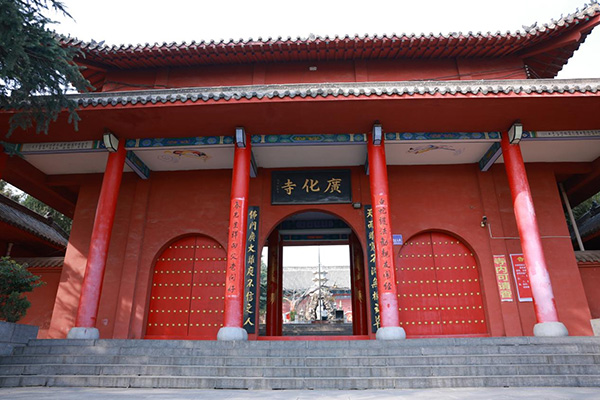
The entrance to Longmen Guanghua Temple in Luoyang, a historic Buddhist setting for exploring Chinese Buddhist culture.
How Zen Buddhism Spread from China to Japan
Chinese Chan had a significant influence beyond China. Buddhist monks traveled between China and Japan, bringing back scriptures, teachings, artistic traditions, and monastic practices. These exchanges contributed to the development of Japanese Zen, although the transmission took place over different periods and through more than one lineage.
Two influential Japanese Zen traditions are Rinzai and Soto. Rinzai Zen is particularly associated with the use of koan practice in certain training contexts, while Soto Zen places strong emphasis on seated meditation, especially the practice known as shikantaza, often translated as just sitting.
Dogen, the thirteenth-century Japanese Buddhist teacher associated with Soto Zen, drew deeply on Chinese Buddhist training and teachings. His writings helped establish a distinctive Japanese interpretation of Zen practice.
The history of Zen in Japan is therefore closely connected with Chinese Chan, but the two should not be treated as completely identical. Each developed within its own language, institutions, historical circumstances, and cultural environment.
The Main Practices of Zen Buddhism
Zen practice includes more than one method. Different schools and temples emphasize different forms of meditation, study, and daily discipline. Nevertheless, several elements are commonly associated with Zen Buddhist life.
Zazen: The Practice of Seated Meditation
Zazen is the Japanese term commonly used for seated Zen meditation. In Chinese Chan contexts, seated meditation is often referred to as zuochan. The practitioner adopts a stable posture and cultivates awareness through the practice.
Posture matters because the body provides the physical foundation for sitting. A balanced position, relaxed shoulders, and natural breathing can help practitioners remain alert without unnecessary tension. The precise posture and instructions vary across traditions and individual circumstances.
Zen sitting is not simply an attempt to stop thinking. Thoughts, sounds, and physical sensations may continue to arise. The practice involves developing a different relationship with these experiences rather than automatically following every distraction.
Walking Meditation and Awareness of Movement
Zen practice is not confined to a meditation cushion. Walking meditation brings attention to movement, balance, and the physical experience of each step.
In some Buddhist meditation settings, walking practice is used between periods of seated meditation. It provides an opportunity to maintain awareness while the body is moving and offers a different way to experience attention.
The significance of walking meditation extends beyond the movement itself. It illustrates an important aspect of Zen culture: awareness is not limited to a particular posture or location.
Koans and the Role of Inquiry
Koans are an important feature of some Zen traditions, particularly Rinzai Zen. A koan may take the form of a question, dialogue, or encounter recorded in Zen literature. Its purpose is not simply to provide an intellectual puzzle with a conventional answer.
Under the guidance of a qualified teacher, koan practice can challenge habitual ways of thinking and encourage a different kind of inquiry. Not all Zen schools use koans in the same way, and they are not a required element of every Zen meditation practice.
This distinction helps avoid a common misunderstanding: Zen is not a collection of mysterious riddles. Its teachings and methods belong to a broader Buddhist context.
Zen Buddhism in Everyday Life: Beyond the Meditation Hall
One of the distinctive themes of Zen culture is the relationship between formal meditation and ordinary activity. Temple life provides many examples of how attention, responsibility, and discipline can be expressed through everyday actions.
Preparing food, cleaning a shared space, caring for a garden, or participating in communal activities can all be understood within a broader framework of Buddhist practice. These activities are not automatically meditation simply because they take place in a temple. Their significance depends on the attitude, ethical understanding, and awareness brought to them.
Tea culture also offers an interesting point of connection between Chinese cultural life and Zen. Preparing and drinking tea can involve attention to water, utensils, fragrance, taste, and the people sharing the experience. In some settings, tea becomes a way to explore simplicity, hospitality, and mindful presence.
Temple customs and daily routines differ according to Buddhist tradition, monastery, region, and community. There is no single universal schedule that applies to every Zen temple. Understanding this diversity is more accurate than assuming that all monasteries follow the same timetable or ritual sequence.
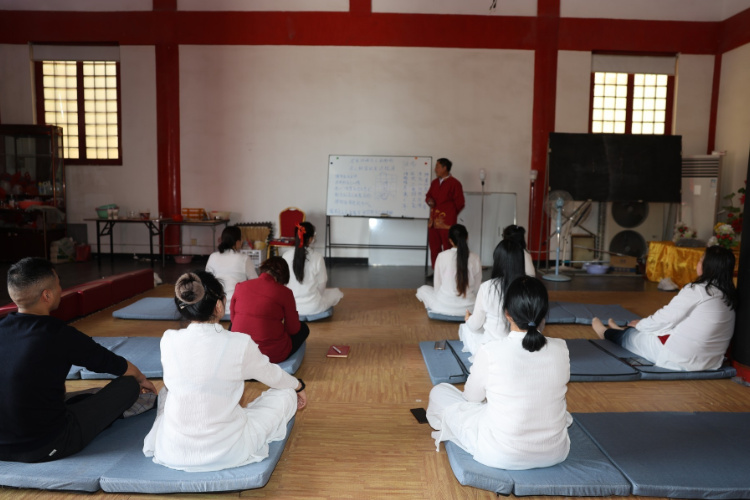
A meditation teaching session at Funzendo, illustrating the role of instruction and shared learning in contemporary Buddhist practice.
The Relationship Between Zen Teachers and Students
Teachers have played an important role in the history of Zen Buddhism. They help students understand the context of Buddhist teachings, develop an appropriate approach to meditation, and recognize misunderstandings that may arise during practice.
Traditionally, the relationship between teacher and student has taken different forms across Zen lineages. It may involve meditation instruction, discussion of Buddhist teachings, study of classical texts, or more formal practices of guidance.
A teacher's role is not simply to demonstrate a meditation posture. Buddhist instruction also concerns the principles behind practice, the development of ethical awareness, and the relationship between meditation and everyday conduct.
For people new to Zen, learning from an experienced instructor can provide useful context and help distinguish traditional Buddhist meditation from general relaxation exercises. The background and teaching approach of an instructor are therefore important considerations when exploring a meditation experience.
Readers interested in the people who guide meditation and cultural learning at Funzendo can visit the Funzendo teacher profiles.
Zen Buddhism and the Cultural Meaning of Chinese Temples
Buddhist temples are not only places of religious worship. They are also important cultural spaces where architecture, sculpture, calligraphy, ritual objects, education, and community life come together.
In China, the development of Buddhist traditions was closely connected with regional history and cultural exchange. Different temples became associated with different Buddhist lineages, teachers, texts, and artistic traditions.
Longmen Guanghua Temple in Luoyang offers an example of this historical complexity. Its heritage is closely associated with Tang Dynasty Esoteric Buddhism and the legacy of the Indian Buddhist master Subhakarasimha, known in Chinese as Shan Wuwei. This is an important part of the temple's identity, but it should not be confused with claiming that Guanghua Temple represents every school or historical stage of Chinese Chan Buddhism.
For visitors, understanding the particular Buddhist heritage of a temple makes a cultural visit more meaningful. It encourages people to look beyond the general image of a peaceful monastery and learn about the traditions, historical figures, and cultural exchanges that shaped the site.
To learn more about meditation and cultural experiences in this setting, explore Zen meditation at Funzendo and its Buddhist cultural activities.
Is Zen Buddhism Suitable for Beginners?
People do not need to have studied Buddhist philosophy before attending an introductory meditation experience. Beginners can start by learning the basic purpose of the practice, understanding comfortable posture, and becoming familiar with simple instructions for awareness and breathing.
It is also useful to approach Zen without expecting immediate results. Meditation experiences differ from person to person. Some people may find it difficult to remain seated, while others may notice that their attention frequently shifts. These experiences are not unusual and should not be treated as evidence of failure.
Those interested in a more immersive introduction can explore the different meditation experiences offered by Funzendo. Visitors should confirm the current arrangements, language support, and suitability of any particular session before making plans.
Frequently Asked Questions About Zen Buddhism
What is the difference between Zen and Buddhism?
Buddhism is a broad religious and philosophical tradition with many schools and forms of practice. Zen is one tradition within Mahayana Buddhism, emphasizing meditation, direct experience, and the cultivation of insight.
Is Zen Buddhism originally Chinese or Japanese?
Zen developed from Chinese Chan Buddhism, which emerged through the interaction of Indian Buddhist teachings and Chinese culture. It later spread to Japan, where traditions such as Rinzai and Soto developed distinctive forms.
Do you have to sit for long periods to practise Zen?
No single sitting duration applies to everyone. Meditation periods vary according to the tradition, teacher, experience level, and practice setting. Beginners should learn appropriate posture and follow guidance suited to their circumstances rather than assuming that longer sessions are always better.
Are koans used in every Zen tradition?
No. Koans are particularly associated with certain Zen lineages and teaching methods, especially Rinzai. Other traditions emphasize different approaches to seated meditation and Buddhist practice.
Can Zen practice be part of everyday life?
Yes. Zen teachings connect formal meditation with awareness and conduct in daily activities. However, everyday mindfulness should be understood within the wider Buddhist context of ethical practice, wisdom, and compassion.
Discover Chinese Zen Culture with Funzendo
Zen Buddhism is a tradition with a long history and a wide range of interpretations. Its development in China, transmission to Japan, meditation practices, and influence on temple culture all reveal different dimensions of Buddhist life.
At Longmen Guanghua Temple in Luoyang, Funzendo introduces international visitors to Chinese Buddhist culture through meditation experiences, cultural activities, and opportunities to learn about the temple's historical heritage.
Whether your interest lies in the history of Chan Buddhism, the practice of seated meditation, or the cultural environment of a traditional Chinese temple, learning about the context behind each experience can deepen your understanding.
Explore the Zen meditation programmes, discover the people behind the teaching through Funzendo's teacher profiles, or browse its cultural and temple experiences.
Understanding Zen Buddhism begins with more than learning how to sit in silence. It begins with understanding the tradition, its teachings, and the many ways Buddhist practice has developed through history and everyday life.