What Stone Inscriptions Reveal About Everyday Buddhism in Tang-Dynasty Luoyang
When people explore the history of Buddhism in China, they often encounter the names of famous monks, influential emperors, celebrated temples, and monumental Buddhist sculptures. These subjects explain the broad development of Buddhist traditions, but they do not always reveal how Buddhism became part of ordinary life.
In Tang Dynasty Luoyang, another kind of historical evidence offers a more personal perspective: stone inscriptions. Engraved on tombstones, memorial tablets, pagoda monuments, and Buddhist images, these records preserve details about people who studied Buddhist scriptures, followed teachers, supported temples, and incorporated religious practice into family life.
Their historical value is easy to overlook. A short inscription may appear to contain little more than a name and a date. Yet, when examined alongside other records, it can reveal where a monk lived, which Buddhist teachings circulated in a particular region, or how members of a family became involved in Buddhist practice.
For anyone interested in the Buddhist heritage of Luoyang, these stone records provide a valuable perspective beyond the famous monuments of the Longmen Grottoes. They help reconstruct the human and social history behind the region's religious landscape.
Why Stone Inscriptions Matter to Buddhist History
Traditional historical accounts often concentrate on major events, prominent religious figures, imperial patronage, and the establishment of important monasteries. These accounts are essential, but they tend to present Buddhism from a relatively broad perspective.
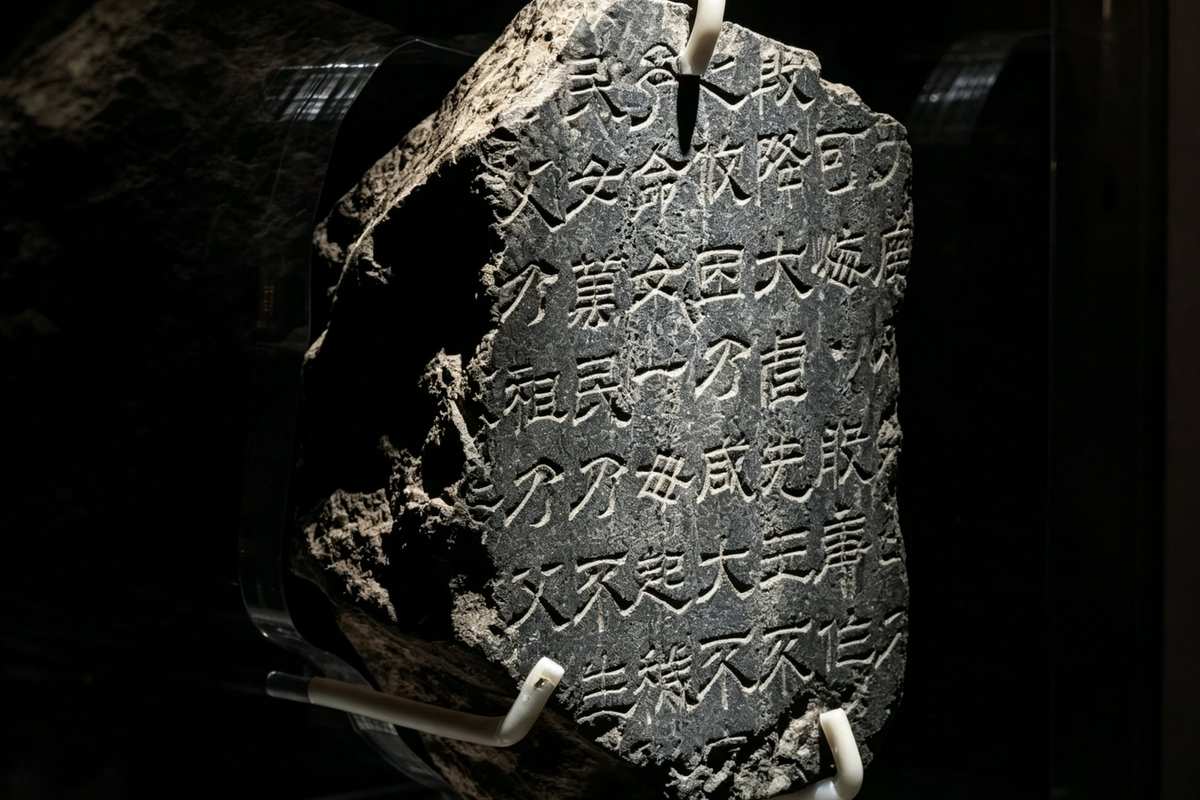
Stone inscriptions preserve a different kind of information. Buddhist epitaphs, pagoda inscriptions, and records carved on religious images can contain personal names, religious titles, dates, institutional affiliations, and accounts of relationships between teachers and followers. Some also identify Buddhist scriptures studied or recited by individuals.
These details allow historians to investigate questions that conventional historical narratives may leave unanswered. Which temples were active outside the main urban area? Did Buddhist practice extend beyond ordained monastics? What kinds of scriptures were familiar to lay believers? How did family relationships influence religious participation?
A stone inscription does not provide a complete picture of the past. Many were created for specific commemorative purposes, and their wording may reflect the values or intentions of the people who commissioned them. Nevertheless, when compared with other historical materials, they offer evidence that might otherwise have disappeared.
Luoyang Was More Than a City of Famous Temples
During the Tang Dynasty, Luoyang served as an important eastern capital and a major center of political, cultural, and religious activity. Its Buddhist landscape extended well beyond a small number of celebrated institutions.
A 2023 academic study by Ting Song and Yuanlin Wang examines stone inscriptions associated with Buddhist communities in the Luoyang region. The researchers identify at least thirteen Buddhist temples around the Longmen area through Tang-period inscriptional evidence. These include Guanghua Temple, Fengxian Temple, Xiangshan Temple, Baoying Temple, and several other institutions.
This evidence is important because it helps reconstruct a broader network of Buddhist activity around the city. Temples were not isolated monuments. They formed part of a religious environment in which monks, nuns, lay practitioners, local families, and patrons interacted.
The inscriptions also help historians connect specific individuals with particular institutions. A record naming a temple in a person's epitaph may provide evidence of where that person practiced, received religious instruction, or maintained a connection with the Buddhist community.
In this way, stone records add geographical and social detail to the history of Luoyang. They show that Buddhist life developed across a network of temples and communities rather than within a single famous sanctuary.
Beyond Famous Monks: The People Behind Buddhist Practice
One of the most interesting contributions of inscriptional research is its ability to bring less prominent Buddhist practitioners into historical view.
Historical narratives naturally give considerable attention to eminent monks and influential teachers. Stone epitaphs, however, also preserve information about people whose names may not appear in major Buddhist biographies. Some were lay believers who studied with Buddhist masters; others were family members who supported religious practice or eventually entered monastic life.
The Luoyang inscription study discusses records concerning women who pursued Buddhist learning and maintained relationships with religious teachers. One example concerns Madame Xu, whose epitaph records her study of Buddhist scripture with Subhakarasimha, known in Chinese as Shan Wuwei, and her learning of Bodhisattva practice from another Buddhist master.
The record is significant because it presents a more complex picture of Buddhist participation. Buddhist learning was not confined to the walls of a monastery or limited to the lives of famous male monks. Laypeople also engaged with Buddhist teachings, sought instruction, and developed sustained relationships with religious communities.
Such evidence helps correct an incomplete understanding of religious history. The development of Buddhism depended not only on teachers who transmitted doctrines, but also on the many people who studied, supported, practiced, and passed those teachings through their own social networks.
Which Buddhist Scriptures Did People Study?
Stone inscriptions can also reveal which Buddhist texts were known and studied among the people of Tang Dynasty Luoyang.
The research by Song and Wang identifies references to several important Mahayana scriptures in epitaphs and other inscriptional materials. These include the Diamond Sutra, the Nirvana Sutra, the Lotus Sutra, and the Vimalakirti Sutra. Other records refer to texts associated with different Buddhist traditions and forms of practice.
This information adds an important dimension to the history of Buddhist literature. The circulation of a scripture cannot be understood only by examining which texts were translated by eminent monks or preserved in major monasteries. Records connected with individual believers provide clues about how Buddhist teachings reached people beyond formal translation institutions.
They also remind us that religious learning was not necessarily uniform. Different individuals and communities engaged with different texts according to their interests, teachers, and religious commitments.
An inscription mentioning a particular scripture does not prove how widely that text was read throughout the entire population. It does, however, establish that the text was meaningful to the person or community represented in that record. When many such records are studied together, broader patterns begin to emerge.
Family Connections and the Spread of Buddhism
Another revealing aspect of the Luoyang inscriptions is the relationship between family life and Buddhist practice.
The study identifies examples in which two or more relatives became monks or nuns, either at the same time or in successive generations. Some records describe siblings who entered religious life, while others document relationships between mothers and daughters or between other female relatives.
These examples suggest that religious commitment could develop within a family rather than only through an individual's independent encounter with a monastery. Family members might introduce one another to Buddhist teachings, support a relative's decision to enter religious life, or maintain connections with the same temple community.
This evidence also reveals an important relationship between Buddhism and traditional Chinese society. Religious institutions did not exist separately from family structures, social customs, and local communities. Instead, Buddhist practice developed through ongoing interaction with them.
The inscriptions therefore offer more than a record of religious belief. They provide glimpses of how people organized their lives, responded to personal circumstances, and formed relationships around shared spiritual commitments.
How Historians Read a Buddhist Stone Inscription
Reading a historical inscription involves more than translating the characters carved into stone. Researchers must consider the physical object, its historical context, its purpose, and the circumstances in which it was created.
1. The date and historical setting
A date can help place an inscription within a particular political and religious period. It allows researchers to compare the record with other documents and identify changes in temple activity, religious titles, and Buddhist institutions.
2. Names, titles, and institutional connections
Personal names and Buddhist titles can help identify the people involved. References to monasteries, teachers, or religious positions may reveal connections that are not preserved in other historical accounts.
3. The purpose of the inscription
Not all Buddhist inscriptions served the same function. An epitaph commemorating a deceased person is different from a dedication inscription on a Buddhist statue or a modern memorial stele honoring a historical master. Understanding the purpose of the object is essential before drawing historical conclusions from its text.
4. The material and the surviving text
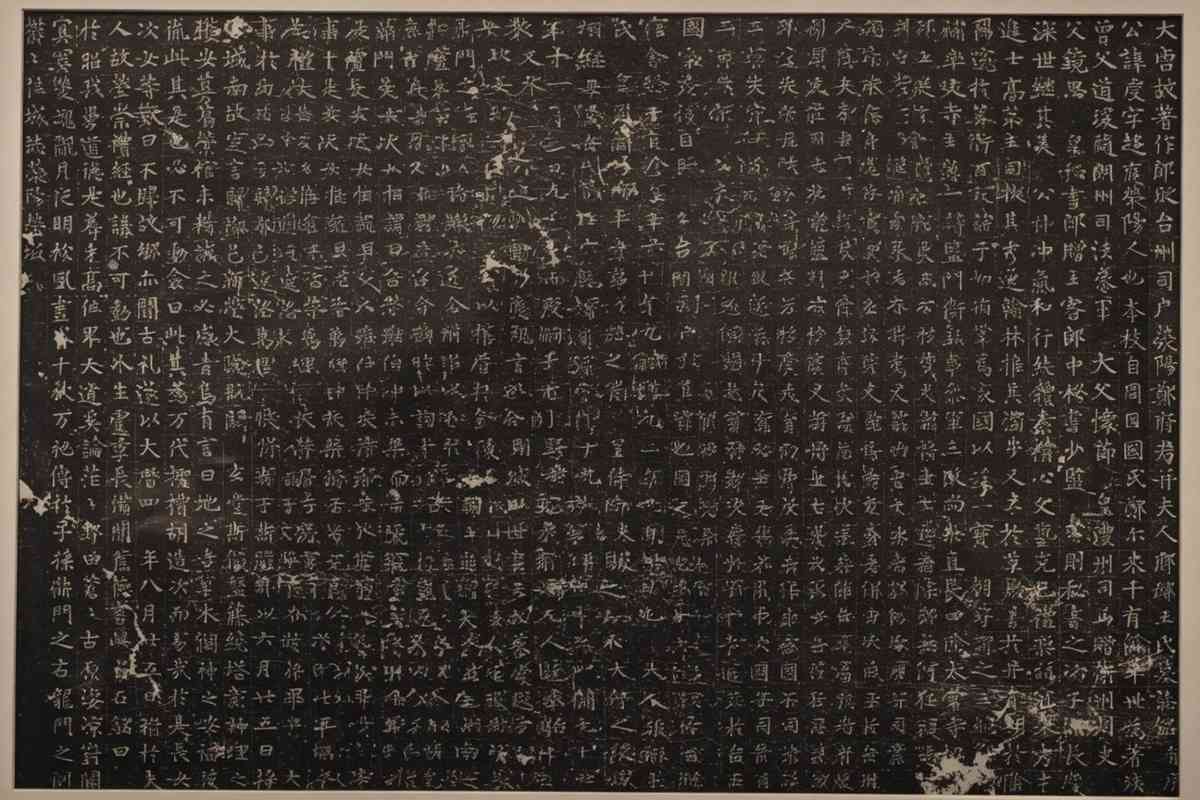
The condition of the stone, the arrangement of the characters, the calligraphic style, and the survival of the inscription all influence what can be learned from it. In some cases, researchers rely on historical rubbings or published transcriptions when the original object is damaged, inaccessible, or no longer in its original location.
These methods help distinguish what an inscription directly records from what historians infer by comparing it with other evidence. Careful interpretation is especially important when a short text is used to explain a much larger historical development.
Connecting Tang Buddhist History with Guanghua Temple Today
The historical importance of Luoyang's Buddhist inscriptions gives added meaning to the heritage sites around Longmen. They remind visitors that the region's religious history is preserved not only in monumental sculptures and temple buildings, but also in written records connected with individual people and communities.
At Longmen Guanghua Temple, one site provides a particularly relevant point of connection: the Shan Wuwei Tripitaka Commemorative Stele. The present monument was erected in 1988 to commemorate Subhakarasimha, the Tang Dynasty Buddhist master also known as Shan Wuwei, and to recognize the historical relationship between Chinese and Japanese Esoteric Buddhist traditions.
It is important to distinguish this modern commemorative monument from the original Tang Dynasty inscriptions discussed in historical research. The stele at Guanghua Temple is a modern memorial to an ancient Buddhist legacy; it is not itself a Tang Dynasty inscription. Its value lies in showing how later generations continued to remember and honor that heritage.
Visitors interested in this connection can explore the Monument to the Tripitaka at Guanghua Temple and learn more about the historical figure of Shan Wuwei and the transmission of Tang Esoteric Buddhism.
The wider Guanghua Temple heritage sites also provide a setting in which visitors can consider the relationship between Buddhist memory, historical monuments, and living religious traditions.
Why These Small Records Deserve Attention
The history of Buddhism is often told through monumental achievements: the construction of temples, the translation of scriptures, the journeys of eminent monks, and the creation of extraordinary works of Buddhist art. These stories are important, but they represent only part of the historical picture.
Stone inscriptions offer another perspective. They preserve the names of people who might otherwise have disappeared from historical memory, document the movement of Buddhist teachings through local communities, and reveal the relationship between religious practice and everyday social life.
In Tang Dynasty Luoyang, these records help show how Buddhism existed beyond the court and the monastery. It was also present in family relationships, personal study, memorial traditions, and the choices of ordinary believers.
For visitors exploring the Buddhist heritage of Longmen, looking beyond the most famous monuments can make the historical landscape more meaningful. A carved inscription may seem modest beside a monumental Buddha, yet it can preserve an intimate story about the people who shaped the religious life of an entire region.
Understanding these records allows us to see Luoyang not simply as a city of ancient temples and sculptures, but as a place where Buddhist ideas were studied, shared, remembered, and woven into the lives of generations.