What Temple Inscriptions Can Tell Us: Reading the Stories Preserved in Ancient Chinese Buddhist Steles
When visiting an ancient Buddhist temple in China, most travelers naturally look first at the Buddha statues, traditional halls, pagodas, and architectural details. Yet some of the most valuable historical information may be found in a much quieter place: the words carved into stone.
Across China, Buddhist temples, cave sanctuaries, and historic religious sites preserve stone steles, commemorative tablets, dedicatory inscriptions, and engraved records. These objects are more than decorative elements. They can reveal who built a temple, who supported a Buddhist project, which monks lived or taught in a particular region, and how religious communities developed over time.
For international visitors interested in Chinese Buddhist culture, learning to recognize these inscriptions offers another way to understand a historic site. Instead of seeing a temple only as an architectural attraction, visitors can begin to read it as a record of people, beliefs, and historical change.
1. What Is a Chinese Buddhist Stele?
A Chinese stele is generally a stone slab or monument bearing an inscription. In traditional Chinese culture, stone inscriptions were used to commemorate important people, events, buildings, achievements, and religious activities. They were designed to preserve information beyond the lifetime of the people who created them.
When Buddhism developed in China, the existing tradition of stone inscription was adapted for religious purposes. Buddhist steles could record the dedication of statues, the construction or restoration of religious buildings, the memory of deceased family members, and the contributions of monks, officials, and lay believers.
Some steles are relatively simple, with text arranged in vertical columns. Others combine inscriptions with carved Buddhist figures, decorative borders, symbolic motifs, or elaborate architectural forms. Their appearance reflects the artistic conventions and historical period in which they were produced.
It is important to distinguish between different types of stone records. A commemorative stele may describe a person or event, while a dedicatory inscription may explain why a Buddhist image or religious structure was created. A pagoda inscription may preserve information about a monk, a relic, or the history of a particular building.
2. Why Inscriptions Are Important to Buddhist History
Historical accounts often focus on emperors, famous monks, major temples, and important religious movements. However, inscriptions can preserve details that are less visible in conventional historical narratives.
For example, a dedicatory inscription may identify the person who sponsored a Buddhist statue. It may mention the family members for whom the statue was made, the religious intention behind the dedication, or the date when the work was completed.
These details help historians understand that Buddhist culture was not shaped only by rulers and prominent religious figures. It was also supported by merchants, officials, women, artisans, local communities, monks, and ordinary believers.
Stone inscriptions can therefore provide evidence about several aspects of historical life:
Religious devotion: The reasons people sponsored Buddhist images, temples, and religious monuments.
Social relationships: Family connections, community participation, and relationships between religious and secular groups.
Historical chronology: Dates, reign periods, and records of construction, dedication, or restoration.
Religious institutions: Names of temples, monks, teachers, and Buddhist communities.
Artistic development: Changes in calligraphy, carving styles, decorative patterns, and visual presentation.
Research into stone inscriptions from the Luoyang region has shown that epitaphs and pagoda inscriptions can supplement written histories by preserving information about temples, monks, Buddhist texts, and the development of local religious communities.
3. Longmen Grottoes: A Remarkable Archive Carved in Stone
Luoyang provides one of the most significant places in China to explore the relationship between Buddhist art and historical inscriptions. The Longmen Grottoes, a UNESCO World Heritage Site, contain an extraordinary collection of Buddhist caves, niches, sculptures, and carved texts.
According to UNESCO, the site contains more than 2,300 caves and niches, approximately 110,000 Buddhist statues, over 60 stupas, and around 2,800 inscriptions carved on steles. These records span important periods of Chinese history, particularly the Northern Wei and Tang dynasties.
The inscriptions are valuable because they connect the physical Buddhist images with the people and circumstances behind their creation. A sculpture tells us about artistic style and religious representation. Its accompanying inscription may tell us who commissioned it, when it was made, and what the donor hoped to express.
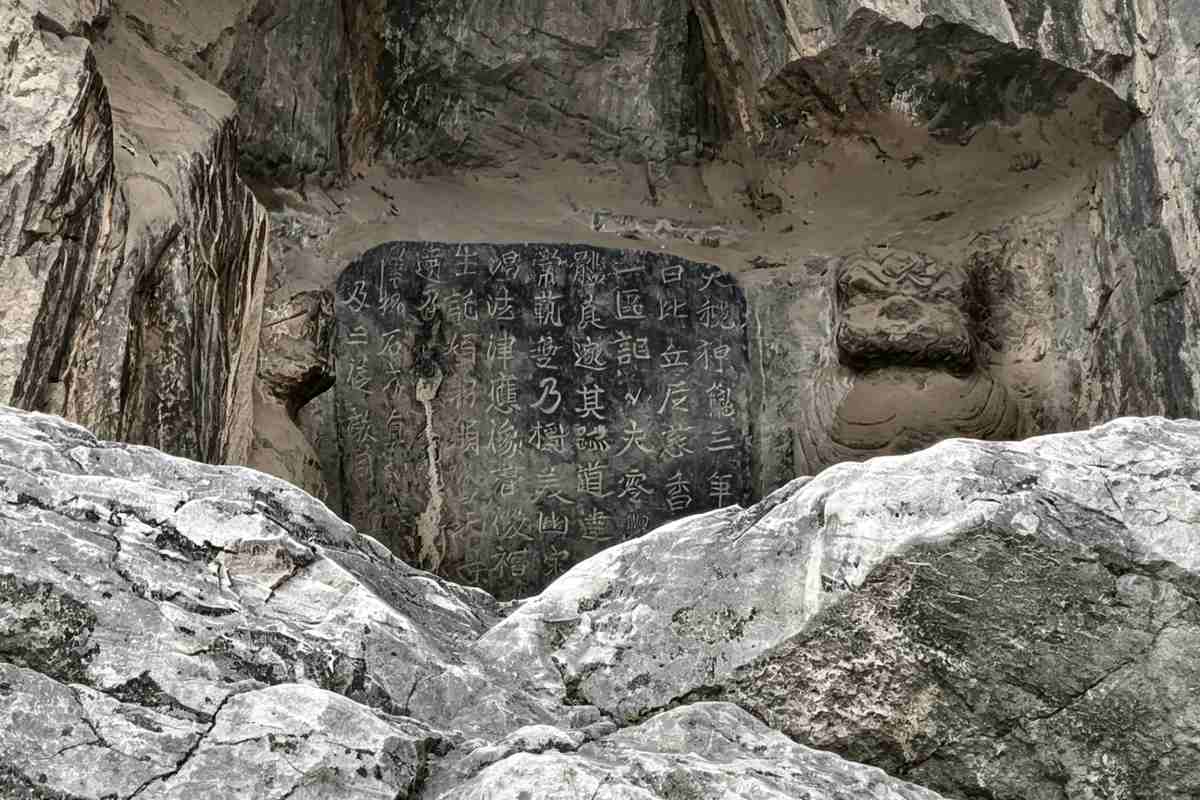
This relationship between image and text is especially important at Longmen. The grottoes are not simply a collection of beautiful statues. They preserve evidence of religious devotion, social participation, artistic development, and the historical role of Luoyang as an important political and cultural center.
4. What Can You Learn from a Buddhist Inscription?
Even if you cannot read classical Chinese, you can still learn to approach an inscription through its structure and historical context. Several elements are particularly useful when observing a stone record.
The Date and Historical Period
Many traditional Chinese inscriptions use reign titles rather than the modern Gregorian calendar. A date may refer to a particular emperor's reign and a numbered year within that period.
Understanding this dating system helps place an inscription within a broader historical timeline. It can also help visitors compare different objects and recognize how a temple or Buddhist site developed across several generations.
The Names of Donors and Patrons
Some inscriptions identify the individuals or groups who paid for a Buddhist statue, cave, or religious monument. These names can reveal the social diversity of Buddhist patronage.
Not every donor was a member of the imperial family or a high-ranking official. Inscriptions may preserve the participation of local families, women, merchants, and religious communities. This makes them valuable sources for understanding how Buddhism became part of everyday social life.
The Purpose of the Dedication
A Buddhist dedication could be made for different reasons. Some were created in memory of deceased relatives. Others expressed prayers for family well-being, the accumulation of religious merit, or support for a Buddhist teaching or community.
These statements help explain the personal meaning behind religious art. A Buddhist statue was not always commissioned simply to decorate a cave or temple. It could represent an act of devotion, remembrance, and generosity.
The Calligraphy and Carving Technique
Stone inscriptions also preserve the history of Chinese writing and visual art. The shape of the characters, the arrangement of the lines, the depth of the carving, and the relationship between text and image can all provide clues about the period and artistic tradition.
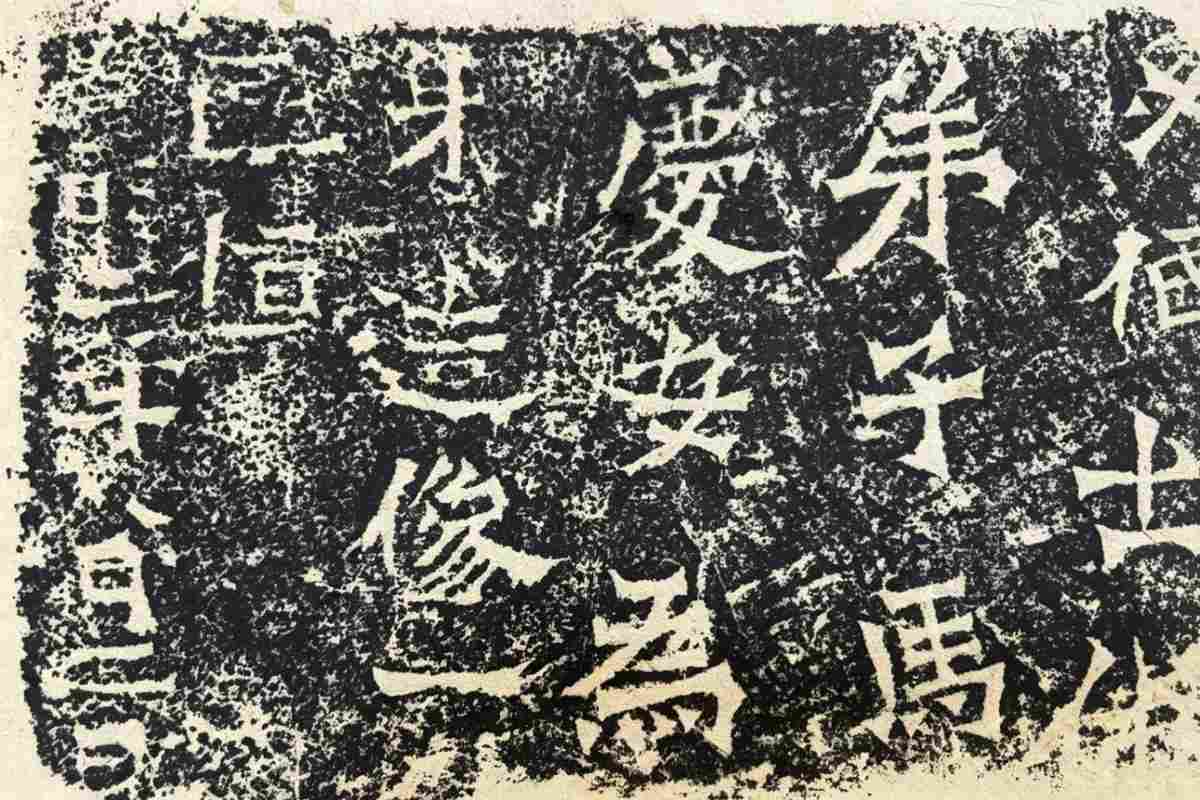
At Longmen, inscriptions are particularly important to the study of Northern Wei calligraphy and the development of Buddhist visual culture. The carved characters are historical records, but they are also works of art in their own right.
5. How to Observe a Stone Stele During a Temple Visit
You do not need to be a historian or a specialist in classical Chinese to appreciate a Buddhist stele. A careful observation can reveal much more than a quick photograph.
Start with the Overall Form
Look at the shape, height, and proportions of the stone. Is it a tall rectangular slab, a tablet integrated into a wall, or a monument with a decorative top? Notice whether the inscription is surrounded by carved borders or accompanied by Buddhist figures.
Look at the Relationship Between Text and Image
Some Buddhist stone monuments combine written records with images of Buddhas, bodhisattvas, donors, or symbolic decorations. Consider how these elements are arranged. The text may explain the purpose of the image, while the image gives visual form to the religious intention described in the inscription.
Observe the Writing Style
Notice whether the characters are regular and carefully arranged or whether their strokes appear more expressive. Look at the spacing between columns and the depth of the engraved lines. Even without reading the text, you can begin to recognize differences in calligraphic style.
Consider the Location
The position of a stele can also be meaningful. It may stand near a temple entrance, be placed beside a pagoda, form part of a memorial space, or be integrated into a Buddhist cave. Its location can help explain its relationship with the building, monument, or religious community.
Read the Historical Context
Whenever possible, consult the site's official interpretation or a reliable historical guide. A few translated lines can make an inscription much easier to understand. Avoid assuming that every stone tablet is a Buddhist scripture or that every carved date refers to the original construction of a building.
6. The Difference Between a Stele, an Epitaph, and a Buddhist Scripture
These terms are sometimes confused by visitors, but they refer to different kinds of historical or religious writing.
Stele Inscription
A stele inscription is text carved on a stone monument. It may commemorate an event, describe a person's achievements, record the construction of a religious building, or document a Buddhist dedication.
Epitaph
An epitaph is a commemorative text associated with a deceased person. In Chinese history, epitaphs were often carved on stone and placed in tombs. Buddhist epitaphs may provide information about monks, nuns, religious families, and their lives.
Buddhist Scripture
A Buddhist scripture is a religious text that conveys Buddhist teachings. Although scriptures may be copied or engraved on stone, their primary purpose is different from that of a commemorative inscription. A scripture transmits religious teachings, while a stele often records a particular person, event, dedication, or historical circumstance.
Recognizing these differences helps visitors interpret what they are seeing and avoid treating every piece of engraved writing as the same type of document.
7. Why Stone Inscriptions Matter Beyond Their Religious Meaning
Stone inscriptions are important not only to Buddhist studies but also to the wider understanding of Chinese history and culture.
They preserve evidence about language, calligraphy, social organization, architecture, craftsmanship, and the relationship between religion and public life. They can also reveal connections between different regions, because monks, patrons, artisans, and religious ideas moved across political and geographical boundaries.
Inscriptions are particularly valuable because they are material objects created in specific historical circumstances. They allow researchers to compare written records with physical evidence and sometimes discover details that were not preserved elsewhere.
At the same time, stone records must be interpreted carefully. An inscription may reflect the perspective and intentions of the person who commissioned it. Its wording may use formal praise or religious expressions rather than providing a neutral account of events. Historians therefore compare inscriptions with other documents, archaeological evidence, and the historical context before drawing conclusions.
8. Discovering the Buddhist Heritage of Luoyang Beyond the Grottoes
Longmen is an essential destination for understanding the history of Buddhist art and inscriptions, but Luoyang's religious heritage extends beyond the grottoes.
The city's temples, pagodas, commemorative monuments, and historical sites reflect different periods in the development of Chinese Buddhism. Exploring these places together can provide a broader understanding of how Buddhist traditions were transmitted, adapted, and preserved in the region.
Longmen Guanghua Temple is part of this wider cultural landscape. Its historical associations with Tang Dynasty Esoteric Buddhism provide another perspective on Luoyang's Buddhist heritage. Visitors interested in the history of the temple and the development of Chinese Buddhist traditions can explore the relevant materials in our Chinese Buddhist Culture section.
For travelers who want to understand more than the appearance of a historic site, a cultural journey can connect architectural observation, historical interpretation, and an appreciation of the traditions that have shaped the region. Explore the Zen Pilgrimage and Cultural Journey programs to learn more about the heritage experiences available through Funzendo.
9. A Different Way to Read an Ancient Temple
An ancient temple can be approached in many ways. Its architecture reveals how people built sacred spaces. Its sculptures express religious ideas through artistic forms. Its inscriptions preserve the names, intentions, and memories of the people who supported Buddhist culture.
For international visitors, learning to notice these details can transform a temple visit. A stone tablet is no longer simply an old object beside a building. It becomes a historical document that connects the present with the lives of people who lived centuries ago.
The next time you visit a Buddhist temple or explore the Longmen Grottoes, take a moment to look beyond the largest statue or the most famous hall. Find the carved words, observe their form, and consider the people whose stories they were intended to preserve.
Sometimes, the quietest details in a historic place reveal some of its most meaningful stories.