A Buddhist temple stay offers a different way to experience China. Instead of moving between attractions, taking photographs, and following a packed sightseeing schedule, visitors have the opportunity to slow down, experience traditional temple life, enjoy simple vegetarian meals, and discover the cultural meaning behind meditation and Buddhist practices.
For international travelers, however, the idea of staying at a Buddhist temple can raise practical questions. Do you need to be Buddhist? Will you be expected to meditate for hours? What kind of food and accommodation should you expect? Is a temple stay suitable for someone who has never visited a monastery before?
The answer depends on the temple and the program you choose. At Funzendo, located within Longmen Guanghua Temple in Luoyang, Henan Province, a temple stay can offer an introduction to Chinese Buddhist culture through meditation, traditional customs, vegetarian dining, and a quieter rhythm of daily life. Understanding what to expect before you arrive can help you make the most of the experience.
A Different Rhythm of Daily Life
One of the first things visitors notice during a Buddhist temple stay is the change in pace. Daily activities may begin earlier than they would during an ordinary holiday, and the day is often organized around simple routines rather than entertainment or sightseeing.
Depending on the program, a typical day may include an early morning wake-up, quiet sitting, a guided meditation session, breakfast, cultural activities, personal time, and an evening period of reflection. Some temple programs include Buddhist ceremonies or chanting, while others focus more on meditation and cultural learning.
These schedules are not identical everywhere. A residential retreat may follow a structured timetable, whereas a shorter cultural stay may leave more room for exploration and rest. Before booking, ask how much of the schedule is guided, which activities are optional, and whether the program is designed for beginners.
The purpose of this slower rhythm is not to fill every hour with spiritual activities. It is to create space between the demands of everyday life and the next thing that requires your attention. Ordinary actions, such as eating breakfast without rushing or walking quietly through a temple courtyard, can become opportunities to notice how you experience the present moment.
Meditation: You Do Not Need Previous Experience
Meditation is often an important part of a Buddhist temple stay, but beginners do not need to arrive with an established practice. In a guided session, an instructor may explain how to sit comfortably, relax unnecessary tension, observe the breath, and return attention to the present when the mind wanders.
Sitting meditation is one possible practice. Depending on the retreat, participants may also experience walking meditation, breathing exercises, or introductory teachings about Chan, the Chinese Buddhist tradition commonly associated with Zen.
It is normal for the mind to wander during meditation. The goal is not to eliminate every thought or achieve an extraordinary state of calm. Instead, beginners learn to recognize distraction without immediately following it. Over time, this simple process can help them understand their habitual reactions to stress, discomfort, and uncertainty.
If you are interested in developing a more consistent practice, explore Funzendo's Zen meditation programs. These provide a starting point for learning about guided meditation and experiencing traditional Chinese approaches to contemplative practice.
You do not have to sit perfectly still or already understand Buddhist philosophy. Wear comfortable clothing, follow your instructor's guidance, and let the practice develop at a manageable pace. If you have difficulty sitting on the floor, ask whether a chair or another supported position is available.
Vegetarian Meals and the Culture of Mindful Eating
Food is another important part of the temple experience. Buddhist vegetarian cuisine reflects a tradition in which eating can be approached with simplicity, gratitude, and awareness. Meals may feature seasonal vegetables, tofu, grains, mushrooms, soups, and other plant-based ingredients prepared according to the kitchen's traditions.
Rather than treating every meal as a separate event, a temple stay encourages visitors to appreciate the ordinary act of being nourished. Eating at a comfortable pace, taking appropriate portions, and avoiding unnecessary distractions can make a familiar routine feel different from everyday dining.
Temple vegetarian food should not automatically be confused with a modern wellness diet. Its cultural and religious background matters, and the dishes served vary by location, season, and kitchen practice. Visitors should also check whether meals contain ingredients relevant to their allergies or dietary requirements.
At a residential retreat, meal times may be shared with other participants, and guests may be asked to keep conversations quiet or follow particular dining customs. These practices are intended to maintain a respectful atmosphere rather than create a formal dining experience.
If you have dietary restrictions, communicate them before arrival. Do not assume that every temple kitchen can accommodate all allergies, vegan requirements, or medically necessary diets without advance notice.
Temple Etiquette: How to Show Respect
You do not need to know every Buddhist custom before your visit. A respectful attitude, a willingness to learn, and attention to local guidance are usually the best starting points.
Dress modestly and comfortably, particularly when entering prayer halls or participating in formal activities. Follow instructions about removing shoes, sitting arrangements, photography, and the use of mobile phones. Some areas may be restricted, and not every ceremony is open to visitors.
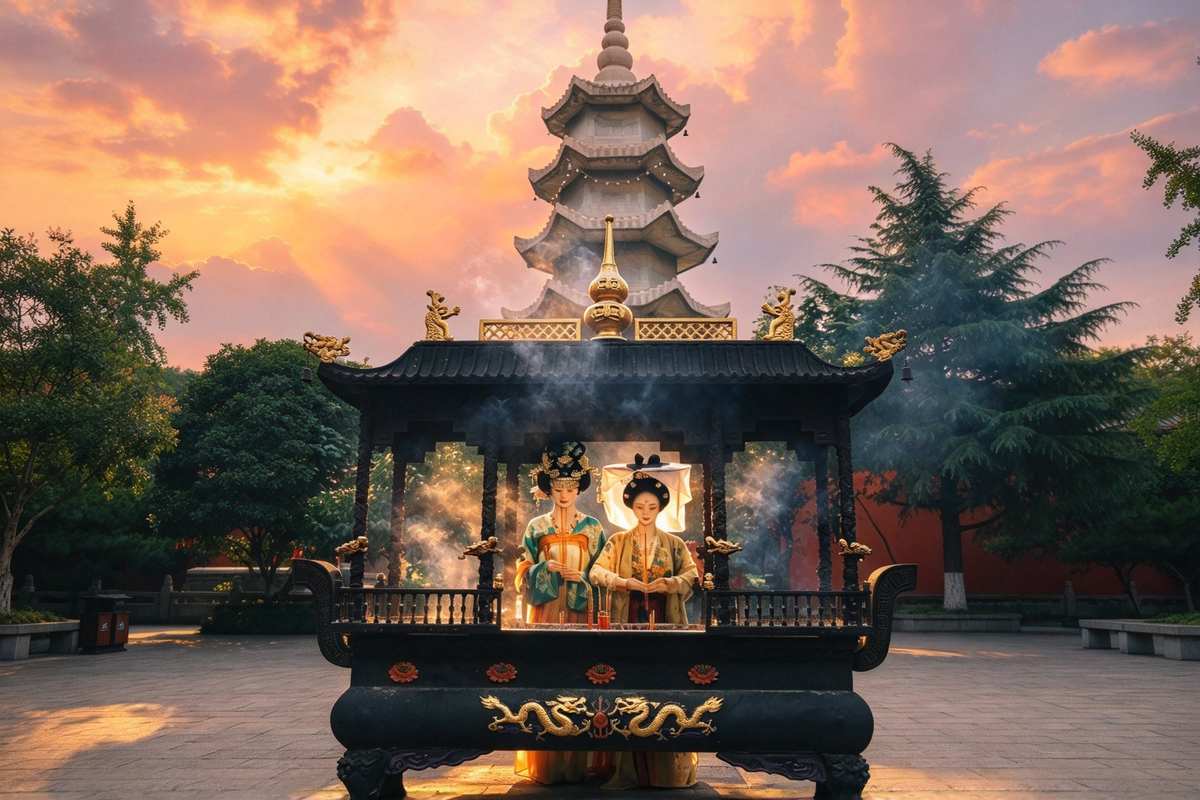
In Chinese Buddhist settings, visitors may encounter statues, incense offerings, chanting, ceremonial objects, and spaces reserved for monastics. These are not simply decorative features. They can carry religious, historical, and cultural significance, so it is appropriate to observe first and ask questions when guidance is available.
If you are unsure whether an action is appropriate, ask a member of the temple staff or your program guide. Avoid touching religious objects without permission, interrupting ceremonies for photographs, or assuming that customs are identical across all Buddhist traditions.
It is also important to understand that visiting a Buddhist temple does not require you to adopt a religion. Many temple stays welcome people who come to learn about culture, meditation, architecture, or traditional ways of life. You can participate respectfully without claiming beliefs you do not hold.
Accommodation: Simplicity Is Part of the Experience
Accommodation is one of the areas where expectations matter most. A Buddhist temple stay is not necessarily the same as sleeping inside a monastic dormitory. Some programs provide rooms in a guesthouse or residential facility associated with the temple, while others use simpler shared accommodation.
Facilities, privacy, bathroom arrangements, room occupancy, heating, air conditioning, and internet access vary from one location to another. Some stays offer private or family rooms; others prioritize shared spaces and a more communal atmosphere. Confirm the specific room type and facilities before booking instead of assuming every temple follows the same arrangement.
At Funzendo, accommodation is connected with the wider experience of spending time at Longmen Guanghua Temple. Guests can use their stay as an opportunity to engage with the temple environment, participate in available activities, and experience a more deliberate daily rhythm.
The value of this kind of accommodation is not necessarily luxury in the conventional sense. It lies in the relationship between the place you stay, the activities you undertake, and the opportunity to step away from your usual routine. Practical comfort still matters, so choose a program that suits your needs and ask questions about accessibility and room facilities in advance.
Discovering Chinese Buddhist Heritage at Longmen Guanghua Temple
A temple stay in China can offer more than an introduction to meditation. It can also provide a way to understand the historical and cultural traditions that shaped the place itself.
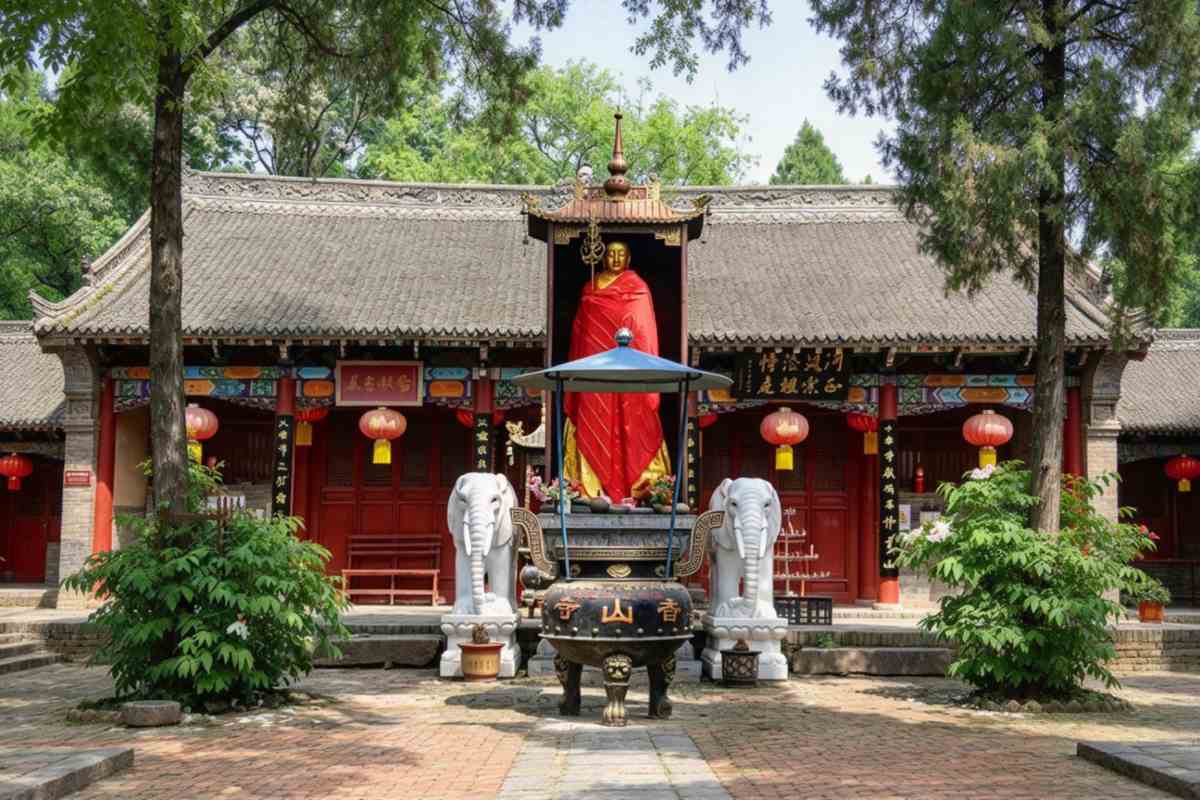
Funzendo is located within Longmen Guanghua Temple in Luoyang, Henan Province, near the celebrated Longmen Grottoes. Luoyang was an important center of Chinese history and Buddhism, and the wider Longmen area preserves layers of religious art, architectural heritage, and cultural memory.
Guanghua Temple is associated with the history of Tang Dynasty Esoteric Buddhism and the transmission of Buddhist teachings in China. For visitors, this background creates a meaningful context for exploring temple architecture, commemorative sites, traditional practices, and the relationship between Buddhism and Chinese cultural history.
The experience is different from viewing a temple only as a tourist attraction. With time to observe the setting and learn about its history, visitors can begin to understand how religious spaces function as living places of practice as well as repositories of heritage.
Depending on the activities available during your stay, you may be able to combine quiet practice with cultural interpretation, traditional tea experiences, or introductions to other aspects of Chinese Buddhist culture. Specific activities should be confirmed with Funzendo before arrival, as schedules and availability may vary.
Beyond Meditation: Tea, Incense, and Traditional Cultural Practices
Not every meaningful moment in a temple stay takes place during meditation. Traditional Chinese cultural practices can offer another way to experience attention, craftsmanship, and the relationship between daily life and contemplative traditions.
A traditional tea experience, for example, invites participants to notice the preparation of tea, the temperature of the water, the aroma of the leaves, and the pace of serving and drinking. Rather than focusing only on tasting, participants can learn about the cultural significance of tea and the etiquette associated with sharing it.
Incense culture offers a different perspective. In traditional settings, incense may be connected with ritual, artistic expression, sensory appreciation, and the atmosphere of a contemplative space. Learning about incense preparation or incense seal traditions can reveal the care and craftsmanship behind practices that visitors might otherwise overlook.
These activities should not be treated as interchangeable with Buddhist meditation or religious ceremonies. Each has its own history and context. When presented thoughtfully, they complement a temple stay by helping visitors encounter Chinese cultural heritage through direct experience rather than explanation alone.
Travelers interested in structured learning can explore Funzendo's Incense, Tea and Singing Bowl Culture Retreat to learn more about the cultural experiences offered through its programs.
Is a Buddhist Temple Stay Suitable for You?
A Buddhist temple stay may be a good choice if you want to experience Chinese culture at a slower pace, learn introductory meditation, explore Buddhist heritage, or take a break from a travel itinerary built around constant movement.
It can also suit travelers who are curious about contemplative traditions but do not know where to begin. A beginner-friendly program can provide guidance and context without requiring prior meditation experience or specialized knowledge of Buddhism.
However, a temple stay may not suit everyone. If you prefer late nights, a highly flexible schedule, extensive entertainment, or hotel-style services, the daily rhythm and expectations may feel unfamiliar. Structured retreats can also involve extended periods of quiet, early mornings, or limited opportunities for independent sightseeing.
Consider your goals before choosing a program. A short cultural stay may be enough if you mainly want to understand temple life. If you want to establish a meditation routine or explore contemplative practice more deeply, a multi-day retreat may provide more continuity.
What to Pack Before Your Temple Stay
Packing for a temple stay is generally straightforward, but a few practical choices can make your experience more comfortable.
Comfortable, modest clothing suitable for sitting, walking, and participating in cultural activities.
Easy-to-remove footwear if the venue requires shoes to be removed in certain spaces.
Personal toiletries, any essential medication, and items you normally need for a comfortable night's sleep.
A light jacket or additional layers appropriate to the season and local weather.
A notebook if you would like to record reflections, questions, or insights from cultural sessions.
A reusable water bottle if permitted by the venue and activity schedule.
Before traveling, confirm check-in arrangements, the daily timetable, meal provisions, room facilities, language support, and any restrictions on photography or personal devices. International visitors should also verify transportation arrangements and the availability of English-language instruction.
How to Make the Most of the Experience
The most useful preparation may be to arrive without expecting a dramatic transformation. A temple stay is not a guaranteed solution to stress, and meditation does not produce the same experience for every participant. Its value often comes from having enough time to observe, learn, and experience unfamiliar routines without rushing to judge them.
Give yourself permission to be a beginner. Ask questions when something is unclear, respect the boundaries of the temple, and approach cultural activities with curiosity. If a session feels challenging, follow the instructor's guidance and communicate any practical concerns.
It can also help to leave some space after the stay to reflect on what you experienced. You might notice that you enjoyed the simplicity of shared meals, learned something unexpected about Chinese Buddhist history, or discovered a meditation technique you would like to continue practicing at home.
A meaningful experience does not depend on how many activities you complete. Sometimes, the most memorable part of a temple stay is simply becoming more attentive to the details of a place and to the habits you bring into everyday life.
Experience a Buddhist Temple Stay at Funzendo
A Buddhist temple stay can bring together cultural discovery, traditional hospitality, meditation, and time for reflection. For travelers who want to understand more about Chinese Buddhist culture, staying near an active temple offers a different perspective from a conventional sightseeing trip.
At Funzendo, within Longmen Guanghua Temple in Luoyang, visitors can explore opportunities to experience Zen meditation, traditional cultural practices, and the heritage of the Longmen area. Whether you are new to meditation or already interested in contemplative traditions, the right program begins with understanding your interests, schedule, and comfort level.
Explore Funzendo's meditation experiences and cultural and temple activities to find an experience that matches your plans. Before booking, contact the team to confirm accommodation, available dates, language support, and the activities included in your chosen stay.
A temple stay is an invitation to experience a different rhythm of life: one shaped by simplicity, cultural understanding, and a little more room to pay attention. You do not need to arrive with all the answers. You only need to arrive ready to learn.