White Horse Temple vs Guanghua Temple: Two Sides of Luoyang's Buddhist Heritage
For travelers exploring the Buddhist heritage of Luoyang, two temples offer particularly different perspectives on the development of Buddhism in China: White Horse Temple (白马寺) and Longmen Guanghua Temple (龙门广化寺).
White Horse Temple is traditionally regarded as the first Buddhist temple established in China. Its history is closely connected with the early transmission of Buddhism during the Eastern Han dynasty. Guanghua Temple, by contrast, is associated with the development and heritage of Tang Dynasty Esoteric Buddhism, known in Chinese as Tangmi (唐密), and with the legacy of the eminent Buddhist master Subhakarasimha.
Although both are important parts of Luoyang's Buddhist landscape, they tell different stories. One introduces visitors to the early history of Buddhism in China; the other offers a closer look at a distinctive tradition that flourished during the Tang dynasty.
So, if you have limited time in Luoyang, which temple should you visit? And if you can visit both, how should you understand the relationship between them?
This guide compares their historical backgrounds, architectural character, cultural significance, and visitor experiences, helping you discover why these two sites are best understood as complementary chapters in the long history of Chinese Buddhism.
Luoyang: A City at the Crossroads of Buddhist History
Luoyang has played an important role in Chinese history for more than two thousand years. As the capital of several dynasties, it became a center of political life, scholarship, artistic production, and religious exchange. Its location also connected different regions of China with routes through which ideas, people, and cultural traditions traveled.
Buddhism reached China through a gradual process of transmission from regions to the west. Over successive centuries, Buddhist scriptures were translated, monasteries were established, and new schools of Buddhist thought developed. Luoyang became one of the important places in this process.
The city's Buddhist heritage can be explored through different kinds of sites:
Early Buddhist temples preserve traditions and historical memories associated with the introduction of Buddhism into China.
Buddhist grottoes reveal how religious ideas were expressed through sculpture, inscriptions, and monumental art.
Historic monasteries and heritage sites help visitors understand the development of particular Buddhist schools and lineages.
White Horse Temple, the Longmen Grottoes, and Guanghua Temple represent different dimensions of this history. Visiting them together provides a broader understanding of how Buddhism arrived, developed, and became part of Chinese culture.
White Horse Temple: The Traditional Beginning of Chinese Buddhism
White Horse Temple (Baima Si, 白马寺) is widely known as the first Buddhist temple established in China. Its foundation is traditionally dated to the Eastern Han dynasty, around 68 CE, during the reign of Emperor Ming.
According to the traditional account, the emperor sent representatives westward in search of Buddhist teachings. They later returned with Buddhist monks and scriptures, traditionally associated with the arrival of the Indian monks Kashyapa Matanga and Dharmaratna. The temple was established in connection with this early transmission.
The story of White Horse Temple has become one of the most recognizable narratives in Chinese Buddhist history. Although the historical development of early Buddhism was more complex than a single founding story, the temple remains an important symbol of Buddhism's introduction and institutional development in China.
What Makes White Horse Temple Special?
White Horse Temple is known for its traditional Chinese Buddhist buildings, historic atmosphere, and international cultural connections. Its grounds include a sequence of halls, courtyards, and religious structures that allow visitors to experience the spatial organization of a major Chinese Buddhist temple.
One particularly distinctive feature is its collection of international Buddhist temple areas. These include architectural and cultural elements associated with countries such as India, Thailand, and Myanmar. They offer visitors a visual introduction to the different ways Buddhist traditions have developed across Asia.
These international sections are especially interesting for travelers who want to understand Buddhism as a tradition that has crossed national and cultural boundaries. They also demonstrate how Luoyang's Buddhist heritage continues to connect with the wider Buddhist world.
Who Should Visit White Horse Temple?
White Horse Temple is an excellent starting point for visitors who are new to Chinese Buddhist history. It is particularly suitable for travelers interested in:
The traditional history of Buddhism's introduction into China.
Traditional Chinese Buddhist temple architecture.
The relationship between Chinese Buddhism and other Asian Buddhist traditions.
A well-known cultural landmark with a broad historical narrative.
For a first-time visitor, White Horse Temple provides an accessible introduction to the early history of Chinese Buddhism and its development into an established religious tradition.
Longmen Guanghua Temple: Exploring the Heritage of Tangmi
While White Horse Temple is associated with the early history of Buddhism in China, Longmen Guanghua Temple offers a different historical perspective. Located on the western hillside of Longmen Village, approximately 500 metres north of the Longmen Grottoes, it is closely connected with the heritage of Tang Dynasty Esoteric Buddhism.
Guanghua Temple is traditionally associated with the history of Tangmi and the legacy of Subhakarasimha (Shan Wuwei, 善无畏), one of the three major masters associated with the development of Esoteric Buddhism during the Tang dynasty.
The temple's historical significance is connected with the story of Subhakarasimha and the transmission of Buddhist teachings during the Tang period. The site was originally associated with the stupa courtyard of this eminent master. It was later rebuilt as a temple in the first year of the Qianyuan era, 758 CE, following a request associated with the Tang general Guo Ziyi.
This history gives Guanghua Temple a distinctive place in the Buddhist heritage of Luoyang. Rather than representing the earliest arrival of Buddhism in China, it helps visitors explore one of the important traditions that developed within Chinese Buddhism during the Tang dynasty.
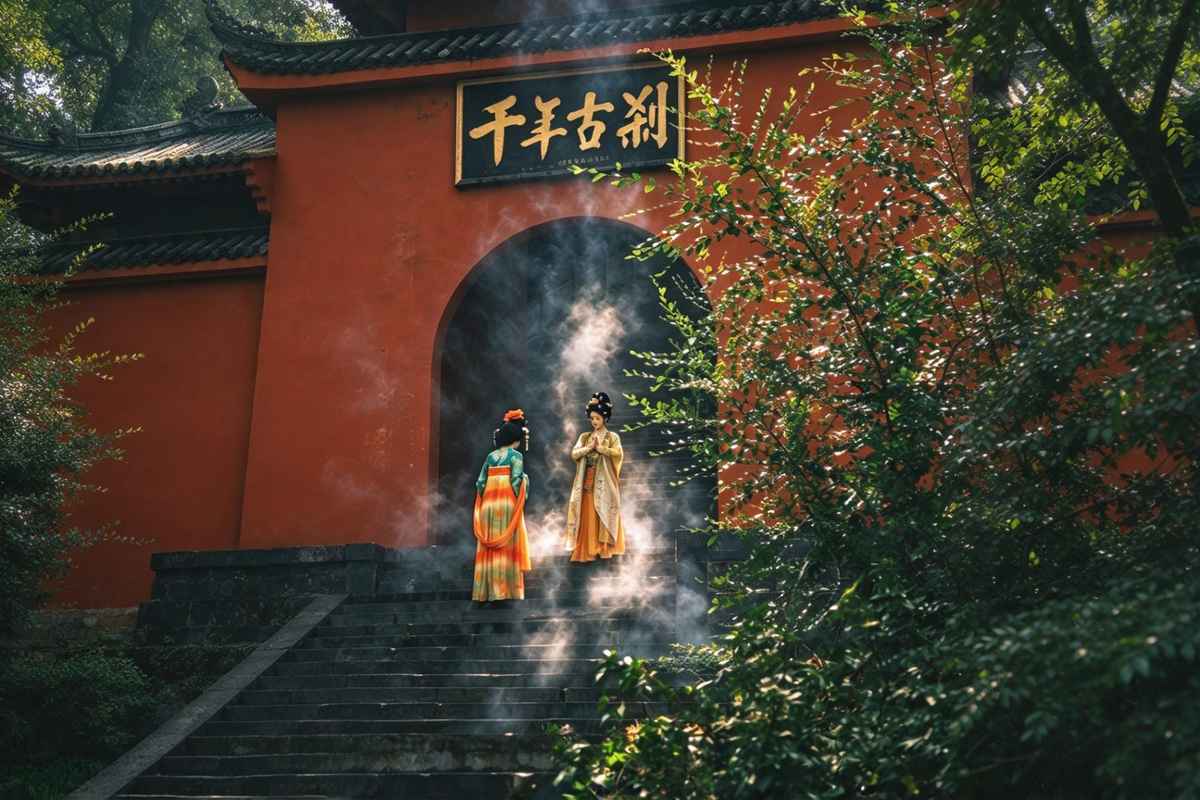
Longmen Guanghua Temple preserves an important part of Luoyang's Tang Esoteric Buddhist heritage.
The Three Kaiyuan Masters and Tangmi
To understand Guanghua Temple, it helps to know the Three Kaiyuan Masters:
Subhakarasimha (Shan Wuwei, 善无畏): An eminent Indian Buddhist master who came to China during the Tang dynasty and contributed to the translation and transmission of Esoteric Buddhist teachings.
Vajrabodhi (Jingangzhi, 金刚智): A major Esoteric Buddhist teacher whose work helped establish and transmit important ritual and doctrinal traditions in Tang China.
Amoghavajra (Bukong, 不空): A highly influential Buddhist translator and teacher who played a major role in the development of Tang Esoteric Buddhism.
Their activities helped shape an influential tradition of Buddhist texts, rituals, and teachings. Tangmi later became an important part of the wider history of East Asian Esoteric Buddhism, including the transmission of teachings to Japan.
Guanghua Temple's association with Subhakarasimha makes it an especially meaningful place to explore this history. Its Memorial Hall of the Three Kaiyuan Masters provides visitors with a cultural and historical point of reference for understanding the three masters and their contribution to Chinese Buddhism.
What Can Visitors See at Guanghua Temple?
Guanghua Temple offers a more intimate hillside setting than the image many visitors have of a large, level temple complex. Its architecture and landscape are closely connected with the natural slope.
Some of the features worth noticing include:
The stone stairway: Approximately 199 steps lead visitors upward through the hillside approach, creating a gradual transition into the temple environment.
Wuwei Pagoda: A landmark associated with Subhakarasimha and the temple's Tang Esoteric Buddhist heritage.
The Memorial Hall of the Three Kaiyuan Masters: A cultural space dedicated to the three influential masters associated with Tangmi.
The Bell and Drum Towers: Traditional structures connected with the daily rhythm of Buddhist temple life.
The Bodhisattva Pond: Also known as the Longevity Pond, with a standing Guanyin image and a Longevity Stele.
Historic inscriptions and commemorative features: Details that help visitors connect the temple's physical environment with its religious and historical background.
These features make Guanghua Temple particularly interesting for travelers who want to explore the relationship between Buddhist history, architecture, and the living cultural traditions of Luoyang.
White Horse Temple vs Guanghua Temple: A Direct Comparison
Both temples are important, but their significance lies in different historical periods and cultural experiences. The following comparison highlights the main differences.
| Category | White Horse Temple | Guanghua Temple |
|---|---|---|
| Historical association | Traditionally regarded as the first Buddhist temple established in China. | Associated with the heritage of Tang Dynasty Esoteric Buddhism. |
| Period emphasized | Eastern Han dynasty and the early transmission of Buddhism. | Tang dynasty and the development of Tangmi. |
| Key historical figures | Traditionally associated with Kashyapa Matanga and Dharmaratna. | Associated with Subhakarasimha and the Three Kaiyuan Masters. |
| Distinctive features | Historic temple halls and international Buddhist temple areas. | Wuwei Pagoda, memorial hall, hillside setting, and historic temple features. |
| Architectural experience | A larger temple complex with a broad range of buildings and cultural areas. | A hillside temple environment shaped by the natural terrain. |
| Best suited to | First-time visitors exploring the early history of Chinese Buddhism. | Visitors interested in Tangmi, Buddhist lineage, and cultural heritage. |
| Visitor focus | Historical introduction and cross-cultural Buddhist connections. | Historical depth, temple atmosphere, and a more focused heritage experience. |
The comparison is not about deciding which temple is more important. Each site preserves a different part of the story. White Horse Temple helps explain the early establishment of Buddhism in China, while Guanghua Temple provides a more focused perspective on a later development within Chinese Buddhist history.
Why the Longmen Grottoes Belong in the Same Journey
A visit to White Horse Temple and Guanghua Temple becomes even more meaningful when combined with the Longmen Grottoes, one of China's most important collections of Buddhist rock-cut art.
The grottoes contain thousands of Buddhist images and inscriptions carved into limestone cliffs along the Yi River. Their artistic and historical development spans several centuries, with particularly important works dating to the Northern Wei and Tang dynasties.
The Longmen Grottoes offer a different way to understand Buddhism from either temple. Instead of focusing primarily on monastic buildings and religious spaces, visitors encounter Buddhist beliefs through sculpture, iconography, inscriptions, and monumental artistic expression.
The three sites therefore complement one another:
White Horse Temple: Explore the traditional story of Buddhism's early arrival and establishment in China.
Longmen Grottoes: Discover how Buddhist beliefs were expressed through Chinese stone sculpture and religious art.
Guanghua Temple: Learn about the heritage of Tang Esoteric Buddhism and the legacy of Subhakarasimha.
Together, these places reveal how Buddhism became part of China's religious, artistic, and cultural landscape across different historical periods.
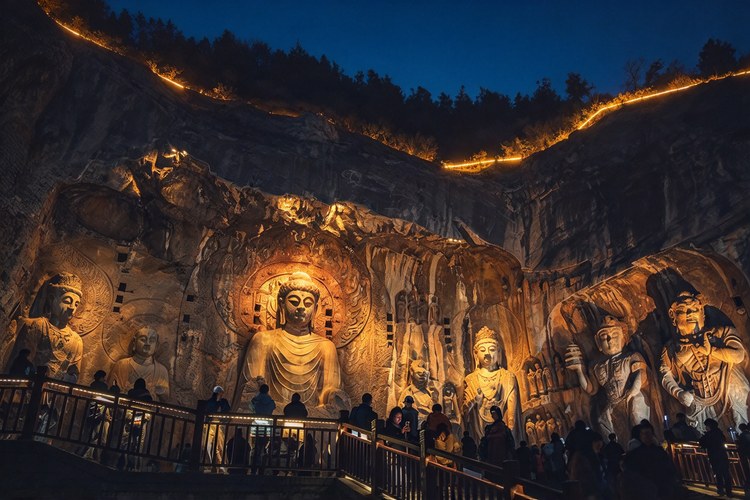
The Longmen Grottoes add an artistic dimension to Luoyang's Buddhist heritage.
Can You Visit White Horse Temple and Guanghua Temple in One Trip?
Yes. Both sites can be included in a Luoyang cultural itinerary. The exact order and timing depend on your arrival time, transport arrangements, opening schedules, and how much time you want to spend at each location.
For visitors with a full day or more, a route connecting White Horse Temple, the Longmen Grottoes, and Guanghua Temple offers a balanced introduction to the city's Buddhist heritage.
A Suggested Cultural Route
Stop 1: White Horse Temple
Begin with the traditional history of Buddhism's introduction into China. Explore the main temple buildings, courtyards, and international Buddhist areas. Allow enough time to understand the temple's historical background rather than treating it as a quick photo stop.
Stop 2: Longmen Grottoes
Continue to the Longmen Grottoes to explore Buddhist art and the historical development of religious sculpture in China. The scale of the carvings and the variety of images offer a different perspective on Buddhist history.
Stop 3: Longmen Guanghua Temple
End the route at Guanghua Temple. Explore its hillside approach, historic pagoda, memorial hall, and other heritage features. This visit offers an opportunity to focus on Tang Esoteric Buddhism and the legacy of Subhakarasimha.
Rather than trying to rush through all three locations, consider how each one contributes to the overall story. The most rewarding cultural journeys allow time for observation, historical explanation, and quiet reflection.
Which Temple Should You Choose?
If your schedule only allows one temple visit, your choice should depend on what you most want to learn about.
Choose White Horse Temple If...
You are visiting Luoyang for the first time.
You want to learn about the traditional history of Buddhism's arrival in China.
You are interested in major Buddhist temple complexes and international Buddhist culture.
You prefer a site with a broad range of architectural and cultural features.
Choose Guanghua Temple If...
You are particularly interested in Tang Dynasty Buddhist history.
You want to learn about Chinese Esoteric Buddhism and the Three Kaiyuan Masters.
You enjoy exploring historic sites through their inscriptions, architecture, and cultural context.
You prefer a hillside temple environment and a more focused heritage visit.
If your interests include both the early history of Buddhism and its later development in China, visiting both temples is the more rewarding option.
Experience Luoyang's Buddhist Culture Beyond Sightseeing
Visiting historic temples can introduce you to Buddhist architecture and history, but understanding a religious tradition also involves learning about the practices and cultural activities that have developed around it.
At Guanghua Temple, the atmosphere of the hillside setting, the sound of the bell, the historical memorials, and the rhythm of temple life provide a different experience from simply visiting a major tourist attraction.
For travelers who want to explore Chinese Buddhist culture more deeply, a cultural retreat or temple-based experience can provide additional context. Activities such as meditation, traditional tea culture, incense appreciation, and sound-based cultural experiences introduce visitors to different aspects of Chinese contemplative traditions.
Funzendo, located within the Longmen Guanghua Temple setting, offers cultural experiences connected with Zen, meditation, and traditional Chinese practices. Visitors interested in exploring these traditions can learn more about the meditation experiences at Funzendo.
Those who are particularly interested in traditional incense, tea, and sound culture can also explore the Incense, Tea and Singing Bowl Culture Retreat. It offers another way to approach Chinese cultural traditions through direct experience rather than observation alone.
For visitors planning a broader cultural journey, the Funzendo website provides further information about cultural experiences and opportunities to explore the heritage of Longmen Guanghua Temple.
Frequently Asked Questions
Is White Horse Temple really the first Buddhist temple in China?
White Horse Temple is traditionally regarded as the first Buddhist temple established in China, with its foundation associated with the Eastern Han dynasty and conventionally dated to around 68 CE. The early transmission of Buddhism was a gradual historical process, so the temple's founding story should be understood within that broader context.
What is Guanghua Temple famous for?
Longmen Guanghua Temple is associated with the heritage of Tang Dynasty Esoteric Buddhism and the legacy of Subhakarasimha, also known as Shan Wuwei. Its Wuwei Pagoda and Memorial Hall of the Three Kaiyuan Masters are important cultural features of the site.
Are White Horse Temple and Guanghua Temple the same type of Buddhist site?
Both are Buddhist heritage sites, but they are associated with different historical narratives. White Horse Temple is linked to the early establishment of Buddhism in China, while Guanghua Temple is connected with the development and heritage of Tang Esoteric Buddhism.
How much time should I allow to visit both temples?
The time required depends on your transport, pace, and interest in historical details. If you also plan to visit the Longmen Grottoes, it is sensible to organize the day carefully and avoid treating all three sites as very short stops. Check current opening hours and transport arrangements before departure.
Is Guanghua Temple close to the Longmen Grottoes?
Yes. Guanghua Temple is located on the western hillside of Longmen Village, approximately 500 metres north of the Longmen Grottoes. Its location makes it a natural cultural stop for visitors exploring the Longmen area.
What is Tangmi?
Tangmi is the Chinese term commonly used for Tang Dynasty Esoteric Buddhism. It refers to the development of Esoteric Buddhist teachings, texts, and ritual traditions in China during the Tang period. The Three Kaiyuan Masters played a major role in this history.
Can I combine temple visits with a cultural retreat?
Yes. A cultural retreat can complement visits to historical sites by introducing practices such as meditation, tea culture, and incense appreciation. This approach allows travelers to explore both the visible heritage of Buddhism and some of the cultural traditions connected with temple life.
Two Temples, One Richer Understanding of Chinese Buddhism
White Horse Temple and Longmen Guanghua Temple are not competing destinations. They represent different periods and dimensions of China's Buddhist history.
White Horse Temple introduces the traditional story of Buddhism's arrival and early establishment in China. Guanghua Temple offers a closer look at the Tang Dynasty and the development of Esoteric Buddhism through the legacy of Subhakarasimha and the Three Kaiyuan Masters. The Longmen Grottoes add another dimension, showing how Buddhist beliefs and artistic traditions were expressed through monumental stone sculpture.
Together, these sites make Luoyang an especially rewarding destination for travelers interested in Chinese Buddhist heritage. They offer more than a collection of historic buildings: they reveal how religious ideas traveled, developed, and became part of China's cultural landscape.
If you are planning a visit, consider giving yourself enough time to experience both temples and the Longmen Grottoes. And if you want to understand the cultural traditions beyond the monuments, explore the experiences available at Funzendo at Longmen Guanghua Temple.