Chanting Practice Can Calm the Mind Without Belief
What is Chanting Practice?
Chanting Practice is the structured, rhythmic repetition of a short phrase, syllable or text, spoken or sung aloud, with attention anchored to the sound and the breath. In Chinese Buddhist temples, including Longmen Guanghua Temple in Luoyang, recitation sits beside sitting meditation as part of daily monastic life. The temple's link to Tangmi, the Tang dynasty esoteric Buddhist tradition, ties it to the history of the mantra and to the Indian master Śubhakarasiṃha, whose pagoda still stands on the grounds. For a secular reader the question is narrower: can the technique work as an attention exercise without adopting the beliefs behind the words? The short answer is yes, with limits. The method acts on rhythm, breath and focus. Understanding the meaning of the words is not required to take part, though a good guide explains it so that nobody recites blindly.
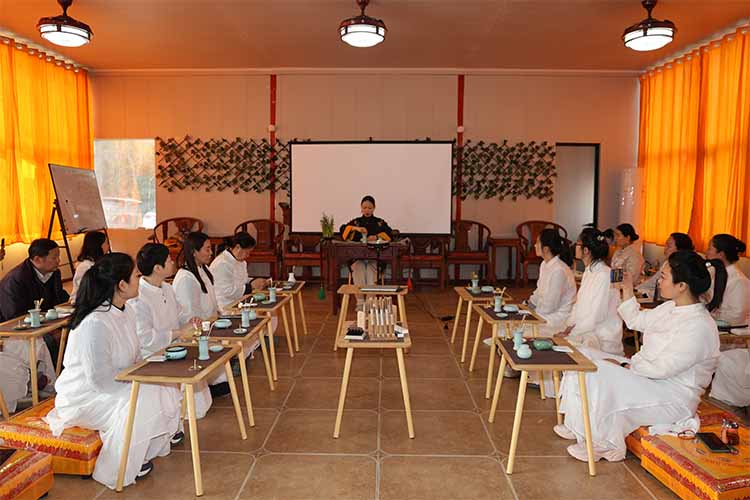
When Rhythmic Vocal Repetition Supports Attention and Calm
Rhythmic vocal repetition has a narrow, defensible role: it gives a restless mind one repeating object to follow. Counting breaths in silence demands steady internal effort. Reciting asks the voice, lungs and ears to cooperate, which many beginners find easier to hold than silence. That is the full extent of our claim. We do not present chanting as a religious requirement for secular guests, and we do not present it as therapy. Research on rhythmic recitation and slow breathing is limited and uneven in quality, so any promise of measurable mental-health outcomes would go beyond the evidence. The table below separates what the technique can reasonably offer from the situations where it falls short or where other support is more appropriate.
| Situation | What rhythmic recitation may offer | Limit or boundary |
|---|---|---|
| Mind wanders before a sitting session | A single sound to follow, which can make the transition into quiet sitting easier. | Effect varies by person. Some guests prefer silent breath counting from the start. |
| Shallow or tense breathing | A long exhale carries each phrase, so the breath tends to slow without special instruction. | Stop if you feel dizzy or lightheaded. It is not a respiratory exercise program. |
| Group recitation in a temple hall | A shared rhythm that lets newcomers follow the group without needing to lead. | Meaning and ritual context belong to Buddhist tradition. Participation can be voice, hum or silence. |
| Persistent anxiety, low mood or trauma | May serve as a calming routine alongside other support. | It is not a treatment and not a replacement for a qualified health professional. |
| Guest who objects to religious wording | Neutral vowel sounds or a counted breath give the same attention task. | Request the secular format in advance so the session is planned around it. |
Types of Chanting Practice
Formats differ in content and in how much explanation surrounds them. Vowel or syllable chanting uses open sounds with no semantic content, which suits guests who want the acoustic effect only. Buddha-name or sutra recitation follows Chinese Buddhist temple tradition and should come with its meaning explained beforehand. Mantra recitation, connected to Tangmi heritage, is presented as cultural and historical context, and guests may listen, hum or recite silently. A secular variant replaces sacred phrases with a neutral word or a counted breath. For programme planners, the packaging options are a one-session taster, a daily slot inside a retreat such as a 3 day meditation retreat China, or a themed workshop that pairs recitation with tea and sound. Choose the format by your audience's comfort with religious content, not by how traditional it sounds.
Features of Chanting Practice
The cultural weight of the practice comes from lineage, not from belief tests. Tangmi treats mantra, mudra (symbolic hand gestures) and visualisation as a linked set, and Guanghua Temple's connection to Śubhakarasiṃha gives that history a physical address in Luoyang. In our sessions these elements are explained as heritage first, and taking part in any of them is optional. Our teachers come from Guanghua Temple, and the temple setting matters: guests learn where the tradition is lived, not in a rented room. A distinctive feature is integration. We combine meditation, mindful tea rituals built on over 10 years of tea practice, and guided sessions to explore singing bowl sound healing, so that voice, listening and breath each get a turn. The limit is scope: this is an introduction to contemplative culture, not an ordination course or a doctrinal study program.
Chanting Practice Application
Three buyer groups can use chanting in different ways. Overseas tour operators can add a recitation session to a Luoyang heritage itinerary, giving guests a participatory element beyond sightseeing. Corporate wellness planners can schedule a short session before a workshop day as an attention exercise, with attendance voluntary and a secular option offered upfront. Workshop designers can build a half-day around recitation, tea and sound. Guests wanting to experience a peaceful Buddhist temple stay will meet recitation as part of the daily rhythm anyway. As an illustrative format, not a past booking: 20 minutes of history and meaning, 15 minutes of vowel chanting, 10 minutes of silent sitting, then tea. It does not suit groups looking for a clinical stress program, and it works poorly if participants feel pressured to join.
Chanting Session Price
We do not quote a fixed standalone rate here, because cost follows packaging rather than the technique itself. Programs run by schedule and reservation, and duration and availability vary by retreat, course or itinerary, so a fair figure needs the format. Individual bookings and small groups are both accepted, with group size and booking requirements set by program. Seasonal variation is mostly an availability matter: holiday periods and the temple's own calendar can limit dates, so earlier requests leave more choice. When you ask for a quote, state headcount, number of days, whether lodging is needed and whether the group wants the secular version. Those inputs determine most of the number.
| Cost factor | What it covers | Effect on quote |
|---|---|---|
| Group size | Teacher time and hall arrangements | Varies by program; confirm minimums at enquiry |
| Duration | One session, a day block or a multi-day retreat | Longer formats add teaching and scheduling time |
| Lodging | Temple stay accommodation, if included | Adds a stay component to the program cost |
| Add-on elements | Tea ceremony, incense, singing bowl sessions | Each extra element changes preparation and materials |
| Booking date | Peak periods and temple calendar | Earlier requests widen date options |
Chanting Session User Guide
Preparation decides whether a first session feels useful or awkward. Brief the group before arrival: tell them they may chant aloud, hum or stay silent, and that no statement of belief is required. Ask for comfortable clothing with covered shoulders and knees in temple halls, and for phones to be switched off. Guests who have never tried Chan meditation benefit from a short sitting period before recitation, because it settles the body first. The most common mistake is treating chanting as a performance, with forced volume and strained throats. The steps below suit a first-time group of any size.
- Settle the posture. Sit upright on a chair or cushion with hands resting in the lap, and take about ten slow breaths before making any sound, so the voice starts from a steady breath.
- Hear the phrase first. The teacher recites once or twice and explains the meaning in plain terms, so nobody repeats words they do not understand.
- Start at speaking volume. A steady, medium voice keeps the breath even and prevents throat strain. Louder is not better.
- Keep the first round short. Three to five minutes is enough for beginners. Stop at once if you feel dizzy or your throat tightens.
- Finish in silence. Sit quietly for a minute or two and notice what changes, if anything, without grading the result.
- Review and adjust. Note what held your attention. If the words felt uncomfortable, switch to a neutral sound or silent counting for the next round.
Chanting Practice Supplier
Funzendo is based at Longmen Guanghua Temple in Luoyang, and our programs include meditation retreats, temple stays, traditional wellness training and Buddhist cultural pilgrimage itineraries. As a supplier of temple-based experiences, we introduce international guests to Chinese contemplative traditions in an authentic setting, led by teachers from Guanghua Temple. Our Zen meditation and mindfulness offerings are accessible to beginners, and our distinctive format combines sound healing, meditation and mindful tea rituals. That suits planners who want recitation presented as culture and attention training, not as a sales pitch for belief. Terms are straightforward: programs are available by schedule and reservation, individual and small-group bookings are accepted, and group size and requirements vary by program. We also state our boundaries plainly. Our sessions are cultural and contemplative, not medical, and we will tell you if a request falls outside that scope.
FAQ of Chanting Practice
Do I need to be Buddhist to join a session?
No. Participation does not require any statement of faith, and guests of any background or none can take part. What we ask for is respect for the setting: quiet behaviour in the halls, modest dress and no mocking of the words. Within the session you choose your level of involvement. You may recite aloud, hum along, or simply listen and breathe. If the religious wording is a barrier, ask in advance for a secular format built on vowel sounds or a counted breath. The meaning of any traditional phrase is explained first, so you decide with full information. The limit is that the surrounding temple culture remains Buddhist, and guests should expect that context.
Can chanting treat anxiety or depression?
No, and we do not claim it can. Chanting is a contemplative technique that some people find calming, and research on rhythmic recitation is limited, so firm medical conclusions are not supported. It may work as a quiet routine alongside other care, but it is not a substitute for diagnosis or treatment. If you are living with persistent anxiety, low mood or trauma, speak to a qualified health professional before adding or replacing anything. Tell the teacher beforehand if you have concerns, and feel free to stop any round that becomes uncomfortable. A calm hour in a temple is a pleasant experience, not a clinical outcome.
What if I dislike my voice or feel awkward chanting aloud?
Awkwardness is common in a first session and does not mean the method has failed. Nobody is graded on pitch or volume, and in a group your voice blends with the others. If speaking aloud still feels wrong, hum, whisper, or recite silently while following the breath; the attention task stays the same. Start with a short round of three to five minutes and extend it only if it feels natural. A teacher can adjust the rhythm and phrase length to suit you. If recitation does not help after a fair trial, silent sitting or tea meditation may suit you better, and that is a sound result, not a failure.
If you are looking for a reliable Chanting Practice supplier please contact us anytime to get the latest quote.