Daoist Wellness vs. Zen Meditation: Understanding Two Chinese Paths of Self-Cultivation
When people explore traditional Chinese wellness, they often encounter two familiar terms: Daoist cultivation and Zen meditation. Both are associated with quiet practice, inner development, and a more balanced relationship between body and mind. Because they share certain methods and cultural settings, they are sometimes treated as different versions of the same tradition.
However, Daoist wellness and Zen meditation developed from different philosophical backgrounds. They approach self-cultivation through distinct perspectives, even when some of their practical methods appear similar.
Understanding these differences offers a more meaningful introduction to Chinese spiritual and wellness culture. It also helps international visitors distinguish between practices such as Zhan Zhuang, breathing regulation, and seated Zen meditation, rather than grouping every traditional exercise under the general label of mindfulness.
Two Traditions, Two Different Starting Points
Daoism and Buddhism have both played important roles in Chinese cultural history. Over many centuries, their ideas and practices developed alongside one another, sometimes influencing the same communities and cultural environments.
Daoist cultivation is rooted in the broader philosophical and religious traditions associated with Daoism. The concept of the Dao, often translated as the Way, points toward the underlying order and natural processes of existence. Within Daoist thought, self-cultivation is frequently understood through the relationship between human life and the natural world.
Zen Buddhism, known in Chinese as Chan Buddhism, developed within the Chinese Buddhist tradition. Its central concern is the direct cultivation of awareness and insight through Buddhist practice. Rather than treating meditation simply as a relaxation method, Zen places it within a broader path of understanding the mind and the nature of experience.
These traditions are not interchangeable. Their historical backgrounds, philosophical aims, and interpretations of practice should be understood on their own terms.
Daoist Wellness: Cultivating the Relationship Between Body and Nature
One distinctive feature of Daoist wellness culture is its attention to the relationship between the human body, natural processes, and everyday life.
Traditional Daoist cultivation includes different approaches to physical movement, posture, breathing, and the regulation of daily habits. These practices developed within a wider cultural understanding of harmony and balance. Rather than focusing exclusively on intellectual knowledge, they often emphasize direct experience and the gradual refinement of personal practice.
In this context, the body is not merely something to exercise. It is part of a larger relationship between the individual and the surrounding environment.
The Importance of Zhan Zhuang
Zhan Zhuang, commonly translated as standing meditation, is an example of a traditional Chinese practice that emphasizes posture, stillness, and body awareness.
Although the practitioner appears to be doing very little, maintaining a relaxed and balanced standing posture requires attention. The relationship between the feet, legs, spine, shoulders, and breathing becomes part of the practice.
Unlike exercises that depend on continuous movement, Zhan Zhuang explores how stability can be developed through stillness. It is also different from simply standing upright: posture, relaxation, and awareness are central considerations.
For people unfamiliar with traditional Chinese wellness, this practice offers an interesting perspective on movement and stillness. Physical activity does not always require visible movement, and developing body awareness can involve learning how to reduce unnecessary tension.

Breathing and Gentle Movement
Breathing regulation and gentle physical exercises are also found in traditional Daoist wellness practices. They encourage practitioners to pay attention to the relationship between posture, movement, and breathing.
These methods should not be confused with a single universal Daoist technique. Different traditions and schools have developed their own approaches, terminology, and methods of instruction.
In contemporary wellness education, the value of these practices is often introduced through practical body awareness, gentle movement, and a better understanding of traditional Chinese cultivation culture.
Zen Meditation: Understanding the Mind Through Direct Experience
Zen meditation has a different emphasis. Its roots lie in Buddhist teachings, and its purpose cannot be reduced to physical relaxation or stress management.
In Chinese Chan Buddhism, meditation is closely connected with the cultivation of wisdom and the direct observation of experience. The practitioner learns to become aware of thoughts, feelings, sensations, and reactions without automatically following every mental movement.
This does not mean that Zen meditation requires the complete absence of thought. Thoughts naturally arise. The practice concerns how the mind relates to them and how awareness can be cultivated through sustained practice.
Posture and Sitting Practice
Seated meditation is one of the best-known forms of Zen practice. A stable posture provides the physical foundation for sustained attention.
Correct posture is not simply about appearing calm or maintaining a particular shape. It involves finding a position that supports alertness without unnecessary strain. Breathing, bodily sensations, and the quality of attention all become relevant.
For beginners, the physical aspects of sitting meditation can be surprisingly important. Discomfort, excessive effort, or unrealistic expectations may make it difficult to establish a sustainable practice.
Awareness Beyond the Meditation Seat
Zen practice is not limited to formal periods of sitting. The broader tradition also emphasizes how awareness relates to ordinary activities and daily conduct.
Walking, eating, listening, and interacting with other people can all become opportunities to observe habitual reactions and develop greater awareness.
This perspective is important because it prevents meditation from becoming an isolated activity that has no connection with everyday life. The purpose of practice is not merely to experience temporary quietness, but to deepen understanding through continued cultivation.
Where Daoist Wellness and Zen Meditation Meet
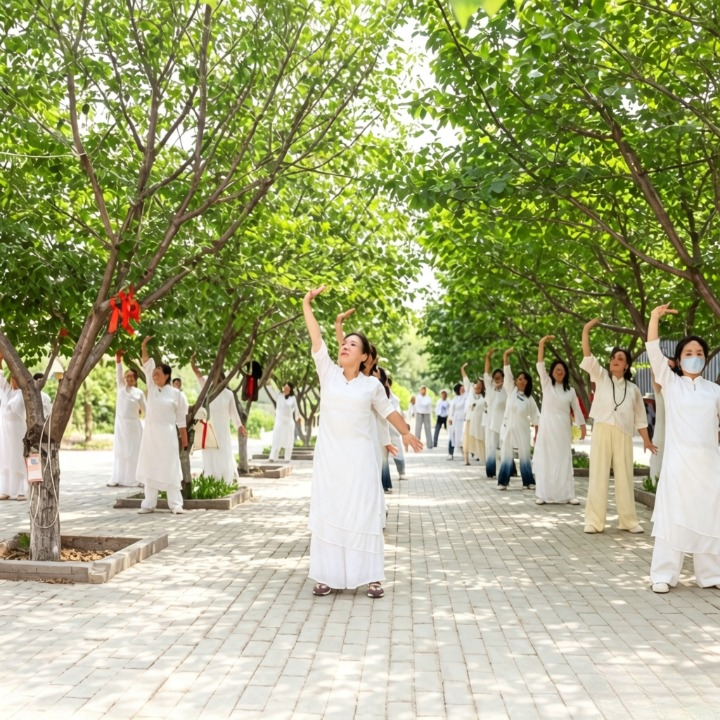
Although the two traditions have different philosophical foundations, they can share certain practical concerns.
Both may involve attention to posture, breathing, stillness, and the cultivation of awareness. Both can encourage practitioners to examine habitual patterns rather than responding automatically to every sensation or distraction.
These similarities help explain why Daoist and Buddhist practices are sometimes introduced together in contemporary Chinese cultural and wellness settings.
However, shared methods do not mean identical purposes. A breathing exercise within a Daoist cultivation framework should not automatically be described as Zen meditation. Similarly, a Buddhist sitting practice should not be presented as a Daoist breathing technique simply because both involve stillness.
Understanding the context of a practice is as important as learning its physical method. Its name, historical background, philosophical meaning, and teaching approach all contribute to a more accurate understanding.
Why the Difference Matters for International Visitors
For visitors discovering Chinese traditions for the first time, the variety of practices can be confusing. Terms such as meditation, Qigong, Tai Chi, Daoist wellness, and Zen are sometimes used loosely in travel and wellness marketing.
Yet each term refers to a different cultural or practical context. A meaningful learning experience should explain what participants are actually exploring, rather than presenting every traditional Chinese practice as a general relaxation activity.
For example, someone interested in physical awareness and traditional movement may want to learn more about standing practice and gentle body conditioning. Another person may be more interested in Buddhist philosophy, seated meditation, and the cultivation of awareness.
Neither interest is more authentic than the other. The important point is to understand what each tradition offers and choose an experience that matches one's interests and expectations.
Exploring Both Traditions at Funzendo
Located within Longmen Guanghua Temple in Luoyang, Funzendo introduces visitors to different aspects of Chinese Buddhist culture, Zen meditation, and traditional wellness practices.
Its Daoist Wellness Practice Retreat focuses on traditional Daoist wellness exercises, breathing regulation, Zhan Zhuang standing meditation, gentle body conditioning, and mindfulness practices. The programme is designed around the relationship between movement, breathing, and body awareness.
Visitors interested in this tradition can learn more about the Daoist Wellness Practice Retreat in China.
For those more interested in Buddhist meditation, Funzendo also introduces Zen practice through its meditation offerings. These experiences provide a different perspective on attention, stillness, and the cultural background of Chinese Buddhism.
Explore the Zen Meditation experiences at Funzendo to learn more about the available practices.
The two traditions can be explored within the wider cultural environment of Guanghua Temple, a historic Buddhist site near the Longmen Grottoes. Its association with Tang Dynasty Esoteric Buddhism provides an important context for visitors interested in the development of Chinese Buddhist traditions.
To discover more about the temple and its cultural background, visit the Funzendo official website.
Beyond Labels: Understanding the Meaning of Practice
Daoist wellness and Zen meditation are more than two different ways to relax. They represent distinct approaches to self-cultivation that developed through different philosophical and spiritual traditions.
Daoist practices often explore the relationship between the body, natural processes, movement, and balance. Zen meditation places particular emphasis on awareness, insight, and the direct observation of experience.
Learning to distinguish between them does not require choosing one and rejecting the other. It simply allows us to approach each tradition with greater accuracy and respect.
For anyone interested in Chinese culture, this distinction opens the door to a richer understanding of the many ways people have explored the relationship between body, mind, nature, and inner development.