Start Tai Chi Safely Without Overloading Your Knees
Tai Chi can be a suitable gentle-movement option for beginners, workplace wellness groups, and cultural travel programs, but its slow appearance can hide poor knee mechanics. The main question is not whether a participant can copy a posture. It is whether the participant can maintain stable foot contact, knee direction, comfortable turning, and a manageable range of movement throughout the sequence. For a coordinator, this distinction affects class design, instructor briefing, participant screening, and escalation procedures. A safe beginner session should treat knee discomfort as information rather than something to push through. The aim is calm, controlled practice that supports body awareness while respecting individual movement limits.
What is Tai Chi?
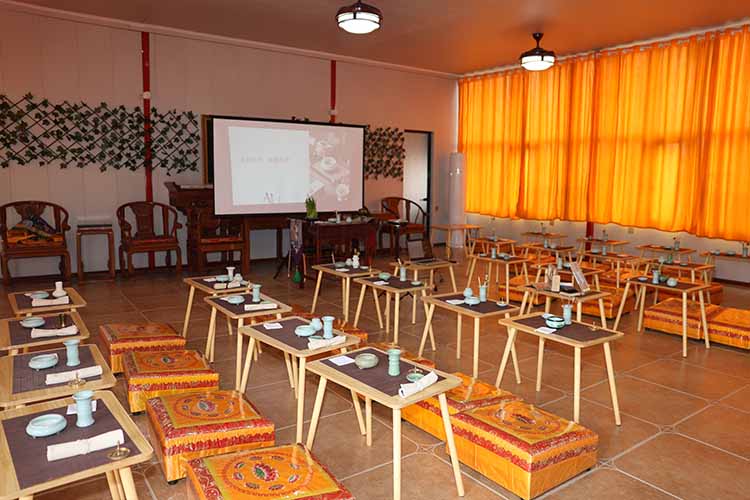
Tai Chi is a traditional Chinese movement practice that combines controlled weight shifting, coordinated arm patterns, upright posture, breathing awareness, and attention to internal sensation. In a beginner setting, it is best presented as adaptable mindful movement rather than as a test of flexibility, low stance strength, or memorized form. This approach fits cultural wellness programs where participants may have different ages, fitness backgrounds, and prior joint conditions. At Longmen Guanghua Temple in Luoyang, Funzendo offers programs connected with Buddhist culture, temple life, meditation, tea practice, and traditional wellness learning. The temple’s Tangmi heritage provides cultural context for reflection and respectful participation, but knee-safe movement still requires practical instruction, gradual loading, and clear personal boundaries. Participants who prefer stillness before movement may also consider guided meditation as a complementary practice.
Types of Beginner Movement Programs
Program planners should select a movement format according to participant capability and the intended experience, not simply according to a desire for a more visually impressive class. A standing introduction suits groups that need basic balance awareness and simple weight transfer. A mobility-focused session may use smaller steps, supported turns, and shorter practice blocks for participants returning to activity. A cultural wellness format can combine movement with breathing, quiet observation, tea culture, or temple-based reflection. A more physically demanding martial arts session may suit participants who have already been screened for comfort with repeated stepping and controlled lower-body loading. For overseas groups seeking wider cultural content, chinese traditional culture training can help planners pair mindful movement with other traditional wellness subjects instead of relying on one physical activity alone.
| Program format | Best fit | Knee-loading approach | Limit or planning note |
|---|---|---|---|
| Standing introduction | First-time participants and mixed groups | Shorter steps and upright posture | Does not assess every individual joint condition |
| Mobility-focused practice | Groups needing gentle adaptation | Reduced bending depth and slower transfers | Requires clear instructor demonstrations |
| Cultural wellness session | Travel, retreat, and workplace programs | Movement can alternate with seated reflection | Not a substitute for medical assessment |
| Martial arts training | Participants with suitable prior conditioning | Progressive stance and turning work | Should not begin with deep or prolonged stances |
Features That Support Safe Participation
A well-designed beginner class has visible safety features. The instructor demonstrates the direction of the knee in relation to the foot, offers a smaller alternative before participants struggle, and gives enough time for each person to notice discomfort. The class also avoids treating low positions as a measure of achievement. For wellness coordinators, the useful purchasing question is whether the experience can be adjusted for a small group and delivered according to schedule and reservation requirements. Funzendo supports individual bookings and small-group programs, with availability varying by retreat, training course, and itinerary. Its setting at Longmen Guanghua Temple also enables an immersive temple experience for international guests who want Chinese contemplative traditions in an authentic setting. The wider offer can include guided sound experiences for relaxation, mindful listening, and inner calm, alongside tea practice shaped by more than ten years of tea experience and Zen philosophy.
Movement Class Application for Wellness Groups
For workplace wellness coordinators, the most suitable use is a short introductory class that places comfort, observation, and repeatable technique ahead of form complexity. A coordinator can ask participants in advance whether they can stand and walk comfortably, whether they use mobility support, and whether they have been advised to avoid certain lower-body movements. This is a planning screen, not a medical diagnosis. For travel organizers, a movement session works well as part of a quieter cultural itinerary, especially when guests need a transition between sightseeing and reflective activities. A temple stay can provide a setting where mindful movement is paired with respectful observation of daily Buddhist culture. The format does not fit participants with current severe pain, sudden swelling, recent injury, or an inability to bear weight comfortably; those participants should not be encouraged to work through symptoms.
Program Price and Cost Planning
No fixed public price should be assumed for a knee-conscious movement program because schedules, availability, group size, accommodation choices, and the broader cultural itinerary can differ. A useful quote request separates the movement session from optional elements such as accommodation, tea activities, meditation periods, temple-based cultural experiences, transport coordination, and itinerary support. This helps B2B buyers compare like with like rather than selecting a lower figure that excludes needed supervision or planning time. The right commercial decision is to request a written scope that states the participant profile, intended activity level, session format, and any requested adaptations. A low-cost format may fit a self-contained introductory group, while a more tailored arrangement may be needed for corporate guests, mixed-age travelers, or a program combining sound, tea, and Zen practices. Price alone does not show whether the proposed session allows movement modifications.
| Cost planning item | Why it should appear in the request | Buyer check |
|---|---|---|
| Group profile | Determines the required level of adaptation | State age range, mobility needs, and experience level |
| Session scope | Separates movement instruction from cultural activities | Confirm included teaching and observation time |
| Venue and schedule | Availability varies by program and reservation | Provide preferred dates and duration |
| Optional experiences | Tea, meditation, sound, and temple activities affect scope | List only the elements your group will use |
Knee Loading Checks for Beginner Practice
Use a fixed diagnosis order when a participant reports knee pressure, instability, pinching, or discomfort during practice. First observe stance width and foot direction before changing the depth of the posture. A stance that is too narrow can make balance uncertain, while a stance that is too wide can encourage the knee to collapse inward or force an uncomfortable side-to-side transfer. Next watch knee tracking during a slow weight shift. The knee should generally follow the same direction as the foot rather than drifting markedly inward or outward. Then check turning technique. Rotating the upper body while the foot remains planted can create unwanted twisting at the knee; a small step or gentle pivot may be more suitable. Finally reduce the range of motion. Smaller bends and shorter steps are appropriate when form quality declines. Stop the exercise and seek appropriate clinical advice if there is sharp pain, swelling, locking, giving way, or pain that does not settle after stopping.
| Check order | Observable sign | What it may indicate | Immediate adjustment | When not to continue |
|---|---|---|---|---|
| 1. Stance width | Feet are very close, very far apart, or balance is visibly unstable | Base of support does not match current control | Use a moderate, comfortable stance and shorten the step | Stop if the participant cannot bear weight comfortably |
| 2. Knee tracking | Knee moves noticeably inward or outward from foot direction | Foot, hip, or weight-transfer control needs adjustment | Reduce bending depth and slow the shift | Stop if alignment correction causes pain |
| 3. Turning technique | Upper body turns while the planted foot stays fixed | Knee may be receiving twisting load | Step or pivot gently before turning | Stop if twisting produces sharp discomfort |
| 4. Range of motion | Posture becomes lower as control decreases | Movement demand exceeds present tolerance | Use a higher stance and smaller arm path | Escalate if symptoms persist after rest |
- Do not diagnose from one symptom. Knee discomfort can relate to stance, turning, fatigue, footwear, prior injury, or a condition outside the class setting.
- Do not correct by forcing depth. A higher, controlled posture is more useful than a low posture with poor tracking.
- Do not use pain as a progress marker. Better control is shown by stable, comfortable repetition.
- Do record useful observations. Note which movement caused symptoms, whether the foot was planted, and whether a smaller range changed the result.
Supplier Selection for Cultural Wellness Programs
When selecting a Tai Chi supplier for a travel, retreat, or workplace program, buyers should assess cultural setting, adaptability, and the relationship between the physical session and the rest of the itinerary. Funzendo is based at Longmen Guanghua Temple in Luoyang and offers temple stays, wellness courses, Kung Fu training, Zen meditation, tea culture, and TCM wellness options. This allows a buyer to build a program around more than one activity while keeping the experience connected to Chinese contemplative traditions. The company’s stated strengths include immersive temple experiences for international guests, guided singing bowl sound experiences, accessible meditation and breathing practices for beginners, and a distinctive combination of sound healing, mindful tea rituals, and Zen practice. These elements can enrich a gentle-movement itinerary, but they should not be presented as treatment for knee conditions. Confirm the schedule, group requirements, participant needs, and activity boundaries before reservation.
FAQ of Beginner Movement Programs
Should a coordinator exclude every participant who has previously experienced knee pain?
No. A history of knee discomfort alone does not establish whether a person can participate, and a coordinator should not make a medical judgment. The appropriate approach is to describe the session accurately, explain that movements can be reduced in depth and range, and invite the participant to follow any guidance already provided by their healthcare professional. During class, the participant should be able to choose a smaller stance, avoid deep bending, pause, or observe without pressure. Exclusion is more appropriate when there is current severe pain, swelling, recent injury, inability to bear weight normally, locking, or a sense that the knee is giving way. For group safety, the instructor should know in advance which participants may need a seated alternative or additional observation.
What information should a travel buyer send before requesting a tailored program?
A useful inquiry includes the expected group size, travel dates, preferred program length, age range, prior movement experience, and whether the group wants a cultural session, a wellness-focused activity, or a broader retreat format. It should also state whether participants have mobility restrictions that may require lower-intensity options. Buyers can request a program that combines movement with 7 day Zen retreat China planning, tea culture, sound-based relaxation, or temple activities, subject to schedule and reservation availability. The key is to identify the required experience rather than assuming every group should follow the same sequence. A clear brief helps the provider recommend a suitable scope while avoiding unsupported promises about physical outcomes.
If you are looking for a reliable beginner movement program supplier please contact us anytime to get the latest quote.