Temple Stay vs Zen Pilgrimage in China: Which Experience Is Right for You?
Planning a meaningful journey to China often involves more than deciding which cities to visit. For travelers interested in Buddhist culture, traditional Chinese philosophy, and experiences beyond ordinary sightseeing, two options stand out: a Chinese Buddhist Temple Stay and a Zen Pilgrimage in Luoyang.
Although both experiences connect visitors with Chinese Buddhist traditions, they offer different ways of discovering the country. One invites you to experience the rhythm of life within a historic temple. The other takes you beyond a single location, connecting ancient Buddhist monuments, traditional architecture, local culture, and spiritual heritage through a carefully arranged journey.
Understanding these differences can help you choose an experience that matches your travel schedule, interests, physical comfort, and expectations. This guide compares both options in practical detail and explains how you can combine them into a more complete cultural journey in China.
Understanding the Difference Between a Temple Stay and a Zen Pilgrimage
What Is a Temple Stay in China?
A temple stay is an opportunity to spend time within a traditional Buddhist temple environment rather than simply visiting it for an hour or two. Instead of moving between several attractions every day, you establish a temporary base in one place and experience its atmosphere, architecture, customs, and daily rhythm.
At Longmen Guanghua Temple in Luoyang, Henan Province, the Guanghua Temple Zen Stay introduces international guests to traditional Chinese temple culture through accommodation, opportunities for meditation, vegetarian food, quiet reflection, and an understanding of Buddhist traditions.
Your experience may include:
Temple accommodation: Stay within the peaceful surroundings of Guanghua Temple, with practical modern facilities for rest and personal time.
Morning temple atmosphere: Experience the sound of traditional bells and the quieter rhythm of a Buddhist environment.
Traditional Buddhist culture: Learn about temple customs, Chinese Buddhist philosophy, and the cultural background of the site.
Vegetarian temple cuisine: Discover the simplicity of traditional vegetarian food and the cultural ideas behind mindful eating.
Meditation and reflection: Explore guided meditation or spend time quietly observing your surroundings, according to the activities available.
Personal exploration: Enjoy time for reading, tea, walking, and reflection without following a demanding sightseeing schedule.
A temple stay does not require previous meditation experience. Nor does it mean that guests must participate in every religious activity. Participation in temple activities is optional, and visitors are expected to respect the customs and peaceful atmosphere of the temple.
For people who want to understand Chinese Buddhist culture through everyday surroundings rather than formal sightseeing, this slower approach offers a valuable perspective.
What Is a Zen Pilgrimage in China?
A Zen pilgrimage is a cultural journey that connects Buddhist heritage sites, historic temples, traditional arts, and meaningful experiences across a particular region. Unlike a temple stay, which is based in one location, a pilgrimage involves traveling between different destinations.
In Luoyang, the Longmen Zen Heritage Journey combines the history of Chinese Buddhism with cultural exploration and opportunities to experience Zen practice.
The four-day journey introduces visitors to several important aspects of Luoyang's heritage, including:
Longmen Grottoes: Explore one of China's most significant Buddhist art collections, with ancient sculptures, inscriptions, and monumental carvings.
Longmen Guanghua Temple: Experience a traditional Chinese Zen meditation session and learn about the temple's connection with Tang Dynasty Esoteric Buddhism.
White Horse Temple: Discover the history of one of China's earliest established Buddhist temples and its role in the development of Buddhism in China.
Traditional Chinese arts: Participate in a hands-on cultural workshop and learn about local artistic traditions.
Luoyang food culture: Discover traditional local dishes and the culinary heritage of this historic capital.
Luoyi Ancient City: Explore historic streets, traditional architecture, local shops, and the atmosphere of Luoyang after dark.
The purpose is not simply to visit more attractions. It is to understand how Buddhism, art, architecture, food, and everyday life have developed together throughout Chinese history.
Temple Stay vs Zen Pilgrimage: A Detailed Comparison
Both experiences introduce visitors to Chinese Buddhist culture, but the structure and emphasis are quite different. The following comparison highlights the practical differences before you make a reservation.
| Comparison | Temple Stay | Zen Pilgrimage |
|---|---|---|
| Main focus | Temple life and cultural immersion | Buddhist heritage and cultural discovery |
| Location | Based at Guanghua Temple | Multiple destinations in Luoyang |
| Daily rhythm | Flexible and relatively relaxed | Structured around an itinerary |
| Accommodation | Temple accommodation | Arranged according to the travel program |
| Meditation | Opportunities for ongoing practice | Selected guided practice sessions |
| Cultural experiences | Temple customs, vegetarian food, and Buddhist traditions | Grottoes, temples, local arts, and historical sites |
| Physical activity | Generally light, with walking around the temple | More walking and transfers between destinations |
| Suggested duration | 2–7 nights or longer | 4 days for the Longmen heritage journey |
| Ideal for | Slower travel and cultural immersion | History, exploration, and cultural discovery |
One important distinction is that a temple stay is not automatically an intensive meditation retreat. Guests can choose how much they participate in available activities. Similarly, a Zen pilgrimage is not a purely religious journey: it also includes history, architecture, food, and local cultural experiences.
What Makes a Temple Stay at Guanghua Temple Special?
Location plays an important role in determining the quality of a cultural experience. Longmen Guanghua Temple is not simply a convenient accommodation option in Luoyang. It is a historic Buddhist site associated with the development of Chinese Esoteric Buddhism, also known as Tangmi.
The temple's history is closely connected with Śubhakarasiṃha, one of the Three Great Masters of the Kaiyuan period. Its historical associations make Guanghua Temple particularly interesting to visitors who want to understand the development of Buddhist traditions in China and their connections with other parts of Asia.
The approach to the temple also creates a distinctive experience. Visitors climb a series of traditional stone steps towards the mountain gate, gradually leaving the atmosphere of ordinary city travel behind. Inside the temple grounds, traditional architecture, courtyards, pagodas, and Buddhist memorial sites create a setting for quiet exploration.
Rather than treating the temple as a backdrop for photographs, a longer stay gives visitors time to notice its details and understand the cultural significance of its spaces.
For example, you can learn about the Wuwei Pagoda and the legacy of Subhakarasiṃha, explore the temple's historical monuments, or simply enjoy a quiet moment with tea. These experiences are difficult to appreciate when every visit is limited to a short sightseeing stop.
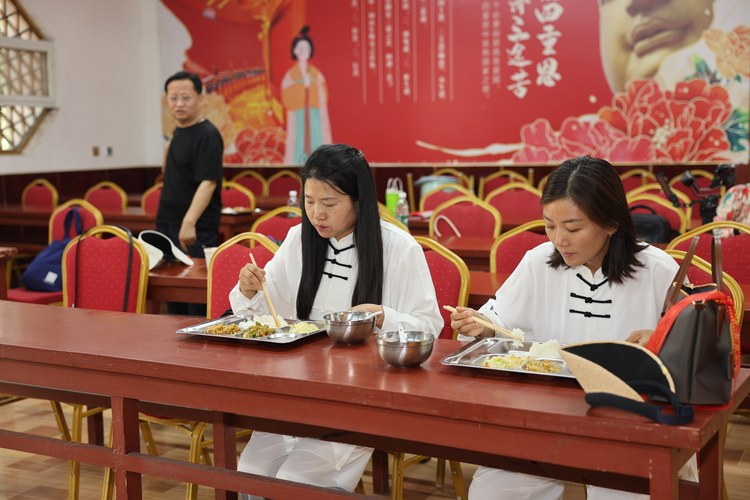
Everyday temple life offers a closer look at traditional Chinese Buddhist culture.
Food is another part of the experience. Traditional vegetarian meals introduce visitors to a different relationship between food, simplicity, and daily practice. The atmosphere of shared dining can also provide a natural opportunity to meet other guests and exchange cultural perspectives.
If you are interested in experiencing this environment beyond a short visit, explore the Guanghua Temple Zen Stay in Luoyang to see its accommodation options and available experiences.
Why Choose a Zen Pilgrimage Through Luoyang?
Luoyang has played an important role in Chinese history for centuries. As one of China's ancient capitals, it developed into a significant center of Buddhist learning, artistic expression, and cultural exchange.
For international visitors, a journey through Luoyang provides an opportunity to understand Chinese Buddhism within its historical setting rather than viewing individual temples and monuments as unrelated attractions.
Discover the Artistic Legacy of Longmen Grottoes
The Longmen Grottoes are among the most remarkable examples of ancient Buddhist stone carving in China. Thousands of caves, niches, inscriptions, and Buddhist images reveal the artistic achievements and religious life of different historical periods.
Walking through the grottoes with historical interpretation helps visitors understand the relationship between Buddhist beliefs, imperial patronage, artistic techniques, and the development of Chinese civilization.
Explore the Origins and Development of Chinese Buddhism
A visit to White Horse Temple adds another important dimension to the journey. Traditionally regarded as the first Buddhist temple established in China, it is closely associated with the early transmission of Buddhism from India into Chinese society.
Comparing White Horse Temple with Guanghua Temple also reveals how Buddhist traditions developed over time. The former introduces the early history of Buddhism in China, while Guanghua Temple offers a connection to the Tang Dynasty and the history of Esoteric Buddhist traditions.
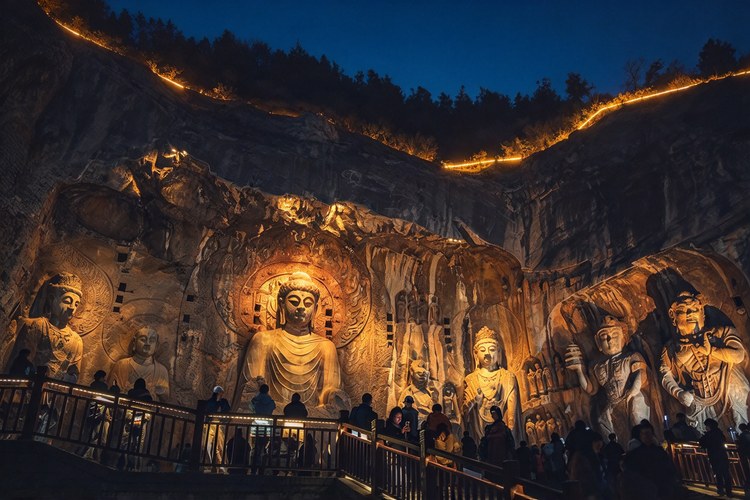
Ancient Buddhist sculpture at Longmen reflects centuries of artistic and religious heritage.
Experience the Culture Beyond Religious Sites
A meaningful cultural journey should also include the everyday life of the destination. Luoyang's traditional cuisine, local markets, historic streets, and craft traditions provide a different perspective on the city.
During the Longmen Zen Heritage Journey, visitors can experience traditional Luoyang dishes, explore Luoyi Ancient City, and participate in a Chinese art workshop. These activities help connect historical knowledge with the living culture of modern China.
This combination makes the pilgrimage especially suitable for travelers who enjoy cultural discovery and want to understand more than the religious history of a destination.
Explore the Zen Pilgrimage programs in China to discover other routes connecting Buddhist heritage, sacred mountains, and traditional Chinese culture.
Which Experience Is Better for Different Types of Travelers?
The right choice depends less on which experience sounds more impressive and more on how you prefer to travel.
Choose a Temple Stay If You:
Want to spend more time in one historic Buddhist temple rather than changing locations every day.
Are interested in traditional Chinese temple customs, architecture, and vegetarian culture.
Prefer a flexible schedule with opportunities for quiet time and personal reflection.
Want to explore meditation without committing to an intensive training program.
Are planning a longer visit and want accommodation that connects naturally with cultural experiences.
Prefer a slower travel experience with less movement between attractions.
A temple stay is particularly suitable for travelers who want to experience a different rhythm of daily life. You do not need to be a Buddhist or an experienced meditation practitioner to appreciate the cultural environment.
Choose a Zen Pilgrimage If You:
Are visiting Luoyang for the first time and want to understand its Buddhist heritage.
Enjoy historical monuments, ancient architecture, sculpture, and traditional Chinese art.
Want to visit Longmen Grottoes, White Horse Temple, and other cultural destinations in one organized journey.
Prefer a planned itinerary with local interpretation and cultural activities.
Have limited time in Luoyang but want a broader introduction to the city's history and traditions.
Enjoy combining cultural exploration with occasional meditation and reflection.
For travelers who value historical context and destination variety, a pilgrimage offers a more comprehensive introduction to Luoyang.
Can You Combine a Temple Stay and a Zen Pilgrimage?
Absolutely. In fact, combining the two can be one of the most rewarding ways to experience Chinese Buddhist culture.
The two experiences complement each other because they approach the same cultural heritage from different perspectives. A pilgrimage helps you understand the historical and geographical context, while a temple stay allows you to spend more time within the environment that you have just explored.
For example, an extended Luoyang journey could be arranged in the following way:
Part One: Explore Luoyang's Buddhist Heritage
Begin with the Longmen Zen Heritage Journey. Visit the Longmen Grottoes, discover White Horse Temple, experience guided meditation at Guanghua Temple, and explore traditional Luoyang culture. This provides a broad introduction to the city's history and Buddhist traditions.
Part Two: Extend Your Experience at Guanghua Temple
After completing the cultural journey, spend additional nights at Guanghua Temple. Enjoy the slower rhythm of temple accommodation, learn more about Buddhist traditions, explore available cultural activities, and make time for personal reflection.
Part Three: Continue with a Longer Retreat if Desired
If you want to develop a more consistent meditation routine, you may also consider a longer program. Funzendo's 30-Day Meditation Retreat in China combines sustained Zen practice, Buddhist cultural learning, traditional arts, and temple living.
The overall schedule can be discussed in advance so that the length of your visit, accommodation arrangements, and preferred activities work together.
Practical Things to Consider Before Booking
Before choosing either experience, consider a few practical details that can make your journey more comfortable.
Travel Duration
If you have only three or four days in Luoyang, a structured cultural journey may be more suitable. If you can stay for a week or longer, temple accommodation provides greater flexibility and more opportunities to experience the environment at your own pace.
Walking and Physical Comfort
A temple stay generally involves less movement between destinations, although Guanghua Temple is located on a hillside and its traditional stone steps require some walking. A pilgrimage involves additional walking at heritage sites and transfers between attractions. Comfortable footwear is recommended for both experiences.
Language and Cultural Guidance
International visitors may be unfamiliar with Chinese Buddhist customs, temple etiquette, or the historical background of the sites. It is helpful to arrange language assistance and cultural guidance in advance, particularly if this is your first visit to China.
Temple Etiquette
Visitors should dress modestly, maintain a respectful volume, and follow local instructions in religious areas. Photography restrictions may apply in certain locations. Guests should also understand that temple activities depend on the temple's schedule and availability.
Accommodation and Program Arrangements
Check whether accommodation, meals, transportation, cultural activities, and entrance arrangements are included in your chosen program. A temple stay and a multi-destination pilgrimage have different logistical requirements, so it is important to understand the details before confirming your booking.
Frequently Asked Questions
Do I Need Meditation Experience to Join a Temple Stay in China?
No. Beginners are welcome at Guanghua Temple. Previous meditation experience is not required, and participation in available temple activities is optional. You can explore the cultural environment at your own pace.
Is a Zen Pilgrimage the Same as a Buddhist Tour?
Not exactly. A traditional sightseeing tour generally focuses on visiting attractions, while a Zen pilgrimage combines cultural exploration with Buddhist heritage interpretation and selected opportunities for reflection or meditation. The exact experience depends on the itinerary.
How Many Days Should I Spend at a Chinese Buddhist Temple?
A short stay of two or three nights can provide an introduction to temple life. Around seven days allows more time for cultural activities and a regular personal routine. Longer stays are suitable for guests seeking a deeper immersion in traditional practice and temple culture.
Can Non-Buddhists Stay at Guanghua Temple?
Yes. The temple stay is open to guests interested in Chinese Buddhist culture, traditional architecture, meditation, and a quieter travel experience. Visitors do not need to identify with a particular religion, but should respect the temple's customs and environment.
Is the Longmen Zen Pilgrimage Suitable for International Visitors?
The program is designed to introduce international travelers to Luoyang's Buddhist and cultural heritage. It combines important historical destinations with local cultural experiences and Zen meditation. You can contact Funzendo in advance to confirm language support and itinerary arrangements.
Can I Book Both Experiences Together?
Yes. You can discuss a combined itinerary that includes the Longmen Zen Heritage Journey and additional nights at Guanghua Temple. The arrangement can be adjusted according to your arrival date, preferred duration, and interests.
Find the Chinese Cultural Experience That Fits Your Journey
Choosing between a temple stay and a Zen pilgrimage is ultimately a choice between two different ways of experiencing China.
A temple stay gives you time to become familiar with the atmosphere of a historic Buddhist community. A Zen pilgrimage introduces you to the wider historical landscape through temples, ancient sculptures, cultural traditions, and the stories of Luoyang.
Neither experience needs to replace the other. If you have enough time, combining them offers a richer understanding of both the historical heritage and the living cultural traditions of Chinese Buddhism.
Located near the world-famous Longmen Grottoes, Longmen Guanghua Temple provides a distinctive setting for discovering Chinese Buddhist culture. Through Funzendo, international visitors can explore temple accommodation, cultural experiences, meditation programs, and heritage journeys arranged around their interests.
Start Planning Your Journey with Funzendo
Interested in a slower cultural experience?
Explore the Guanghua Temple Zen Stay and discover accommodation and traditional temple experiences.
Want to explore the Buddhist heritage of Luoyang?
Discover the Longmen Zen Heritage Journey and its four-day cultural itinerary.
Not sure which option is right for you?
Tell us your travel dates, preferred duration, and interests. Our team can help you explore a suitable arrangement or combine both experiences.
Funzendo · Longmen Guanghua Temple · Luoyang, Henan, China