Things to Do in Luoyang, China: 10 Cultural Experiences You Shouldn't Miss
Looking for the best things to do in Luoyang, China? This historic city in Henan Province offers much more than a collection of ancient monuments. Once the capital of several important Chinese dynasties, Luoyang brings together archaeological treasures, Buddhist heritage, imperial history, traditional food, lively old streets and seasonal flower culture.
For international visitors, Luoyang is an opportunity to discover a different side of China. You can stand before monumental Buddhist sculptures at the Longmen Grottoes, explore the origins of Chinese Buddhism at White Horse Temple, learn about ancient civilizations in a museum, and spend an evening among lantern-lit streets. You can also discover quieter cultural spaces around Longmen, including Guanghua Temple, where traditional temple life and Chinese cultural experiences offer a different perspective on the city.
Rather than treating Luoyang as a quick stop between larger destinations, it is worth allowing time to understand its different historical layers. Here are ten experiences that can help you explore the city beyond the usual sightseeing checklist.
1. Explore the Longmen Grottoes, a UNESCO World Heritage Site
For many travelers, the Longmen Grottoes are the main reason to visit Luoyang. Located south of the city along the Yi River, this extraordinary complex of Buddhist caves and cliff carvings represents one of the great achievements of Chinese stone sculpture.
Carving began around the time the Northern Wei court moved its capital to Luoyang in the late fifth century. Work continued through successive periods, with particularly important developments during the Tang Dynasty. UNESCO records more than 2,300 caves and niches, almost 110,000 Buddhist statues, and thousands of inscriptions across the site.
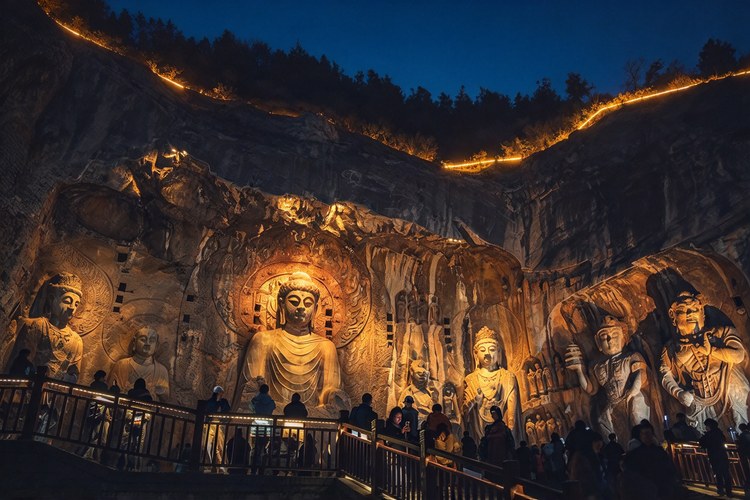
One of the most recognizable areas is Fengxian Temple, where the monumental Vairocana Buddha and surrounding figures form an impressive ensemble. The site is not simply a place to photograph large statues. Look closely at the smaller niches, inscriptions, clothing details and differences in artistic style. They reveal how religious belief, artistic techniques and imperial patronage changed over several centuries.
Allow enough time to explore more than the most famous viewpoint. The West Hill grottoes, East Hill area, Xiangshan Temple and Bai Garden together provide a broader understanding of the landscape and heritage. Comfortable walking shoes are useful, as the visit involves extended walking and steps.
For a visual introduction before your visit, explore the Funzendo Longmen Grottoes photo collection.
2. Visit White Horse Temple, a Landmark in the History of Chinese Buddhism
White Horse Temple, known in Chinese as Baima Si, is traditionally regarded as the first officially established Buddhist temple in China. Its origins are associated with the Eastern Han Dynasty and the year 68 CE, making it an important destination for anyone interested in the history of Buddhism in East Asia.
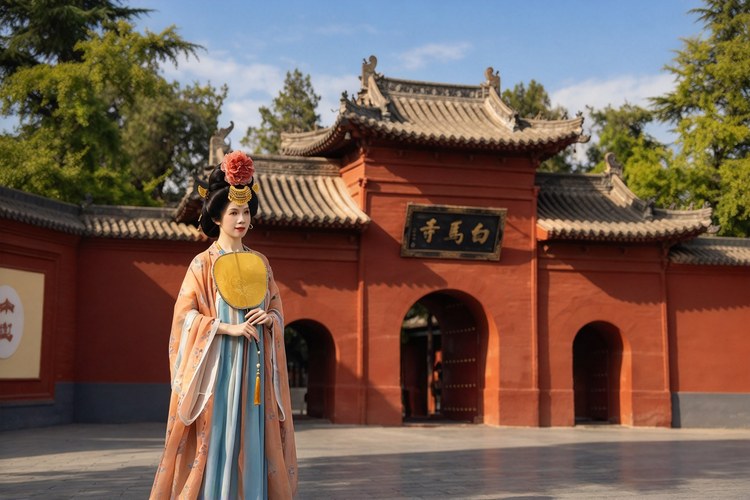
The temple's significance extends beyond its age. It represents an important chapter in the transmission and adaptation of Buddhist teachings as they moved from India into China. Over time, Buddhist institutions in China developed their own architecture, artistic traditions, rituals and schools of thought.
Visitors can explore the traditional Chinese temple halls and courtyards, as well as the international Buddhist temple area, which includes architectural influences associated with India, Thailand and Myanmar. These different styles offer an interesting reminder that Buddhism has always been shaped by cultural exchange.
White Horse Temple is best appreciated as a religious and historical site rather than simply an architectural attraction. Dress respectfully, keep noise low in worship areas and follow any photography restrictions displayed on site.
3. Discover Luoyang's History at the Luoyang Museum
After visiting historic sites, a museum visit can help connect the objects and stories you have encountered with the wider history of the region. The Luoyang Museum is a useful place to begin.
Luoyang has a long history as a political and cultural center. Its archaeological record includes material from prehistoric communities, early dynastic societies, the Han period and the great cultural developments of the Sui and Tang dynasties. A chronological museum exhibition helps visitors understand how these different periods relate to one another.
Look for bronze objects, pottery figures, ceramics and other archaeological finds. Tang sancai, the distinctive three-color glazed pottery associated with the Tang period, is particularly interesting for visitors who want to understand the artistic and material culture of medieval China.
A museum also changes the way you experience the city outside its walls. The architectural details at a temple, a sculpture at Longmen or an object displayed in a historic site becomes easier to understand when you have seen the wider archaeological context.
Check the museum's current opening arrangements and reservation requirements before visiting. Exhibition access and temporary displays may change.
4. Experience the Imperial Atmosphere of the Sui and Tang Luoyang City Sites
Luoyang's importance was not limited to religious institutions. It was also a major imperial capital, and the remains and archaeological presentation of the Sui and Tang city sites offer another way to explore its history.
Yingtian Gate, Mingtang and Tiantang are among the best-known places associated with the Sui-Tang Luoyang City heritage area. They help visitors understand the scale and organization of the imperial city, particularly during the reign of Empress Wu Zetian, when Luoyang held a central political role.
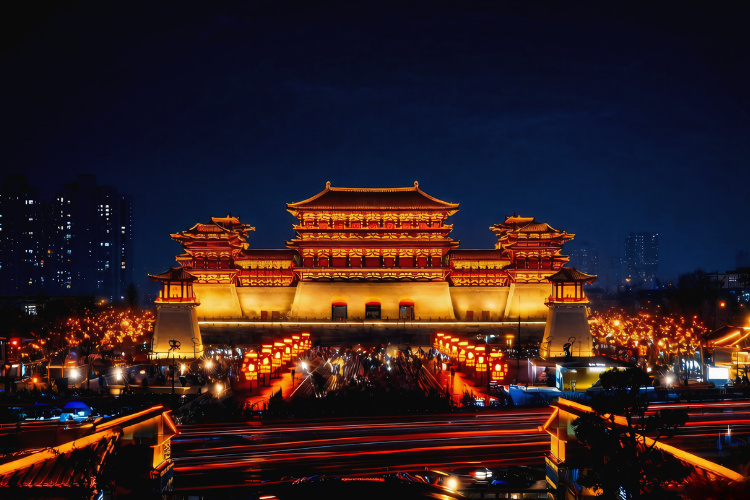
These sites combine archaeological remains with reconstructed architecture and modern exhibition spaces. It is important to understand the difference between original archaeological remains and restored or reconstructed structures. Both can help tell the story of the ancient capital, but they do not have the same historical status.
The area is particularly atmospheric in the evening, when the illuminated buildings create a dramatic setting. For visitors interested in Chinese imperial history, it is a valuable complement to the Buddhist heritage of Longmen.
5. Walk Through Luoyi Ancient City and the Old Streets After Dark
Luoyang is not only a city of museums and monuments. Its evening atmosphere is part of the travel experience, especially around the old town and Luoyi Ancient City.
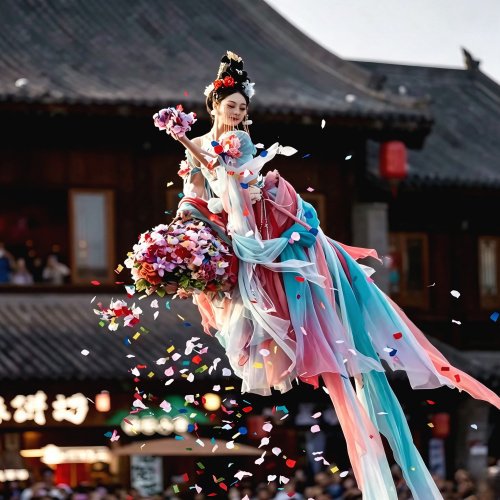
Luoyi Ancient City is a modern cultural tourism district designed around traditional-style streets, lanterns, shops and public spaces. It is popular with visitors who want to experience Hanfu, the traditional clothing styles associated with different periods of Chinese history. Rental studios and photography services make it possible to explore the visual language of historical clothing in a more interactive way.
It is worth remembering that Luoyi Ancient City is a contemporary cultural district, not an untouched ancient town. Its appeal comes from the combination of traditional architectural references, modern leisure spaces and the lively atmosphere created by visitors and local businesses.
Nearby old-town streets offer another side of Luoyang. Browse small shops, look for local snacks and observe how residents use these historic-looking commercial streets in everyday life. Evening is often a pleasant time to explore, when the lights and street activity give the area a different character from daytime sightseeing.
6. Visit Guanlin and Discover the Cultural Legacy of Guan Yu
Guanlin is a distinctive historical site in Luoyang associated with Guan Yu, the famous general of the Three Kingdoms period. In traditional accounts, the site is connected with the burial of Guan Yu's head. Over the centuries, Guan Yu became an important figure in Chinese popular religion and cultural memory, associated with loyalty, righteousness and integrity.
Unlike a conventional temple visit, Guanlin brings together a memorial temple, a tomb area and a grove within one historic complex. Its layout and ceremonial spaces reflect the long development of Guan Gong worship and the changing ways in which historical figures were remembered and revered.
For visitors interested in Chinese history, Guanlin offers a perspective that is different from the Buddhist heritage of Longmen and White Horse Temple. It introduces the relationship between historical memory, popular belief, moral values and local religious culture.
Funzendo also introduces Guan Gong heritage through its Guanlin cultural pilgrimage program, which explores the wider cultural connections associated with this tradition.
7. Experience Guanghua Temple and a Quieter Side of Longmen
For travelers who want to explore beyond Luoyang's best-known attractions, Guanghua Temple offers a different kind of cultural experience. Located in the Longmen area, near the famous grottoes, this historic temple is associated with the heritage of Chinese Esoteric Buddhism, also known as Tangmi.
Guanghua Temple is not simply another sightseeing stop. Its historical associations, mountain setting and ongoing religious environment make it a place where visitors can learn about temple culture while experiencing a quieter side of Longmen.
Among the places to notice are the temple's mountain gate, Bodhisattva Pond, the Wuwei Pagoda and the memorial spaces connected with the Three Kaiyuan Masters. These sites introduce different aspects of the temple's history and its place in the Buddhist heritage of Luoyang.
Visitors should remember that Guanghua Temple is a religious setting, not a themed attraction. Respect the temple's rules, avoid disturbing worship and confirm in advance whether a particular cultural activity or guided experience is available.
To understand the setting before visiting, read about the Mountain Gate of Longmen Guanghua Temple and explore the wider Guanghua Temple heritage sites.
8. See Luoyang's Peonies in Spring
Luoyang is widely known as China's Peony City. The peony has a long cultural association with the city and became especially celebrated during the Tang Dynasty. In Chinese art and literature, the flower is often connected with elegance, prosperity and refined beauty.
Spring is the season to experience this side of Luoyang. The annual peony viewing period generally falls around April, although the exact blooming dates depend on temperatures and local growing conditions. Different gardens and varieties may reach their best condition at different times.
Visitors interested in flowers can explore the city's peony gardens and parks, where cultivated varieties create a colorful contrast with Luoyang's historic architecture. The experience is not only about photography. It also offers a way to understand how a flower became part of a city's cultural identity.
If peonies are a major reason for your visit, check the local flowering forecast before finalizing travel dates. A few days can make a significant difference to the viewing experience.
9. Taste Traditional Luoyang Food
Food is an essential part of understanding Luoyang. The city's culinary traditions include ceremonial dishes, everyday breakfast foods and regional specialties that reflect the eating habits of Henan.
Luoyang Water Banquet
The Luoyang Water Banquet is one of the city's best-known culinary traditions. It is characterized by a sequence of dishes, many served with soup or broth. The name refers to the way dishes arrive one after another, creating a flowing progression rather than a single static meal.
Bufan Soup
Bufan soup is a familiar local street-food option. It is commonly associated with a thin mung-bean pancake served in a savory broth with other ingredients. Recipes and toppings vary between vendors, making it worth trying at a local breakfast shop.
Luoyang Beef Soup
Beef soup is another well-known breakfast choice. It is often served hot with bread or other accompaniments and is part of the city's everyday food culture. Visitors can find different versions depending on the neighborhood and restaurant.
Jiangmian Tiao
Jiangmian Tiao is a traditional noodle dish made with fermented mung-bean liquid. Its distinctive tangy flavor may be unfamiliar to first-time visitors, but it offers a taste of regional cooking that differs from more widely known Chinese noodle dishes.
Trying local food is one of the simplest ways to experience Luoyang beyond its monuments. If you have dietary restrictions, ask about ingredients and preparation methods before ordering.
10. Take Time for a Cultural Experience Rather Than Only Sightseeing
One of the most rewarding things to do in Luoyang is to leave some space in your visit for a cultural experience. The city is known for its historic sites, but its traditions are also expressed through daily practices, religious spaces, craftsmanship and forms of learning.
At Longmen Guanghua Temple, Funzendo offers cultural experiences that introduce visitors to Chinese Zen traditions, temple life and traditional arts. Depending on the program and availability, visitors can explore meditation, tea culture, incense appreciation and other forms of cultural learning.
For travelers who want to understand more than the external appearance of a historic site, these experiences can provide context for the customs and values that continue to shape Chinese cultural life.
Explore the Longmen Zen Heritage Journey to learn about a cultural experience combining Longmen heritage, Guanghua Temple, traditional Chinese culture and local Luoyang experiences.
For visitors interested in spending more time in the temple environment, the Funzendo Temple Stay experience offers another way to explore temple life in Luoyang. It is designed around cultural immersion and a quieter stay rather than conventional hotel sightseeing.
How Many Days Should You Spend in Luoyang?
The ideal length of a visit depends on your interests. Travelers focused on the main historical attractions may be able to see several highlights in a short stay, while visitors interested in museums, local food, cultural experiences and surrounding landscapes will benefit from allowing more time.
A useful way to plan is to group attractions by area rather than moving repeatedly across the city. Longmen Grottoes and Guanghua Temple are both in the southern Longmen area. White Horse Temple lies farther east. Luoyang Museum and the Sui-Tang heritage sites are in the newer urban districts, while Luoyi Ancient City and the old-town streets are best explored as part of an evening visit.
If you are planning to visit during the peony season or a major public holiday, allow extra flexibility. Popular attractions and transport services can become busier, and advance reservations may be necessary at some venues.
Practical Tips for Visiting Luoyang
Choose your season carefully: Spring is popular for peonies, while autumn can be pleasant for outdoor heritage visits. Check the weather before traveling.
Plan by location: Luoyang's attractions are spread across different districts. Group nearby places together to reduce unnecessary travel.
Wear comfortable shoes: Longmen Grottoes and several historic sites involve considerable walking and steps.
Check opening arrangements: Museum access, temple schedules, ticketing and special exhibitions can change. Verify details through official channels before departure.
Respect religious customs: Temples remain active religious spaces. Follow local instructions and ask before photographing worshippers or ceremonies.
Keep some time unplanned: A morning market, a local breakfast or an evening walk can reveal aspects of Luoyang that are not found in a standard attraction list.
Discover Luoyang Beyond the Famous Landmarks
The best things to do in Luoyang, China, are not limited to visiting a few famous monuments. The city offers a layered cultural experience: Buddhist sculpture at Longmen, the early history of Buddhism at White Horse Temple, imperial heritage at the Sui-Tang city sites, archaeological discoveries in its museums, traditional food in local neighborhoods and the seasonal beauty of its peonies.
There is also a quieter side to the city. Around Longmen Guanghua Temple, visitors can explore Chinese Buddhist heritage and cultural experiences in a setting that feels different from the larger tourist attractions.
Whether you are visiting Luoyang for history, photography, food or a deeper understanding of Chinese culture, give yourself time to explore the connections between its landmarks and living traditions. That is when the ancient capital becomes more than a list of places to see — it becomes a city to understand.