Wellness Travel Becomes More Meaningful When It Starts With Local Culture Rather Than a Treatment Menu
Wellness Travel planners face a recurring design question: should an itinerary revolve around a sequence of treatments, or around the living culture of the destination itself? Many group programs default to the first model — a massage slot, a yoga class, a spa afternoon — stitched together without much connection to the place they happen in. The second model, built on local foodways, nature, heritage sites, and community-led practices, tends to produce stronger participant feedback and better repeat bookings for tour operators. This distinction matters for anyone designing a wellness travel program in China, particularly one centered on Buddhist or Taoist traditions, where the depth of the experience depends on context, not just activity.
What Is Culture-Led Wellness Travel?
Culture-led wellness travel is an itinerary model where meditation, movement, diet, and rest are taught inside their original cultural setting rather than imported into a generic resort format. At Longmen Guanghua Temple in Luoyang, this means explore a deeper Buddhist meditation practice alongside the temple's own teaching lineage, rather than a standalone breathing session detached from its source. Guanghua Temple carries a specific historical weight here: it is linked to Chan Buddhism and to Tangmi, the Chinese Esoteric Buddhist tradition that flourished under the Tang dynasty. The temple is recorded as the place where Śubhakarasiṃha, the Indian monk who helped transmit Esoteric Buddhism into China during Emperor Xuanzong's reign, passed away and was interred — his stupa still stands on the grounds today.
Building an Itinerary Around Foodways, Nature, Heritage, and Community
A treatment-led itinerary treats each activity as interchangeable — a tea tasting could happen anywhere, a meditation session could be swapped for a spa hour with no real loss. A culture-led itinerary instead treats the setting itself as the content. The table below outlines the practical difference for program designers comparing the two approaches.
| Design Element | Treatment-Led Model | Culture-Led Model |
|---|---|---|
| Meals | Hotel buffet, generic "healthy" menu | Monastic vegetarian meals tied to temple schedule and fasting customs |
| Instructor | Rotating wellness staff | Resident temple mentors with continuous teaching history at the site |
| Setting | Spa room or conference hall | Temple halls, courtyards, mountain paths used for centuries |
| Activities | Isolated sessions (massage, yoga class) | Linked practices — morning chanting, tea ceremony, afternoon training |
| Community contact | Minimal, staff-to-guest only | Guests interact with resident monks and practitioners |
To build this kind of itinerary, start with the location's actual rhythm — temple bell schedules, seasonal produce, local pilgrimage routes — and fit wellness activities around it. Steps that work well in practice:
Map the site's daily and seasonal schedule before choosing session times.
Anchor meals to regional and monastic food traditions, not a hotel menu.
Include one heritage or nature element per day (a stupa, a mountain trail, a historic hall).
Assign a resident teacher rather than a rotating facilitator, where the program allows it.
Leave unscheduled time for informal contact with the local community.
Common failure point: planners often overfill the schedule with back-to-back sessions, leaving no room for the unplanned conversations and quiet observation that make a culture-led trip memorable.
Types of Culture-Led Wellness Programs at Longmen Guanghua Temple
Program types differ mainly in depth and duration, not in underlying philosophy. Short-format options such as the 3 day meditation retreat China introduce beginners to experience a peaceful Buddhist temple stay without a long commitment. Mid-length options, including the take a week away for mindful meditation format, allow enough time for tea ceremony, incense practice, and basic Kung Fu movement to be layered in. Longer formats, such as the 30-day practice and temple residency routes, suit participants seeking sustained immersion rather than a sampler. Pilgrimage-style programs connect Guanghua Temple to wider heritage routes — for instance, guests can explore the Buddhist heritage of Longmen before extending toward Chang'an or Dunhuang on a multi-site itinerary.
Common Mistakes When Planning Group Wellness Travel
Group planners and corporate wellness buyers tend to repeat a small set of errors when they default to a treatment-first mindset. Recognizing these early saves rework later in the booking process.
Treating meditation as a single event instead of a short daily practice built across several days — one session rarely produces a noticeable shift for beginners.
Ignoring dietary context by requesting Western menus inside a monastic setting, which disrupts the fasting or vegetarian structure that gives the program its meaning.
Overpacking the itinerary with sightseeing stops unrelated to the wellness theme, leaving participants too tired for evening practice.
Skipping orientation on temple etiquette — dress code, bowing customs, silence periods — which causes avoidable friction on day one.
Booking group sizes without checking program capacity, since learn traditional Chinese wellness practices sessions often work best in small cohorts rather than large tour groups.
Cost Considerations for Culture-Led Wellness Programs
Pricing for temple-based wellness travel is built from several distinct components rather than one flat rate. Understanding the breakdown helps buyers compare quotes accurately.
Accommodation — temple guest quarters versus nearby lodging; shared rooms typically cost less than private rooms.
Instruction — sessions led by resident temple mentors for meditation, Chinese medicine wellness training, or Kung Fu training.
Cultural activities — tea ceremony materials, incense supplies, and singing bowl sessions.
Meals — monastic vegetarian catering, which varies with fasting schedules.
Group size and duration — longer stays and larger groups generally lower the per-person rate, though program availability varies by schedule.
Because duration and availability vary by retreat, training course, and pilgrimage itinerary, exact pricing should be confirmed against the specific dates and group size requested rather than assumed from a general range.
A Step-by-Step Planning Checklist for Program Designers
Use this sequence when assembling a culture-led wellness travel proposal for a client or internal stakeholder group:
Define the outcome — stress reduction, team cohesion, or introductory practice exposure each call for different program lengths.
Select the site and lineage — confirm whether the setting has a documented teaching history, such as Guanghua Temple's Tangmi connection, since this shapes credibility with experienced travelers.
Choose program depth — match a 3-day, 7-day, or extended stay to the group's available time.
Layer activities around the daily rhythm — place Chinese incense and tea training and sound healing sessions where they naturally fit temple hours, not where the schedule has gaps.
Confirm dietary and etiquette briefings — send guidance before arrival so participants understand expectations in advance.
Review group size against program format — individual bookings and small-group programs have different logistical needs.
This checklist fails when any one step is skipped — for example, booking a large corporate group into a program designed for small cohorts almost always produces scheduling conflicts during meditation sessions.
Working With a Wellness Travel Supplier at Longmen Guanghua Temple
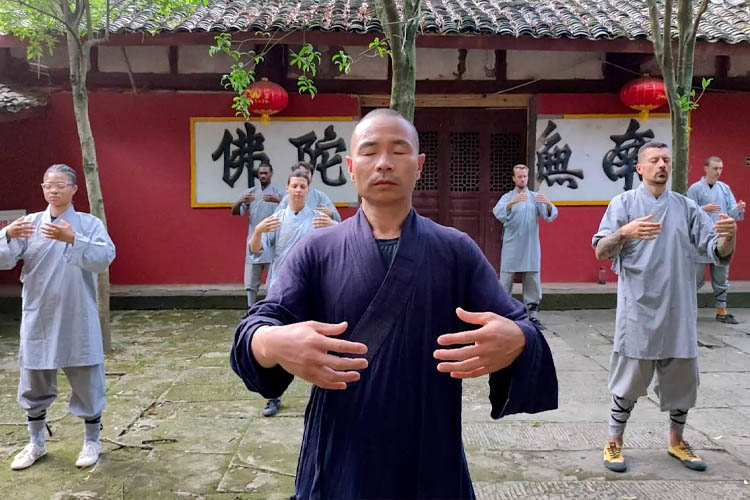
Funzendo operates from Longmen Guanghua Temple in Luoyang, where mentors with backgrounds in Chan practice, Traditional Chinese Medicine, and tea culture lead the programs rather than outside contractors. Tea practice at the site draws on more than 10 years of continuous instruction, blended with Zen philosophy rather than taught as a one-off demonstration. Guests can experience daily Buddhist temple life, join singing bowl sound healing sessions, and build toward deeper practice through structured, beginner-accessible meditation. Programs are arranged by schedule and reservation, with both individual bookings and small-group formats available, so the supplier relationship matters as much as the destination — a program designer needs a partner who can confirm dates, group logistics, and instructor availability clearly before a client commits.
FAQ About Wellness Travel at Longmen Guanghua Temple
How long should a first-time culture-led wellness program run? Three days is usually enough for beginners to understand the format without over-committing a group budget, while seven days allows deeper practice in meditation, tea ceremony, and introductory Kung Fu movement. Longer formats suit participants who already have some meditation experience.
Can a corporate group book a custom itinerary? Yes — group size and booking requirements vary by program, so corporate wellness buyers should confirm dates and headcount early, since small-group formats often fill a limited number of spaces per session.
Does the program accommodate guests with no prior meditation experience? Beginner-level sessions are designed for exactly this situation, with guided breathing and mindfulness instruction that does not assume prior training, making it a practical starting point for first-time participants.
If you are looking for a reliable wellness travel supplier, or want to design a temple stay, meditation, or tea culture itinerary around Longmen Guanghua Temple, please contact us anytime for the current program schedule and a quote.